

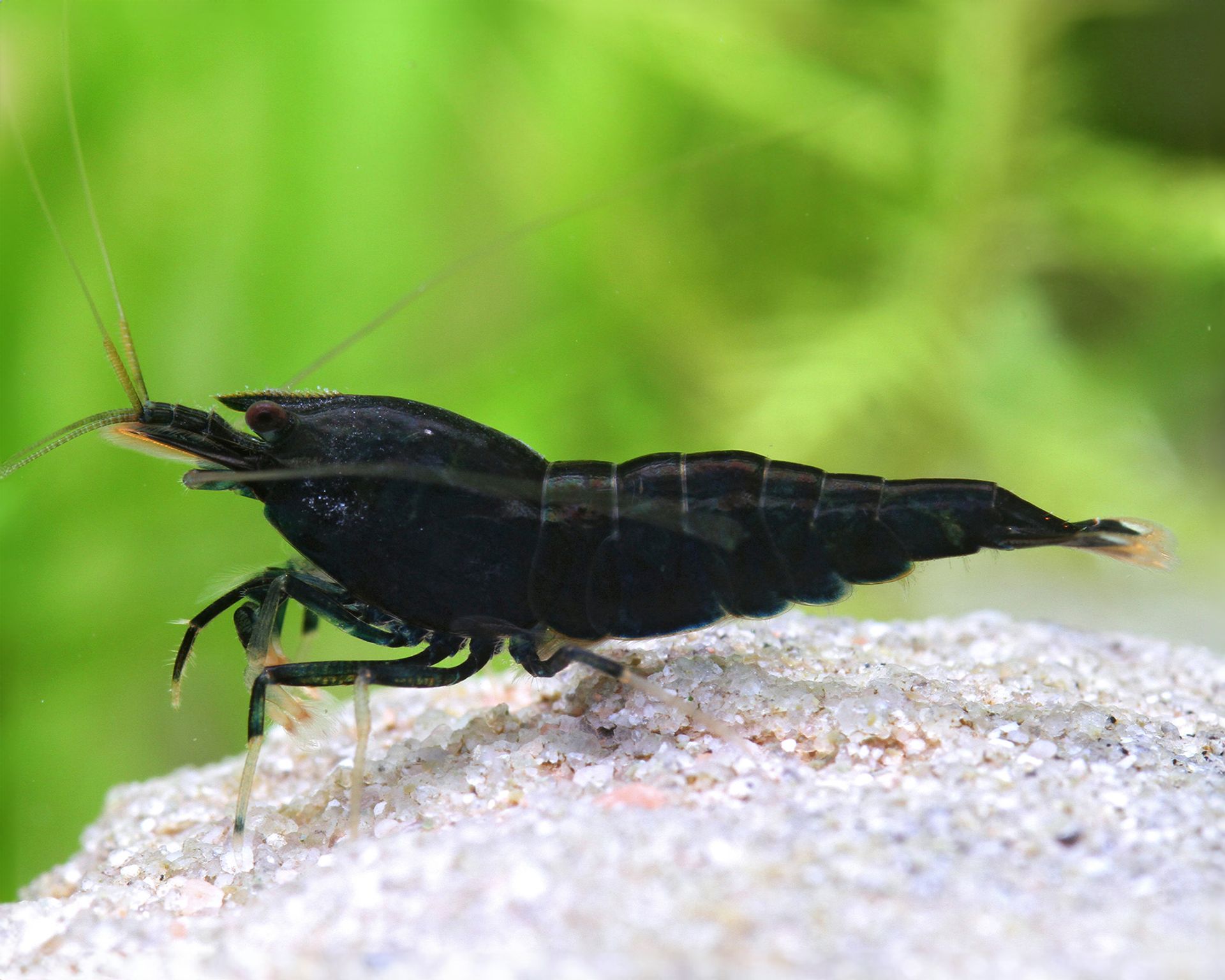

Crystal Red Shrimp (CRS) Care Malaysia: Can Caridina Survive Our Heat?
Can crystal red shrimp survive in Malaysia? Yes, but not at room temperature. CRS and other Caridina shrimp do best at about 20–24°C, and they become stressed and die more easily above about 26°C. A Malaysian room usually sits at 26–31°C, so you will need a chiller (or a tank in a room air-conditioned around the clock), plus active soil to hold the pH low and RO water remineralised for Caridina. Get those three right and CRS can thrive and breed here. If you can't cool the tank, start with hardier Neocaridina such as cherry shrimp instead.
What Are Crystal Red Shrimp?
Crystal red shrimp are a selectively bred colour form of the bee shrimp (Caridina cantonensis group), first developed in Japan. They have red and white bands, and the amount and pattern of white decides their grade and price. Close relatives include crystal black shrimp (CBS), Taiwan bees (wine red, blue bolt, black king kong) and tiger shrimp hybrids, which all need similar care.
| Caridina (CRS, CBS, Taiwan bee) | Neocaridina (cherry shrimp) | |
|---|---|---|
| Ideal temperature | 20–24°C | 20–28°C (tolerates ~30°C) |
| pH | 5.8–6.8 | 6.5–8.0 |
| GH | 4–6 | 6–12 |
| KH | 0–1 | 2–8 |
| TDS | ~100–180 ppm | ~150–300 ppm |
| Water | RO + Caridina GH remineraliser | Tap water with anti klorin |
| Substrate | Active (buffering) soil | Any |
| Malaysian room temp OK? | No, needs cooling | Usually, with a fan in hot rooms |
| Beginner? | Intermediate | Yes |
For an overview of other species, see our freshwater shrimp types guide. For the easy option, see cherry shrimp care.
Crystal Red Shrimp Temperature: Cooling in Malaysia
Temperature is the make-or-break factor here.
Option 1: Aquarium chiller (most reliable)
- Holds a set temperature (e.g. 22–23°C) regardless of the weather.
- Size it for your tank volume and allow extra capacity for hot rooms. A chiller working flat out in a 31°C room struggles.
- Place it where it can vent heat, not inside a closed cabinet.
- Uses power continuously, so factor in the electricity bill.
Option 2: Air-conditioned room
- Works if the room is kept at about 22–24°C, 24 hours a day.
- Risky if the aircond goes off while you're at work or during a power cut, because the temperature will climb.
Option 3: Cooling fan
- A clip-on fan cools by evaporation, usually by 2–3°C.
- Not enough on its own for CRS in a 30°C room, but useful as backup or in a semi-cool room.
- Evaporation raises TDS, so top up with plain RO water daily.
Browse chillers and cooling fans on FishyHub, and see our chiller and fan guide for sizing.
Power cuts: have a battery air pump ready, and keep frozen water bottles to float in the tank if a long outage hits. Avoid sudden drops of more than about 2°C.
Water: Why Malaysian Tap Water Is a Problem
Malaysian tap water is chlorinated, and its hardness and pH vary between areas and over time. Caridina are very sensitive to these swings and to traces of copper or other metals. Most CRS keepers use:
- RO (reverse osmosis) water, which is almost pure, with TDS near zero.
- A Caridina-specific GH remineraliser (GH+ type, with no KH) to bring TDS up to about 100–180 ppm and GH to about 4–6.
- A TDS meter to check every batch.
Top up evaporation with plain RO water (not remineralised), because minerals don't evaporate.
Read our tap water guide for why tap water varies.
Active Soil: The Other Essential
Active (buffering) aqua soil pulls KH to near zero and holds pH around 6–6.8, which is exactly what Caridina need. Browse aquarium soil on FishyHub.
- New soil leaches ammonia for several weeks. Cycle the tank for 4–6 weeks before adding shrimp, and test until ammonia and nitrite are zero.
- Soil exhausts over time (often 1–2 years). When the pH starts to creep up, it's time to replace it.
- Don't add rocks that raise KH (limestone, some "dragon stone" or seiryu stones, coral sand).
Setting Up a CRS Tank: Step by Step
- Tank: 1.5–2 kaki is ideal for a starter colony. Larger tanks are more stable.
- Filter: a sponge filter or a canister with a sponge on the intake, so baby shrimp aren't sucked in.
- Substrate: 3–5 cm of active soil.
- Water: RO water remineralised to GH 4–6 and TDS ~100–180.
- Cooling: a chiller set to 22–23°C.
- Plants: mosses, Java fern, Anubias and Bucephalandra. Plants are low-maintenance and give biofilm for grazing.
- Cycle: 4–6 weeks. Add a bacteria starter if you like.
- Test: ammonia 0, nitrite 0, nitrate low, pH 6–6.8, stable temperature.
- Acclimate slowly: drip-acclimate new shrimp over 1–2 hours.
More details are in our shrimp tank setup guide.
Feeding Crystal Red Shrimp
- Small amounts, every day or every other day. Remove leftovers after 2–3 hours.
- Shrimp pellets, biofilm powders, blanched vegetables and occasional protein.
- Leaf litter like daun ketapang adds biofilm and mild tannins.
- Avoid copper-containing foods or medications. Copper is toxic to shrimp.
See our shrimp food guide and food for shrimp listings.
Crystal Red Shrimp Grading
CRS are graded by how much white they have and how solid it is. Grading systems vary between breeders, but a common ladder from lower to higher is:
| Grade | Typical look |
|---|---|
| C | Thin, broken white bands; more red |
| B | Thicker bands, clearer pattern |
| A | Wide white bands, solid colour |
| S | Mostly white with red bands |
| SS | Very little red, often on the head |
| SSS | Almost completely white, minimal red |
Named patterns include Hinomaru (a red dot on a white head), Mosura (heavy white with a red tail band) and No Entry (a red bar on the head). Higher grades cost far more in RM, and their offspring don't always "breed true". Ask the seller for the grade and whether photos show the actual shrimp.
Breeding CRS
Healthy CRS in stable, cool water breed readily. Females carry eggs for about 3–4 weeks, and the babies hatch as tiny shrimp, with no larval stage. Keep the water stable, avoid big water changes (do 10% weekly with matched RO water), and don't keep fish that eat shrimplets.
Why Do CRS Die?
| Cause | Fix |
|---|---|
| Too warm (above 26°C) | Chiller or 24/7 aircond |
| New soil ammonia | Cycle 4–6 weeks |
| pH / TDS swings from tap water | RO + Caridina remineraliser |
| Copper or pesticides | Check foods, plants and medications |
| Large water changes | Small, matched changes |
| Moulting problems | Stable GH, mineral balance |
More in our guide on why aquarium shrimp die.
Buying CRS on FishyHub
FishyHub lists Caridina shrimp from Malaysian sellers with prices in RM. Check each listing for grade, the water parameters the shrimp are kept in, whether photos show the actual shrimp, and the seller's location. Shrimp travel badly in heat, so ask about delivery or self-collect and their live-arrival terms, and avoid shipping during heatwaves.
Frequently Asked Questions
Udang crystal red boleh hidup di Malaysia tanpa chiller? Sukar. Udang crystal red perlukan suhu sekitar 20 hingga 24°C, manakala suhu bilik di Malaysia biasanya 26 hingga 31°C. Guna chiller atau bilik berhawa dingin 24 jam.
Udang CRS makan apa? Udang CRS makan pelet udang, serbuk biofilm, sayur yang direbus sebentar dan daun ketapang. Beri sedikit sahaja dan buang sisa makanan selepas 2 hingga 3 jam.
What temperature do crystal red shrimp need? About 20–24°C. Above roughly 26°C they become stressed and breeding drops.
Can I use tap water for CRS? It's not recommended in Malaysia. Use RO water with a Caridina GH remineraliser for stable results.
What does SSS grade mean? It's one of the highest CRS grades, with almost completely white shrimp and very little red.
Ready for Caridina? Browse Caridina shrimp, chillers and cooling fans and aquarium soil from sellers across Malaysia on FishyHub.