

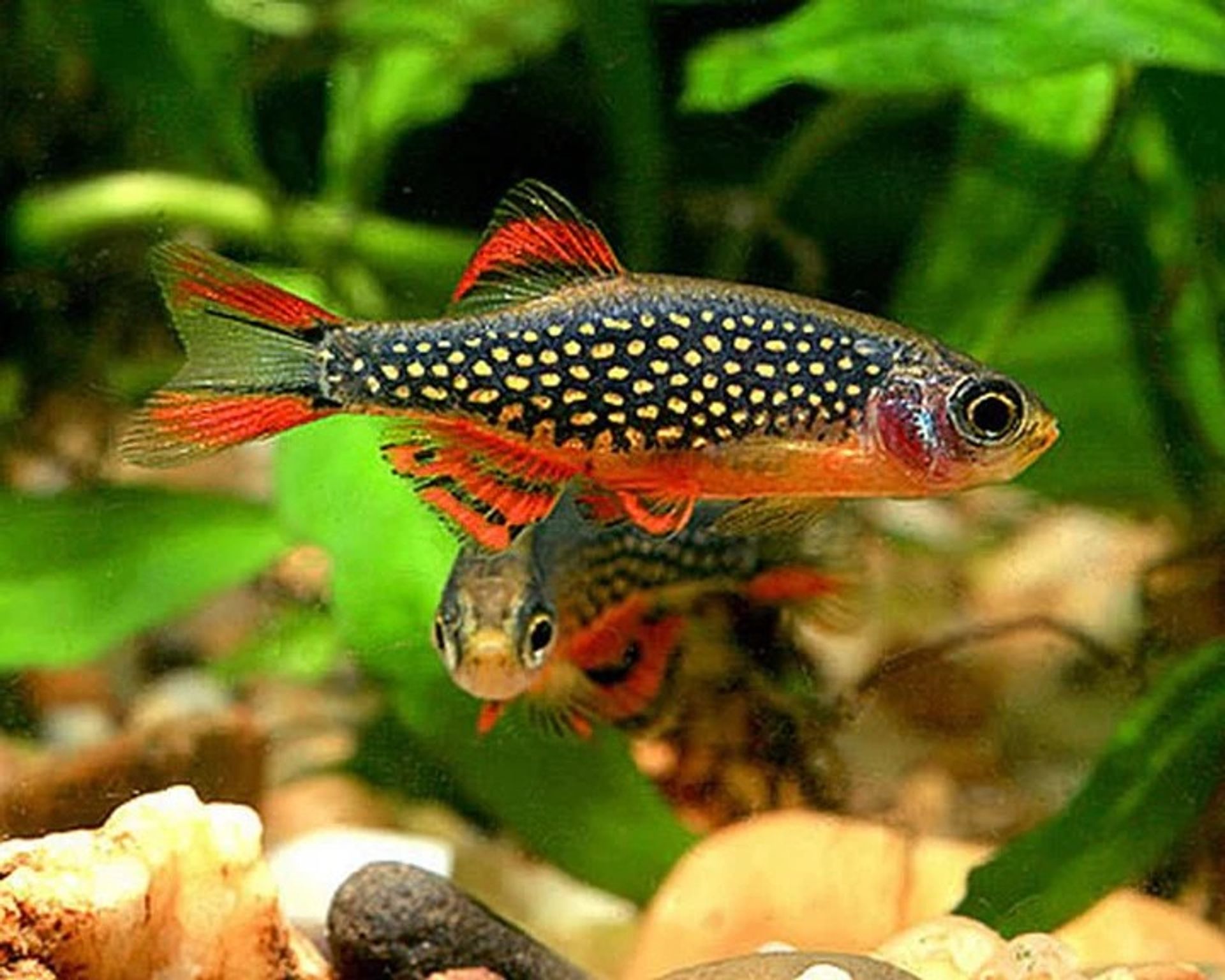

Chili Rasbora & Boraras: Nano Fish from Borneo and Malaysian Peat Swamps
The chili rasbora (Boraras brigittae) is a 2 cm red nano fish that does best in a planted 1–2 kaki tank, in a group of 10 or more, with soft, slightly tannin-stained water and very small food. It comes from blackwater peat swamps in southwestern Borneo, and its close relative the spotted dwarf rasbora (Boraras maculatus) is native to the acidic forest streams and peat swamps of Peninsular Malaysia. Both suit Malaysian tap water once it's treated, and both are among the few fish you can safely keep with cherry shrimp.
Boraras at a Glance
| Need | Recommendation |
|---|---|
| Adult size | About 1.5–2 cm |
| Tank size | 1 kaki (~12 L) minimum for a small group; 1.5–2 kaki (28–55 L) is far better |
| Group size | 10+ (they school loosely and colour up in groups) |
| Temperature | About 24–28°C; Malaysian room temperature with good shade is fine |
| Water | Soft, slightly acidic (pH about 5.5–7.0); treated tap water plus daun ketapang |
| Flow | Gentle; a sponge filter is ideal |
| Diet | Micro pellets, crushed flake, baby artemia, daphnia/moina |
| Tank mates | Shrimp, small snails, other nano fish |
| Beginner-friendly? | Yes, in a mature planted tank |
Which Boraras Will You See in Malaysia?
Chili rasbora (Boraras brigittae)
Bright red with a dark stripe along the side. Males are usually redder and slimmer. This is the most widely sold ikan rasbora chili in Malaysian shops.
Spotted dwarf rasbora (Boraras maculatus)
Orange-red with dark spots on the body and near the tail. In the wild it is found in shallow, acidic forest streams and peat swamps in Peninsular Malaysia, Sumatra and nearby islands, according to IUCN-based summaries. That makes it one of our genuinely native nano fish.
Phoenix and other Boraras
Boraras merah (phoenix rasbora) and Boraras urophthalmoides also appear in the trade. Care is the same for all of them. The wider rasbora group, including harlequins and Trigonostigma, is covered by our rasbora listings.
Native Habitat, and Why Captive-Bred Matters
Malaysia's peat swamp forests are among the most threatened freshwater habitats in the region. They produce dark, acidic water stained by fallen leaves, which is exactly what Boraras evolved in. Drainage for plantations and development has shrunk many of these habitats.
For hobbyists, the responsible choice is simple:
- Buy captive-bred fish where possible, and ask the seller about the source.
- Never collect from the wild without proper permission, and never release aquarium fish into local streams. Even native species from another area can carry disease or upset local populations.
If you want to recreate the habitat, our Malaysian driftwood guide explains how wood and tannins tint the water.
Setting Up a Nano Tank for Chili Rasbora
- Tank: 1.5–2 kaki gives stable water and room for a proper school. A 1-kaki tank works for a small group but heats up and changes faster.
- Filter: a sponge filter or a gentle hang-on with a sponge over the intake. Tiny fish and baby shrimp get sucked into strong intakes.
- Plants: dense planting with mosses, Cryptocoryne, floating plants and epiphytes. Low-tech plants are enough; see our no-CO2 plant guide.
- Dark substrate and dim light: colours show best against dark soil or sand with floating plants shading part of the surface.
- Tannins: a few daun ketapang or a piece of driftwood gives the soft, amber water these fish come from.
- Cycle first: Boraras are sensitive to ammonia. Give the tank 3–4 weeks to mature before adding them.
Malaysian heat
Small tanks heat up quickly. Keep the tank off windowsills, use a lid with gaps or a small fan if the water goes above 29–30°C, and keep the surface rippling a little for oxygen.
Feeding Tiny Mouths
Boraras have very small mouths. The most common mistake is feeding standard flakes, which they can't swallow.
- Micro pellets or flakes crushed to powder as the staple
- Live or frozen baby artemia, daphnia or moina several times a week; live food brings out the best colour
- Small, frequent feeds: a pinch twice a day rather than one big meal
Look under fry foods and live feed for suitable sizes. Remove uneaten food; leftovers in a nano tank foul the water quickly.
Shrimp-Safe Stocking
Chili rasboras are one of the best fish for a shrimp tank. They may pick at the tiniest newborn shrimplets, but in a planted tank with moss most baby shrimp survive. Good companions:
| Companion | Notes |
|---|---|
| Cherry shrimp (Neocaridina) | Ideal; browse shrimps |
| Amano shrimp | Algae eater, larger than the fish |
| Nerite snails | Algae control, won't breed in fresh water |
| Pygmy corydoras | Small, peaceful bottom dwellers |
| Otocinclus | Gentle algae grazers for 2-kaki tanks |
| Kuhli loach | Shy, nocturnal, likes the same soft water |
Avoid anything big enough to swallow a 2 cm fish: angelfish, larger gouramis, most barbs and cichlids. Even a male betta may hunt them in a small tank.
Common Problems
- Fish vanish after a week: usually ammonia in an uncycled tank, or fish sucked into the filter.
- Pale colour: too few fish, too much light, or a bright, bare tank.
- Thin bellies: food too big. Switch to micro food or live baby artemia.
- White spot: treat carefully at reduced dose with medicine labelled safe for small fish and shrimp; check the label, as many treatments are toxic to shrimp.
Frequently Asked Questions
Ikan rasbora chili boleh campur dengan udang cherry?
Boleh. Rasbora chili sangat kecil dan aman, jadi ia antara ikan terbaik untuk akuarium udang hiasan. Sediakan banyak pokok atau lumut supaya anak udang ada tempat bersembunyi.
Berapa ekor rasbora chili untuk akuarium 2 kaki?
Akuarium 2 kaki (lebih kurang 55 liter) boleh muat 15 hingga 25 ekor rasbora chili, bergantung pada pokok dan ikan lain. Mulakan dengan sekurang-kurangnya 10 ekor.
Is the chili rasbora native to Malaysia?
The chili rasbora itself comes from southwestern Borneo (Kalimantan). Its close relative Boraras maculatus is native to Peninsular Malaysia's peat swamps and forest streams.
Do chili rasboras need a heater in Malaysia?
No. Room temperature is warm enough all year. The bigger risk in a small tank is overheating.
How long do chili rasboras live?
Commonly a few years in a stable, mature tank. Small tanks that swing in temperature or water quality shorten their lives.
Shop rasboras and shrimps from Malaysian sellers on FishyHub, with prices in RM.