

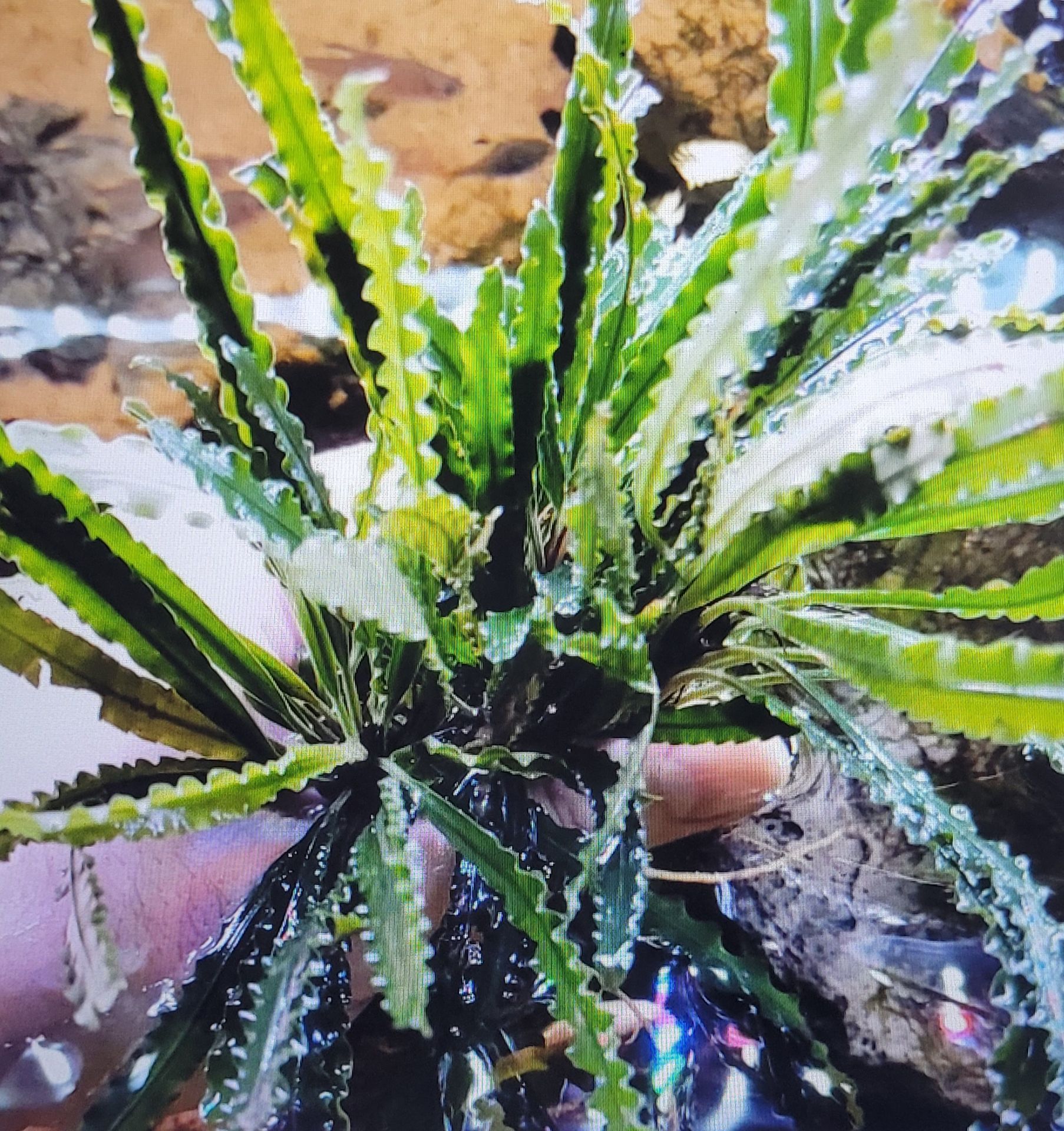

Bucephalandra: Borneo's Jewel Plants for Low-Tech Aquascapes in Malaysia
Bucephalandra ("buce") is a small, slow-growing plant found only on the island of Borneo, including Malaysian Sarawak and Sabah, Brunei and Indonesian Kalimantan. In the wild it clings to rocks in fast, clear forest streams. In the aquarium it's an epiphyte: you tie or glue it to rock or driftwood instead of burying it. Buce is prized for its shimmering, often blue-green, purple or red-tinted leaves, and it grows happily without CO2 under low to medium light. The two things to know: never bury the rhizome, and be patient, because it grows only a leaf or two a month. Buy cultivated or tissue-culture plants rather than wild-collected ones.
Where Bucephalandra Comes From
Bucephalandra is a genus in the aroid family (Araceae), the same family as anubias and cryptocoryne. Every known species is endemic to Borneo. Botanists have described around 30 species, most of them from Kalimantan, with others recorded from Sarawak, Sabah and Brunei, according to recent taxonomic work by S.Y. Wong and P.C. Boyce and Kew's Plants of the World Online. It grows as a rheophyte: a plant adapted to fast-flowing water, rooted onto boulders and rock faces along streams and waterfalls, often partly out of water for part of the year.
That habitat explains its care:
- Tough roots that grip rock and wood
- Thick, waxy leaves that resist strong flow
- Slow growth, because nutrients in clear forest streams are low
- Tolerance of shade, since forest canopy shades many streams
A note on wild collection
Bucephalandra became hugely popular in the hobby around the 2010s, and many plants in the trade were collected from wild streams in Borneo, often named after the area they came from. Heavy collection has put pressure on some populations, and some habitats are also threatened by logging and land clearing.
As a buyer, you can help by:
- Choosing tissue-culture or nursery-propagated plants, which are now widely available
- Asking the seller whether a plant is cultivated or wild-collected
- Never collecting buce from streams yourself, especially in forest reserves and protected areas, where rules on removing plants may apply
Bucephalandra Care at a Glance
| Condition | Ideal | Notes |
|---|---|---|
| Light | Low to medium | Too much light invites algae on leaves |
| CO2 | Not needed | Speeds growth and colour if used |
| Temperature | 22–28°C | Tolerates warm Malaysian rooms up to about 30°C; add flow and aeration in heatwaves |
| pH | 6.0–7.5 | Adaptable |
| Flow | Gentle to moderate | Mimics stream habitat; reduces algae |
| Growth | Very slow | One or two leaves a month |
| Placement | On rock or wood | Rhizome must not be buried |
| Difficulty | Easy, with patience | Great for low-tech tanks |
Our low-tech aquarium plants guide covers other plants that thrive in the same conditions.
How to Attach Buce
Option 1: Superglue (gel)
- Pat the roots and rhizome dry.
- Put a small dot of cyanoacrylate superglue gel on the rock or wood.
- Press the roots (not the leaves) onto it for 10–20 seconds.
- Return to the tank. The glue sets white and becomes hard to see.
Superglue gel is commonly used in aquascaping and is considered safe once cured. Use small amounts.
Option 2: Cotton thread or fishing line
Tie the roots to the hardscape. Cotton rots away after the roots grip. Fishing line lasts, so cut it off once the plant is secure.
Option 3: Wedge it
Push the rhizome into a gap between rocks or wood. Make sure water can still reach it.
Never bury the rhizome
The rhizome is the thick horizontal stem the leaves grow from. If it's buried in sand or soil, it rots. Roots can grow into the substrate on their own, but the rhizome stays above it.
For hardscape ideas, see our Malaysian driftwood guide.
Colour Forms
Buce in the trade comes in many trade names and forms. Common looks include:
- Blue-green iridescence: a metallic sheen under good light
- Dark green to bronze: classic narrow or rounded leaves
- Red, purple or brown tones: often stronger under brighter light
- Wavy or ruffled leaves
- Spotted or speckled leaves: tiny white or silver dots
- Mini forms: small leaves, ideal for nano tanks
Colour depends partly on light, nutrients and CO2, so a plant may look slightly different in your tank from the seller's photo. Ask for real photos of the actual plant where possible. You'll find buce, anubias and java fern under Epiphytes.
Slow Growth and Algae: The Main Challenge
Because buce grows slowly, its leaves sit in the tank for a long time, which gives algae time to settle on them.
How to prevent algae on buce:
- Moderate the light. Place buce in shaded spots or lower parts of the scape. Run the light about 6–7 hours. See our planted tank lighting guide.
- Add gentle flow across the leaves, as in its natural stream.
- Add fast-growing plants (stem plants, floaters) to use up excess nutrients.
- Keep up water changes.
- Use algae grazers such as cherry shrimp, Otocinclus or nerite snails.
If a leaf is badly covered, trim it at the base. The plant will replace it.
Fertiliser and CO2
- Buce takes nutrients from the water through its leaves and roots. A light liquid fertiliser once or twice a week is enough for most tanks.
- CO2 is optional. It speeds growth and improves colour, but most Malaysian keepers grow buce perfectly well without it.
- Avoid overdosing fertiliser in low-light tanks, which feeds algae.
Propagation
Healthy rhizomes branch over time. When a rhizome has several leaves and is a few centimetres long, cut it into sections with a clean blade. Each section should have at least 3–4 leaves and some roots. Attach each piece to its own spot. Flowers sometimes appear underwater, which is a sign the plant is happy.
Buce in Malaysian Aquascapes
- Nano and desk tanks: mini buce on small stones suits 1 kaki tanks.
- Low-tech jungle and nature scapes: combine with crypts, anubias, java fern and mosses. See our Cryptocoryne guide.
- Shrimp tanks: shrimp graze biofilm on buce leaves.
- Borneo-inspired stream tanks: rocks, gentle flow, buce and native fish such as rasboras or loaches.
Frequently Asked Questions
Pokok bucephalandra perlu ditanam dalam pasir ke?
Tidak. Bucephalandra ialah pokok jenis epifit, jadi ia perlu diikat atau dilekatkan pada batu atau kayu. Jangan tanam rizom (batang mendatar) dalam pasir atau tanah kerana ia akan reput. Akar boleh masuk ke dalam pasir sendiri.
Kenapa bucephalandra lambat membesar?
Memang sifat semula jadi bucephalandra membesar dengan perlahan, biasanya satu atau dua daun sebulan. Ia berasal dari sungai hutan di Borneo yang kurang nutrien. Cahaya sederhana, aliran air yang lembut dan baja cecair sedikit sudah cukup.
Is Bucephalandra native to Malaysia?
Yes, in the sense that Borneo includes Sarawak and Sabah. The genus is endemic to Borneo, and is found in both Malaysian and Indonesian parts of the island, as well as Brunei.
Does Bucephalandra need CO2?
No. It grows well in low-tech tanks. CO2 only speeds growth and can improve colour.
Why are my buce leaves melting or turning transparent?
Usually a buried rhizome rotting, a sudden change in conditions, or a plant adjusting from emersed to underwater growth. Check the rhizome is above the substrate and keep conditions stable.
Add a touch of Borneo to your tank: browse epiphyte plants, including buce, anubias and java fern, and the full aquatic plants range from Malaysian sellers on FishyHub. Check listings for tissue-culture or cultivated plants, and ask the seller for real photos.