

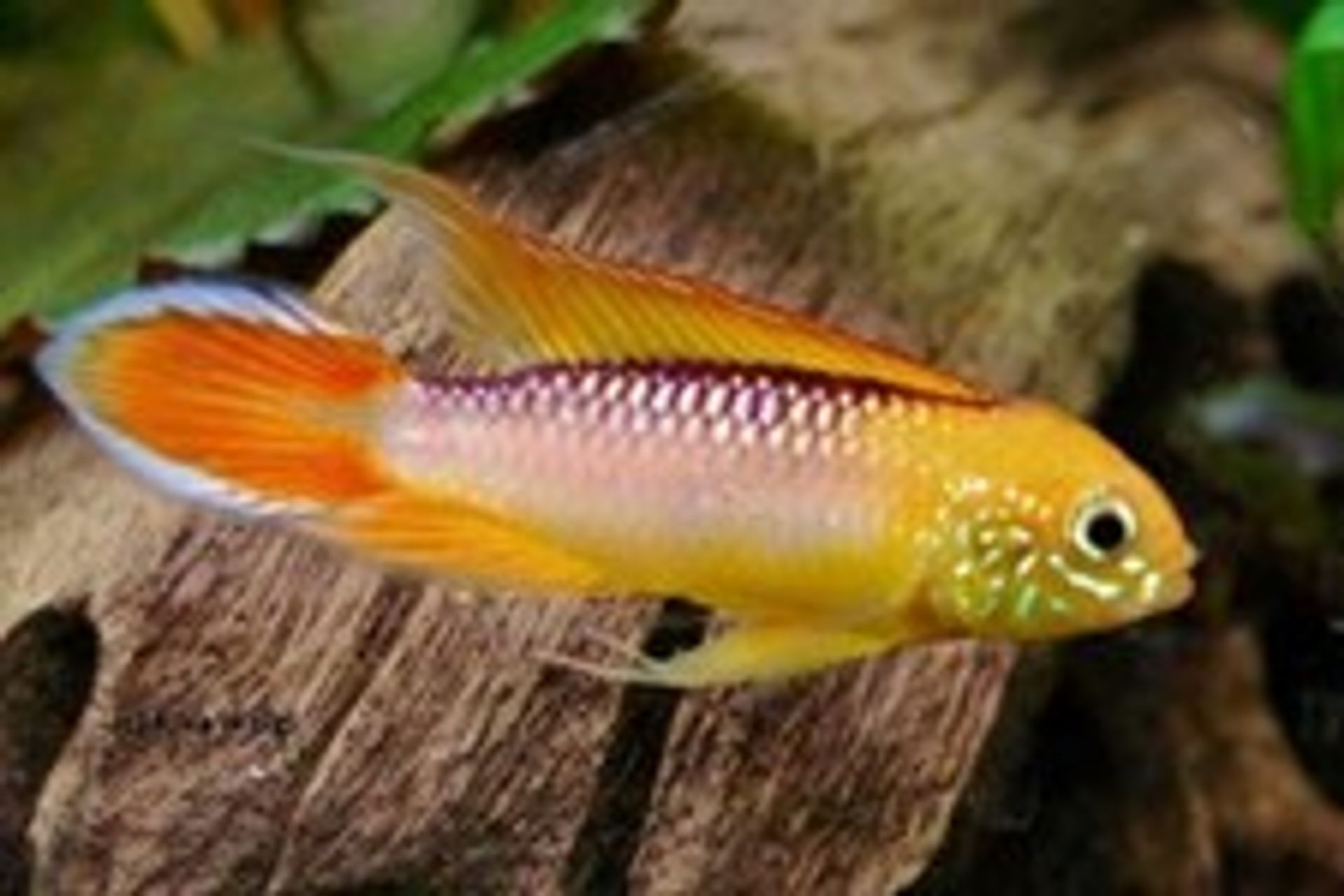

Apistogramma Malaysia: Dwarf Cichlid Care, Species & Blackwater Setup
Apistogramma ("apisto") are small South American dwarf cichlids, mostly 5–8 cm, with bright fins and big personalities. They suit Malaysian hobbyists well: they like warm, soft, slightly acidic water, which is close to what much of the country already has. Keep one male with one or more females in a 2 kaki or larger tank, give every female her own cave, add leaf litter and driftwood for a blackwater look, and feed small frozen and live foods. Start with Apistogramma cacatuoides or A. agassizii if you are new to dwarf cichlids.
Popular Apistogramma Species
| Species | Size (male) | Difficulty | Notes for Malaysia |
|---|---|---|---|
| A. cacatuoides (cockatoo) | ~8 cm | Easiest | Tolerates a wide pH range; good first apisto |
| A. agassizii | ~7–8 cm | Easy–moderate | Many colour forms ("fire red", "double red"); prefers soft, acidic water |
| A. macmasteri | ~7 cm | Moderate | Red tail; enjoys blackwater |
| A. trifasciata | ~5 cm | Moderate | Small; good in a nano-style 2 kaki |
| A. viejita | ~6 cm | Moderate | Often mixed up with macmasteri |
| A. borellii | ~6 cm | Moderate | Prefers cooler water (low-to-mid 20s°C); needs a fan or chiller in most Malaysian homes |
| A. hongsloi | ~6 cm | Moderate–hard | Red-striped forms are highly prized |
| A. panduro and other blackwater species | ~5–6 cm | Hard | Need very soft, acidic water; better for experienced keepers |
Many trade names are line-bred colour strains of one species, especially for agassizii and cacatuoides. Ask the seller which species the fish actually are.
Apistogramma Care Table
| Factor | What apistos need |
|---|---|
| Temperature | 25–29°C for most species; Malaysian rooms are fine, borellii excepted |
| Minimum tank | 2 kaki (60 × 30 × 36 cm, ~55 L) for one male and 1–2 females |
| Water | Soft, pH 5.5–7 depending on species; very clean |
| Temperament | Peaceful to other species; territorial towards their own kind |
| Diet | Micropredator: small pellets, frozen and live foods |
| Lifespan | Around 3–5 years |
| Beginner? | Advanced beginner, in a mature tank |
Harem Keeping: One Male, Several Females
In the wild, a male apisto often holds a territory that covers the smaller territories of several females. Aquariums work the same way:
- Pair: 1 male + 1 female. Simple, but the male may harass a single female if she is not ready to spawn.
- Harem: 1 male + 2–3 females. Spreads attention, but each female needs her own cave and space, so this needs at least a 3 kaki tank.
- Do not keep two males in a 2 kaki tank. They will fight.
Telling male from female
- Males: larger, with longer, more colourful fins (often extended dorsal "comb" fins in cacatuoides).
- Females: smaller, plainer, and turn bright yellow with black markings when guarding eggs or fry.
Caves and Hiding Places
Apisto females spawn inside small caves. Good options:
- Half coconut shells with a small entrance cut in
- Small ceramic or clay caves
- Gaps under driftwood roots or between stones
- Thick leaf litter where fish can hide
Give one cave per female plus one spare. Place caves apart and break line of sight with driftwood so fish can retreat. Browse driftwood, rocks and stones for hardscape.
A Simple Blackwater Setup for Malaysia
Blackwater means soft, acidic, tea-coloured water stained by tannins from leaves and wood. Many apistos colour up and breed better in it. Malaysia has natural blackwater habitats in its own peat swamps, so local materials work well.
What you need
- Malaysian driftwood: releases tannins and gives structure. Soak and boil it first, as described in our Malaysian driftwood guide.
- Daun ketapang (catappa leaves): add 1–2 leaves per 50 L, rinse first, and replace when they break down.
- Fine sand: apistos sift sand for food.
- Low-to-medium light and floating plants.
- Soft water: treated tap water is often already soft; test KH and pH before adding anything.
Step by step
- Set up the tank with sand, wood and caves.
- Fill with tap water treated with anti klorin (see our tap water guide).
- Cycle the tank for several weeks before adding fish.
- Add leaves once the tank is cycled.
- Add dither fish (a school of small tetras or rasboras) first, then the apistos.
The tea colour is harmless and natural. If you prefer clearer water, use activated carbon or fewer leaves.
Plants for an apisto tank
Low-tech plants that handle warm water: anubias, java fern, Cryptocoryne, Amazon frogbit, salvinia. See our aquarium plants without CO2 guide.
Water Changes and Stability
Apistos are sensitive to nitrate, ammonia and sudden swings.
- Change 20–30% weekly with dechlorinated water at a similar temperature.
- Do not overfeed; leftover frozen food fouls water quickly.
- If KH is near zero, pH can drop very low over time. Test regularly, and adjust slowly if needed.
- During heatwaves, add aeration. For A. borellii, a kipas akuarium (fan) or chiller is usually needed; see our aquarium cooling guide.
Feeding
- Small sinking pellets or granules as a base
- Frozen bloodworm, brine shrimp, daphnia and cyclops
- Live baby brine shrimp (artemia), moina or microworms, especially for breeding pairs
Feed small amounts once or twice daily.
Breeding Basics
A ready female turns yellow and starts courting the male near her cave. She lays eggs on the cave roof and guards them, while the male patrols the outer territory. Eggs hatch in a few days, and the female leads the fry around the tank. Feed fry newly hatched artemia or microworms several times a day.
In several Apistogramma species, studies have shown that water temperature and pH during early development affect the sex ratio of the fry, with warmer water tending to produce more males. If you breed them in a warm Malaysian tank and get mostly males, this may be why.
Tank Mates
- Small schooling tetras, pencilfish and rasboras (they act as "dither fish" and make apistos bolder)
- Otocinclus and small plecos
- Peaceful corydoras (watch that they do not disturb caves during spawning)
Avoid other dwarf cichlids in small tanks, larger cichlids and fin-nippers.
Buying Apistogramma on FishyHub
Browse Apistogramma for sale. Check the species or strain name, whether fish are sold as pairs or trios, the size, whether the photo is the actual fish, and the seller's delivery or self-collect and live-arrival terms. Ask the seller about the water the fish are kept in.
Frequently Asked Questions
Ikan apistogramma sesuai untuk pemula?
Sesuai untuk pemula yang sudah ada sedikit pengalaman dan akuarium yang sudah cycle. Mulakan dengan Apistogramma cacatuoides kerana spesies ini lebih tahan.
Berapa ekor apistogramma dalam akuarium 2 kaki?
Seekor jantan dan satu atau dua ekor betina. Jangan simpan dua ekor jantan dalam akuarium 2 kaki kerana mereka akan bergaduh.
Do I need daun ketapang for apistogramma?
Not strictly, but leaves add tannins, lower pH slightly, provide hiding spots and grow microorganisms that fry graze on. Most apistos appreciate them.
Why did my female apisto turn yellow?
She is in breeding colour, usually guarding eggs or fry, or getting ready to spawn. Leave her cave alone.
Can apistogramma live with a betta?
It is possible in a large, well-planted tank, but both are bottom-to-middle territorial fish. In a 2 kaki tank it is better to choose one or the other.
Apistogramma bring cichlid behaviour into a small, planted tank. Browse apistos, driftwood and hardscape from Malaysian sellers on FishyHub, and see our German blue ram guide for another warm-water dwarf cichlid.