1–8 of 8
Shop Ram Cichlids online from aquarium stores, breeders and specialist freshwater fish sellers across the United States on FishyHub. Compare German Blue Rams, Bolivian Rams, Electric Blue Rams, Gold Rams and other dwarf cichlids by color, size, temperament and seller.
Ram Cichlids are small, colorful South American cichlids known for vivid markings, pair bonding and interesting territorial behavior. FishyHub helps U.S. hobbyists compare Ram listings from multiple sellers in one marketplace.
Buying Ram Cichlids online gives hobbyists access to a broader range of species, color forms and breeder lines than may be available from a single local aquarium store.
Compare exact species or strain, sex, current size, adult size, temperament, seller information and shipping options before choosing Rams for your aquarium.
Popular Ram Cichlids in the freshwater aquarium hobby include:
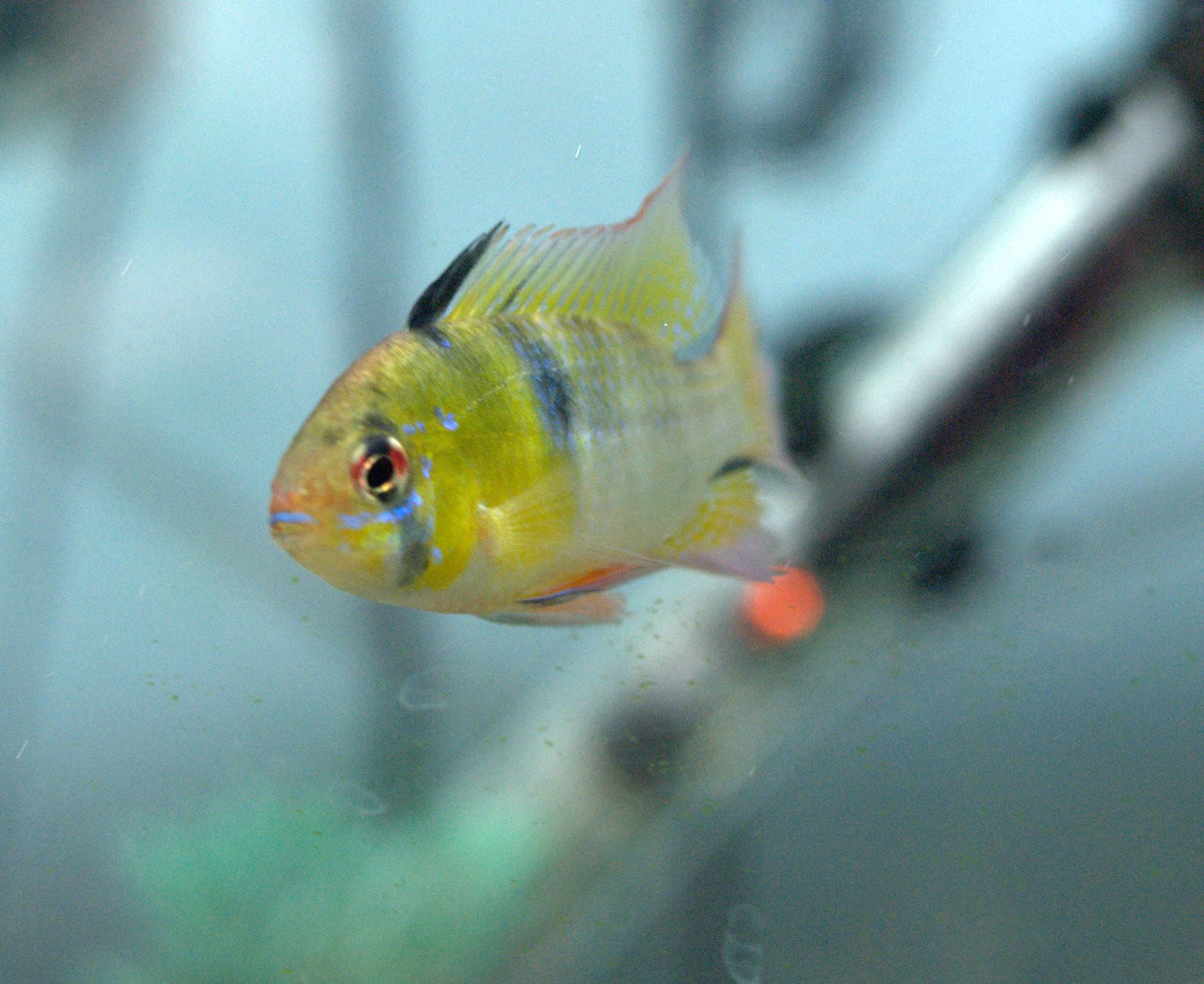
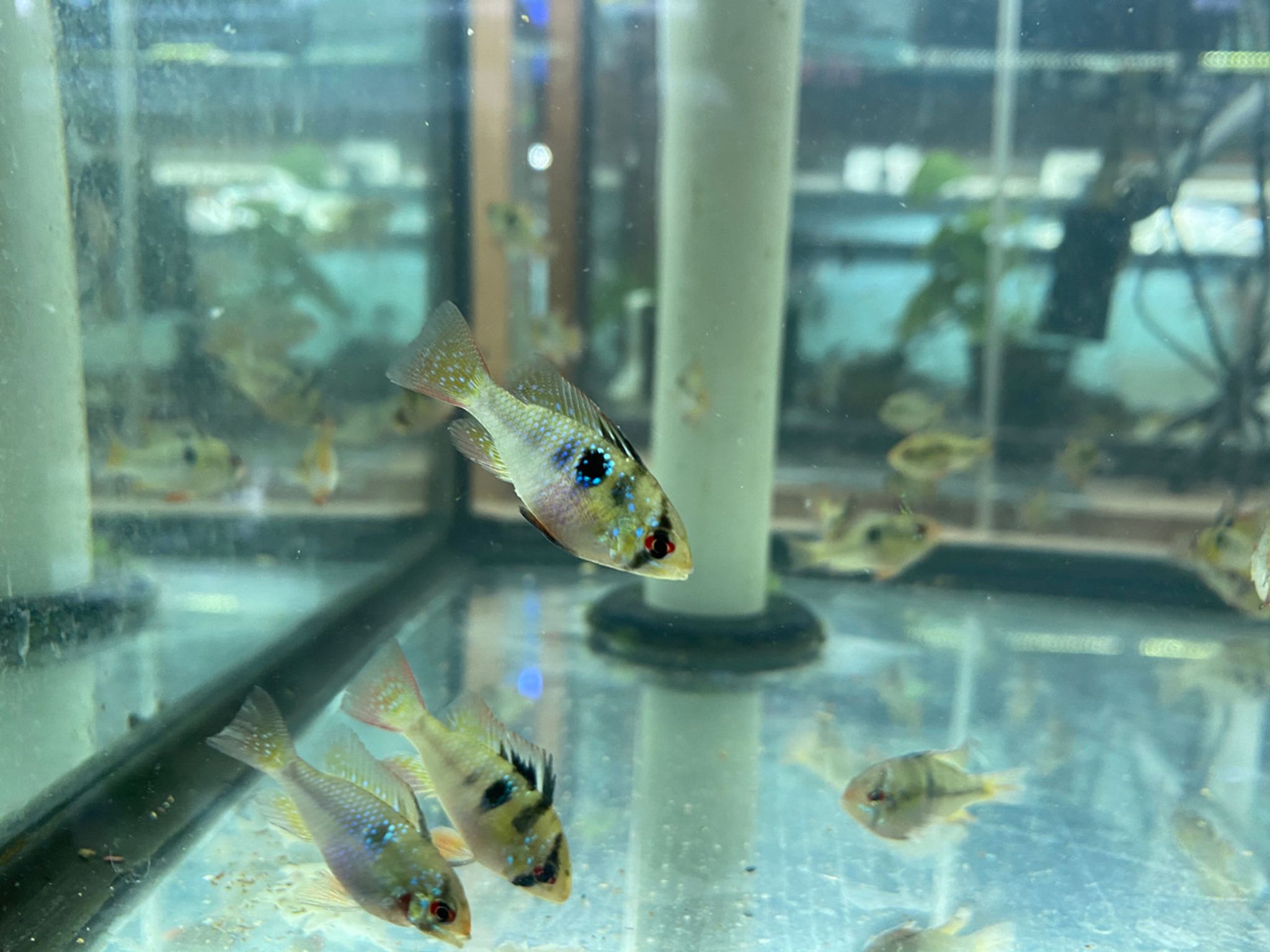
German Blue Rams are among the most popular dwarf cichlids in the aquarium hobby and are known for intense blue, yellow, black and red coloration.
They can make striking centerpiece fish in warm, stable community aquariums with carefully selected tankmates.
Bolivian Rams are slightly larger-bodied dwarf cichlids known for calmer behavior and attractive red, yellow and blue accents.
They are often considered more forgiving than German Blue Rams, though stable water quality and suitable tankmates are still important.
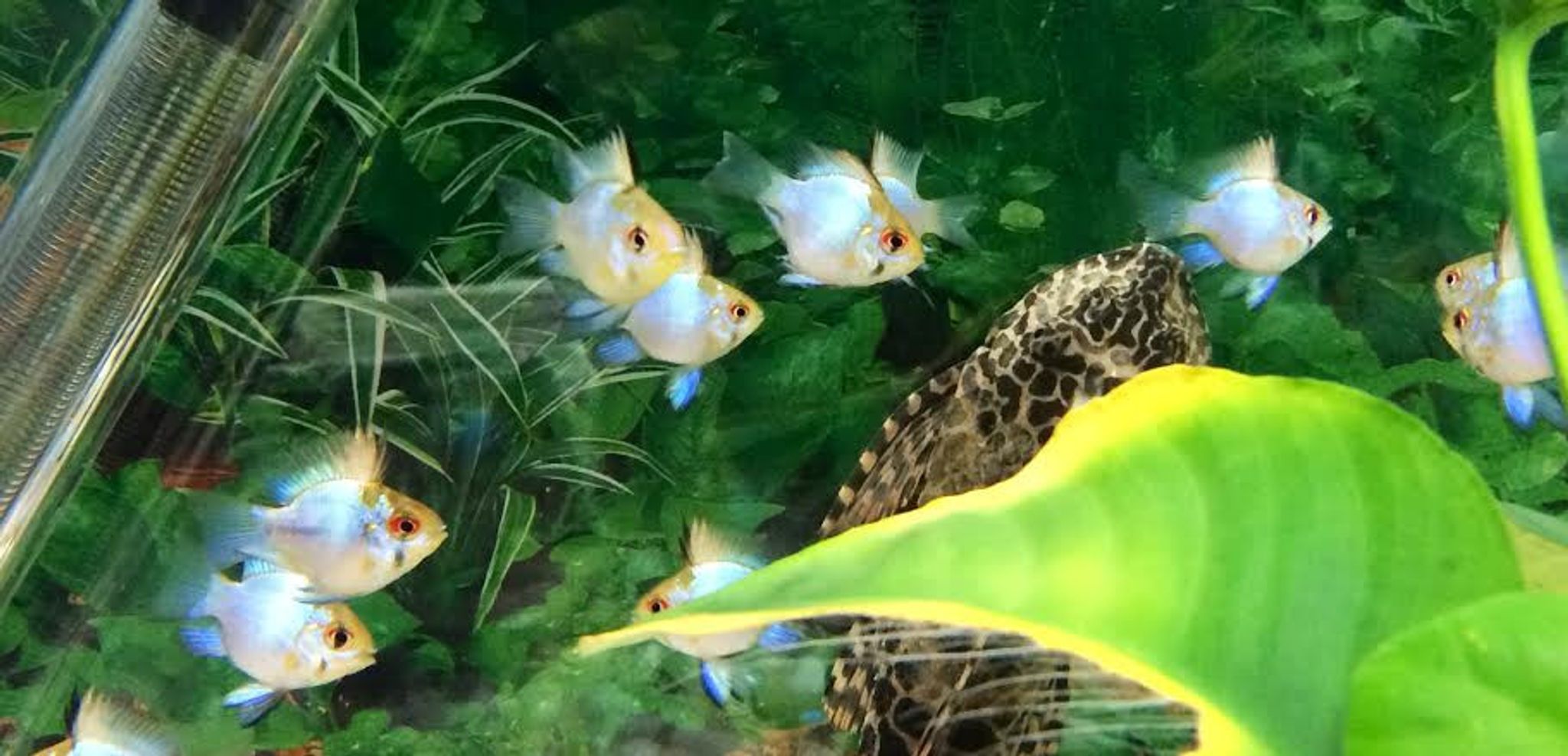
Electric Blue Rams are selectively bred color forms with intense metallic blue coloration.
Their appearance can be dramatic, but care should still be based on the needs of the underlying Ram species rather than color alone.
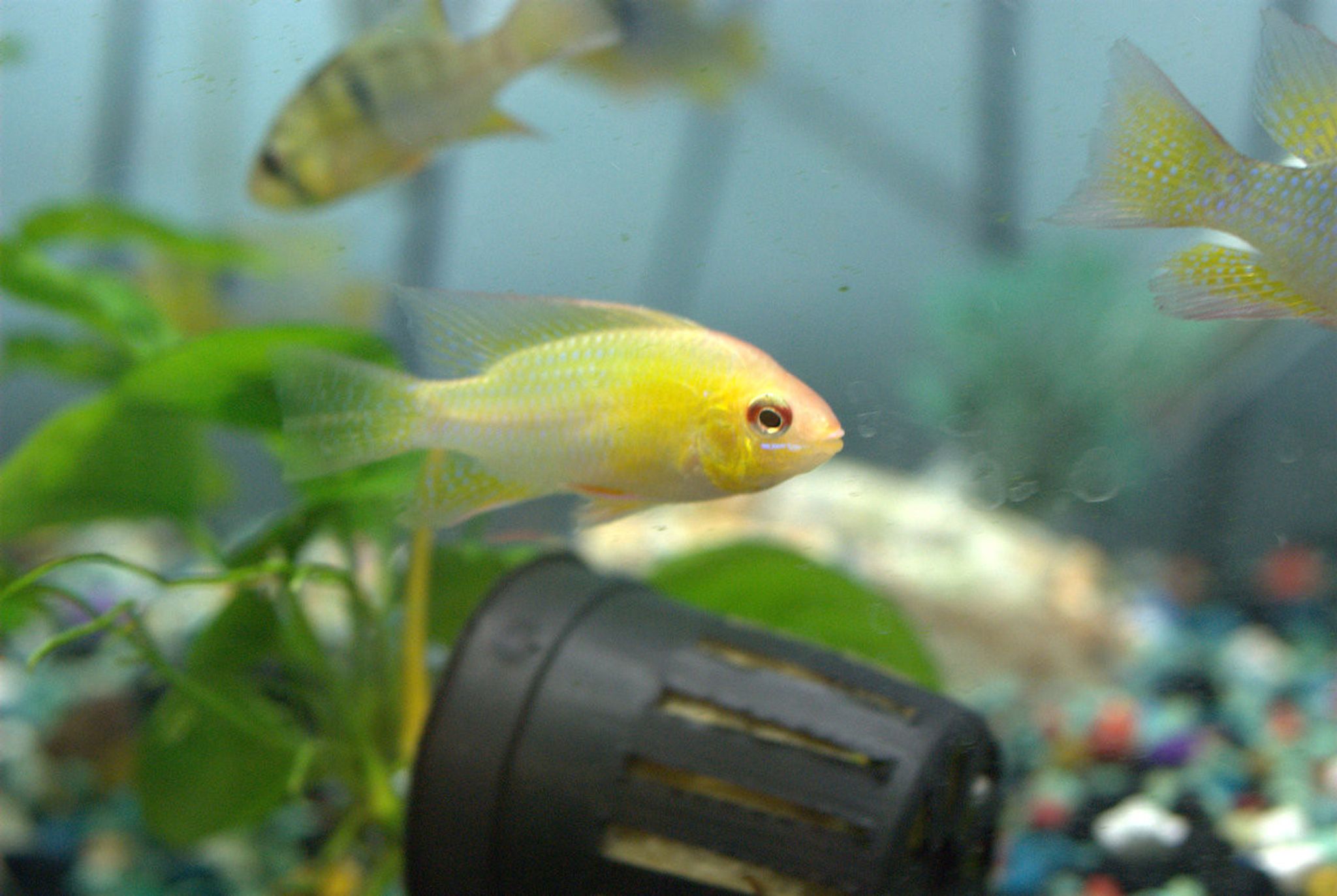
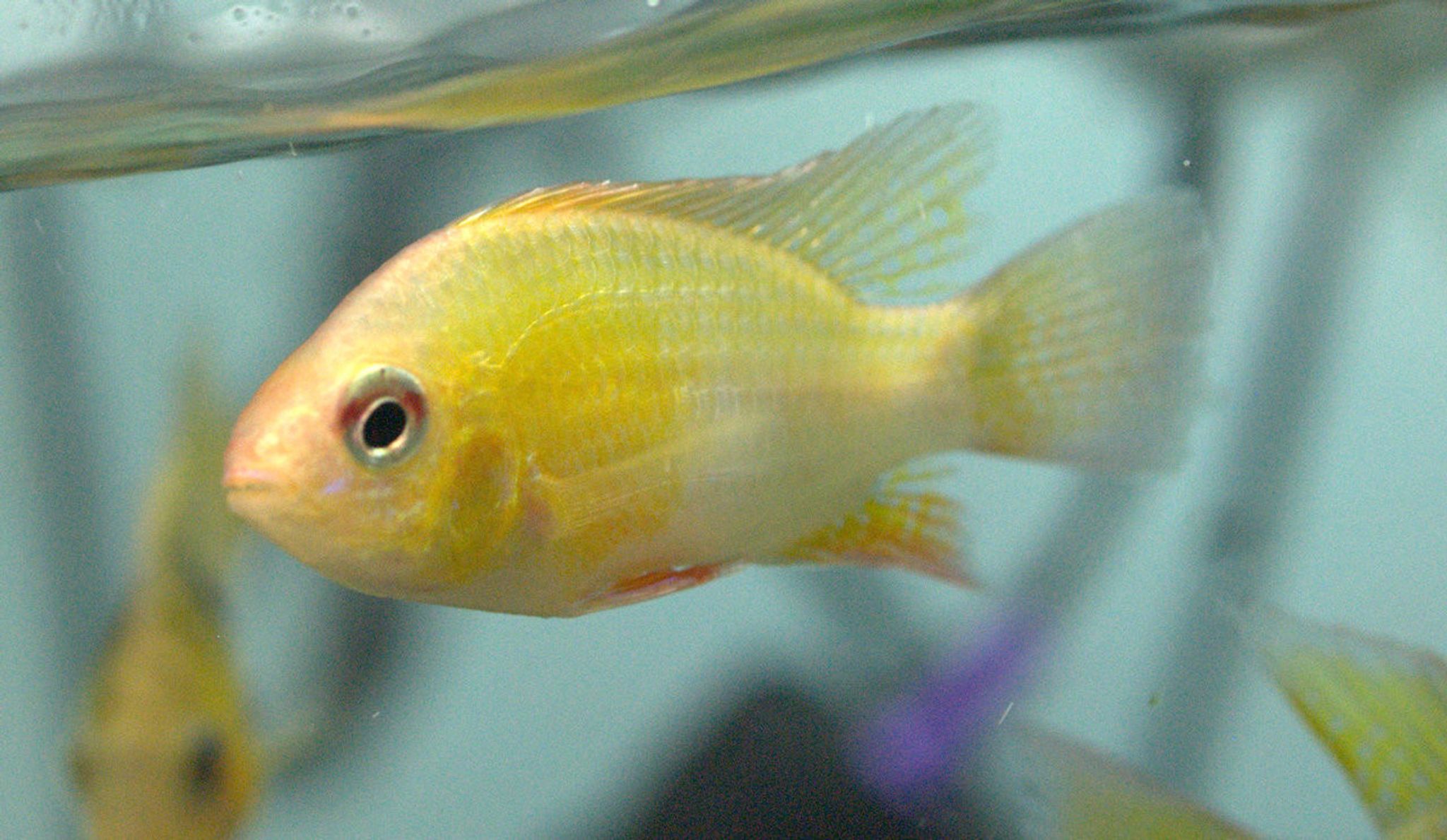
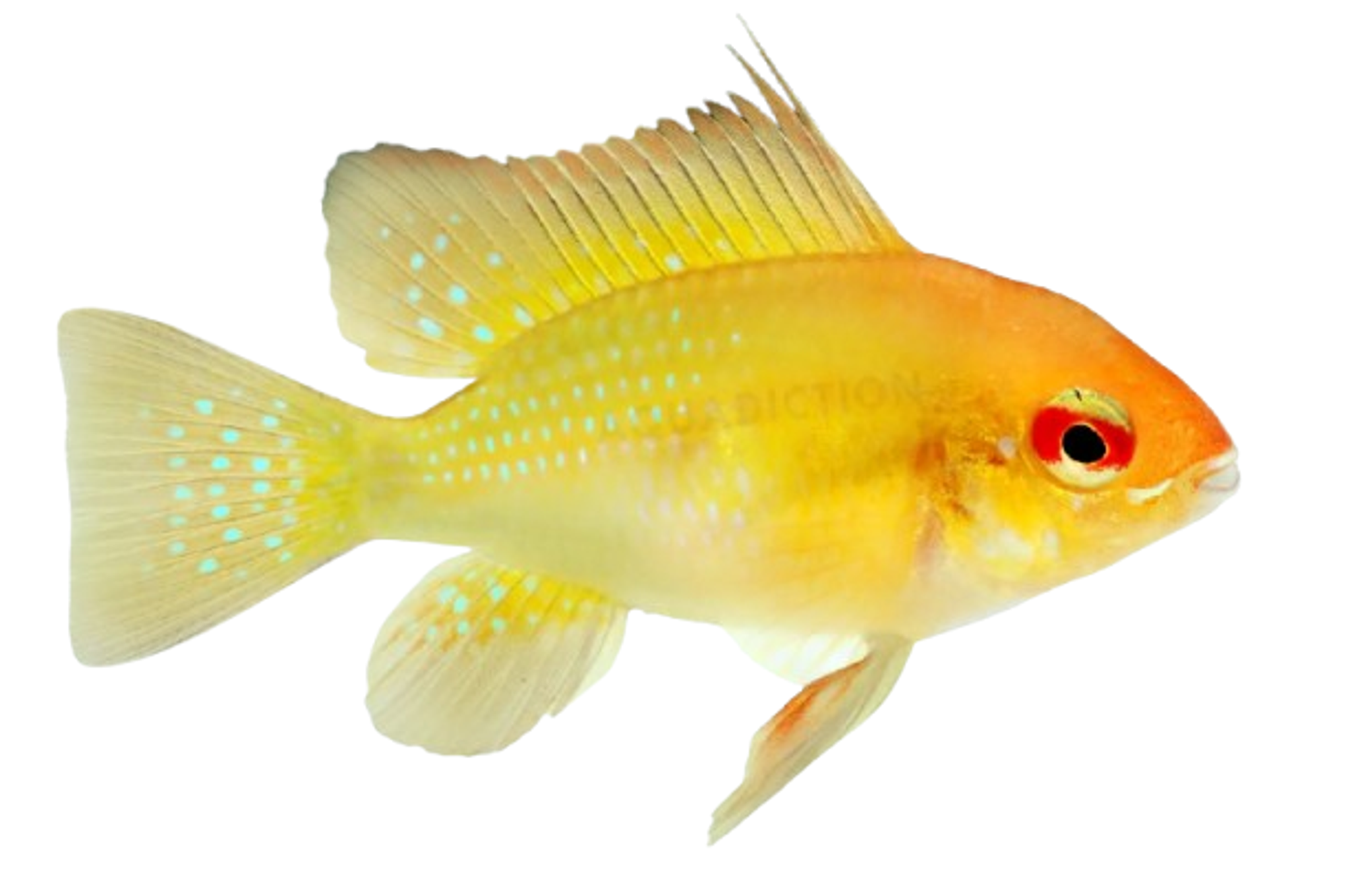
Gold Rams are ornamental color forms with bright yellow or golden bodies and contrasting red or blue markings.
Color intensity can vary by breeder line, age and condition, so seller photos and strain descriptions are useful when comparing fish.
Longfin Rams are selectively bred forms with extended finnage and a more flowing appearance.
Avoid aggressive or persistent fin-nipping tankmates that may damage their longer fins.
Balloon Rams are selectively bred for a shortened, rounded body shape.
When buying any exaggerated body form, prioritize fish with normal swimming, feeding and body condition and review seller information carefully.
Yes. Rams are small South American cichlids commonly grouped with other dwarf cichlids because they remain far smaller than large species such as Oscars.
Their compact size makes them attractive for community and planted aquariums, but they still display classic cichlid territorial and breeding behavior.
Ram Cichlids remain relatively small, though adult size varies between German Blue Rams, Bolivian Rams and different ornamental forms.
Plan aquarium space around mature fish and territory rather than juvenile sale size.
Sex differences vary by species and strain, but males may develop longer fin extensions while females can show fuller bodies or stronger abdominal coloration.
Sexing juveniles can be difficult, so breeder or seller information may be useful when purchasing pairs.
Rams benefit from aquariums with open substrate, plants, driftwood, rocks and visual barriers.
Creating several distinct areas can help fish establish territories without constant confrontation.
Fine sand or smooth substrate works well for many Rams because they frequently forage close to the bottom.
Flat stones, wood and open areas can also provide useful spawning and territorial sites.
Ram Cichlids can work beautifully in planted aquariums because plants provide cover and help divide territories.
Leave open areas near the substrate so the fish can forage, display and breed naturally.
Different Ram species and strains do not all have identical water requirements.
Stable, clean water matched to the exact fish is more useful than applying one universal temperature, pH or hardness range to every Ram.
German Blue Rams are generally associated with warmer conditions than many common community fish.
This matters when choosing tankmates because fish that prefer significantly cooler water may not be ideal long-term companions.
Bolivian Rams can have somewhat different temperature preferences from German Blue Rams.
Treat the two as separate species with their own care needs rather than assuming all Rams require identical conditions.
Rams are generally less aggressive than many larger cichlids, but they can still become territorial.
Aggression often increases around chosen territories and during courtship, spawning or fry guarding.
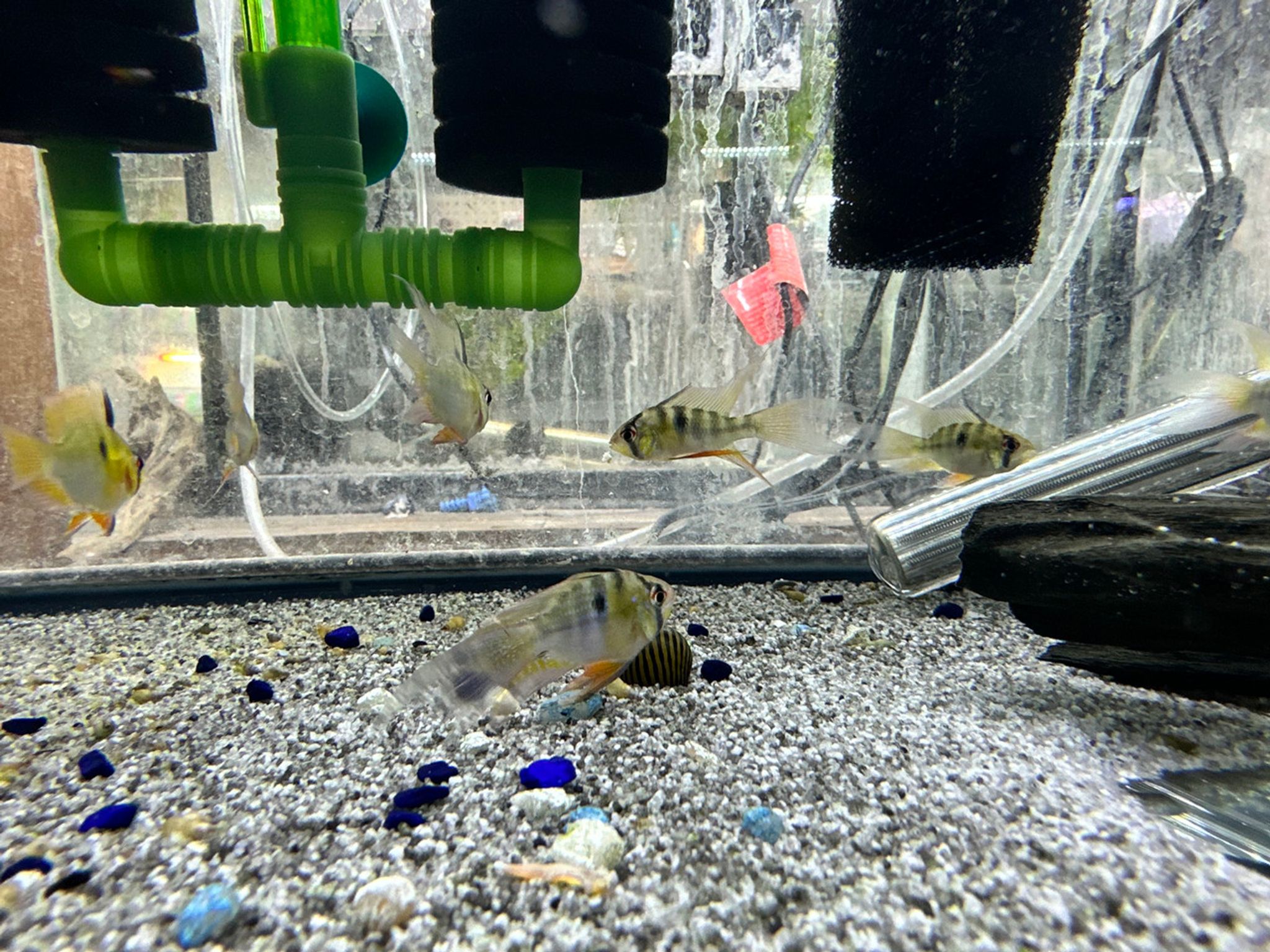
Multiple Rams can sometimes coexist when the aquarium provides enough space, cover and separate territories.
Pair bonds and individual temperament can change social dynamics, so observation is especially important when several adults share the same aquarium.
Rams are often kept as pairs, particularly when breeding is a goal.
Simply placing a male and female together does not guarantee a compatible pair, so provide retreat areas and monitor behavior carefully.
Rams can live in peaceful community aquariums with appropriately selected tankmates.
Midwater schooling fish often work well because they do not constantly occupy the same bottom territories.
Many peaceful Tetras can be good tankmates for Rams when temperature and water requirements overlap.
Cardinal Tetras and other suitable warm-water species are often considered for German Blue Ram communities.
Peaceful Rasboras may coexist with Rams in community aquariums when environmental needs are compatible.
Their midwater swimming can reduce direct competition for bottom territory.
Corydoras and Rams can sometimes coexist, but both spend considerable time near the bottom.
Breeding Rams may chase Corydoras away from eggs or fry, and temperature compatibility should also be checked for the exact Corydoras species.
German Blue Rams are sometimes considered for Discus aquariums because both can tolerate warm conditions.
The aquarium should still provide enough space, stable water quality and feeding opportunities for both species.
Rams and freshwater Angelfish can sometimes coexist in sufficiently spacious aquariums.
Both are cichlids and may become territorial while breeding, so individual behavior and available space matter.
Rams and Apistogramma can compete for similar bottom territories, caves and spawning areas.
Combining dwarf cichlid species is best attempted in larger aquariums with substantial structure and clearly separated territories.
Shrimp are not guaranteed to be safe with Ram Cichlids.
Adult shrimp may coexist with some Rams, but shrimplets and smaller shrimp can be hunted and eaten.
Rams are omnivorous to small-animal feeders and naturally consume small invertebrates and other foods from the substrate.
In aquariums, many accept quality prepared foods together with suitable frozen or live foods.
Offer a varied diet and make sure enough food reaches the lower part of the aquarium.
Shy or newly introduced Rams may lose out to fast-feeding community fish, so observe each fish during meals.
Rams are substrate-spawning cichlids that may lay eggs on flat stones, depressions or other selected surfaces.
Both parents may participate in territory defense and fry care, although behavior varies between pairs and species.
Breeding pairs can become much more territorial after spawning.
Fry require appropriately small foods and stable water conditions, while community tankmates may prey on eggs or young fish.
Rams may be available as captive-bred fish, established ornamental strains or occasionally fish from different geographic lines.
Origin and breeding history can influence coloration, availability and care expectations, so review seller details where provided.
Bolivian Rams can be relatively approachable for hobbyists with a stable aquarium, while German Blue Rams are often considered more sensitive.
Stable water quality, suitable temperature and careful tankmate selection are more important than relying on the general label “dwarf cichlid.”
When comparing Ram Cichlids for sale, look for:
Newly shipped Rams may be stressed after transport and may initially show reduced coloration or spend time hiding.
Prepare a stable, cycled aquarium before arrival and follow the seller's acclimation guidance for the exact species or strain.
Quarantine and careful observation can help reduce the risk of introducing disease into an established aquarium.
Monitor appetite, body condition, breathing, waste and swimming behavior before moving new Rams into the main tank.
Ram prices vary according to species, color form, sex, size, breeder line, availability and seller.
Standard German Blue or Bolivian Rams and specialty Electric Blue, Gold or Longfin strains can differ significantly in price, so compare exact fish, quality and seller information rather than price alone.
FishyHub brings Ram Cichlid listings from aquarium stores, breeders and specialist freshwater fish sellers together in one marketplace.
When comparing Rams online, consider:
Shipping availability depends on the seller, destination, fish size, weather and livestock-shipping policy.
Review packaging, delivery timing and live-arrival terms before ordering, and make sure the aquarium is fully prepared before the Rams arrive.
Yes. Aquarium stores, breeders and specialist sellers offer German Blue Rams, Bolivian Rams and ornamental Ram varieties online across the U.S., depending on seller shipping coverage and availability.
They are different dwarf cichlid species with different appearance, adult size, temperature preferences and husbandry requirements.
Rams are generally less aggressive than many larger cichlids but can become territorial, especially while breeding.
Many peaceful Tetras can coexist with Rams when temperature, water requirements and aquarium size are compatible.
Sometimes, but breeding Rams may defend bottom territory aggressively and the exact Corydoras species should also tolerate the same temperature range.
Adult shrimp may coexist with some Rams, but shrimplets and smaller shrimp can be eaten.
They can be more sensitive than many common community fish and benefit from stable, warm, clean water and careful acclimation.
FishyHub helps U.S. hobbyists compare Ram Cichlids from aquarium stores, breeders and specialist freshwater fish sellers in one marketplace.
Explore Ram Cichlids for sale on FishyHub and compare German Blue Rams, Bolivian Rams, Electric Blue Rams, Gold Rams, Longfin Rams and other dwarf cichlid varieties. Discover listings from aquarium stores and breeders across the United States, and compare species, strain, sex, temperament, price and shipping options before choosing Rams for your aquarium.