1–19 of 19
Showing 19 of 19 products
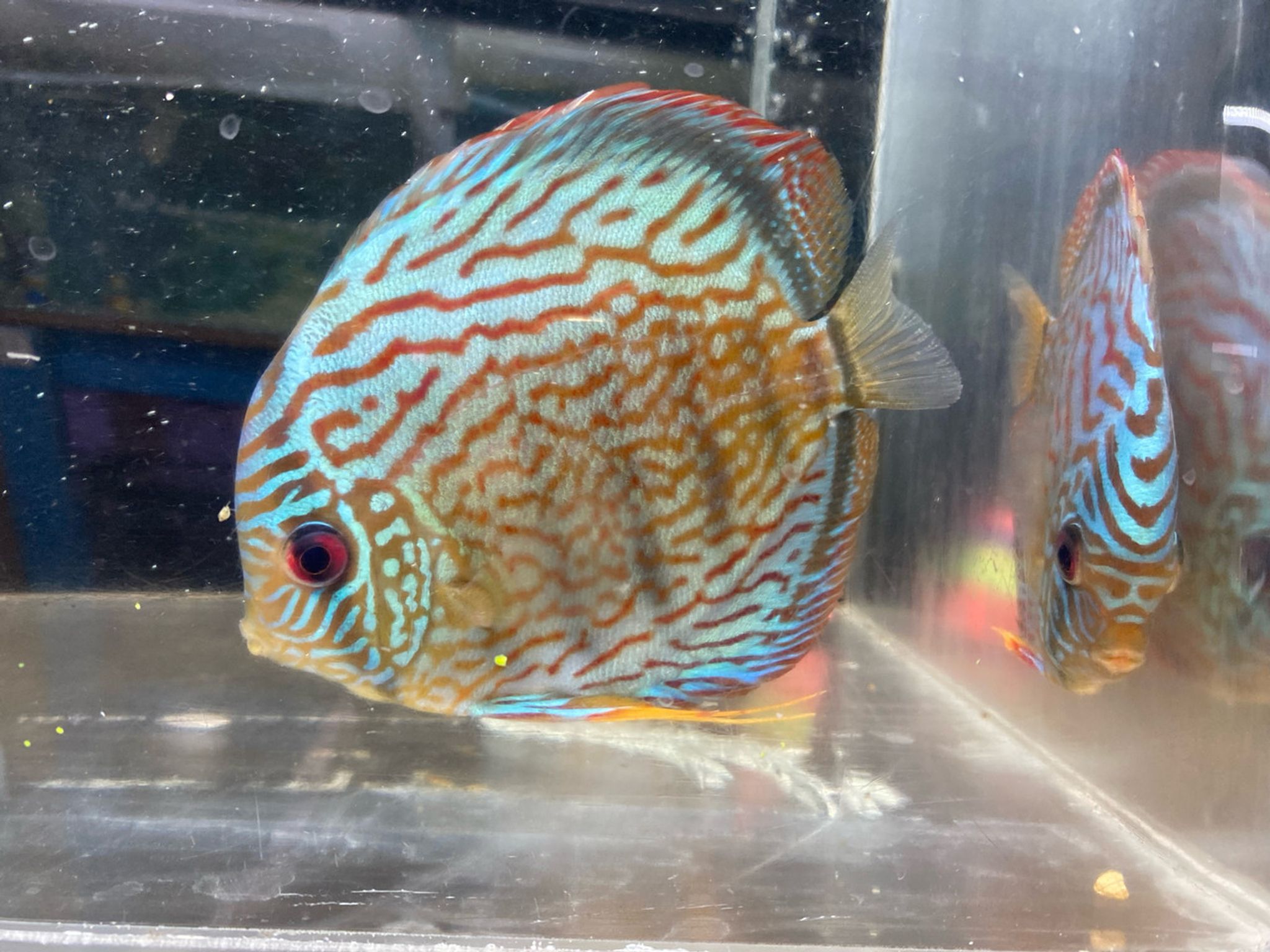
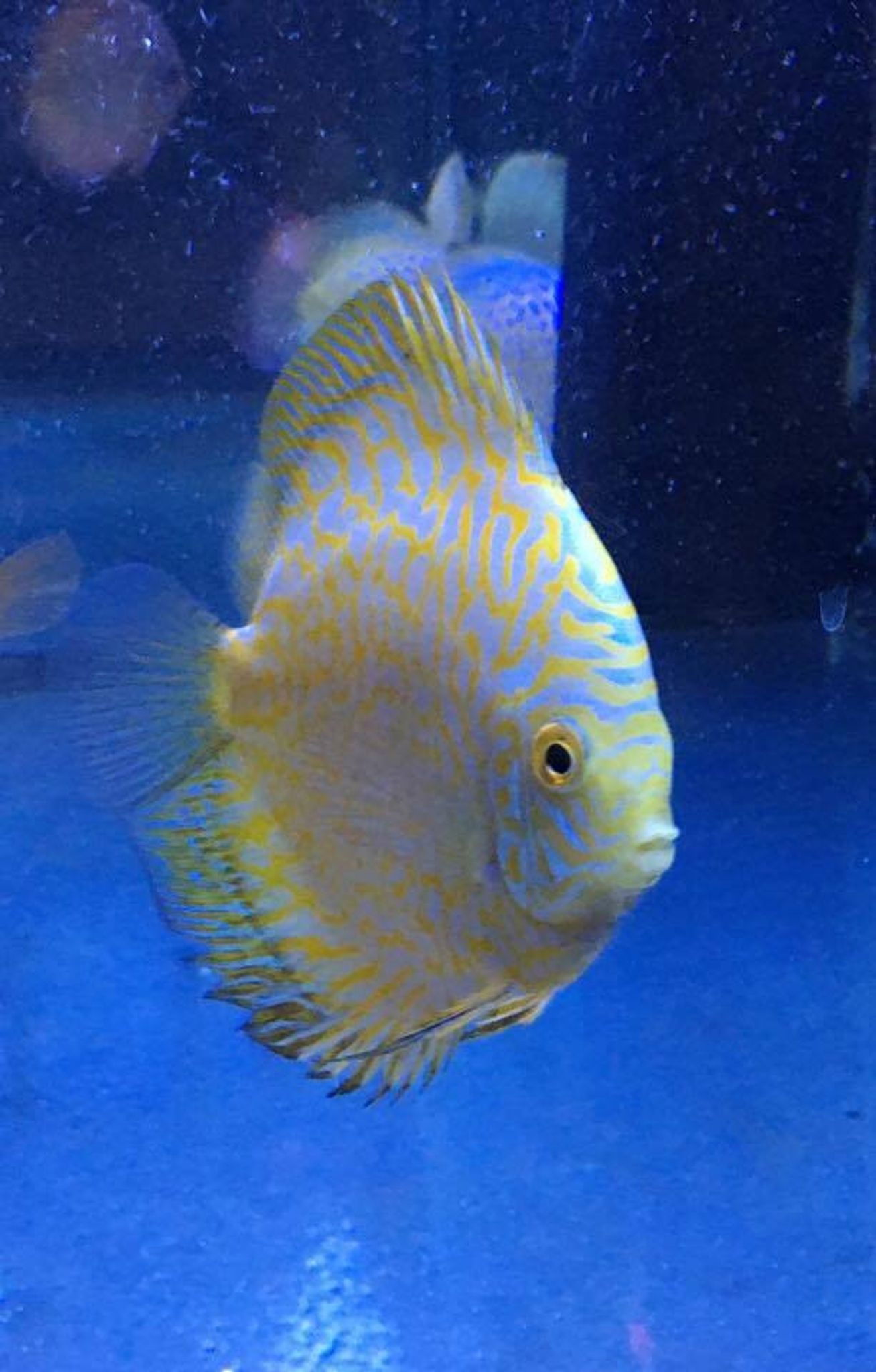
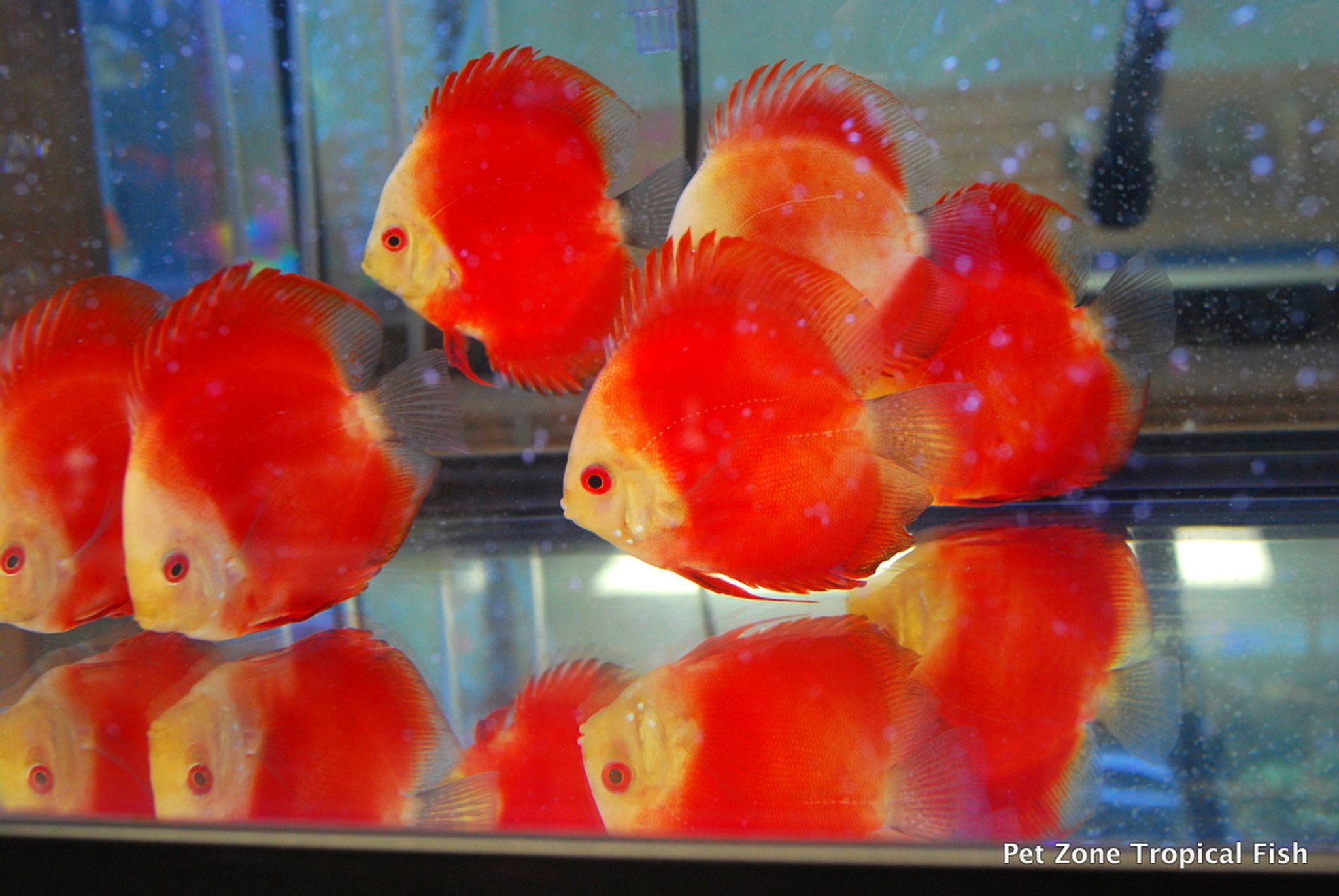
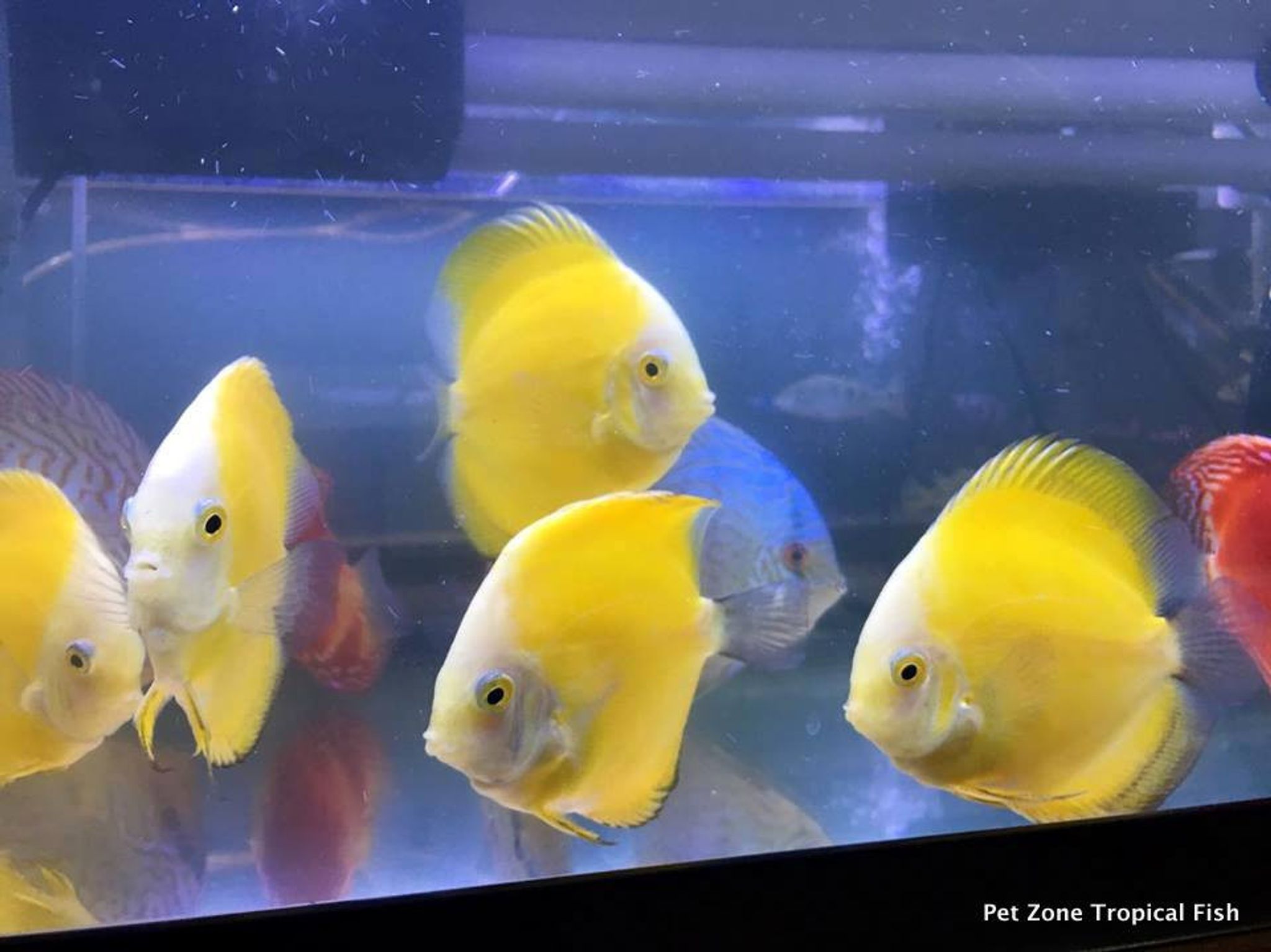
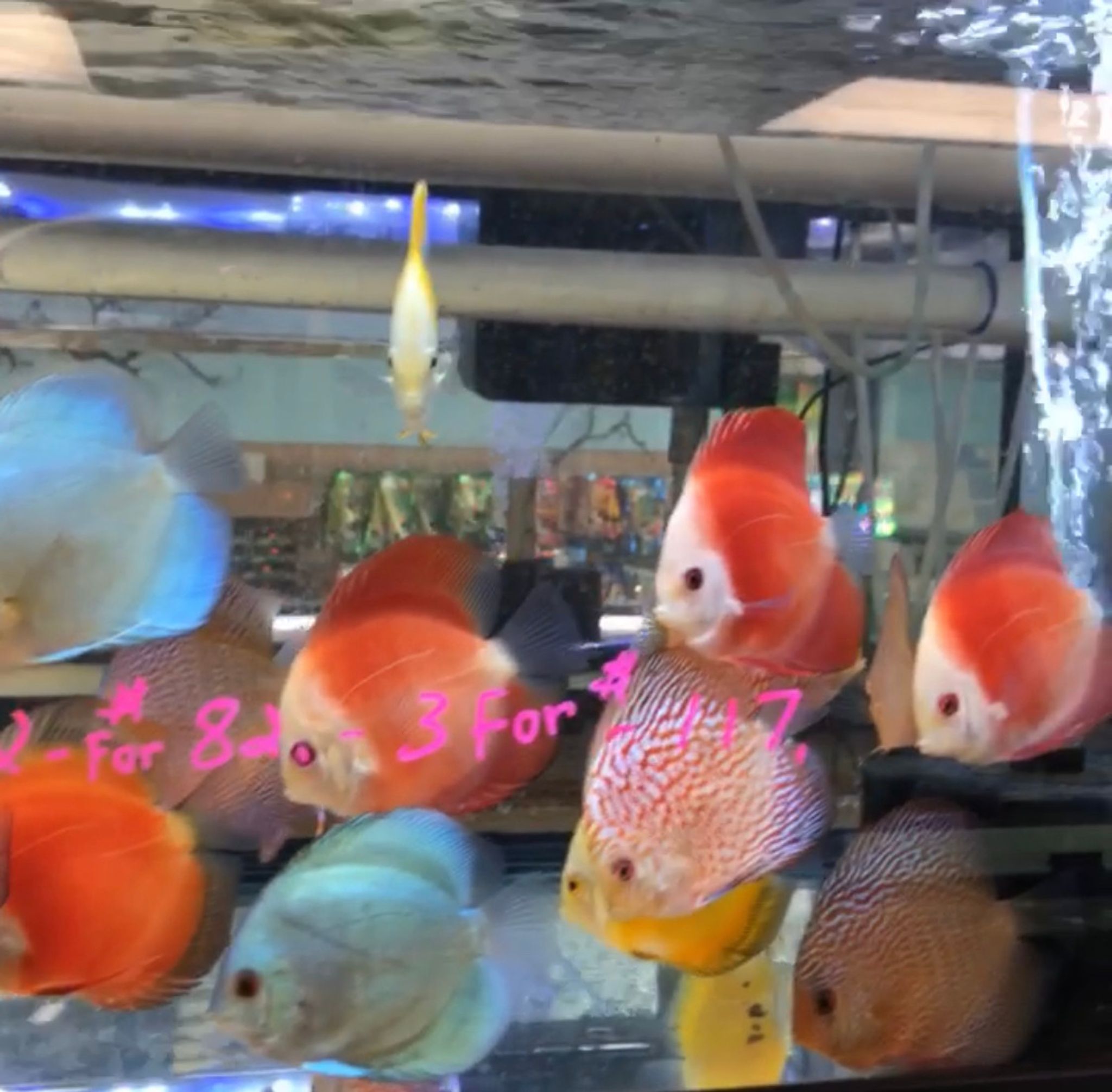
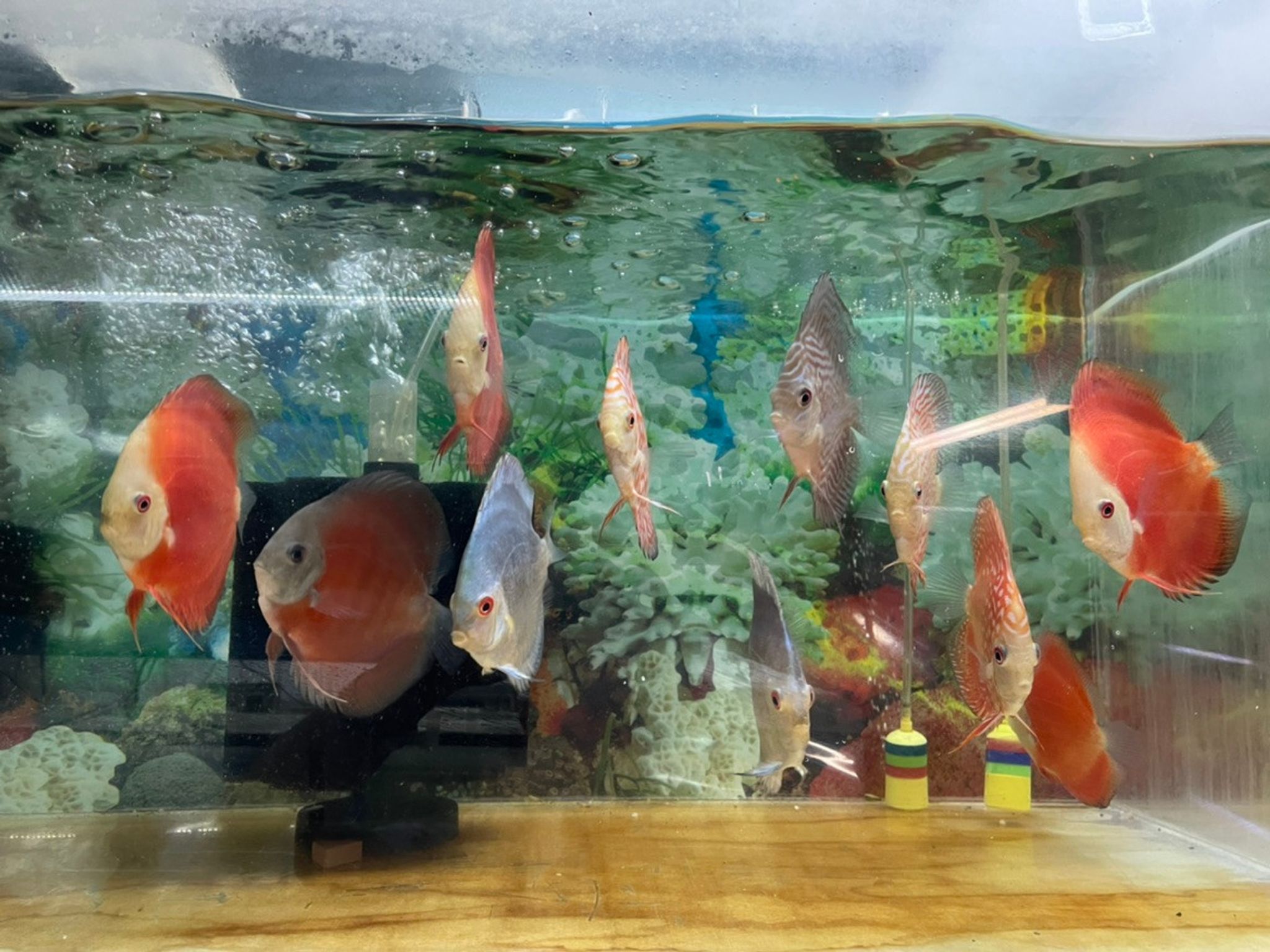
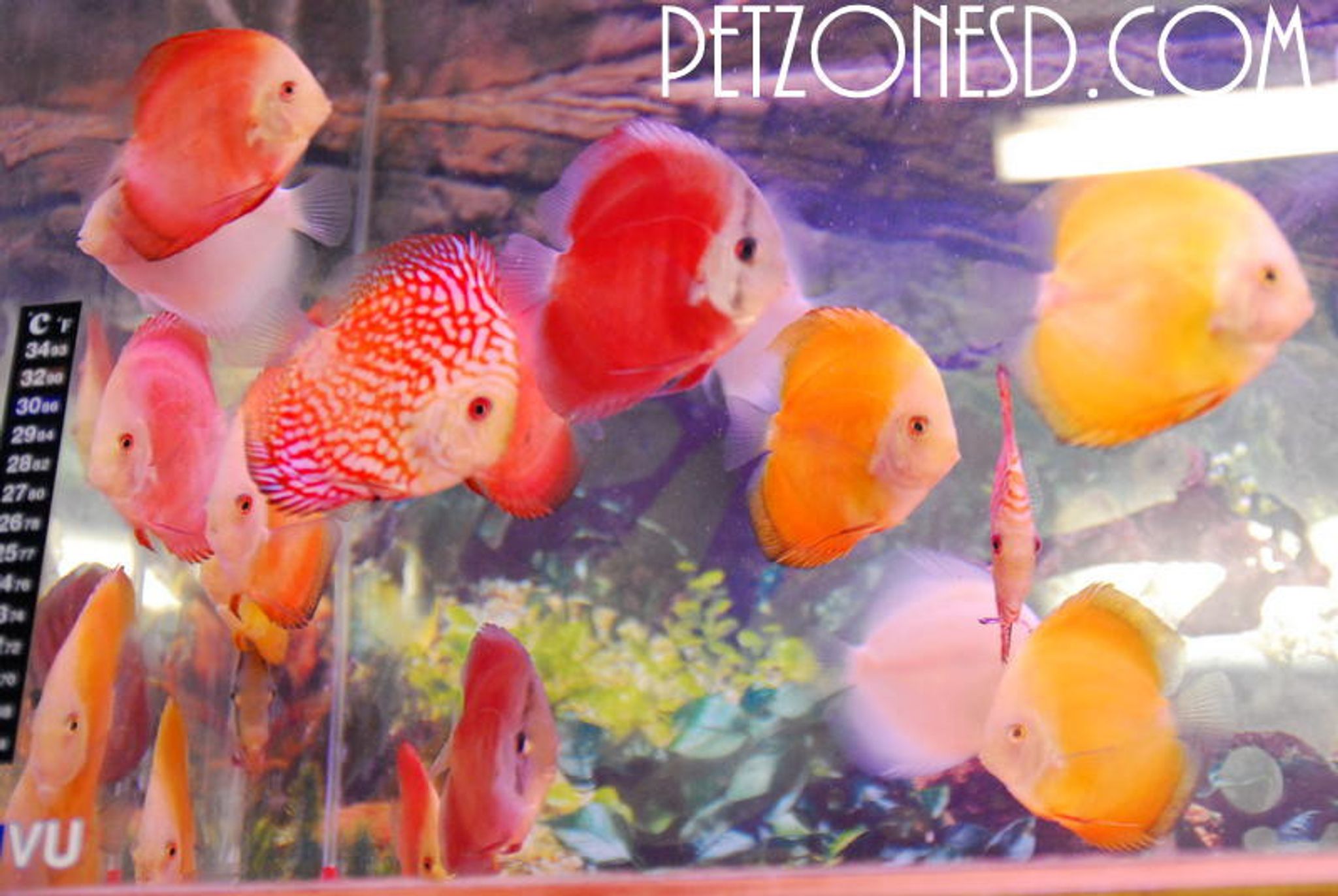
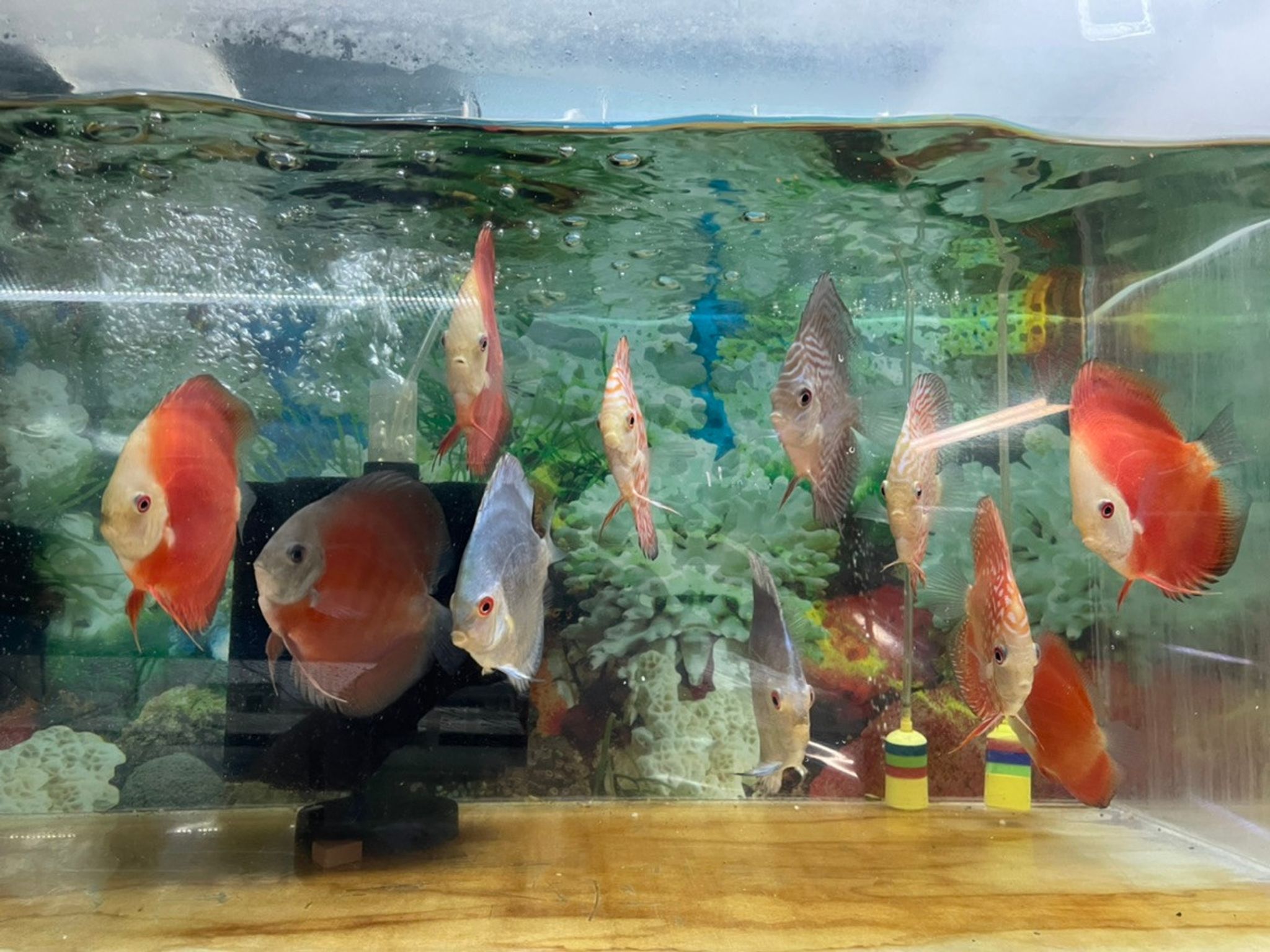
Shop Discus fish online from aquarium stores, breeders and specialist sellers across the United States on FishyHub. Compare Red Discus, Blue Discus, Turquoise Discus, Pigeon Blood Discus, Leopard Discus and other selectively bred varieties by color, size, pattern and seller.
Discus are among the most distinctive freshwater aquarium fish, known for their round body shape, elegant movement and extraordinary range of colors and patterns. FishyHub helps U.S. hobbyists compare Discus from multiple sellers and breeders in one marketplace.
Buying Discus online gives hobbyists access to a broader range of strains, sizes and breeder lines than may be available from a single local aquarium store.
Compare color strain, body shape, current size, seller information and shipping options before choosing Discus for your aquarium.
Popular Discus varieties in the aquarium hobby include:
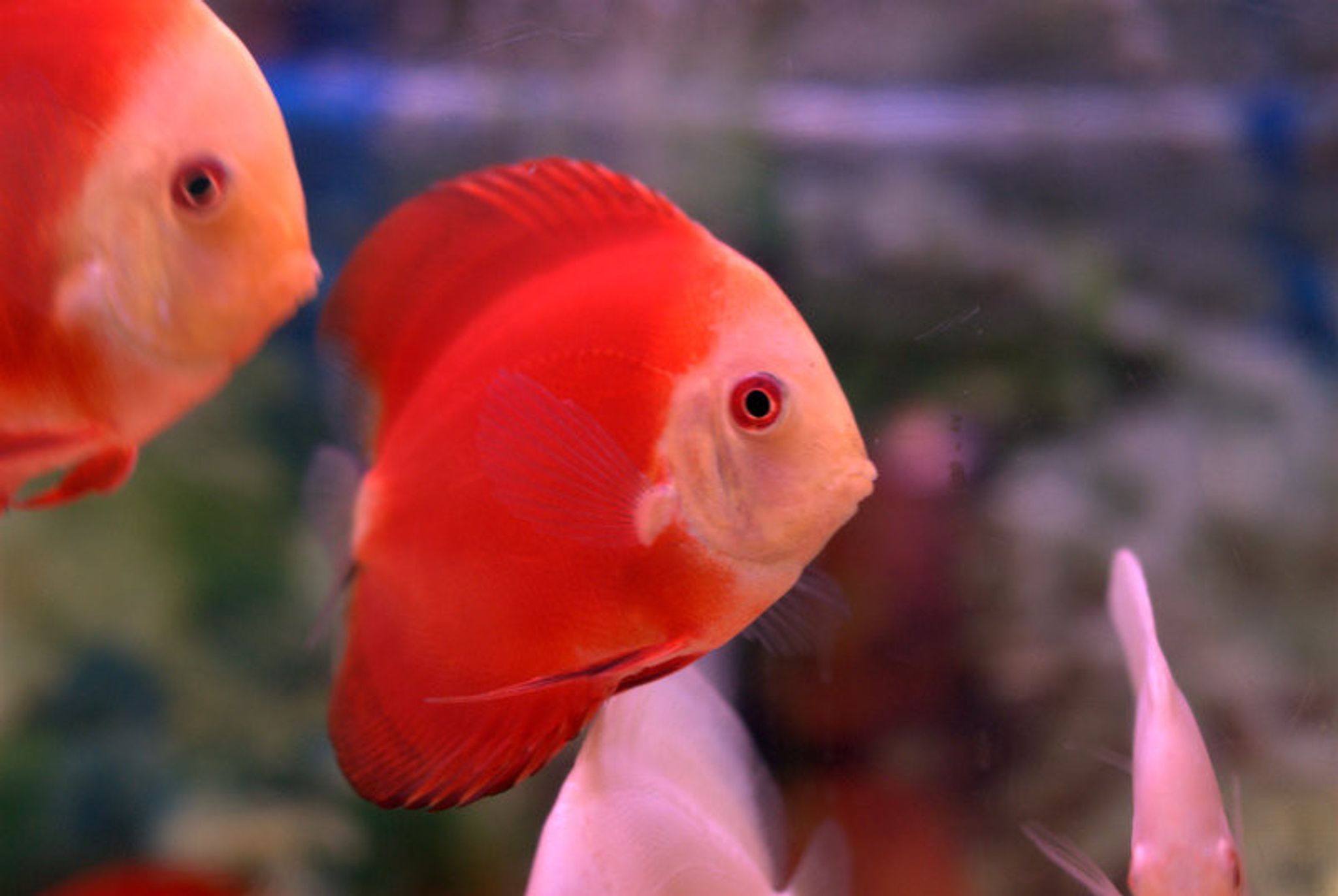
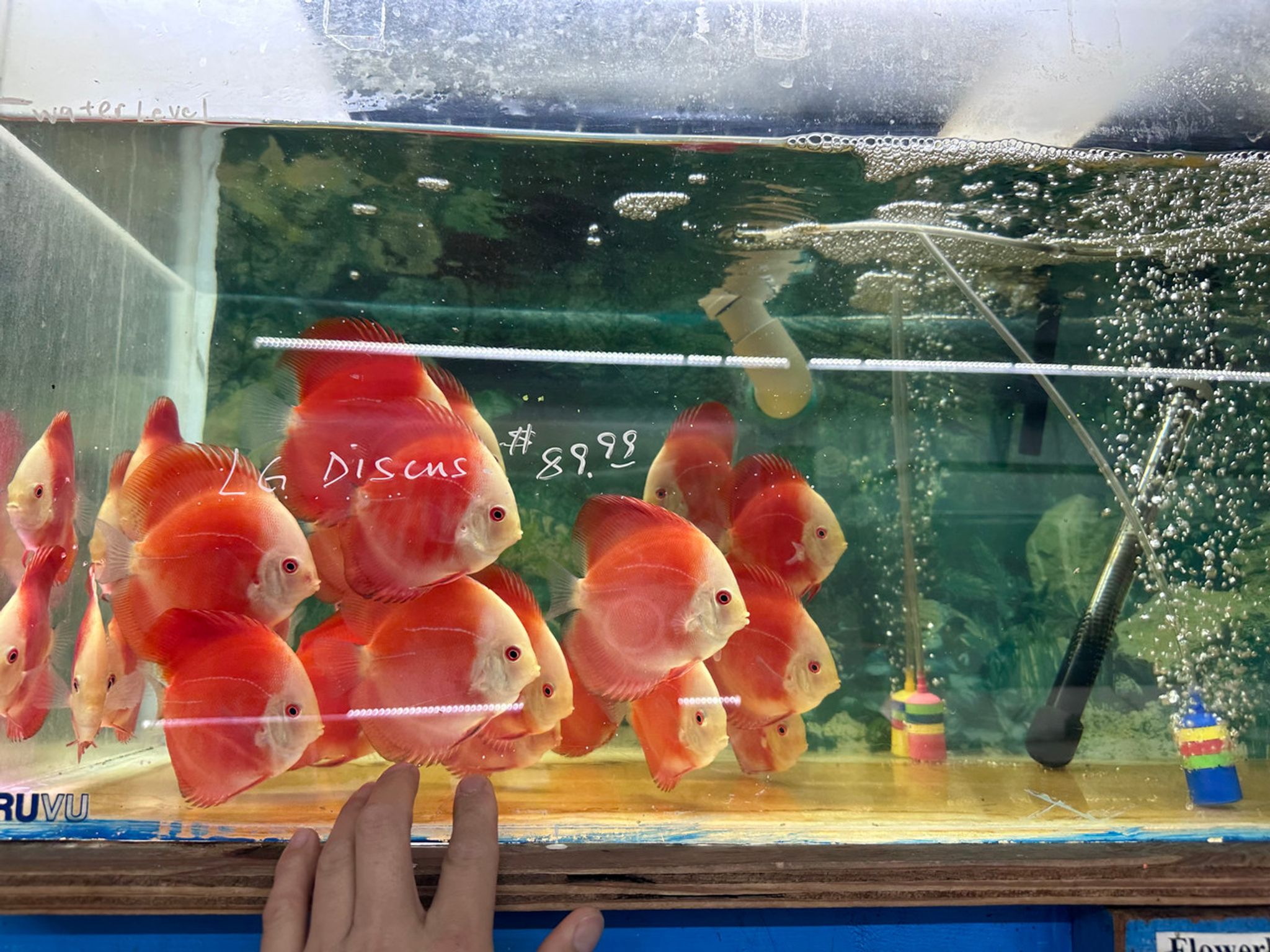
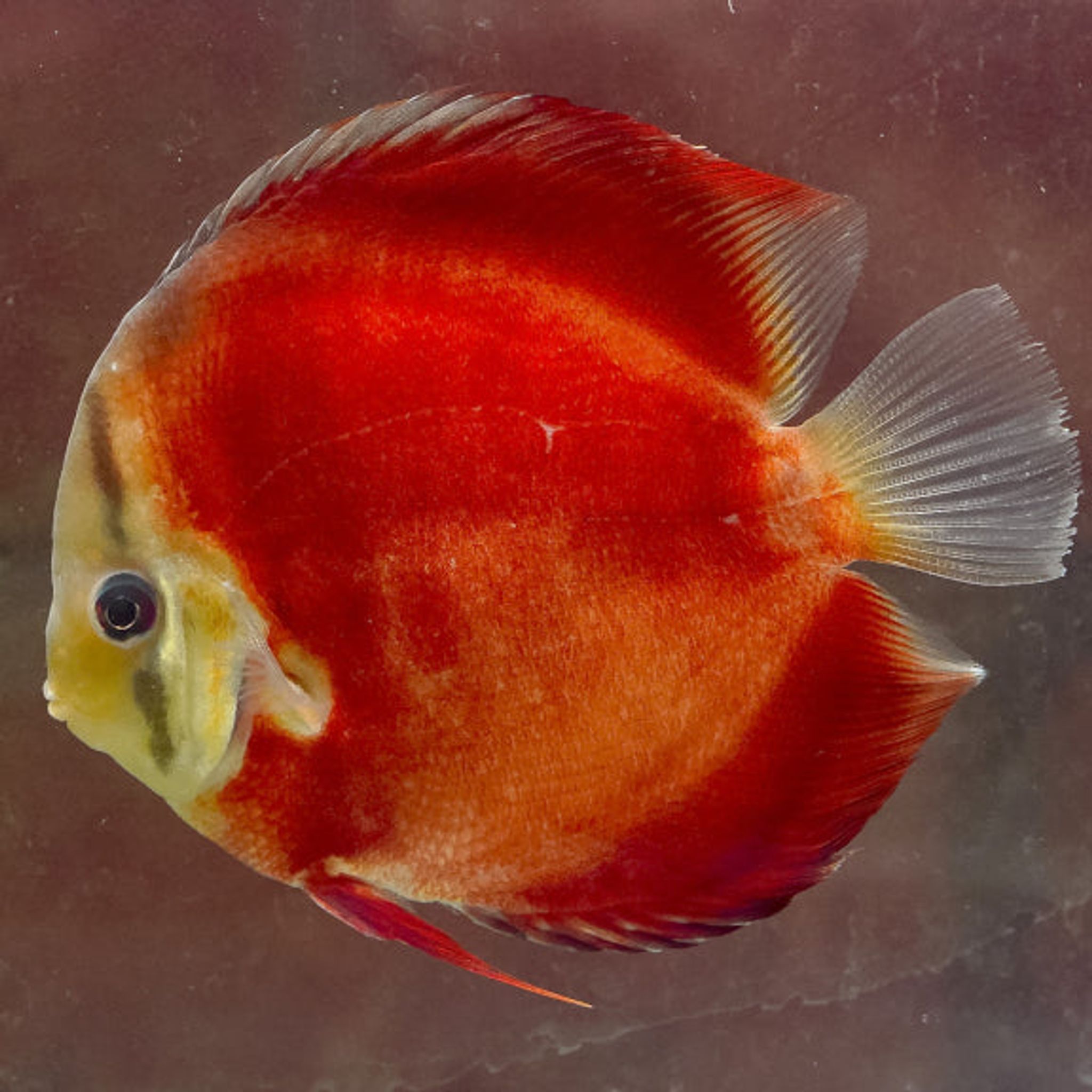
Red Discus are selectively bred for strong red, orange or scarlet coloration across much of the body.
Intensity and coverage can vary greatly by strain, age, breeder line and individual fish.
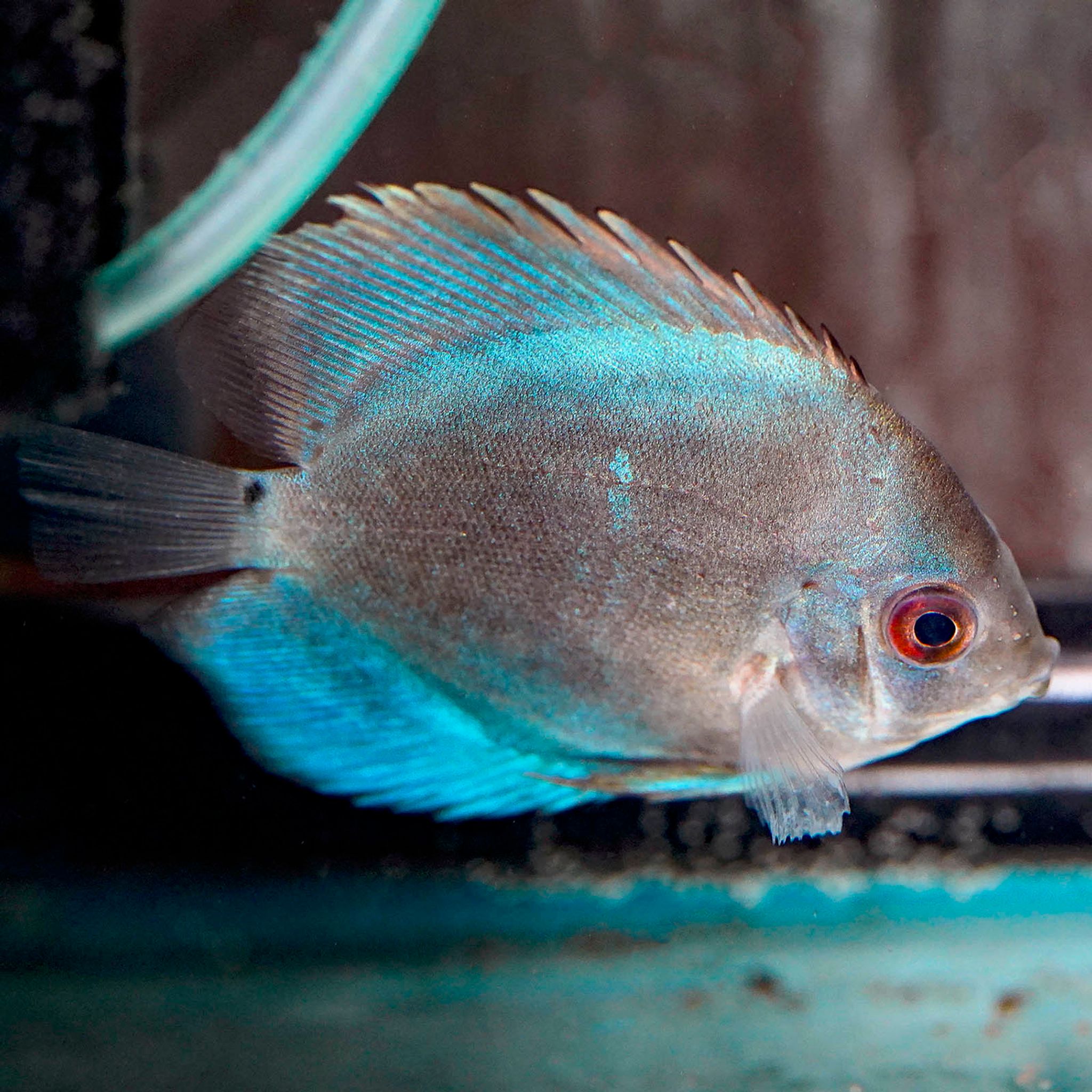
Blue Discus include a broad range of fish with turquoise, cobalt, electric blue and other blue-toned coloration.
Some strains are nearly solid blue while others display intricate lines or patterned markings.
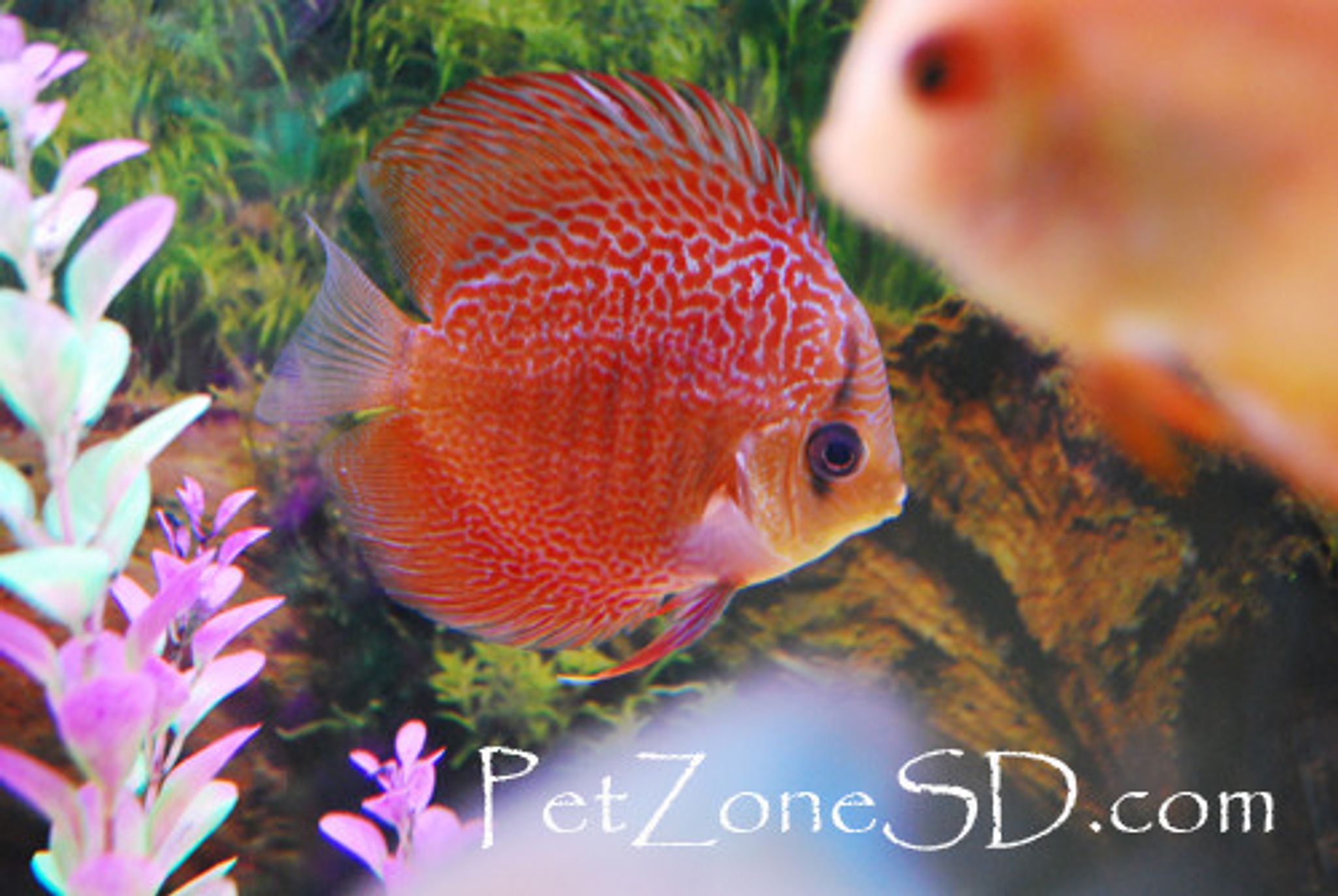
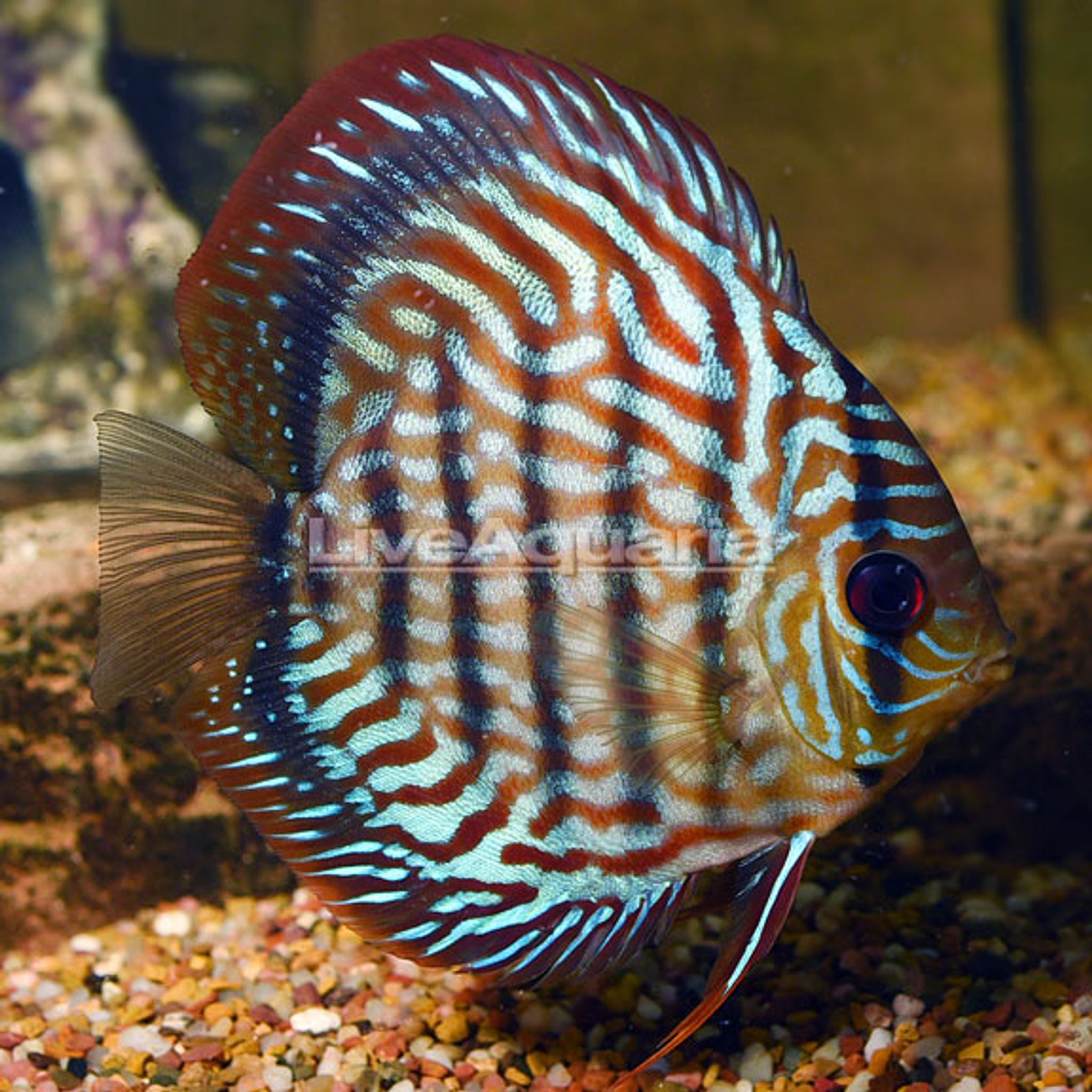
Turquoise Discus are known for bright blue-green patterning across the body and fins.
Red Turquoise and Blue Turquoise forms remain especially popular with hobbyists who prefer detailed body patterning.
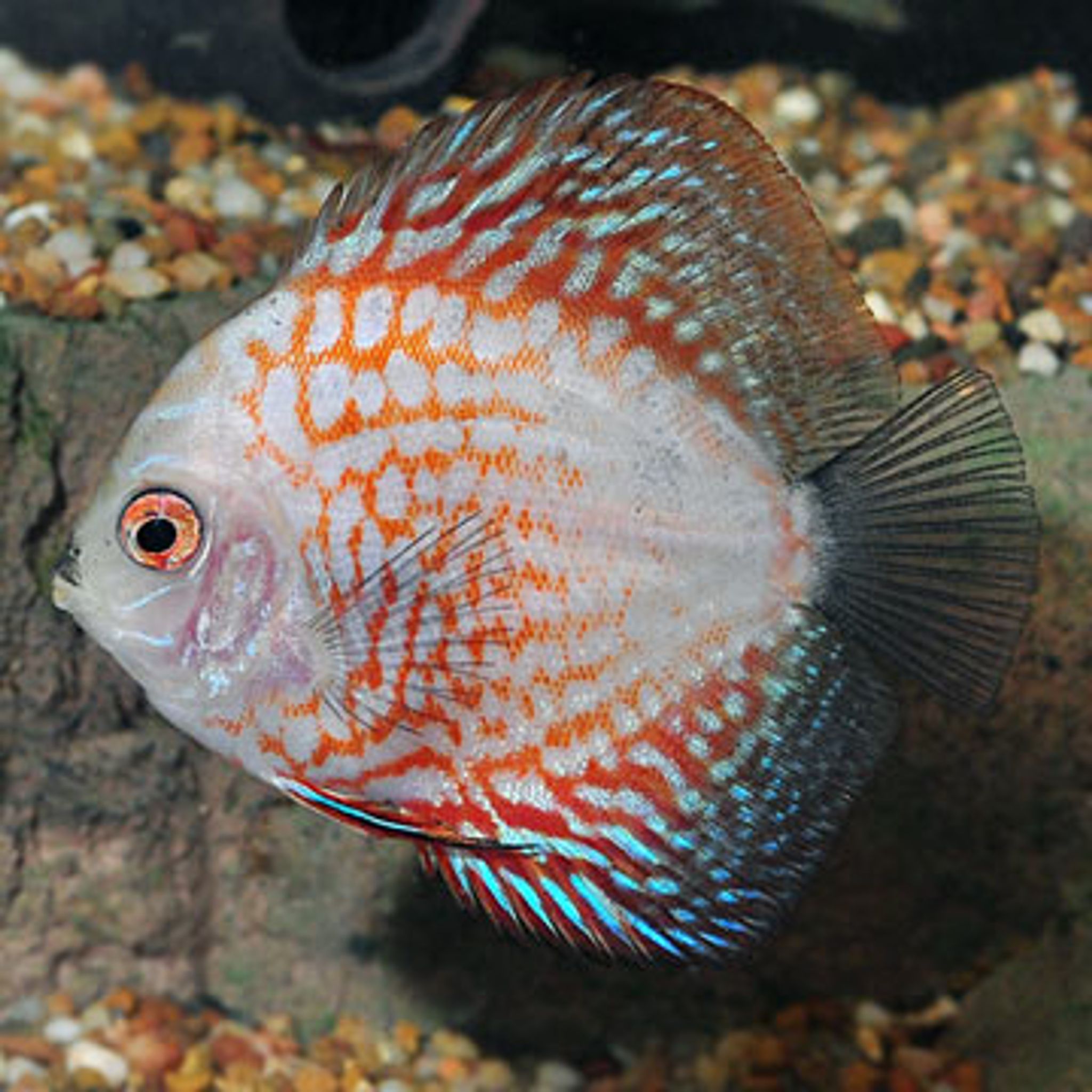
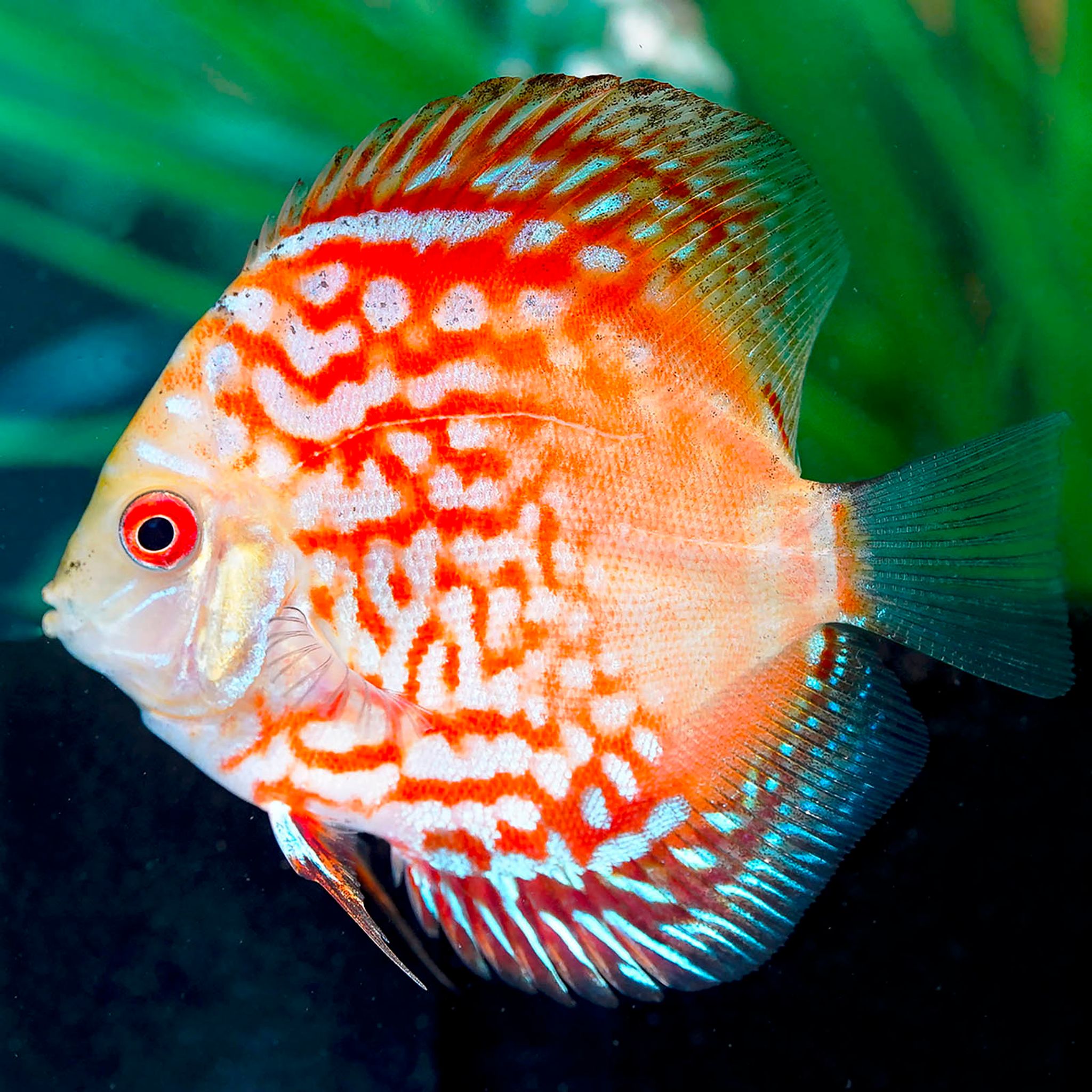
Pigeon Blood Discus are a major selectively bred strain group known for pale base coloration combined with red, orange or patterned markings.
Different breeder lines can look very different, so compare individual photos and seller descriptions when shopping online.
Leopard Discus are bred for dense spotted or broken patterning across the body and fins.
Their appearance can range from fine spotting to bold red or dark markings depending on the line.
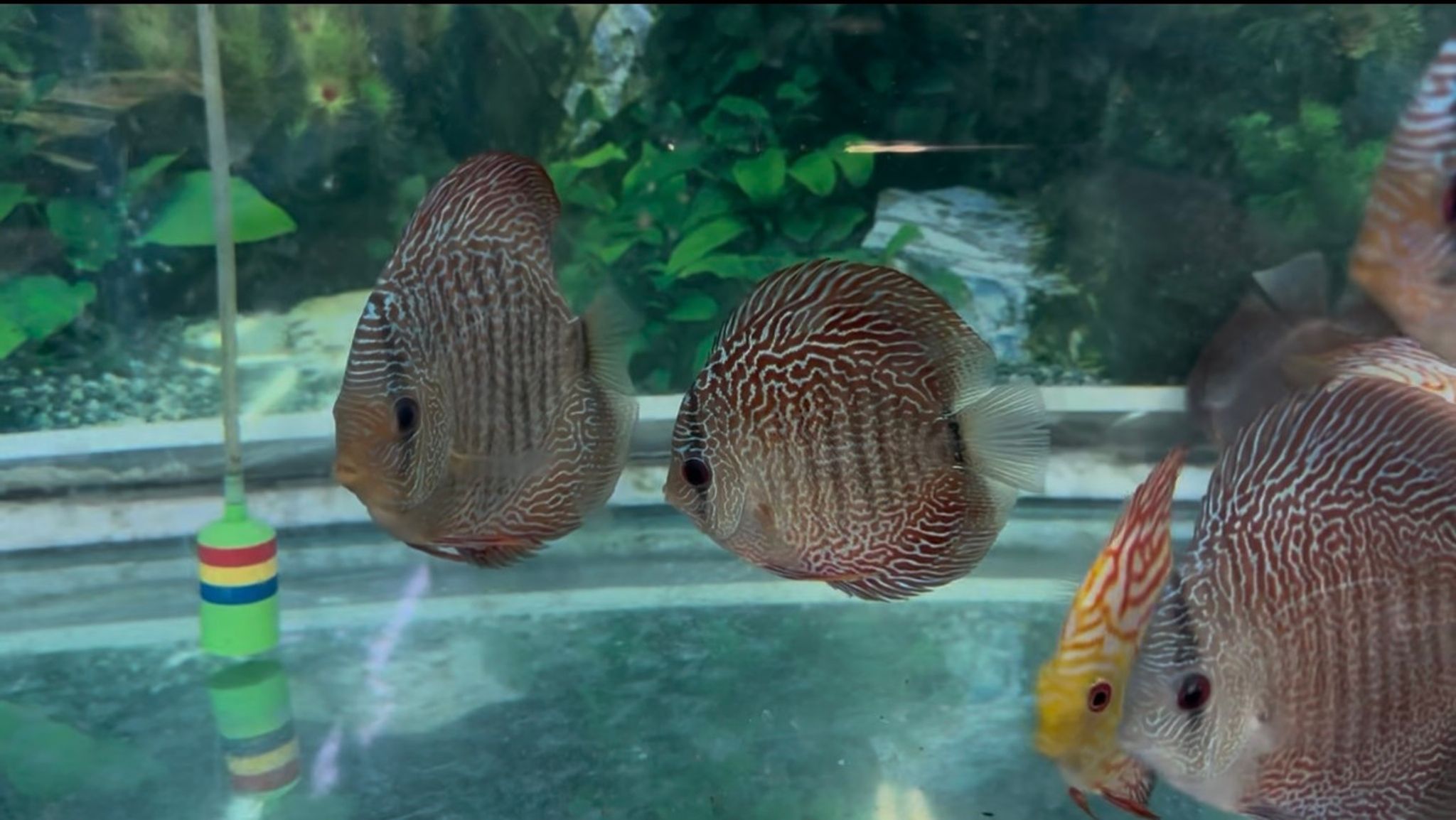
Snakeskin Discus are known for fine, intricate patterning created by many narrow lines across the body and fins.
These fish are popular with collectors who prefer highly detailed pattern expression rather than solid coloration.
Blue Diamond Discus are bred for a clean, largely solid blue appearance with minimal body patterning.
Their simple coloration can make them especially striking in planted or darker-background aquariums.
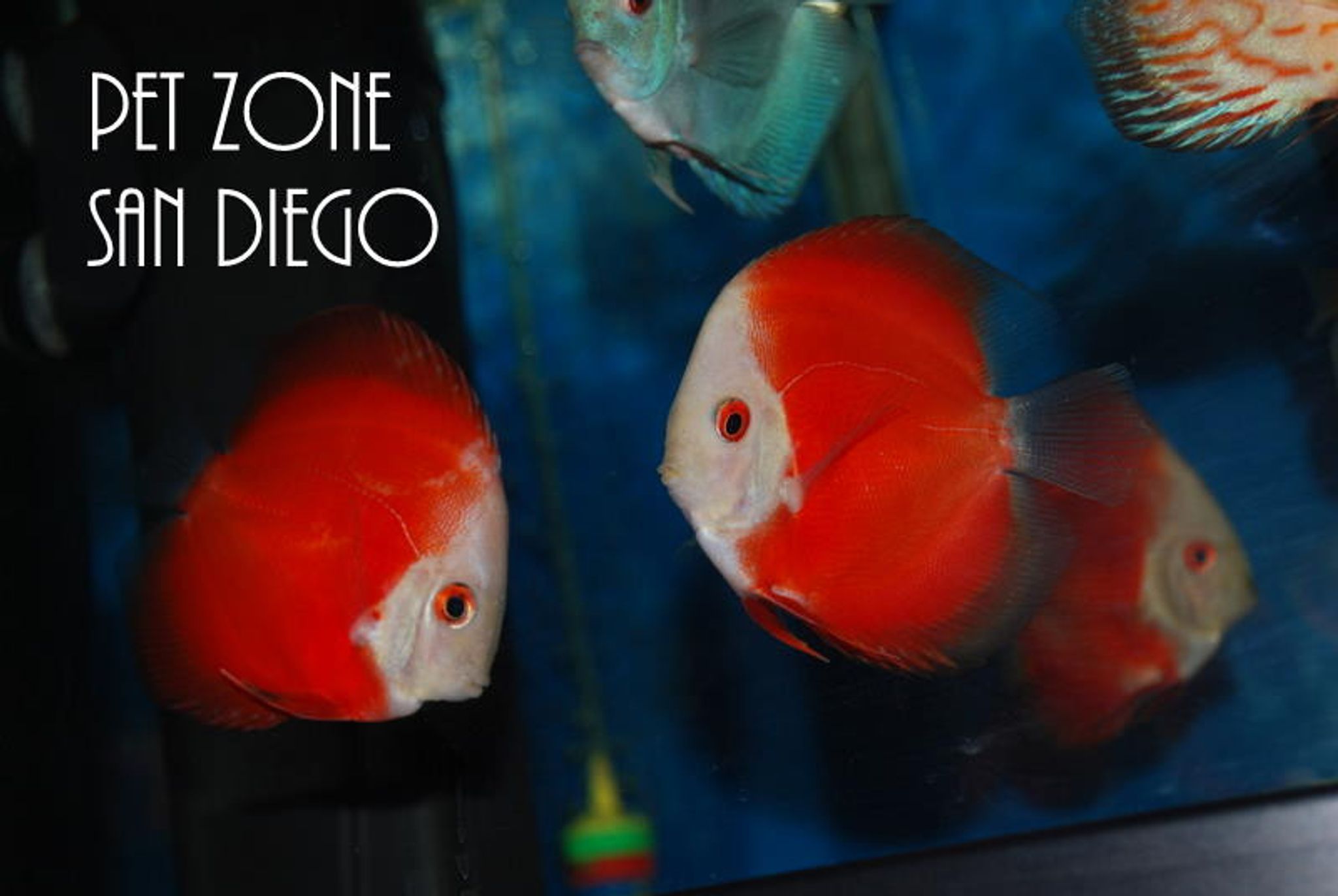
Marlboro Red Discus are known for strong red or orange-red body coloration with a lighter face.
Color intensity and the amount of contrasting facial coloration can vary between breeder lines.
Juvenile Discus are much smaller than mature adults and can change significantly in body shape, color and pattern as they grow.
Aquarium planning should be based on adult size, group needs and long-term swimming space rather than the size of young fish shown in a listing.
Young Discus may not yet show the full coloration or body proportions they will develop as adults.
Some patterns intensify or change with age, so breeder lineage and parent stock can be useful information when choosing juveniles.
Discus do best in stable, properly cycled freshwater aquariums with reliable filtration and enough open swimming space.
Aquariums can be planted, minimally decorated or arranged around wood and vertical structures depending on the keeper's goals and maintenance style.
Discus can be kept successfully in planted aquariums when plant selection and aquarium conditions are compatible.
Tall plants, wood and open swimming areas can create a natural-looking display while still leaving enough space for the fish to move comfortably.
Discus benefit from stable, clean freshwater conditions and should not be exposed to repeated swings in temperature or water chemistry.
Exact requirements can vary between wild-type fish and long-established captive-bred lines, so follow the needs of the specific livestock being kept.
Reliable filtration is important because Discus benefit from excellent water quality and stable aquarium conditions.
Filtration should suit aquarium size, stocking and feeding level while avoiding unnecessarily harsh flow.
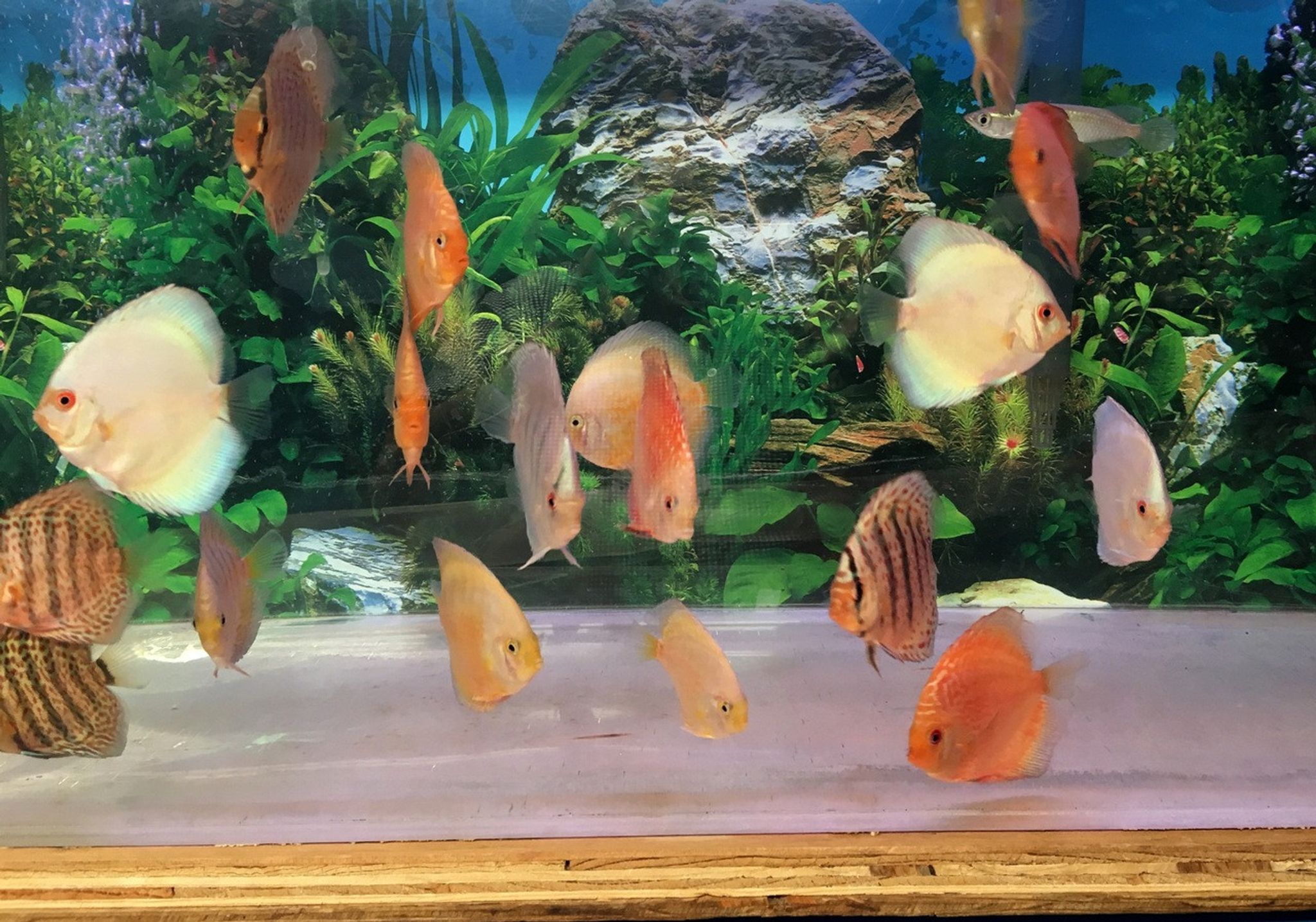
Discus are social Cichlids and are often kept with others of their own kind rather than as isolated individuals.
Group dynamics can include dominance and feeding competition, so aquarium space, group composition and observation are important.
Discus can coexist with carefully selected peaceful freshwater fish that tolerate similar aquarium conditions.
Avoid aggressive, highly competitive or persistent fin-nipping fish that may stress Discus or dominate feeding.
Cardinal Tetras are a popular companion for Discus in planted community aquariums.
Their schooling behavior and bright coloration can complement Discus, provided aquarium conditions are suitable for both species.
Some Corydoras can coexist with Discus, but species selection matters because different Corys have different temperature preferences.
Choose Corydoras whose long-term care requirements overlap appropriately with the Discus aquarium rather than selecting only by appearance.
Discus and Angelfish are both South American Cichlids and can sometimes be kept together in large, carefully managed aquariums.
Feeding competition, territorial behavior and health management should be considered carefully before combining them.
Discus are omnivorous and can accept a range of quality prepared and frozen aquarium foods.
A varied diet should be matched to fish size, age, condition and breeder recommendations rather than relying on a single food type.
Observe individual fish during feeding because subordinate Discus may receive less food in a group.
Good feeding response and stable body condition are useful indicators when monitoring an established group.
Mature Discus may form pairs and lay eggs on vertical surfaces.
Discus are famous for specialized parental care, with newly hatched fry feeding from mucus produced on the parents' skin during early development.
Sellers may offer individual Discus, groups, compatible pairs or established breeding pairs.
If breeding is your goal, check whether a listing describes a proven spawning pair or simply two fish being sold together.
Sexing Discus by appearance alone can be difficult, particularly in immature fish.
Pair formation and reproductive behavior generally provide more useful clues than relying only on body shape or fin appearance.
Wild-type and captive-bred Discus can differ significantly in appearance, acclimation history and husbandry expectations.
Captive-bred Discus are available in a huge range of colors and patterns, while wild forms are generally valued for natural coloration and geographic provenance.
FishyHub can feature Discus listings from U.S. aquarium stores and breeders as well as selected international sellers where available.
International breeders have developed many distinctive Discus strains, but shipping, import or transshipping arrangements can vary by seller and destination.
Imported Discus may appeal to hobbyists searching for specific breeder lines, colors or strains that are difficult to find locally.
Buyers should review seller reputation, shipping arrangements, import or transshipping procedures where applicable and live-arrival policies before ordering.
When comparing Discus for sale, look for:
Newly shipped Discus may experience significant transport stress and changes in water chemistry.
Prepare a stable, cycled aquarium before arrival and follow the seller's acclimation guidance while avoiding unnecessary prolonged exposure to shipping water.
Quarantine and careful observation can be especially useful when adding Discus from different breeders or sellers to an established collection.
Monitor appetite, breathing, feces, body condition, coloration and behavior before combining newly acquired fish with an existing group.
Discus prices vary widely according to strain, current size, breeder, coloration, pattern, body quality, rarity and seller.
Juvenile everyday strains and large premium breeder-quality Discus can occupy very different price ranges, so compare fish quality, size and seller information rather than price alone.
FishyHub brings Discus listings from aquarium stores, breeders and specialist freshwater fish sellers together in one marketplace.
When comparing Discus online, consider:
Shipping availability depends on the seller, destination, fish size, weather and livestock-shipping policy.
Review packaging, delivery timing and live-arrival terms before ordering, and make sure the aquarium is prepared before the Discus are scheduled to arrive.
Yes. Aquarium stores and breeders sell Discus online across the U.S., depending on seller shipping coverage and livestock policies.
Yes. Discus are South American freshwater Cichlids known for their round body shape and unusual parental care.
Red, Blue, Turquoise, Pigeon Blood, Leopard, Snakeskin, Blue Diamond and Marlboro Red are among the most familiar breeder strains.
Yes, with carefully selected peaceful tankmates that share compatible water and temperature requirements.
Cardinal Tetras are a popular Discus tankmate when both species are kept under compatible aquarium conditions.
It can work in some large, carefully managed aquariums, but feeding competition, territorial behavior and health management should be considered.
Many captive-bred lines are accustomed to aquarium conditions, but care still depends on the breeder line, age, previous husbandry and individual fish.
FishyHub helps U.S. hobbyists compare Discus listings from aquarium stores, breeders and specialist freshwater fish sellers in one marketplace.
Explore Discus fish for sale on FishyHub and compare Red, Blue, Turquoise, Pigeon Blood, Leopard, Snakeskin, Blue Diamond and other Discus varieties. Discover listings from aquarium stores and breeders across the United States, and compare strain, size, coloration, breeder, price and shipping options before choosing Discus for your aquarium.
