
Freshwater vs Saltwater Fish Prices: Which Cost More?
In the US, saltwater fish cost more than freshwater fish. On FishyHub, the cheapest saltwater fish, such as gobies, blennies, chromis, damselfish and cardinalfish, sit in the mid-range price tier, the same tier as angelfish, goldfish and most bettas, while the entry-level tier is almost entirely freshwater. At the top end, saltwater groups such as tangs, large and dwarf marine angelfish, seahorses and eels make up most of the collector tier. Add the extra equipment a reef or fish-only marine tank needs, and the gap widens further.
Key Findings
- FishyHub marketplace data shows saltwater fish are priced higher than freshwater fish in the US at every level, from budget to collector.
- FishyHub data shows the US entry-level / budget tier is almost entirely freshwater, with marine snails the only saltwater livestock in it.
- FishyHub data shows the most affordable US saltwater fish, including blennies, cardinalfish, chromis, damselfish, dragonets, gobies, hawkfish, jawfish and pipefish, sit in the mid-range tier.
- FishyHub data shows most US saltwater fish, including clownfish, butterflyfish, lionfish, triggerfish and wrasse, sit in the upper mid-range.
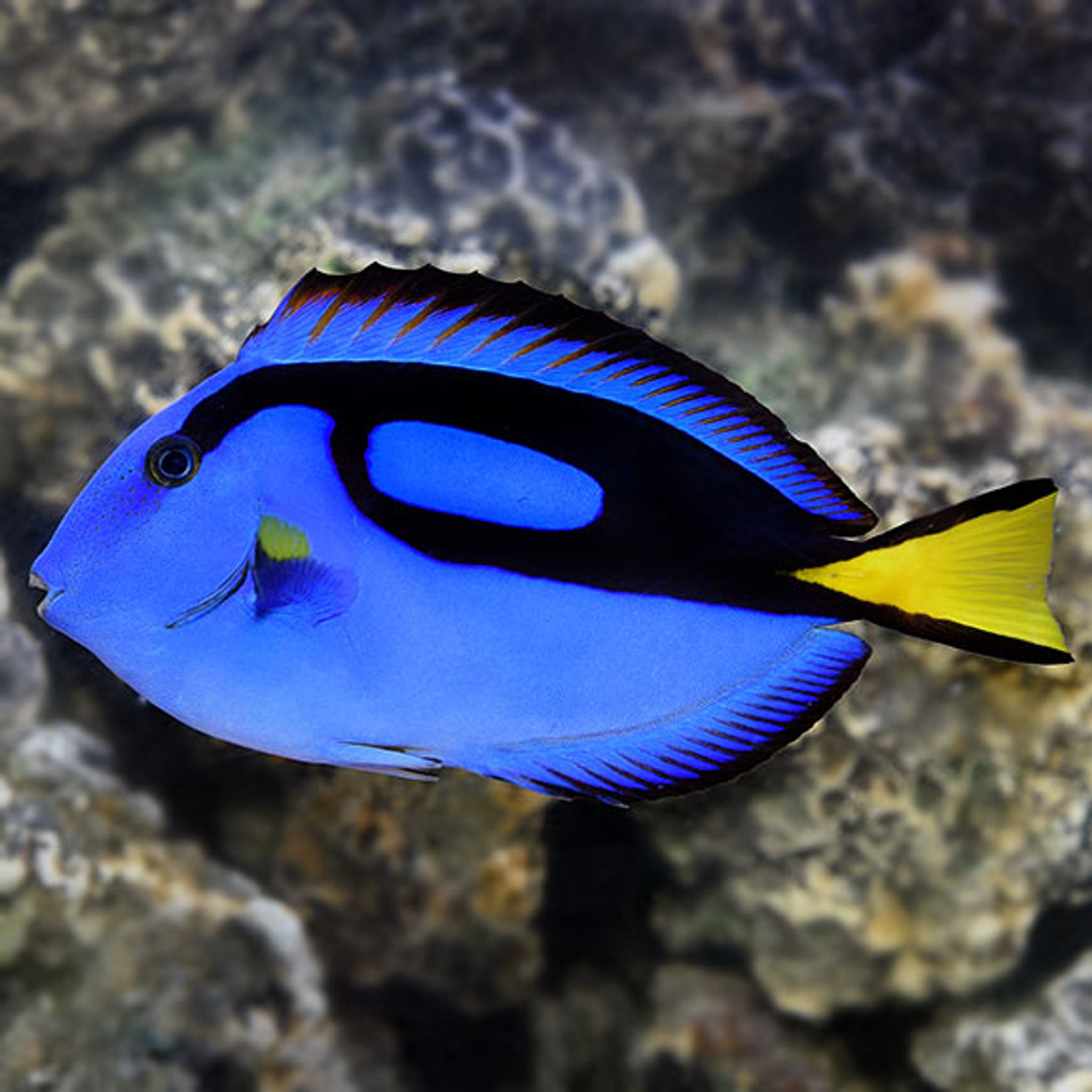
- FishyHub data shows saltwater groups make up most of the US collector / premium tier, including tangs, large and dwarf marine angelfish, seahorses, eels, groupers, rays and sharks.
- FishyHub data shows freshwater has the larger share of US listings, while saltwater groups tend to have wider price spreads.
- FishyHub data shows LPS hard corals sit in the US collector tier and SPS corals, soft corals, polyps and mushrooms in the upper mid-range.
Price Tiers Side by Side
FishyHub groups US listings into four price tiers. This is how freshwater and saltwater livestock fall across them, with examples listed alphabetically.
| Price tier | Freshwater examples | Saltwater examples |
|---|---|---|
| Collector / premium | Arowana, datnoids, flowerhorn | Dwarf angelfish, eels, large marine angelfish, seahorses, tangs |
| Upper mid-range | Discus, giant halfmoon plakat bettas, halfmoon bettas, plecos, silver arowana | Butterflyfish, clownfish, lionfish, triggerfish, wrasse |
| Mid-range | Angelfish, goldfish, koi, most bettas, oranda | Blennies, chromis, damselfish, gobies, hawkfish |
| Entry-level / budget | Corydoras, danios, guppies, rasboras, tetras | Marine snails |
The pattern is consistent. A saltwater fish sits about one tier above a freshwater fish of a similar role. A small, peaceful reef fish such as a goby costs more than a small community freshwater fish such as a tetra. A showpiece reef fish such as a tang costs more than a freshwater showpiece such as a discus.
Why Saltwater Fish Cost More
Most are wild-collected
Most freshwater fish in the US trade are farm-bred, many in Florida and Southeast Asia, so supply can grow with demand. Most saltwater fish are still collected from coral reefs in the Indo-Pacific and the Caribbean. Collection is slower, depends on skilled divers and is subject to local rules, and every fish passes through a long chain of handlers before it reaches a US buyer.
Shipping is harder
Saltwater fish travel in heavier, carefully balanced water and are more sensitive to swings in temperature and water chemistry. Losses along the supply chain are higher, and the price of the fish that arrive healthy reflects the ones that do not.
Captive breeding is still catching up
Captive breeding has transformed some marine groups. Clownfish, many dottybacks, some gobies and a growing number of seahorses are bred in captivity. But for many reef fish, larvae are tiny and hard to raise, so captive-bred stock is still limited.
The groups carry a wide range
FishyHub shows very wide or wide price spreads for many US saltwater groups, including clownfish, dartfish, dwarf angelfish, eels, groupers, large marine angelfish, scorpionfish, sharks, tangs and wrasse. Rare species and designer morphs pull the top end up, so a single category can include both reasonable and very expensive fish.
The Exceptions
Freshwater is not always the cheaper choice:
- Arowana, flowerhorn and datnoids sit in the US collector tier, above most saltwater fish.
- Discus and premium bettas sit in the upper mid-range, level with clownfish and wrasse.
- Oscars and knifefish are cheap to buy as juveniles, but grow into large fish that need big tanks.
On the saltwater side, damselfish, chromis and gobies are reasonably priced and hardy, which is why they are popular first fish for a marine tank.
The Cost of the Tank
The fish are only part of the comparison. A saltwater tank usually needs:
- Salt mix for every water change.
- Purified water, often from a reverse osmosis unit, as tap water in many US areas contains nitrates, phosphates or chloramine that cause algae or harm invertebrates.
- A protein skimmer and, for reef tanks, strong lighting and water-flow pumps.
- A heater in most US homes, as for tropical freshwater fish.
A freshwater community tank needs a filter, a heater for tropical fish and a water conditioner. Over the life of the tank, saltwater costs more to run, as well as to stock.
Buying Saltwater Fish in the US
Saltwater fish are especially sensitive to temperature during shipping. Sellers ship by overnight courier in insulated boxes, and buyers in the Midwest & Central, East Coast & Northeast and West Coast & Mountain West zones should watch for cold snaps in winter, while buyers in the South & Southeast should watch for summer heat. The Alaska, Hawaii & territories zone is usually the costliest and slowest to reach.
Methodology
This page is based on FishyHub marketplace activity in the US over the period from October 2024 to October 2026. We looked at active US listings, typical listed prices, the share of listings in freshwater and saltwater, the spread of prices within each group, and how new listings have changed over time. Findings are reported as tiers and directions, not as figures.
The US marketplace is newer than FishyHub's Singapore market, so it has no order history in this data and no price-direction data yet. FishyHub does not measure equipment or running costs, or report state-by-state figures. Comments on collection, shipping, captive breeding and tank costs come from general hobby knowledge.
Frequently Asked Questions
Are saltwater fish more expensive than freshwater fish?
Yes, in the US. FishyHub shows saltwater fish priced about one tier above comparable freshwater fish, and the entry-level tier is almost entirely freshwater.
What is the cheapest saltwater fish?
On FishyHub in the US, the most affordable saltwater fish, including blennies, cardinalfish, chromis, damselfish and gobies, sit in the mid-range tier.
Why are saltwater fish so expensive?
Most are wild-collected from reefs and flown in, they are harder to ship, and many species are not yet bred in captivity at scale.
Is a saltwater tank more expensive to run?
Generally, yes. It needs salt, purified water, a protein skimmer and, for reefs, strong lighting, on top of the heating and filtration a freshwater tank needs.
Are any freshwater fish more expensive than saltwater fish?
Yes. Arowana, flowerhorn and datnoids sit in FishyHub's US collector tier, above most saltwater fish.
How to Cite This Page
Source: FishyHub, "Freshwater vs Saltwater Fish Prices: Which Cost More?" (2026), https://fishyhub.com/us/blogs/blog-detail/freshwater-vs-saltwater-fish-prices-which-cost-more


