
Best Tank Mates for Yellow Watchman Goby: Peaceful, Risky and Incompatible Choices
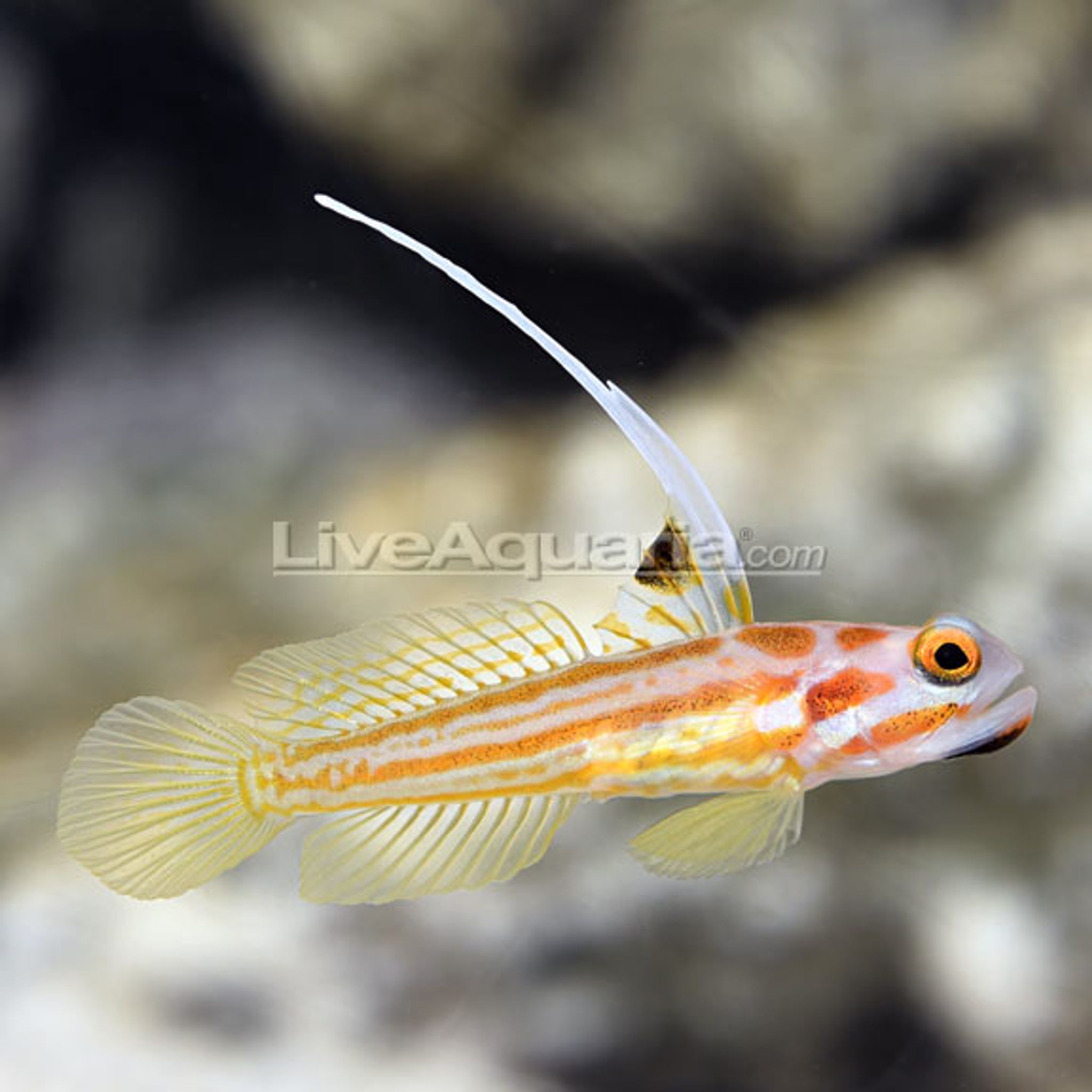
The Yellow Watchman Goby (Cryptocentrus cinctus) is a shy, sand-burrowing fish that does best with calm neighbors and no competition for its hole. This guide sorts tank mates into peaceful, risky and incompatible tiers, and explains why some "reef safe" fish are still a problem for its pistol shrimp partner.
Yellow Watchman Goby Basics
This species tops out around 3–4 inches and spends nearly all of its time near a single burrow, darting in at the first sign of trouble. It's a sand-dweller, not a swimmer — it perches at the entrance of its hole, watches the water column, and rarely strays more than a body length or two away.
Recommended setup:
- Tank size: 20-gallon minimum for a goby (or a goby-and-shrimp pair) alone
- Substrate: 2–4 inches of sand deep enough to burrow into; fine oolitic or sugar-size sand holds a burrow shape far better than coarse crushed coral or chunky aragonite
- Structure: live rock or rubble positioned near the burrow entrance so the shrimp has stable material to tunnel under without triggering a rockslide
- Water parameters: 75–80°F, pH in the standard reef range of 8.1–8.4 as a practical target (some sources cite a wider 7.7–8.5 tolerance, but stability near 8.1–8.4 is the better goal), specific gravity 1.020–1.026, ammonia and nitrite at 0 ppm, nitrate under 20 ppm (lower in a coral-heavy reef tank)
Temperament-wise, the goby is peaceful toward unrelated species but intolerant of its own kind and of other similar shrimp gobies competing for the same territory — more on that below.
The Pistol Shrimp Partnership
The Yellow Watchman Goby's best-known behavior is its symbiosis with a pistol shrimp, most commonly a species of Alpheus (such as A. randalli or A. bellulus), though it will pair with various Alpheidae. The shrimp has poor eyesight and keeps an antenna resting on the goby at all times; the goby watches for predators and flicks its tail as a warning signal, sending both animals diving into the shared burrow. The shrimp does the excavation and burrow maintenance, while the goby stands guard.
This pairing is not required — a Yellow Watchman Goby will do perfectly well on its own. But the behavior is far more visible and natural with a shrimp partner, and it's the main reason most hobbyists seek this species out. When adding a shrimp and goby together, releasing the shrimp near the spot where the goby has already started digging speeds up the bonding process rather than dropping both in at once and hoping they find each other.
Peaceful Tank Mates
These are generally safe choices that won't bully the goby or threaten its shrimp:
- Clownfish — calm, mid-water, ignores bottom-dwelling gobies
- Small to medium peaceful wrasses (non-predatory types) — occupy different tank zones
- Blennies — similarly bottom-oriented but not territorial toward gobies
- Firefish and dartfish — shy, peaceful, similar temperament and size
- Other calm nano and reef community fish
- Cleaner shrimp, hermit crabs, and snails
- Most reef corals — the goby ignores corals and the vast majority of invertebrates entirely
Reef Safety
The Yellow Watchman Goby is considered reef safe. It doesn't pick at coral polyps or bother sessile invertebrates, which makes it a solid addition to a mixed reef community. Hobbyists building out a coral display can browse reef-safe coral options alongside the goby without concern for the fish itself — though see the callout below on threats to its shrimp partner.
Risky or Conditional Tank Mates
These fish aren't automatically incompatible, but each comes with a specific caveat worth understanding before adding:
- Larger or predatory wrasses (Thalassoma-type) — often ignore the goby but will happily eat the pistol shrimp
- Boisterous or fast eaters (some tangs, active damsels) — won't attack the goby but will outcompete it for food, leading to weight loss over time
- Other bottom-dwelling or burrowing gobies — compete directly for territory and burrow space
- Larger peppermint shrimp or other aggressive shrimp species — may prey on the pistol shrimp, especially right after it molts and its shell is soft
Threats to the Goby vs. Threats to the Shrimp
This distinction rarely gets spelled out clearly, but it matters: the Yellow Watchman Goby itself is harmless to nearly all invertebrates and ignores corals. The vulnerability runs the other way. Its pistol shrimp partner is a small, soft-bodied crustacean that larger aggressive shrimp and crabs will readily prey on, particularly during a molt. So a tank mate can be "goby safe" while still being a serious risk to the burrow-mate shrimp.
Incompatible Tank Mates
Avoid these outright in a tank with a Yellow Watchman Goby and its shrimp:
- Aggressive triggerfish, large angelfish, groupers, lionfish — large enough to eat or seriously bully a 3–4 inch goby
- Territorial damsels and hawkfish — prone to harassing small, slow-moving bottom fish
- Dottybacks — aggressive toward small tank mates in a confined space
- Crabs and larger predatory invertebrates — direct threats to the pistol shrimp
- A second unrelated watchman or shrimp goby in a small tank — near-guaranteed territorial fighting
Yellow Watchman Goby Tank Mate Compatibility Chart
| Tier | Examples | Key Concern |
|---|---|---|
| Peaceful | Clownfish, firefish, dartfish, blennies, cleaner shrimp, hermit crabs, most corals | Minimal to none |
| Risky/Conditional | Predatory wrasses, fast-eating tangs, active damsels, other burrowing gobies, aggressive peppermint shrimp | May eat pistol shrimp or outcompete goby at feeding |
| Incompatible | Triggerfish, large angelfish, groupers, lionfish, hawkfish, dottybacks, crabs, a second unrelated watchman goby | May eat or bully the goby, or prey on its shrimp |
Coral Gobies: A Different Fish Entirely
Searches for "goby tank mates" often turn up coral gobies (Gobiodon spp., such as the green clown goby), which are frequently confused with shrimp gobies like the Yellow Watchman. They're worth a quick comparison:
- Coral gobies are tiny and live embedded in coral branches, not sand burrows
- They're peaceful toward unrelated fish but territorial toward their own species and other coral gobies in small tanks
- They produce a mildly toxic skin mucus that deters predators, though they're still vulnerable to bigger aggressive fish such as hawkfish, dottybacks, larger wrasses, and lionfish
- They have no pistol shrimp relationship at all
If you're shopping specifically for a sand-burrowing shrimp partner fish, look under marine gobies rather than coral-dwelling species — the care and compatibility rules differ significantly between the two groups.
Feeding Considerations With Tank Mates
The Yellow Watchman Goby is a carnivore that eats meaty frozen foods like mysis and brine shrimp, along with sinking pellets. Because it's timid, it's easily outcompeted at feeding time by faster or more aggressive tank mates. Target-feed near the burrow entrance so the goby gets a fair share, and keep an eye on body condition if it's housed with quick eaters like tangs or damsels.
Common Mistakes to Avoid
- Adding a second watchman goby (or another burrowing shrimp goby) expecting them to coexist — this usually ends in chasing and fighting unless it's an established mated pair
- Introducing the shrimp and goby without acclimation care — releasing the shrimp near the goby's chosen burrow site speeds pairing rather than dropping both in randomly
- Housing with fast, aggressive eaters without target-feeding — the goby will lose weight from being outcompeted
- Assuming "wrasse = reef safe" automatically extends to shrimp safe — some wrasses pick off pistol shrimp even while leaving the goby untouched
- Insufficient sand depth or unstable rockwork over the burrow, risking a rock collapse when the shrimp digs
- Assuming the goby needs a shrimp to survive — it doesn't; the partnership adds security and natural behavior but is optional
Stocking Order and Tank Size Guidance
Introduce the goby (and shrimp, if pairing) to an established rockscape before adding boisterous fish, so it can claim a burrow site undisturbed. Adding a timid burrower into a tank already stocked with active swimmers makes it much harder for it to settle.
On tank size: 20 gallons is the accepted minimum for a goby-and-shrimp pair alone, but that number assumes little else is competing for space. Step up to 30–40+ gallons once you're adding several other community fish, both to reduce feeding competition and to give the goby enough territory to avoid conflict with any other bottom-dwellers. If you're setting up a larger reef community from scratch, a glass tank sized for your full stocking plan is worth choosing upfront rather than upgrading later.
Quarantine is worth a note too: when quarantining a goby-and-shrimp pair, keep them together rather than separating them, since re-pairing after quarantine adds unnecessary stress and delay.
Frequently Asked Questions
Can I keep a Yellow Watchman Goby without a pistol shrimp?
Yes. It will do fine on its own — it just tends to be a bit shier and less active without a partner to watch over.
Will a pistol shrimp attack other fish?
No. Pistol shrimp aren't aggressive toward fish; their snap is a defensive and predatory tool used on tiny prey. The actual risk runs the other way, with larger animals eating the shrimp rather than the shrimp attacking anything.
Can I keep two Yellow Watchman Gobies together?
Only if they're an established mated pair. Unrelated same-sex individuals will fight over territory, especially in tanks under roughly 40–55 gallons.
Is the Yellow Watchman Goby reef safe?
Yes. It ignores corals and the great majority of invertebrates, making it a good fit for a reef community tank.
What fish will eat my pistol shrimp?
Larger aggressive wrasses, bigger crabs, and larger or aggressive shrimp species can prey on a pistol shrimp, particularly right after it molts and its shell is soft.
Can Yellow Watchman Gobies live with clownfish, tangs or angelfish?
Generally yes with peaceful specimens of each. Watch for food competition with fast-eating tangs, and avoid large aggressive angelfish, which can bully or outsize the goby.
Do Yellow Watchman Gobies jump?
They can, especially when startled or unpaired. A tight-fitting lid is a good idea regardless of which tank mates you choose.
How big of a tank do I need for a goby, shrimp and community fish?
Plan on 20 gallons minimum for the goby-and-shrimp pair alone, stepping up to 30–40+ gallons once you add several other fish to reduce territorial and feeding competition.
Ready to build out a compatible reef community around your Yellow Watchman Goby? Browse marine fish on FishyHub to find peaceful tank mates sized and tempered to match.


