
Best Tank Mates for Engineer Goby: Peaceful, Risky and Incompatible Choices
The Engineer Goby is peaceful toward fish but not toward small shrimp and crabs, and its adult burrowing habit shapes almost every stocking decision around it. This guide breaks down which tank mates are genuinely safe, which are a gamble, and which should be avoided entirely, along with the tank size and aquascaping details that keep the whole setup stable.
What Exactly Is an Engineer Goby?
The fish sold as Engineer Goby and Convict Blenny (or Convict Goby) are the same animal: Pholidichthys leucotaenia. Despite both common names referencing gobies and blennies, this species is neither. It sits in its own family, Pholidichthyidae, and among marine fish it's considered most closely related to cichlids.
That taxonomic quirk matters for stocking purposes: don't assume compatibility rules from true gobies or blennies apply here. This fish grows far larger, digs far more aggressively, and behaves completely differently as an adult than as a juvenile.
Juvenile vs. Adult: A Dramatic Transformation
Buyers are almost always sold a juvenile, and the juvenile looks nothing like the adult.
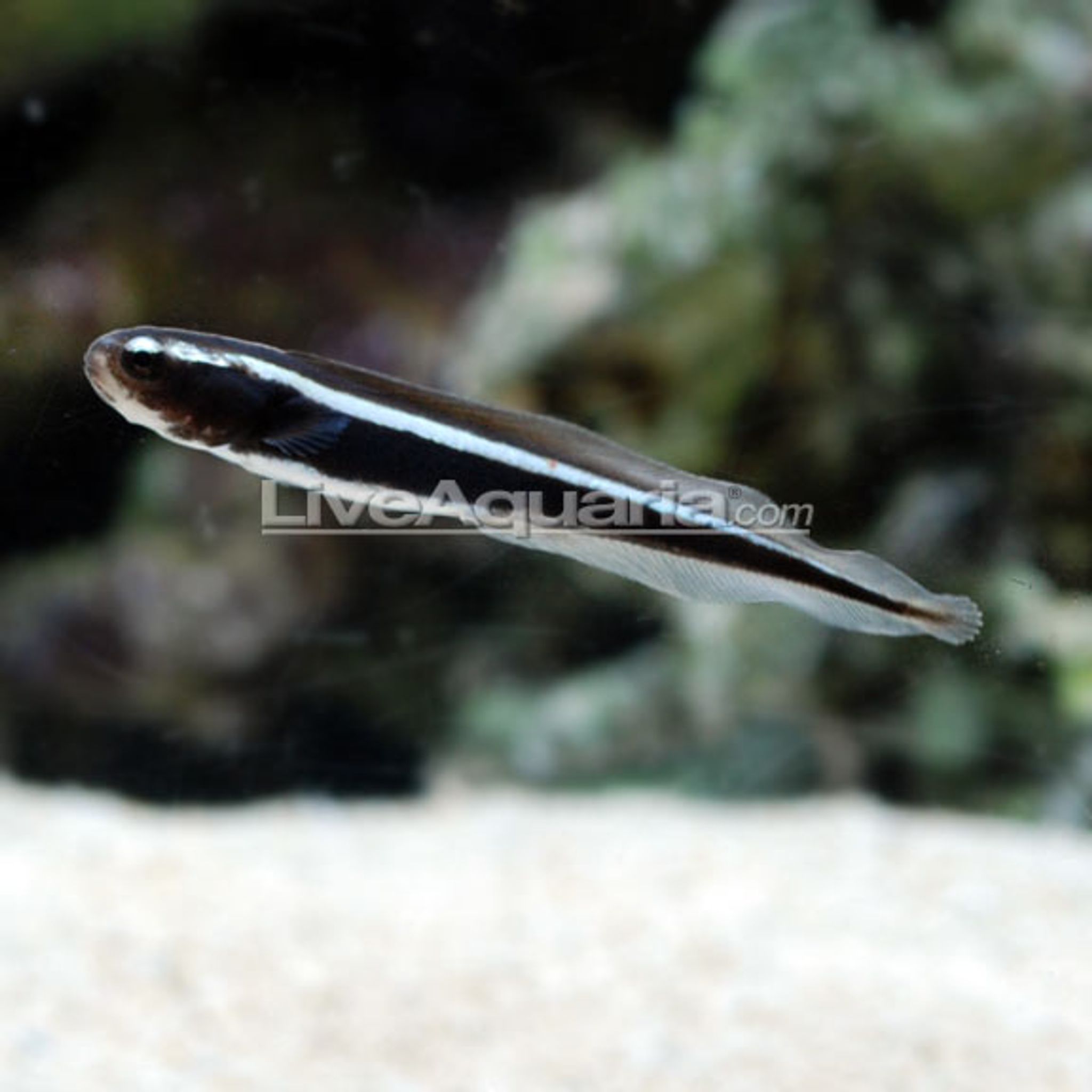
- Juveniles are black with a bold white or cream horizontal stripe running the length of the body. They school in open water above reef rubble in tight, coordinated groups.
- This striped schooling pattern is believed to mimic the venomous striped eel catfish (Plotosus lineatus), which predators avoid. By looking and swimming like a toxic species, young Engineer Gobies gain a layer of protection they don't actually possess.
- Once a juvenile passes roughly 5–6 inches, the stripe fades, the schooling behavior stops, and the fish develops mottled, eel-like adult coloration. It becomes solitary and burrows rather than schools.
Buyers who don't know this transformation is coming are often surprised when their "cute striped schooling fish" becomes a reclusive, tunnel-dwelling adult that rarely shows itself.
Size and Tank Requirements
In the wild, adult Engineer Gobies can reach 18–24 inches (45–60 cm). Captive specimens commonly stay smaller, but they're still large-bodied, elongated fish that need real swimming and burrowing space — not a nano tank.
| Life stage / setup | Minimum tank size | Notes |
|---|---|---|
| Single juvenile, short term | ~30 gallons (114 L) | Only acceptable as a temporary home |
| Single adult, long term | 75–125+ gallons (285–475+ L) | Matches adult length and burrow range |
| Small juvenile school (5+) | 125+ gallons (475+ L) | Space scales with group size, not just fish count |
General fish-database sites sometimes list 30 gallons as fine on its own. Specialty marine sources push back, and the more detailed view should win here: 30 gallons only works for a juvenile in the short term. Long-term planning should assume the tank listed above, especially if you're keeping a group.
Water Parameters
This is a true marine species and needs full reef-standard conditions — not the freshwater-style ranges (70s °F, pH 6–8) that occasionally show up in mislabeled aggregator content.
- Temperature: 74–80°F (23–27°C)
- pH: 8.1–8.4
- Specific gravity: 1.020–1.025
- Alkalinity: 8–12 dKH
- Ammonia/nitrite: near zero
- Nitrate: kept low
Tank Setup for a Burrower
Adults dig extensive tunnels through sand and under rock, so the aquascape has to be built with that in mind from day one.
- Secure all rockwork on the glass bottom, not stacked loosely on top of sand. Rock resting only on sand will collapse once tunnels form underneath it.
- Provide several inches of sand as a substrate base to give the fish room to dig without exposing the glass or undermining structures.
- Offer PVC pipe sections or pre-made caves as burrow substitutes. These redirect digging energy toward a stable structure instead of the base of your rockwork.
- Protect sumps and overflows from sand disturbance — active digging can kick substrate toward intake points over time.
- Keep corals mounted securely and away from active burrow zones so they aren't undermined or toppled, even though the goby won't eat or sting them directly.
Feeding Routine
Engineer Gobies are omnivorous to carnivorous feeders.
- Offer meaty frozen foods such as mysis, brine shrimp, and chopped seafood, along with sinking pellets.
- Juveniles also pick plankton out of the water column while schooling.
- Feed small portions twice daily rather than one large feeding.
- Because adults are shy and spend the day hidden, watch closely to confirm food is actually reaching them and they aren't being outcompeted at feeding time.
Keeping Juveniles Solo vs. in a Group
A single juvenile does fine and will grow normally, but it loses the natural schooling display that makes this fish interesting at that life stage. Keeping five or more juveniles together in a sufficiently large tank replicates their natural burrow-colony behavior and looks far more dynamic. Just remember that tank size needs to scale up with group size — a school needs meaningfully more room than a single fish, both for swimming and for burrow space as they mature.
Reef and Invertebrate Safety, in Detail
Engineer Gobies are reef-safe with corals and sessile invertebrates, provided rockwork is secured as described above. They are not safe for small ornamental crustaceans once they mature.
At risk as the goby grows:
- Cleaner shrimp
- Peppermint shrimp
- Fire shrimp
- Small ornamental hermit crabs
- Small ornamental crabs generally
Some general community-fish guides describe this species simply as a "peaceful community fish" with no caveat about invertebrates. That's incomplete. Specialty marine sources are clear that predation on small crustaceans is tied to known feeding biology as the fish matures, and that's the standard to plan around — treat it as reef-safe and fish-safe, but not small-invertebrate-safe.
Peaceful Tank Mates
These generally coexist well with Engineer Gobies of similar or larger size:
- Clownfish, browsable in the Clownfish category
- Larger wrasse species — see the Wrasse selection
- Tangs and larger angelfish
- Larger gobies and blennies, cardinalfish, and larger dartfish
- Non-aggressive sand-sifting or semi-burrowing fish, given enough space to avoid territorial overlap
The Engineer Goby is not territorial the way damsels or dottybacks can be, and it's shy rather than confrontational, so it rarely initiates conflict with tank mates of its own size or larger.
Risky, Case-by-Case Tank Mates
- Small or juvenile ornamental shrimp and hermit crabs — often fine while the goby is small, increasingly risky as it matures and its predatory instinct toward crustaceans develops.
- Small, slow-moving, or bottom-dwelling fish that might be viewed as competition for burrow space, or occasionally bothered opportunistically.
- Very boisterous or aggressive species, such as large triggers or large eels — the risk here runs the other way, since the Engineer Goby is passive and hides rather than defends itself.
Incompatible Tank Mates
- Small ornamental cleaner, peppermint, or fire shrimp and small crabs long term, once the goby reaches adult size
- Fish that require pristine, undisturbed fine sand beds or very shallow substrate — constant digging will disturb them
- Corals or rockwork that cannot be secured to the glass or tank bottom, due to burrow-collapse risk
Common Mistakes to Avoid
- Buying a small juvenile for a nano or small reef tank without planning for an 18–24 inch adult, which often forces a rehoming decision later.
- Stacking rock loosely on sand instead of securing it to the glass bottom — a setup that collapses once tunneling begins.
- Assuming full invertebrate safety and adding prized cleaner shrimp or crabs that later disappear as the goby matures.
- Confusing this species with true gobies or blennies and expecting a small, non-burrowing adult.
- Under-providing hiding and burrow structure, which produces a constantly stressed fish that won't emerge to feed.
- Keeping a single juvenile while expecting schooling behavior — schooling only occurs with multiple individuals.
Frequently Asked Questions
Is the Engineer Goby the same as the Convict Blenny?
Yes. Both names refer to the same species, Pholidichthys leucotaenia, and it's marketed under either label depending on the retailer. Despite the naming, it's technically neither a true goby nor a true blenny.
How big does an Engineer Goby get?
In the wild it can reach roughly 18–24 inches. Captive adults are often somewhat smaller, but they're still large for what's marketed as a "goby" and need a correspondingly big tank.
Is the Engineer Goby reef safe?
Yes for corals and sessile invertebrates, as long as rockwork is properly secured. It is not safe for small ornamental shrimp and crabs once it reaches adult size.
Can I keep Engineer Gobies with clownfish or tangs?
Yes. They're generally peaceful and get along with most community reef fish of similar or larger size, including clownfish and tangs.
Do Engineer Gobies need to be kept in groups?
No, a single juvenile is fine, but juveniles display natural schooling behavior and look their best in a small group when the tank is large enough to support it.
Will an Engineer Goby destroy my reef tank?
It can rearrange sand and undermine unsecured rock or coral through its burrowing, but it won't eat or sting corals directly. Securing rockwork to the tank bottom prevents most of this damage.
What do Engineer Gobies eat, and will they eat my other fish?
They eat meaty frozen and prepared foods and aren't aggressive toward other fish. They will, however, opportunistically prey on small shrimp and crabs as they mature.
What size tank does an Engineer Goby need?
About 30 gallons is acceptable for a juvenile short term, but plan for 75–125+ gallons long term for an adult or a small school.
If you're planning a build around this species, browse compatible options in Marine Fish on FishyHub to find peaceful tank mates sized appropriately for an Engineer Goby's long-term home.


