1–7 of 7
Explore Gar fish for sale in Singapore from aquarium shops, breeders and specialist monster fish sellers on FishyHub. Compare freshwater Gar species by size, appearance, condition and seller.
Gars are prehistoric-looking freshwater predators known for their elongated bodies, long jaws and armoured scales. They are powerful fish that can become very large, so exact species identification, long-term tank planning and current ownership requirements should all be checked before purchase.
Gars belong to the family Lepisosteidae and are native to freshwater and brackish habitats in North and Central America.
Different Gar species vary significantly in adult size, body shape and long-term housing needs, making scientific identification especially important for monster fish keepers.
Several Gar species are known in the aquarium hobby, although availability and legal status may vary by location.
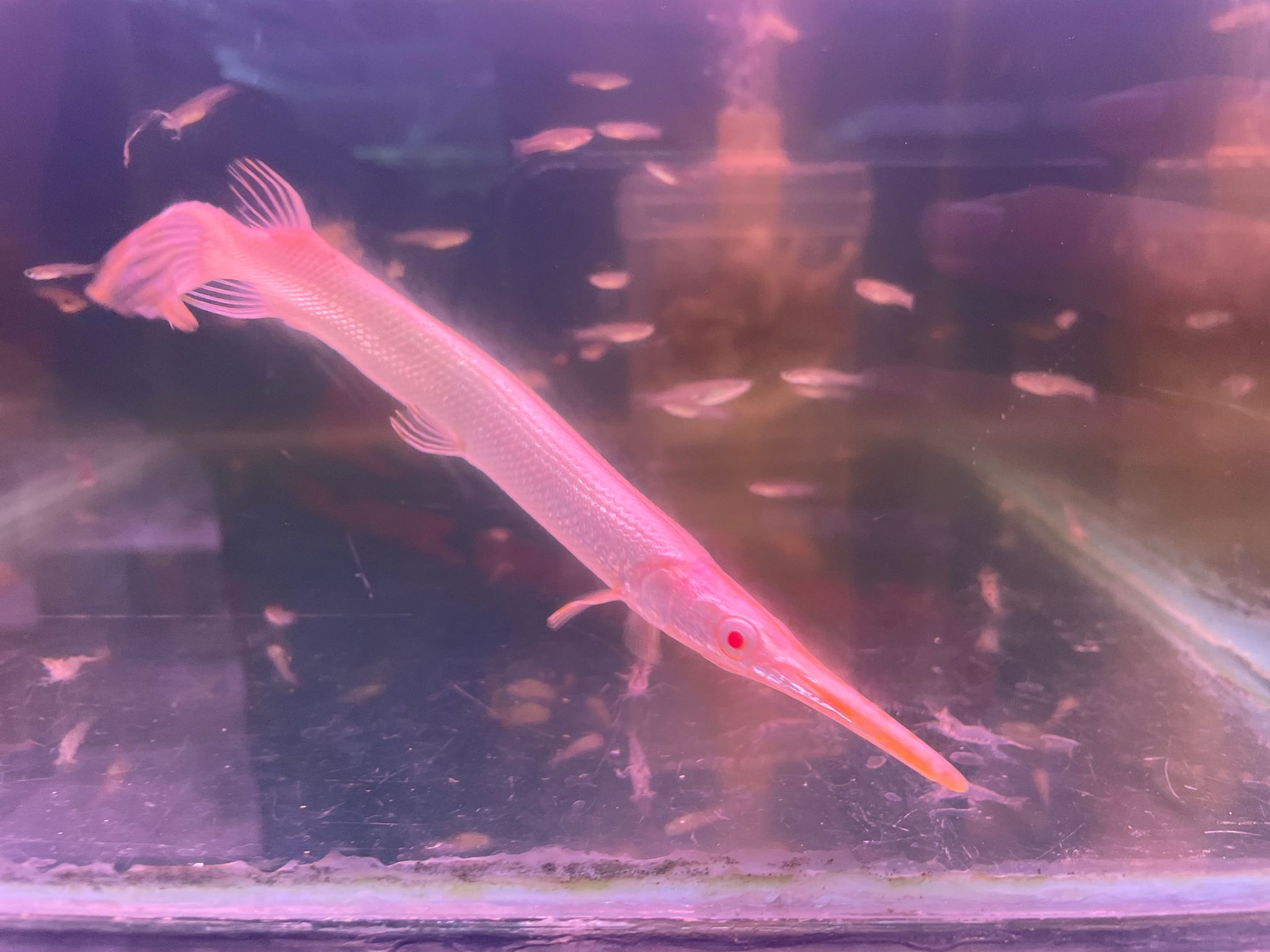
Florida Gars have long, narrow bodies and elongated jaws and are among the more recognisable Gar species in the aquarium trade. They still become substantial fish and require large long-term housing.
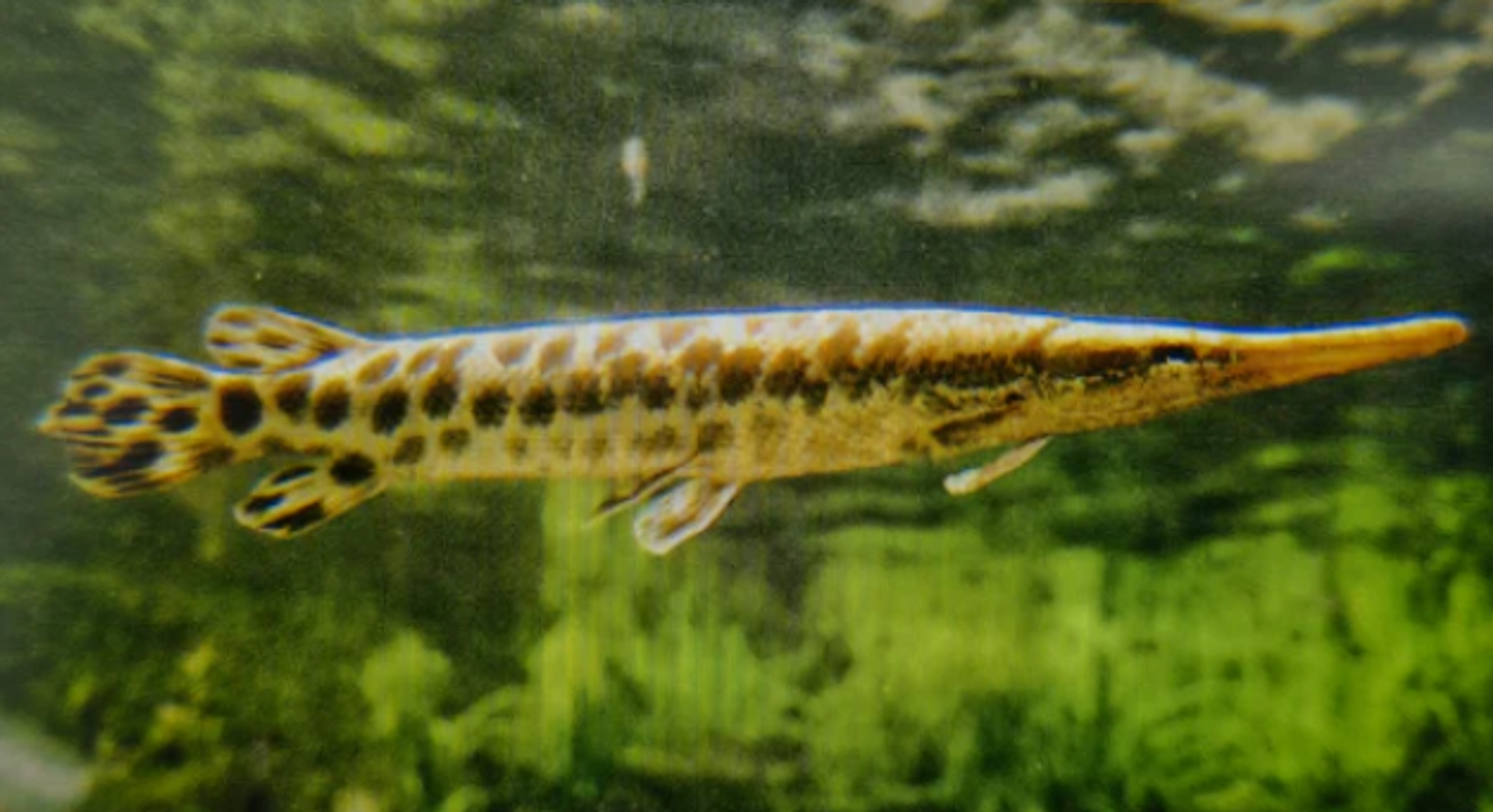
Spotted Gars are recognised by dark spotting across the body and fins. Their attractive pattern does not change the fact that they are large predatory fish requiring significant space.
Alligator Gars are among the largest Gar species and can become enormous. They are not suitable for ordinary home aquariums and require specialist long-term housing where legally permitted.
Other Gar species may appear depending on specialist availability. Always confirm exact identification, adult size and current local regulations before purchase.
Gar fish can grow far larger than typical aquarium fish.
Adult size differs by species, but even comparatively smaller Gars need substantially more space than ordinary community fish. Plan around mature size rather than juvenile shop size.
Gar fish require long, spacious aquariums or other suitable specialist housing.
Horizontal swimming space and enough room to turn comfortably are especially important because of their elongated bodies.
A suitable Gar setup may include:
Avoid crowded layouts that restrict the fish's ability to turn or cruise through the tank.
Yes. Gars are ambush predators with long jaws adapted for capturing fish and other prey.
Tankmates small enough to fit in the mouth can eventually be eaten, even if they initially appear safe.
Gar fish are carnivorous predators.
Depending on the individual, suitable carnivore pellets and other appropriately sized protein-rich foods can form part of a varied aquarium diet.
Juvenile Gars need appropriately sized foods and should be monitored carefully to confirm consistent feeding.
Avoid overfeeding and make sure food quality matches the nutritional needs of a growing predatory fish.
Adult Gar can consume substantial amounts of food and may create a significant bioload.
Strong filtration and sensible feeding schedules are therefore important parts of long-term care.
Suitable tankmates should be large enough not to be considered prey and robust enough to coexist with a large predatory fish.
Compatibility depends on the size and temperament of both the Gar and the other fish.
Gars and Arowana are sometimes kept together in very large predator aquariums.
Both are powerful surface and midwater predators, so tank dimensions, mature size and feeding competition should be considered carefully.
Bichirs may coexist with suitably sized Gars in spacious aquariums because Bichirs spend more time near the bottom.
Size matching remains essential because a sufficiently large Gar may attempt to swallow smaller tankmates.
Suitably sized Oscars may sometimes coexist with Gar in large predator setups.
Monitor aggression, feeding competition and whether the Oscar harasses a slower-moving Gar.
Large Gars and freshwater stingrays may sometimes share specialist display aquariums because they generally use different parts of the tank.
The aquarium must provide substantial space for both fish, and feeding should be managed so neither is consistently outcompeted.
Some large catfish may coexist with Gar in specialist monster fish aquariums.
Mature size, mouth size and feeding behaviour should be considered carefully because either fish may become capable of injuring or swallowing the other.
Small fish are generally unsuitable tankmates.
Gars are predators and may consume fish that can fit inside their mouths.
Multiple Gars may sometimes be kept together when they are appropriately size-matched and have enough space.
Large size differences can create predation risk, while crowding can increase stress and feeding competition.
Gar fish can make sudden powerful movements and may jump when startled.
A secure aquarium cover is strongly recommended, particularly around openings for filter pipes, cables and feeding.
Gars possess specialised adaptations that allow them to gulp atmospheric air at the surface.
They still require clean, well-filtered water, so air-breathing ability should never be treated as a substitute for good aquarium maintenance.
Gars can technically be kept with aquatic plants, but their size and swimming requirements make dense aquascapes less practical.
Open swimming room should take priority, with plants and hardscape positioned so the fish can move freely.
Gar fish benefit from stable, clean water and consistent aquarium maintenance.
Exact temperature and water chemistry preferences vary by species, so care should be based on the particular Gar being kept.
Large predatory fish can produce substantial waste, making strong biological and mechanical filtration important.
Large canister filters, sump systems and other high-capacity filtration approaches may be appropriate depending on aquarium size and stocking.
Gar are generally better described as predatory rather than constantly aggressive.
They may appear calm around suitably sized tankmates but can quickly capture fish small enough to be considered prey.
Gar fish are generally not beginner aquarium fish.
Their adult size, predatory diet, powerful movement and long-term housing requirements make them more suitable for experienced monster fish keepers.
Sexing Gar visually can be difficult, especially when fish are young.
Size and body shape differences may become more apparent in mature fish, but they are not always reliable for casual identification.
Gar breeding is far more specialised than breeding common aquarium fish.
Their large adult size and reproductive behaviour make breeding projects more appropriate for specialist facilities than ordinary home aquariums.
When comparing Gar fish for sale, look for:
Jaw and snout condition are particularly important because long-jawed fish can injure themselves if kept or transported in unsuitable spaces.
Introduce new Gar carefully to avoid sudden changes in temperature and water chemistry.
The aquarium should already provide sufficient space and secure cover before the fish arrives, especially for larger specimens.
Gar prices in Singapore vary according to species, size, source, rarity, condition and seller.
Larger specimens and less commonly available species may be valued differently from juvenile fish.
FishyHub brings Gar listings from aquarium shops, breeders and specialist monster fish sellers across Singapore together in one marketplace, making it easier to compare available fish from multiple sources.
When comparing Gar listings, consider:
Availability and regulations can vary by species, so buyers should verify current Singapore requirements before purchasing or importing any Gar.
Gars are primarily freshwater fish, although some species can also occur in brackish environments.
Yes. They are ambush predators and can eat fish small enough to fit in their mouths.
Suitably sized individuals are sometimes kept together in very large predator aquariums, but adult size and feeding competition must be considered.
They sometimes can when both fish are appropriately size-matched and the aquarium is large enough.
They are sometimes combined in very large specialist aquariums, but space, feeding and mature size need careful planning.
Gars can gulp atmospheric air using specialised respiratory adaptations.
Adult size varies greatly by species, with some Gars becoming extremely large and unsuitable for ordinary aquariums.
Ownership and import requirements can depend on the exact species and current regulations. Buyers should verify the latest Singapore rules before purchase or import.
Explore Gar fish for sale on FishyHub and compare available freshwater Gar species from aquarium sellers, breeders and specialist monster fish keepers across Singapore. Compare species, size, condition and price while planning carefully for long-term housing and current ownership requirements.