1–0 of 0
No products found
Isopods are small land crustaceans, the same family as the pill bugs and woodlice you may spot under flowerpots in a Malaysian garden. In the hobby they play two roles: a working cleanup crew that breaks down waste in a bioactive terrarium, and colourful display pets in their own right. This category also covers springtails and other terrarium invertebrates, including feeder insects.
Isopods suit terrarium and paludarium builders, reptile and frog keepers, and anyone who wants a low-noise, low-space pet. On FishyHub you can compare isopod cultures and invertebrates from Malaysian breeders and hobbyists, with prices in RM and the seller's delivery details on each listing.
No. Isopods are crustaceans, more closely related to shrimp and crabs than to beetles or ants. They breathe through gill-like structures, which is why they need humidity to survive. Springtails, often sold alongside them, are tiny six-legged hexapods that are not true insects either, though they're usually grouped with them.
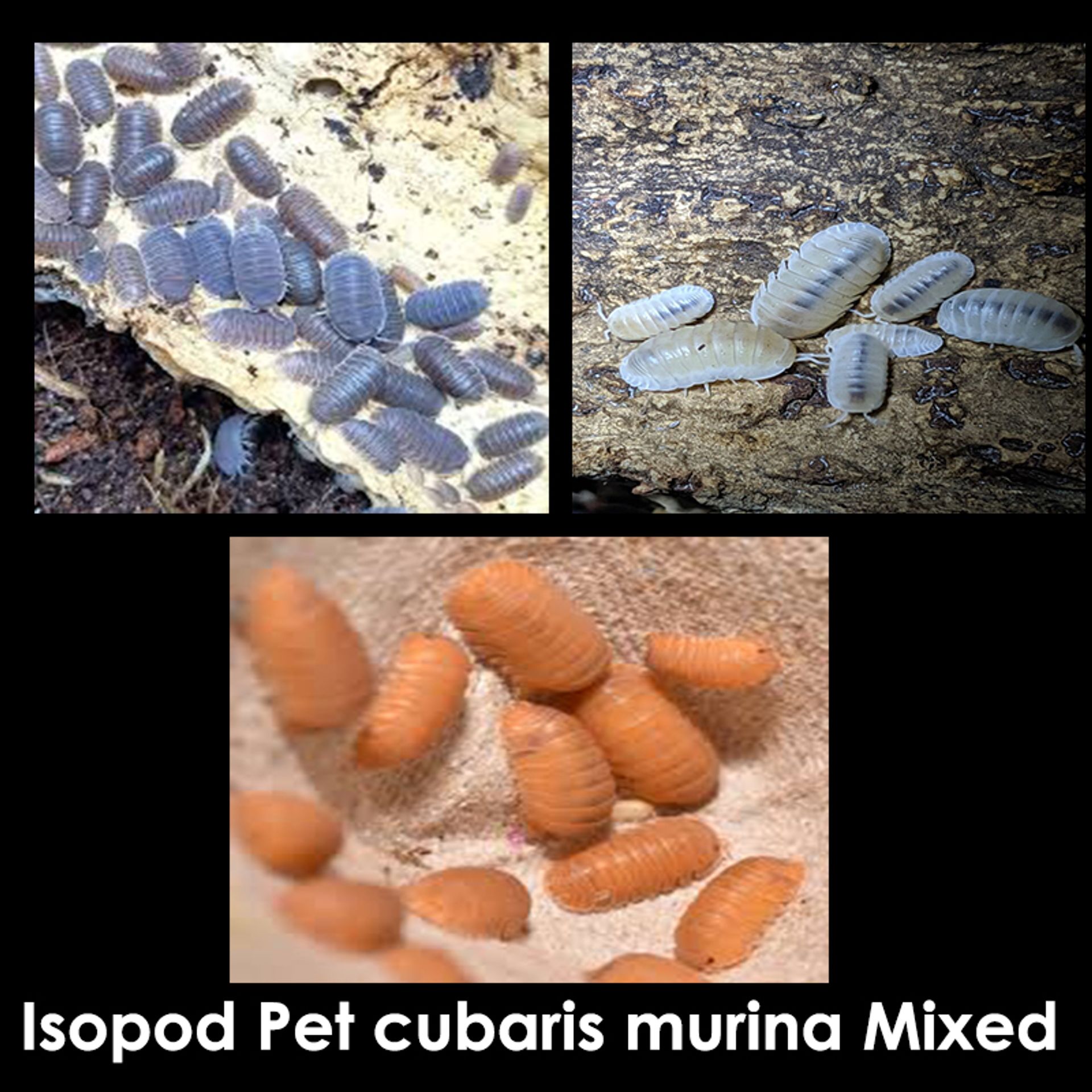
Fast-breeding, hardy species such as Porcellionides pruinosus (powder orange, powder blue) and dwarf white isopods are favourites for bioactive tanks. They tolerate a range of conditions and multiply quickly, so a starter culture soon becomes a working colony.
Species and morphs kept mainly for looks. Cubaris isopods, such as the well-known "rubber ducky", are popular across Southeast Asia, and there are also Porcellio morphs with spotted, striped or high-contrast patterns (for example dairy cow types) and roll-up Armadillidium species. Many display species breed slowly, which is reflected in price.
If it's your first colony, start with a hardy, fast-breeding species. They forgive mistakes with moisture and food, and you'll learn the basics before moving to rarer types.
Springtails eat mould and the tiniest scraps, which isopods leave behind. Most bioactive keepers use both together. Depending on what sellers list, you may also find display insects and feeder cultures for reptiles, amphibians and insect-eating fish. Care varies hugely between species, so research the exact animal.
| Care point | Guide |
|---|---|
| Temperature | Many species do well around 22–28°C. Malaysian rooms at 26–31°C suit hardy species; sensitive ones may need the coolest spot in the house. |
| Enclosure | A ventilated plastic tub or small glass enclosure; size depends on colony size. |
| Humidity | A gradient: one side moist, one side drier, so the colony can choose. |
| Substrate | Organic soil or coco fibre mixed with leaf litter and rotting wood. |
| Diet | Leaf litter and decaying wood, plus vegetables, fish flakes or protein food; a calcium source such as cuttlebone. |
| Beginner-friendly? | Yes for hardy species; rarer species need more experience. |
Malaysia's natural humidity is a big help: enclosures dry out more slowly than in air-conditioned climates elsewhere, so you may need to mist less. The flip side is heat and stuffiness. A sealed tub sitting near a sunny window or on a hot condo shelf can overheat and grow mould quickly.
In a bioactive setup, isopods and springtails eat droppings, shed skin, dead leaves and mould, helping keep the enclosure clean. Match the isopod species to the main animal's conditions: humid tropical isopods for a dart frog or gecko tank, drier-tolerant species for arid setups. Some reptiles and frogs will eat isopods, so a larger starter culture helps the colony establish. A cleanup crew reduces maintenance but doesn't replace it.
Set up the enclosure first, with damp substrate, leaf litter, hides and food already in place, then add the isopods. Leave them undisturbed for a few weeks. Signs of a healthy colony include steady feeding, animals of different sizes and young appearing over time. Keep different species in separate tubs if you want to maintain pure lines; one species may outcompete another.
Prices in RM depend on species, morph, rarity and culture size. Common cleanup crews are usually affordable, while rare display isopods cost much more. Invertebrates in small tubs generally travel better than fish, though buyers in Sabah and Sarawak should still check with the seller, as delivery takes longer.
Isopod makan daun kering, kayu reput dan bahan organik yang mereput. Boleh juga beri sayur, sedikit flake ikan dan sumber kalsium seperti cuttlebone.
Isopod sesuai untuk terrarium bioaktif, terutamanya untuk katak, cicak gecko dan terrarium pokok. Pilih spesies yang sesuai dengan kelembapan haiwan utama.
Yes. They're the classic cleanup duo: isopods handle larger waste and springtails tackle mould and tiny bits.
The usual causes are an enclosure that's too dry, too wet with no airflow, overheating, or not enough leaf litter and calcium. Check moisture gradient and ventilation first.
You can, but one species often takes over. Keep separate cultures if you care about a particular morph.
Browse cleanup crew isopods, display species, springtails and other invertebrates from Malaysian sellers, with prices in RM. Building a terrarium? Also look at terrarium plants, moss and hardscape.