

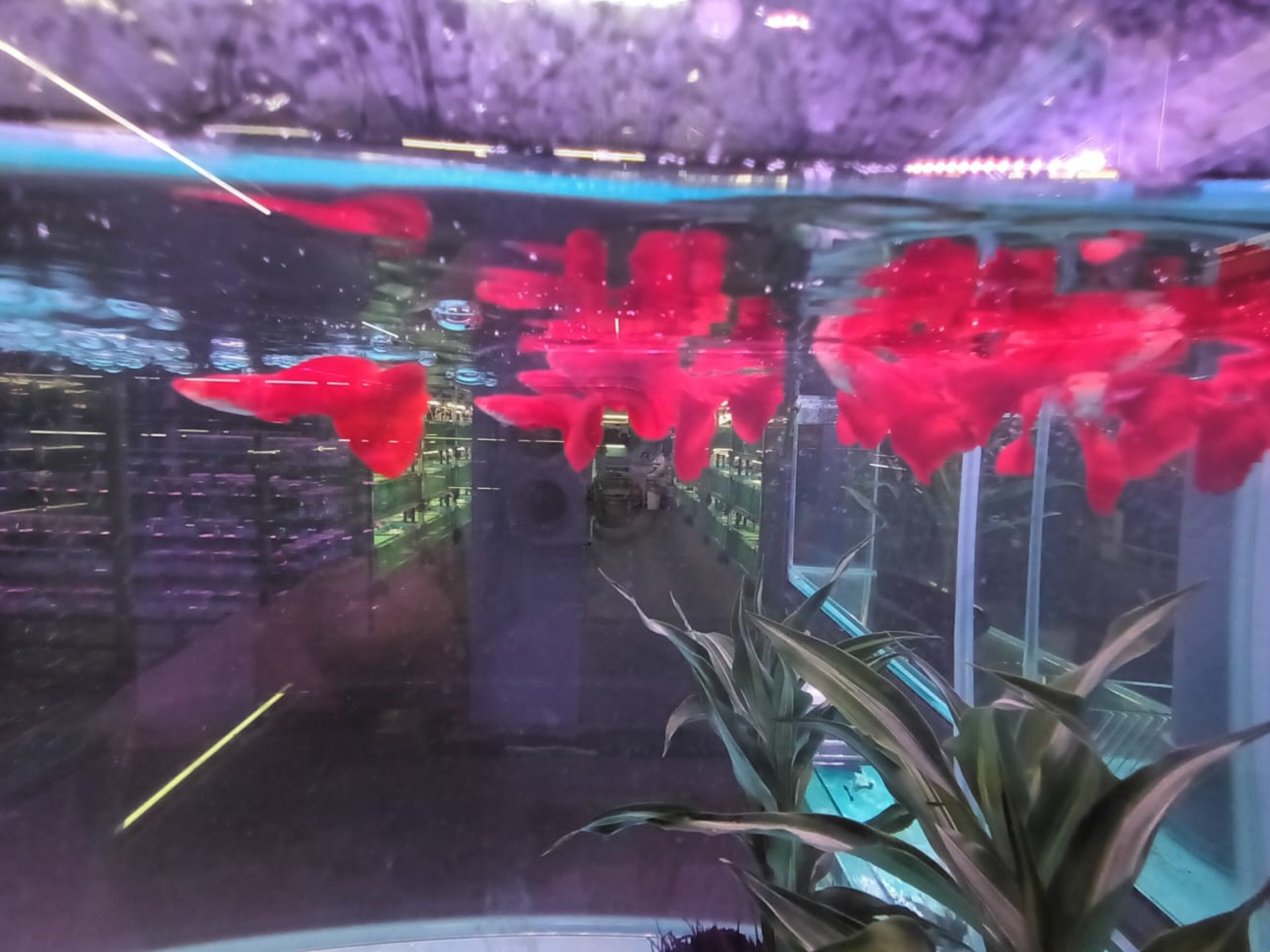

Penyakit Ikan Guppy: Signs a Guppy Is Sick & How to Treat It
The most common penyakit ikan guppy (guppy diseases) are clamped fins and "shimmying", tail rot, white spot, camallanus worms, velvet and columnaris-type bacterial infections. Early signs of a sick guppy are easy to spot: fins held tight against the body, a guppy swaying in place, a ragged tail, loss of colour, hiding, or red threads poking out of the vent. In Malaysia, two things trigger most outbreaks: new fish added without quarantine, and soft, low-mineral tap water that leaves guppies stressed. Fix the water, isolate the sick fish, and treat the colony if the problem is contagious.
Tanda Ikan Guppy Sakit: Early Warning Signs
Check your guppies daily at feeding time. Watch for:
- Fins clamped against the body instead of spread
- Shimmying: swaying side to side without moving forward
- Ragged, shrinking or white-edged tails
- White spots, a gold dust coating, or cotton-like tufts
- Red threads hanging from the vent (anus)
- Hiding, sitting at the bottom, or hanging at the surface
- Not eating, or spitting food out
- A thin, pinched belly despite eating
- Bent spine in older fish
Penyakit Ikan Guppy: Symptom Table
| Symptom | Likely problem | Contagious? |
|---|---|---|
| Clamped fins, shimmying | Stress from water quality, low minerals or sudden changes | Not usually |
| Ragged or rotting tail | Fin/tail rot (bacterial) | Can spread in poor water |
| White salt-like dots | White spot (ich) | Yes |
| Fine gold or rusty dust | Velvet | Yes |
| White patches, "saddle" marks, frayed mouth | Columnaris-type bacterial infection | Yes, fast in warm water |
| Red threads from the vent | Camallanus worms | Yes |
| Thin body despite eating | Internal parasites, or "wasting" | Often |
| Raised scales, swollen belly | Dropsy (sisik nanas) | Underlying cause may be |
| Gasping at the surface | Low oxygen, ammonia, gill problems | Depends |
Why Malaysian Water Matters for Guppies
Guppies come from fairly hard, mineral-rich water. Much of Malaysian tap water is soft with low KH, so:
- pH can swing, especially in tanks with many fish and few water changes.
- Guppies in very soft water often show clamped fins and shimmying.
- Fry may grow slowly or develop deformities.
What helps:
- Test KH, GH and pH with a test kit.
- Some guppy keepers add crushed coral, a mineral supplement or a little garam ikan to raise minerals. Do this gradually and test, rather than guessing.
- Always use anti klorin. Read our tap water anti klorin guide.
Common Guppy Diseases in Detail
Shimmying and clamped fins
Usually a symptom, not a disease. Causes include poor water, low minerals, sudden temperature changes or ammonia. Improve water quality and mineral content first. If other fish start showing spots or rot, treat that specific problem.
Tail rot (reput ekor)
Fancy guppies with large tails are prone to tail rot when water is dirty.
- Do a 30% water change and clean the filter sponge in old tank water.
- Use an antibacterial treatment if the rot keeps progressing.
- Remove any fin-nipping tankmates. Tails often regrow once the infection stops.
Columnaris-type infections
These bacterial infections cause white or greyish patches, often on the back ("saddleback") or mouth, and can kill quickly in warm water.
- Isolate sick fish.
- Use a suitable antibacterial treatment promptly.
- Don't raise the temperature; heat speeds this bacteria up.
Camallanus worms
Red, thread-like worms hanging from the vent. They're common in guppies from crowded farms.
- Treat the whole tank, not just the fish you can see worms on.
- Dewormers that contain levamisole or flubendazole are commonly used for camallanus; check the active ingredient on local products and follow the label.
- Repeat the treatment after a couple of weeks, as recommended, to catch newly hatched worms.
- Vacuum the substrate between doses.
White spot and velvet
Both are parasites that spread quickly. White spot looks like salt grains; velvet looks like fine gold dust and is easier to see with a torch. See our white spot treatment guide.
Treating a Guppy Colony
Guppy keepers often have one tank full of fish, plus fry. Treatment needs a plan:
- Separate visibly sick fish into a hospital tank to reduce spread and for easier treatment.
- Identify the problem with the table above. Don't throw multiple medicines in at once.
- Treat the main tank too if the disease is contagious (white spot, velvet, camallanus, columnaris).
- Remove shrimp and snails if the medicine isn't invertebrate-safe.
- Remove activated carbon and keep an air stone running.
- Protect fry: fry are more sensitive to some medicines; check the label.
- Finish the course, then do a water change.
Find treatments on the ubat ikan (medication) page.
Prevention: Healthier Guppies
- Quarantine new guppies for 2–4 weeks. Read our quarantine tank guide.
- Don't overstock. Guppies breed fast; rehome or separate fry before the tank gets crowded.
- Weekly water changes of 25–30%.
- Varied diet: flakes, micro pellets, and live or frozen foods like artemia and bloodworm.
- Stable minerals and pH.
- Avoid inbreeding in long-running colonies by adding new bloodlines from other breeders (after quarantine).
For the full care basics, see our guppy care guide.
Buying Healthy Guppies on FishyHub
When browsing guppies from Malaysian sellers:
- Ask whether the fish are from the seller's own tanks or a farm batch.
- Look for spread fins, active swimming and clean vents in the photos or videos.
- Check each listing's delivery or self-collect options and live-arrival terms.
Frequently Asked Questions
Kenapa ikan guppy duduk diam di dasar? Ikan guppy yang duduk diam biasanya tertekan kerana kualiti air, suhu yang berubah atau penyakit. Uji ammonia dan nitrit, tukar sebahagian air dan perhatikan sama ada ada bintik putih, ekor reput atau cacing merah di dubur.
Ekor ikan guppy reput, macam mana nak rawat? Tukar 30% air, bersihkan span penapis dengan air akuarium lama, dan gunakan ubat antibakteria jika reput semakin teruk. Ekor biasanya tumbuh semula selepas jangkitan berhenti.
What are the red threads coming out of my guppy? Most likely camallanus worms. Treat the whole tank with a suitable dewormer and repeat as the label advises.
Why is my guppy shimmying? Shimmying is usually a stress sign linked to poor water, low minerals or temperature swings. Test the water and fix the cause first.
Can I use salt for sick guppies? Guppies tolerate low doses of aquarium salt, which can reduce stress. It doesn't cure every disease, and you should remove salt-sensitive tankmates or plants first.
Keep your guppy colony healthy. Browse guppies, fish medication and water test kits from Malaysian sellers on FishyHub.