

Ikan Corydoras: Cory Catfish Care, Sand & Group Size
The ikan corydoras (cory catfish) is the cheerful little armoured catfish that snuffles through the bottom of community tanks. To keep corydoras happy in Malaysia: buy at least six of the same species, give them soft sand or very smooth gravel so their whiskers (barbels) stay intact, feed sinking food because they rarely get the flakes, and choose heat-tolerant species if your room regularly hits 30°C. They are peaceful, hardy once settled, and a natural partner for tetras, rasboras and angelfish.
Ikan Corydoras Care Sheet
| Need | Recommendation |
|---|---|
| Size | Pygmy about 2–3 cm; most species about 4–7 cm |
| Group | 6 or more of one species |
| Tank | 2 kaki (~55 L) for a group of 6–8; 1.5 kaki for pygmy corys |
| Temperature | Depends on species, see table below |
| Water | Treated tap water, pH about 6.0–7.5; clean, low nitrate |
| Substrate | Fine, rounded sand or smooth small gravel |
| Diet | Sinking wafers, pellets, frozen bloodworm |
| Temperament | Peaceful |
| Beginner-friendly? | Yes, in a cycled tank |
Heat Tolerance by Species
Malaysian homes sit around 26–31°C. Not all corydoras enjoy that. This is one of the most overlooked points in cory care.
| Species | Comfortable range (approx.) | Malaysian room? |
|---|---|---|
| Bronze / albino (C. aeneus) | Wide, about 22–28°C | Yes, very adaptable |
| Sterbai (C. sterbai) | About 24–29°C | Yes, one of the best for warm tanks |
| Panda (C. panda) | About 22–26°C | Only with shade, aeration or a fan |
| Peppered (C. paleatus) | About 20–26°C | Prefers cooler; use a fan |
| Pygmy (C. pygmaeus) | About 22–26°C | Shade and aeration; avoid hot rooms |
| Julii / false julii | About 24–28°C | Usually fine with aeration |
Ranges are approximate guides from hobby literature. If your tank regularly reads 30°C or more, start with bronze, albino or sterbai, add an air pump, and use a cooling fan for cooler-water species. Our cooling guide has more.
Popular Corydoras in Malaysia
Corydoras panda
White body with black "eye patch", dorsal and tail spot. Very popular and charming, but one of the species that prefers cooler water and is more sensitive in its first weeks.
Corydoras pygmy
A tiny species that often swims mid-water in loose groups, unlike most corys. Perfect for nano tanks with shrimp and small rasboras (see our chili rasbora guide). Needs very fine food.
Ikan corydoras albino
Usually the albino form of the bronze cory (C. aeneus): pink-white with red eyes. Among the hardiest corys and a good beginner choice in warm rooms.
Sterbai, julii and others
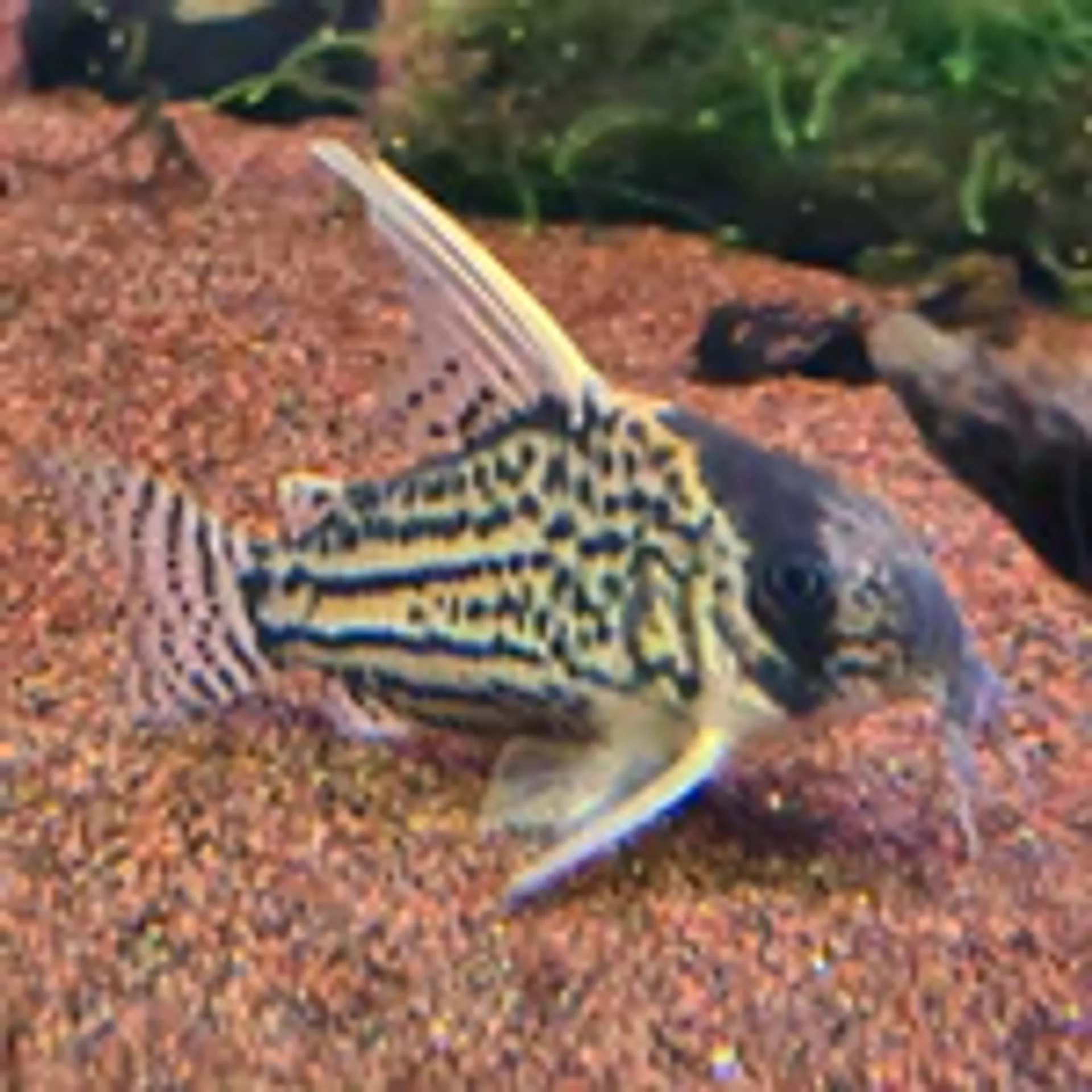
Sterbai have dark bodies with white spots and orange fins. Julii and false julii have fine spotted patterns. All share the same basic care.
Browse current stock on our corydoras listings.
Sand and Barbels
Corydoras feed by pushing their barbels into the substrate. Sharp or coarse gravel, combined with dirty substrate, is widely linked to eroded or missing barbels. Best choices:
- Fine, rounded aquarium sand (the ideal)
- Smooth, small-grain gravel if you must use gravel
- Clean substrate: vacuum lightly during water changes so food doesn't rot
Avoid sharp crushed rock and very coarse gravel. See the gravel and sand range for cory-friendly options. If you have an aquasoil planted tank, leave a sand patch at the front where corys can forage.
Group Size and Behaviour
Corys are shoaling fish. Kept alone or in pairs, they hide and stress. In groups of six or more they forage together, rest in piles and dart up to the surface.
Is surface-dashing normal?
Yes. Corydoras can gulp air from the surface and absorb oxygen through their gut. An occasional dash is normal. Constant surface trips suggest low oxygen or poor water, common in hot Malaysian tanks, so add aeration and test the water.
Feeding Corydoras
Corys are not "cleaners" that live on leftovers. They need their own food:
| Food | Notes |
|---|---|
| Sinking wafers or catfish pellets | Staple; drop after lights-off if tank mates steal food |
| Frozen bloodworm, artemia | 2–3 times a week |
| Micro pellets | For pygmy corys |
Find suitable foods under food for pleco and bottom feeders. Feed what they finish in a few minutes; leftovers rot in the sand.
Water and Tank Mates
- Water: Treat tap water with anti klorin. Corys are sensitive to nitrate build-up, so keep weekly water changes going.
- Medication and salt: Corydoras are often described as sensitive to aquarium salt and some medications. Use half doses or check the label, and treat in a separate tank where possible.
- Tank mates: tetras, rasboras, guppies, platies, gouramis, angelfish, bettas and shrimp.
- Avoid: large cichlids that could swallow them, goldfish (different temperatures) and aggressive bottom dwellers.
Handling Tip: Spines
Corydoras have sharp spines on their dorsal and pectoral fins. Catch them in a container, not a fine net, because the spines tangle in mesh. When bagging corys for transport, use thicker bags.
Common Problems
- Fish dying in the first week: often ammonia in a new tank or transport stress. Cycle first.
- Red, eroded barbels: dirty or sharp substrate. Switch to sand and clean more often.
- Rapid gill movement and surface gasping: low oxygen or high temperature. Add an air pump.
- Thin bellies: not enough food reaching the bottom.
Frequently Asked Questions
Ikan corydoras makan apa?
Ikan corydoras makan makanan tenggelam seperti wafer ikan dasar atau pelet catfish, ditambah cacing darah beku atau artemia beberapa kali seminggu. Jangan harap ia hidup hanya dengan sisa makanan ikan lain.
Ikan corydoras perlu berapa ekor?
Sekurang-kurangnya 6 ekor daripada spesies yang sama. Corydoras ialah ikan berkumpulan, dan dalam kumpulan besar ia lebih aktif dan kurang tertekan.
Do corydoras need sand?
Sand is best for their barbels and natural foraging. Smooth, small gravel can work if kept clean.
Can corydoras live in Malaysian room temperature?
Bronze, albino and sterbai corys handle warm rooms well. Panda, peppered and pygmy corys prefer cooler water and need shade, aeration or a fan.
Can I mix different corydoras species?
They will often shoal loosely together, but each species is happiest with at least a few of its own kind.
Shop corydoras, aquarium sand and bottom-feeder food from Malaysian sellers on FishyHub.