

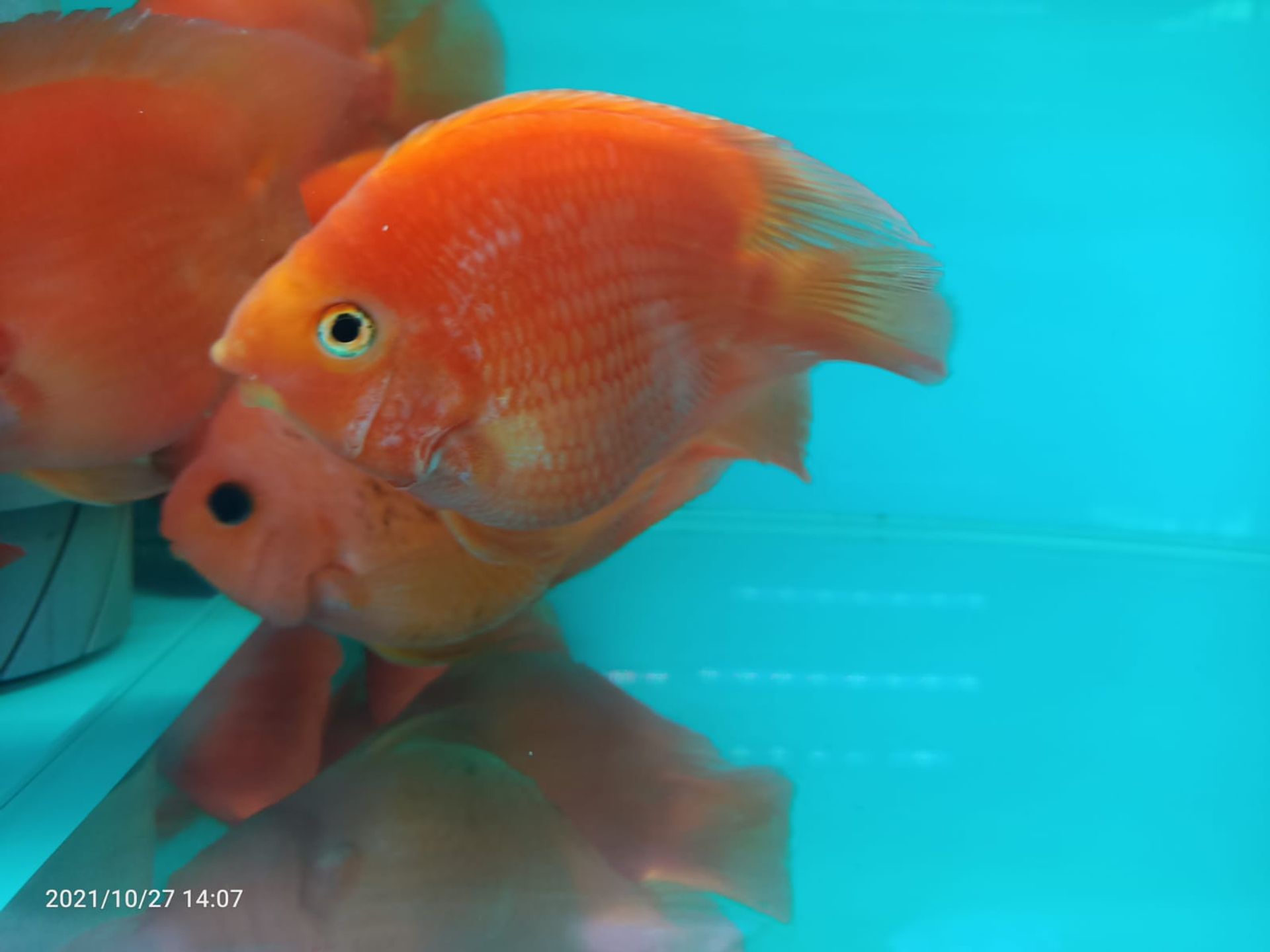

Ikan Parrot: Blood Parrot Fish Care, Colour & Tank Size
In Malaysian aquarium shops, ikan parrot means the blood parrot cichlid, a round, usually orange-red hybrid cichlid with a small beak-like mouth. It is not the marine parrotfish you see on coral reefs or at the wet market. A blood parrot needs a 3-kaki tank for one or two fish, strong filtration, food small enough for its awkward mouth, and naturally colour-enhancing food rather than dyed stock. This guide covers care, colour and the questions Malaysian buyers should ask before buying.
Blood Parrot vs Marine Parrotfish
| Blood parrot cichlid | Marine parrotfish | |
|---|---|---|
| Water | Fresh water | Salt water (coral reefs) |
| Origin | Man-made hybrid, first bred in Taiwan in the 1980s | Wild reef fish (family Scaridae) |
| Size | About 15–20 cm | Many species far larger |
| Aquarium? | Common home aquarium fish | Rarely suitable for home tanks |
If you're searching for "parrot fish aquarium" in Malaysia, you almost certainly want the blood parrot.
A Note on Hybrids and Malaysian Rules
The blood parrot is a hybrid, and its exact parent species have never been officially confirmed. It is often said to come from a cross that includes the Midas cichlid, which is prohibited in Malaysia under the Department of Fisheries (DOF) import-prohibited list. Flowerhorn (louhan), another hybrid cichlid, is prohibited too, and the two are often confused in shops. They are different fish: the prohibited flowerhorn has a large nuchal hump and a full-sized mouth, while blood parrots have a small, round body and a narrow mouth that doesn't close properly.
We did not find an official DOF statement that names the blood parrot itself. Lists can change, so confirm with DOF Malaysia before you buy, and buy only from sellers who follow DOF rules. Blood parrots have also been recorded in a Penang rice field and storm drain (Aqmal-Naser and Ahmad, BioInvasions Records, 2020), so never release one into a drain, pond outlet or river.
Blood Parrot Care Sheet
| Need | Recommendation |
|---|---|
| Adult size | About 15–20 cm |
| Tank | 3 kaki (90×45×45 cm, ~155 L) for 1–2; 4 kaki for 3–5 |
| Temperature | 26–30°C; Malaysian room temperature is fine |
| Water | Treated tap water, pH about 6.5–7.5, 30% weekly water change |
| Filtration | Canister or top filter rated for a larger tank; air pump |
| Diet | Small cichlid pellets that sink slowly, plus frozen foods |
| Temperament | Usually peaceful for a cichlid; territorial with its own kind |
| Lifespan | Many keepers report 10 years or more with good care |
| Beginner-friendly? | Yes, in a large enough tank |
Tank Size in Kaki
Blood parrots look slow and chunky, but they are active swimmers and produce a lot of waste. A 2-kaki tank is only for juveniles.
- 3 kaki (~155 L real water): one or two adults with a few dither fish.
- 4 kaki (~230 L): a group of three to five, the setup most Malaysian keepers aim for.
- Decor: caves and smooth rocks for hiding; they like to dig and rearrange sand, so anchor plants or skip them.
Ikan Parrot Merah and the Colour Question
Natural colour
A healthy blood parrot is orange to deep red, and some naturally pale fish are cream or yellow. Colour deepens with good food (pellets containing astaxanthin or other carotenoids), clean water and a dark background. Stressed fish turn pale or develop dark blotches.
Dyed, injected and "painted" fish
Some blood parrots sold as ikan parrot biru, purple or green, and fish with hearts, letters or patterns on the body, have been dyed or injected. This practice:
- Stresses the fish and causes wounds that can become infected
- Fades within months, leaving the fish its natural colour
- Has been widely criticised by fish welfare groups
Blue and purple are not natural blood parrot colours. If the price for a blue parrot seems high, you're paying for a dye job that won't last. Choose naturally red or orange fish, and ask the seller directly whether a fish has been coloured.
King Kong and other forms
"King kong" parrots have a slightly larger head and mouth. "Love heart" or "heart parrot" forms have a very short, round body and often no proper tail fin; the tail is reportedly cut in some young fish to create the shape. Ask the seller how the fish was produced.
What to Feed a Blood Parrot
The blood parrot's mouth is small and doesn't close fully, so it struggles with big or fast-sinking food.
| Food | Notes |
|---|---|
| Small cichlid pellets | Staple; slow-sinking is easier to catch |
| Colour-enhancing pellets | A few times a week for natural red |
| Frozen bloodworm, artemia, mysis | Treats, 2–3 times a week |
| Blanched peas | Occasional, helps digestion |
Browse food for cichlids, arowana and monster fish for small cichlid pellets. Feed once or twice a day, only what is eaten in two minutes. Don't feed live feeder fish.
Tank Mates
Blood parrots are fairly peaceful for cichlids but will chase small fish and bully slow ones. They get on with:
- Larger tetras (black skirt, Buenos Aires), silver dollars in big tanks
- Bristlenose plecos and other armoured catfish
- Other blood parrots in a 4-kaki tank
- Similarly sized, calm cichlids such as severums or angelfish in tall tanks (watch for bullying)
Avoid tiny fish (neons, chili rasboras), slow long-finned fish and aggressive cichlids. Our oscar guide covers a more boisterous big cichlid that is generally not a good mix with blood parrots.
Water and Malaysian Conditions
Blood parrots handle warm Malaysian rooms well. Focus on:
- Anti klorin for every water change; see our tap water guide
- Strong filtration and an air pump: an external filter rated for a bigger tank plus one of our air pumps; warm water plus a heavy feeder means oxygen drops quickly
- Weekly 30% water changes; low KH tap water lets pH drift down between changes
- Battery backup for the air pump during power cuts
Common Health Problems
- White spot: salt-like dots; raise water changes and use ubat white spot.
- Black patches: often stress or ammonia burns; check water quality.
- Not eating: may be food size (mouth problem), new-tank stress or water quality.
- Hole-in-the-head type pitting: linked to poor water and diet in large cichlids; improve both.
Frequently Asked Questions
Ikan parrot makan apa?
Ikan parrot makan pelet ikan cichlid yang kecil dan perlahan tenggelam, kerana mulutnya kecil dan tidak tertutup sepenuhnya. Tambah cacing darah atau artemia beku beberapa kali seminggu, dan pelet penambah warna untuk warna merah semula jadi.
Ikan parrot biru asli ke?
Tidak. Ikan parrot biru, ungu atau yang ada corak hati biasanya telah diwarnakan atau disuntik pewarna. Warna itu akan pudar, dan proses itu menyakitkan ikan. Pilih ikan parrot berwarna merah atau oren semula jadi.
Is the blood parrot the same as the prohibited flowerhorn?
No. Flowerhorn (louhan) is a different hybrid with a big head hump and a normal mouth, and it is prohibited in Malaysia. The blood parrot has a small, rounded body and a narrow mouth. Confirm current rules with DOF Malaysia before buying either kind of hybrid cichlid.
How big does a blood parrot get?
About 15–20 cm. Plan a 3-kaki tank for one or two adults.
Can blood parrots breed?
Pairs often lay eggs and guard them, but most males are infertile, so eggs usually don't hatch.
Compare blood parrot listings and cichlid foods from Malaysian sellers on FishyHub, and check each listing for real photos and whether the fish has been coloured.