

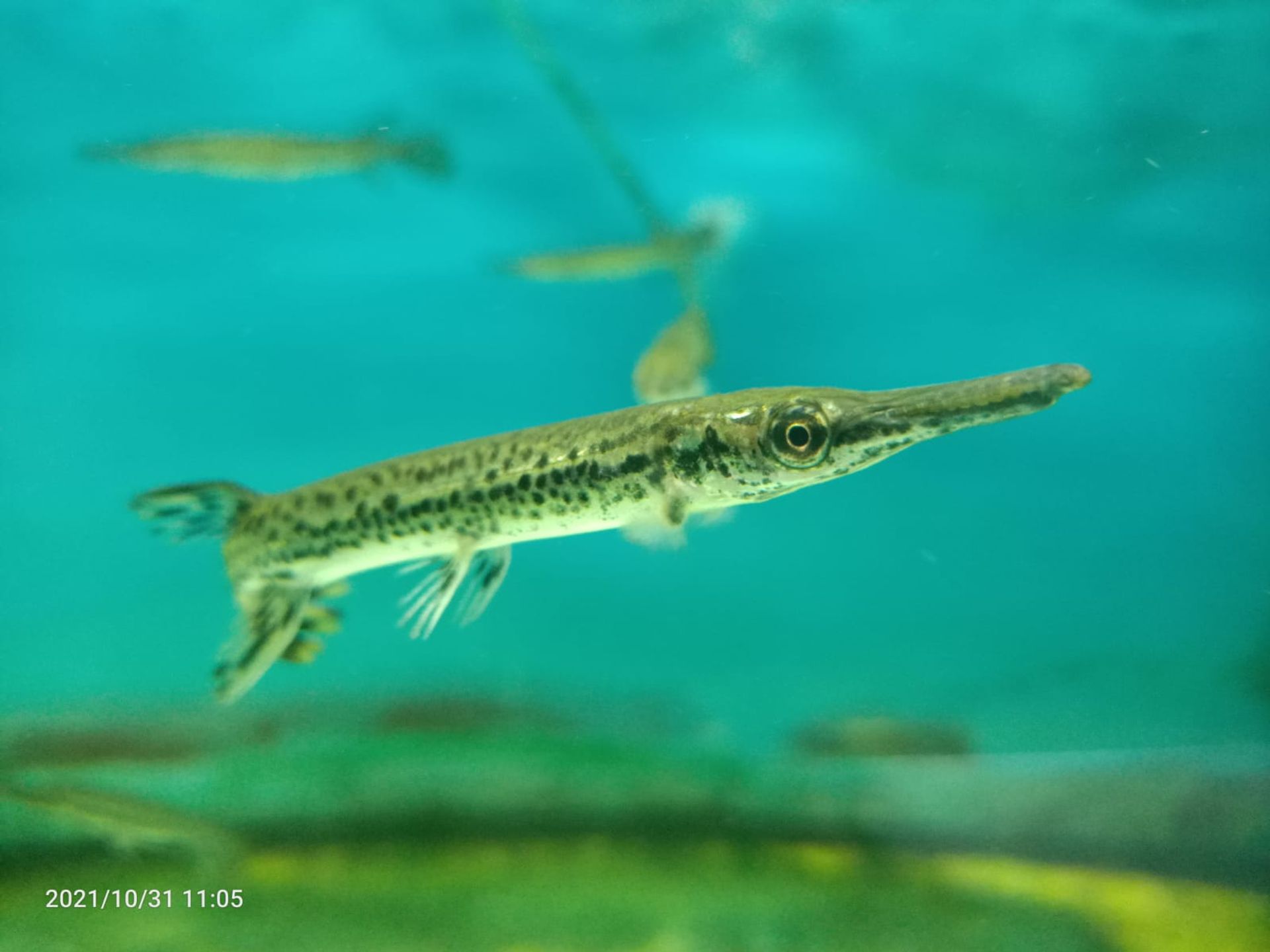

Arowana Drop Eye & Hole in Head: Causes and Prevention for Malaysian Keepers
Arowana drop eye is when one or both eyes of an arowana turn downward permanently, so the fish looks at the floor instead of straight ahead. There is no single proven cause. The main theories are a habit of looking down (sinking food, bottom tankmates, activity below the tank), fat building up behind the eye from a rich diet of feeder fish, a tank that's too shallow, and genetics and age. Drop eye doesn't usually harm the fish's health, but it lowers its show value. The best you can do is lower the risk: feed at the surface, keep the bottom of the tank "boring", use a tall enough tank and give a lean, varied diet. This guide also covers hole in head (HITH) and dropsy, two problems that are health issues.
Every arowana in Malaysia must be bought CITES-certified, microchipped and with its certificate, which you should keep. See our arowana price and CITES guide.
What Does Arowana Drop Eye Look Like?
- One eye (or both) points downward instead of level
- The white part of the eye shows more at the top
- It usually develops slowly, over months
- The fish otherwise eats, swims and behaves normally
It's seen in Asian arowana (including Malaysian golden crossback and red varieties) and in silver arowana. Many keepers report it is more common in older fish and in silver arowana than in some other types.
Drop Eye: Main Theories
Experienced keepers and breeders don't agree on one cause. Most believe it's a mix of factors.
| Theory | Idea | What keepers do about it |
|---|---|---|
| Looking down | Arowana are surface hunters. If food, tankmates or movement are mostly below, the eye muscles adapt to looking down | Feed floating food; keep the bottom of the tank calm |
| Fat behind the eye | A fatty diet, especially lots of feeder fish, builds fat behind the eye that pushes it down | Leaner, varied diet; fewer fatty feeders |
| Tank too shallow | In a shallow tank the fish spends more time near the bottom and looking down | Choose a taller tank with plenty of swimming depth |
| Genetics | Some lines may be more prone | Buy from reputable breeders; ask about the line |
| Age | Risk seems to rise as fish get older | Prevention early |
| Reflection from a bare bottom | A shiny bottom catches the fish's attention | Disputed; some keepers use a dark bottom or thin sand |
How to Lower the Risk of Drop Eye
- Feed at the surface. Use floating pellets and foods that stay at the top. Avoid foods that sink to the floor. Our arowana care guide covers feeding in more detail.
- Keep the bottom quiet. Bottom-dwelling tankmates, moving décor or a bright floor can attract the fish's gaze. Some keepers keep the lower half of the tank simple and dark.
- Give height. A tank of 60 cm height or more gives room to swim level. Adults need at least a 5–6 kaki tank. See the tank size guide.
- Lean, varied diet. Use quality arowana pellets as a base, with insects (crickets, superworms), prawn and occasional fish. Don't rely on feeder fish.
- Avoid overfeeding. Fat arowana are not healthy arowana.
- Place the tank thoughtfully. Avoid a spot where people and pets move mainly below the tank's line of sight, such as a low cabinet near a busy floor.
Can drop eye be fixed?
Some keepers report improvement with a "ping pong ball" or floating object method that encourages the fish to look up, but results are anecdotal. Specialist surgery to remove fat behind the eye exists and is done by experienced practitioners, but it carries risks. Consult a fish vet or an experienced arowana specialist before considering it.
Hole in Head (HITH) in Arowana
Hole in head disease causes small pits or holes on the head and along the lateral line. It's also seen in discus and large cichlids.
Signs:
- Small pits or pale spots on the head that grow
- Eroded lateral line
- Sometimes white, stringy poop or reduced appetite
Possible causes (debated):
- Poor water quality, especially high nitrate over a long time
- Nutritional deficiencies from a narrow diet
- Internal parasites such as Hexamita
- Stray electrical current in the tank (faulty equipment)
Prevention and treatment:
- Large, regular water changes with anti klorin
- Strong filtration and low nitrate
- A varied, high-quality diet
- Check equipment for faults
- For confirmed cases, a fish vet may advise medication for internal parasites; follow their guidance
Dropsy in Arowana
Dropsy (sisik nanas) shows as raised scales and a swollen belly. It's a sign of serious internal illness, often bacterial, and is not the same as drop eye.
- Isolate the fish if possible
- Improve water quality
- Seek advice from a fish vet or experienced keeper quickly
See our dropsy guide for general treatment.
Other Arowana Problems at a Glance
| Problem | Signs | First step |
|---|---|---|
| Drop eye | Eye pointing down | Surface feeding, diet, tank setup |
| Hole in head | Pits on head and lateral line | Water quality, diet, vet advice |
| Dropsy | Raised scales, swollen belly | Isolate, seek advice |
| Gill curl | Gill cover edges curling outward | Water quality, oxygen, tank size |
| Cloudy eye | White film on the eye | Water quality, check for injury |
| Jumping injuries | Scrapes on the head and mouth | Secure lid, calm environment |
| Fin rot | Ragged, white-edged fins | Water changes, antibacterial |
Water and Diet: The Foundations
For arowana in Malaysia:
- Temperature: normal room temperature (26–31°C) suits arowana. Avoid spikes above 32°C.
- Water changes: regular, large changes with anti klorin.
- Filtration: large top filters, canisters or sumps.
- Lid: arowana are powerful jumpers.
- Diet: varied, not too fatty.
- Quarantine new tankmates.
Buying an Arowana on FishyHub
Browse arowana from Malaysian sellers. Before buying:
- Confirm the fish is CITES-certified and microchipped, and that you'll receive the certificate.
- Check both eyes are level in photos and videos.
- Ask about the line, age and diet.
- Check delivery or self-collect options on each listing.
Frequently Asked Questions
Kenapa mata arowana jatuh ke bawah? Punca sebenar belum dipastikan. Teori utama ialah tabiat ikan melihat ke bawah, lemak di belakang mata akibat makanan berlemak, akuarium yang terlalu cetek, serta faktor baka dan umur. Beri makan di permukaan dan pastikan makanan tidak terlalu berlemak.
Boleh ke drop eye arowana sembuh? Ada penjaga yang melaporkan sedikit perubahan dengan menggalakkan ikan melihat ke atas, tetapi hasilnya tidak pasti. Pembedahan oleh pakar wujud tetapi ada risiko. Rujuk doktor haiwan ikan atau pakar arowana.
Does drop eye hurt the arowana? Usually not. Drop eye fish typically eat and swim normally. It mainly affects appearance and value.
Is hole in head contagious? It's not clearly contagious, but if internal parasites are involved, other fish may be affected. Focus on water quality and seek vet advice.
What should I feed to prevent drop eye? Floating pellets as a staple, with insects and prawn for variety. Limit fatty feeder fish.
Keep your arowana looking straight ahead. Browse arowana, arowana food and top filters from Malaysian sellers on FishyHub.