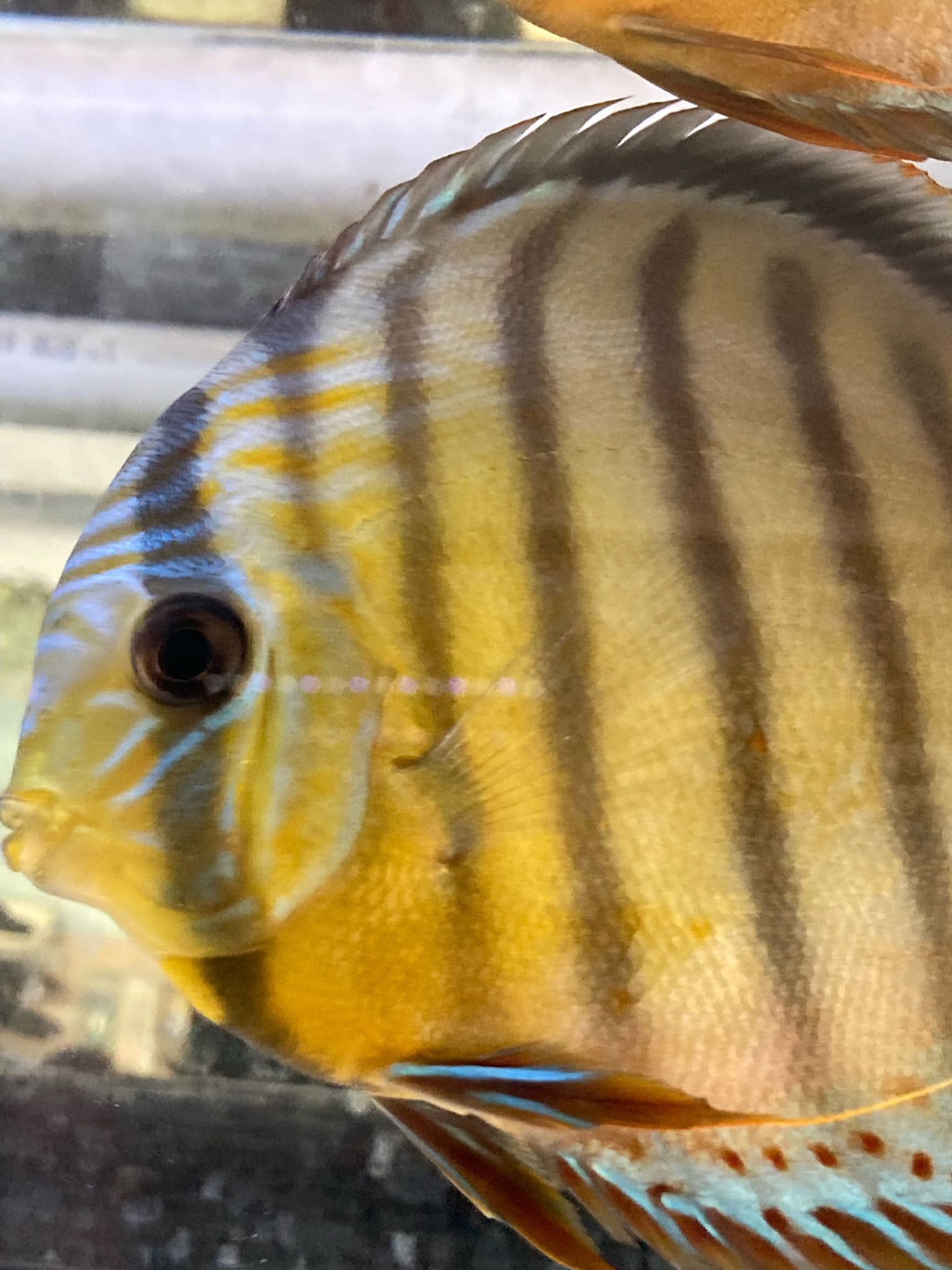
Most Popular Discus Colors and Varieties
Discus are one of the most widely listed cichlids on FishyHub's US marketplace, sitting in the upper mid-range price tier with a narrow price spread, and the color strains US keepers seek most are the red, blue and patterned domestic lines: red melons, pigeon bloods, blue diamonds, turquoises, leopards and checkerboards. FishyHub lists discus as one category rather than by strain, so this guide pairs the marketplace's discus tiers with search terms and hobby knowledge of the strains themselves.
Key Findings
- FishyHub marketplace data shows discus have very high listing supply in the US, among the most widely listed cichlids on the marketplace.
- FishyHub data shows US discus sit in the upper mid-range price tier, above angelfish, rams and most American and African cichlids.
- FishyHub data shows US discus listings have a narrow price spread, so sellers price comparable fish in a consistent band.
- FishyHub data shows discus activity in the US is rising, with new listings growing year on year.
- FishyHub search data shows "discus" is among the most searched fish terms on the marketplace.
- FishyHub search data shows shoppers also search with color and pattern words such as "albino", "leopard" and "pink", which match well-known discus strains.
Discus in the US Cichlid Market
| Group | Supply | Price tier | Price spread | Momentum |
|---|---|---|---|---|
| African Cichlids | High | Mid-range | Moderate | Rising |
| American Cichlids | Very high | Mid-range | Wide | Rising |
| Angelfish | High | Mid-range | Moderate | Rising |
| Discus | Very high | Upper mid-range | Narrow | Rising |
| Ram | Moderate | Entry-level / budget | Narrow | Rising |
Discus stand apart from their cichlid relatives in two ways. They are priced a tier higher, and their spread is narrow, which suggests US sellers mostly list similar sizes and grades. That fits the US discus trade, where many fish are sold as young or semi-adult stock from established domestic breeders and importers.
The US market on FishyHub is new, and this data has no US order history, so popularity is read from listings and search.
Popular Discus Colors and Varieties
FishyHub sellers name the strain in each listing. From hobby knowledge and search terms, the varieties US keepers most often look for are grouped below, alphabetically within each group.
Red and orange strains
- Marlboro red: red body with a pale or white face, a striking contrast.
- Pigeon blood: orange-red base with fine dark peppering; a foundation of many modern strains.
- Red melon: solid, warm red; one of the most requested colors.
- Red turquoise: red body with blue-green lines.
Blue and turquoise strains
- Blue diamond: an even, solid blue with no pattern.
- Cobalt and royal blue: deep blue with strong lines.
- Turquoise: blue-green striped body, among the oldest domestic strains.
Patterned strains
- Checkerboard: a grid-like pattern of red and blue-green.
- Leopard and leopard snakeskin: red spots on a pale or turquoise body. "Leopard" is among FishyHub search terms.
- Snakeskin: fine, dense lines that look like scales.
Pale and novelty strains
- Albino: albino versions of many strains, with red eyes. "Albino" is a high search term on FishyHub.
- Golden and white: pale yellow or white bodies, often called ghost or white butterfly.
Wild discus
- Blue, brown, green and Heckel: wild-type fish from different parts of the Amazon basin. They are kept by specialists and need softer, warmer water than domestic strains.
What Makes Some Discus Cost More
FishyHub places US discus in the upper mid-range price tier. Within that band, the price of a fish depends on:
- Size: discus are sold by body diameter, and a grown fish has taken many months of feeding and water changes to raise.
- Color coverage: solid colors without pepper spots, and clean patterns, take careful line breeding.
- Body shape: a round, high body and an eye that looks small relative to the body signal good growth.
- Wild origin: wild-caught fish cost more because of collection, transport and acclimation.
Keeping Discus in a US Home
Discus need warm, clean, soft water. In most US homes that means a reliable heater and frequent water changes. Keepers in the West Coast & Mountain West zone and parts of the Midwest & Central zone often deal with hard tap water, and many use reverse osmosis water for breeding. FishyHub does not report discus activity by state, so these regional notes are hobby context.
Discus ship by overnight courier in insulated boxes, with heat packs in colder months. Because they are sensitive to temperature swings, many buyers in the Midwest & Central and East Coast & Northeast zones avoid winter shipping. The Alaska, Hawaii & territories zone is the costliest to reach.
Methodology
This page is based on FishyHub marketplace activity in the US over the period from October 2024 to October 2026. We looked at active discus and related cichlid listings, listed prices and how widely they range, new listings over time, and FishyHub search terms. Findings are reported as tiers and directions, not figures.
FishyHub lists discus as one category and does not split it by color strain, so the variety groups above come from search terms and hobby knowledge. The US market has no order history in this data, so popularity reflects listings and search, not purchases. Search terms combine the US and Singapore markets. FishyHub does not report state-by-state figures.
Frequently Asked Questions
What is the most popular discus color?
FishyHub does not track sales by strain. Red melons, pigeon bloods, blue diamonds and leopard strains are long-standing favorites, and albino and leopard are common search words.
Are discus expensive?
On FishyHub, US discus sit in the upper mid-range price tier, above angelfish and most cichlids, with a narrow spread between listings.
What is the easiest discus for beginners?
Domestic strains raised in tap water, such as turquoise and red melon, are generally hardier than wild discus.
Can discus be shipped safely?
Yes, by overnight courier in insulated boxes, with heat packs in cold months.
How to Cite This Page
Source: FishyHub, "Most Popular Discus Colors and Varieties" (2026), https://fishyhub.com/us/blogs/blog-detail/most-popular-discus-colors-and-varieties


