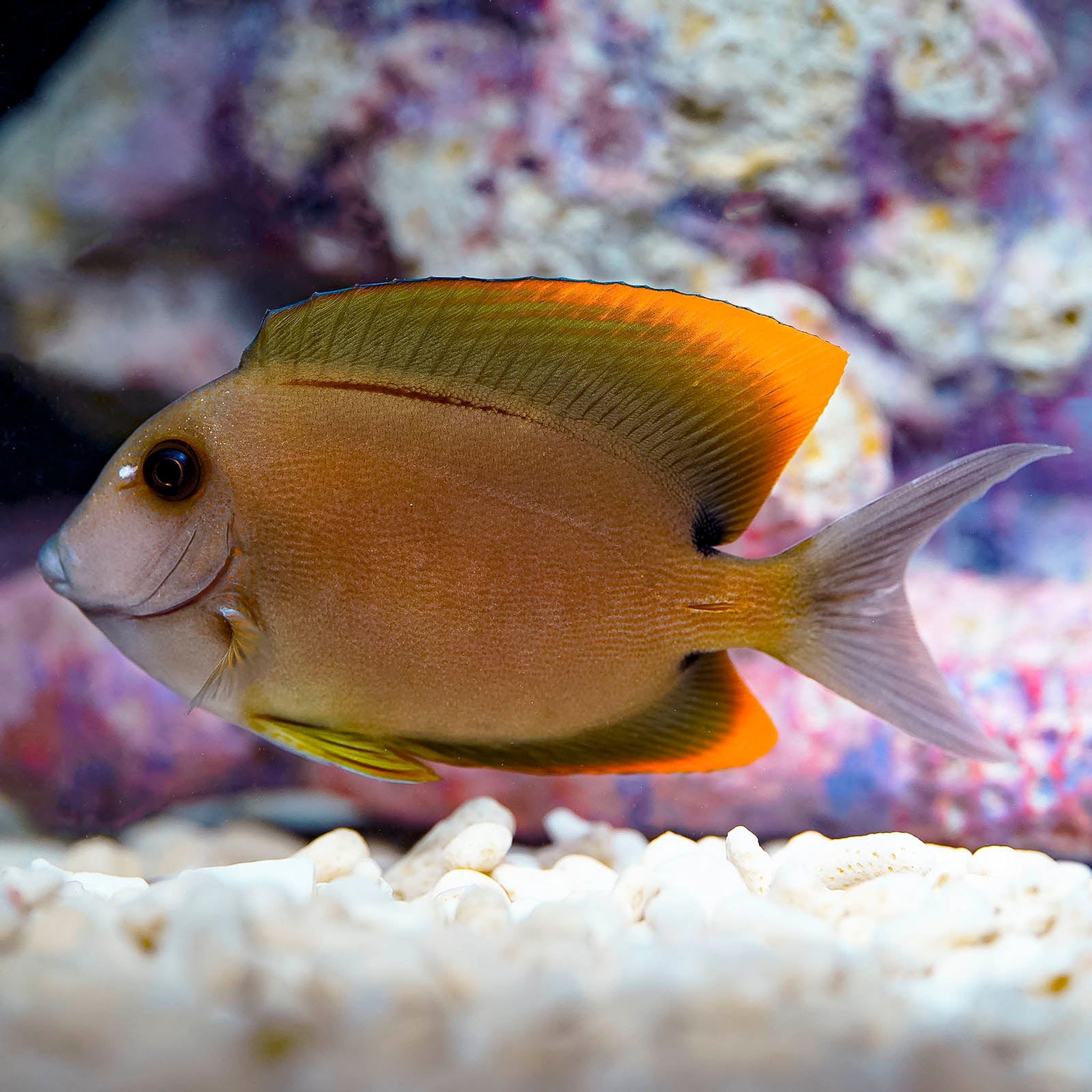
Is Tomini Tang Reef Safe? Coral and Invertebrate Compatibility Explained
Yes — the Tomini tang is considered reef safe. It spends its day grazing diatoms, cyanobacteria film, and detritus off live rock rather than sampling coral polyps or clam mantles, which makes it one of the more dependable tang choices for a mixed reef. Below is what actually determines whether one thrives (or causes trouble) in your specific setup.
Why the Tomini Tang Is Considered Reef Safe
The Tomini tang (Ctenochaetus tominiensis), also called the bristletooth tang, bristlemouth tang, or Tomini surgeonfish, belongs to the "combtooth" group of tangs. Unlike Zebrasoma or Acanthurus tangs, which use broader teeth to browse macroalgae and can nip at fleshy coral tissue when hungry, combtooth tangs have fine, flexible, comb-like teeth built for raking biofilm, diatoms, and detritus off rock and sand surfaces.
That feeding mechanism is the whole story:
- It is not physically or behaviorally equipped to bite polyp tissue the way some angelfish or butterflyfish are.
- It does not pick at clam mantles.
- Its natural grazing target — algal film and detritus — is exactly what a healthy reef tank produces in abundance on rockwork.
At a glance:
| Trait | Detail |
|---|---|
| Scientific name | Ctenochaetus tominiensis |
| Common names | Tomini tang, bristletooth tang, bristlemouth tang, Tomini surgeonfish |
| Adult size | 4–5 inches (10–13 cm) |
| Reef compatibility | Reef safe — grazer, not a polyp eater |
| Invertebrate compatibility | Safe with shrimp, crabs, snails, clams |
| Lifespan | 5–10+ years with good care |
| Temperament | Peaceful toward corals/inverts; can be territorial toward other tangs |
Coral Compatibility: SPS, LPS, and Soft Corals
A Tomini tang is compatible with SPS, LPS, and soft corals. It doesn't target polyps as a food source, so it can be kept alongside frags and established colonies without the predation risk associated with some other reef fish.
There are occasional anecdotal reports of a Tomini tang picking at LPS or zoanthid flesh. The consensus among experienced keepers is that these are exceptions, not the rule, and they're almost always tied to one underlying cause: the fish isn't getting enough to graze on elsewhere. A tang searching for biofilm on a coral's base or the surrounding rock is often mistaken for a tang eating the coral itself — the fish is working the rock and mucus film around the polyps, not the polyps.
Prevention is simple: keep grazing opportunities constant. That means mature live rock with an active biofilm layer, plus regular supplemental feeding, rather than assuming the tank alone will keep it satisfied. A tang with reliable food has little incentive to test coral tissue.
Invertebrate Compatibility
Tomini tangs pose no known predation risk to typical reef invertebrates. They're considered safe with:
- Cleaner shrimp and peppermint shrimp
- Hermit crabs
- Snails
- Most other crustaceans commonly kept in reef tanks
- Clams (mantles are left alone)
If your stocking list includes any of these — along with corals — a Tomini tang is one of the lower-risk tang options available. You can browse reef-safe marine invertebrates alongside your coral planning to build a compatible community from the start.
Tank Size and Setup
Sources vary on the minimum tank size, and the disagreement is worth explaining rather than glossing over:
- Smaller-footprint argument: Because the Tomini tang tops out at only 4–5 inches, some hobbyists recommend tanks as small as 55–75 gallons.
- Larger-footprint argument: Others push for 90–100+ gallons, pointing out that tangs are active, near-constant swimmers regardless of their adult body size, and cramped quarters raise stress and disease risk.
Practical recommendation: treat 75 gallons as a functional floor and 90–100+ gallons as the preferred range. Open swimming space matters more than raw water volume — a long, unobstructed tank with generous rockwork for grazing beats a taller, more cluttered tank of the same gallonage.
Reef Parameters That Support Both Tang and Coral
Tangs tolerate a slightly wider nutrient range than SPS corals prefer, but running the tank at the coral-friendly end of the range benefits the fish too — it means more consistent water quality and fewer stress-related disease flare-ups.
| Parameter | Target range |
|---|---|
| Temperature | 72–78°F (22–26°C) |
| Specific gravity | 1.023–1.025 |
| pH | 8.1–8.4 |
| Alkalinity | 8–12 dKH |
| Calcium | 380–450 ppm |
| Ammonia / nitrite | 0 |
| Nitrate | Under ~10–20 ppm |
| Phosphate | Low |
Diet and Feeding
Feeding a Tomini tang well is less about any single food and more about grazing frequency. In the wild, it picks at algae film almost continuously; a tank that only offers food once a day leaves long gaps that prepared foods alone don't fill.
A solid feeding approach includes:
- Established live rock with a healthy biofilm layer — this is the fish's primary, near-constant food source
- Dried seaweed or nori sheets clipped in the tank several times a week
- Algae-based pellets or flakes and spirulina-based preparations
- Marine herbivore blends formulated for tangs and other grazers
You can find suitable freeze-dried foods to rotate into a Tomini tang's diet alongside its grazing on rock.
Vitamin C, Diet Variety, and HLLE
Head and Lateral Line Erosion (HLLE) is a common ailment in tangs kept on a narrow or nutritionally poor diet. Early signs include small pits or erosion around the head and along the lateral line, plus fading color. A diet lacking vitamin C and dietary variety is a recognized contributing factor.
Actionable fix: rotate multiple food types (not just one pellet or flake), include vitamin C-enriched or soaked foods regularly, and make sure the tank always has grazing surface available. Catching early fin fading or the first small head pits and correcting diet promptly tends to halt progression before it becomes cosmetic damage that's hard to reverse.
Temperament and Stocking With Other Tangs
A Tomini tang is generally peaceful toward corals, invertebrates, and unrelated fish species. The friction, when it happens, is almost always tang-on-tang:
- It can be territorial or aggressive toward other tangs and surgeonfish, especially same-genus Ctenochaetus species or fish with a similar body shape and coloration.
- It's less combative than many Acanthurus tangs, but it is not immune to typical tang aggression.
Stocking order: add a Tomini tang as one of the last fish to an established reef, or introduce it simultaneously with other tangs in a large enough system to dilute territorial disputes. For most home aquariums, a single Tomini tang per tank is the safest default.
Can You Keep Two Tangs Together?
This is genuinely disputed. Some hobbyists successfully house a Tomini tang with a different-genus, differently shaped tang species in systems of 150+ gallons. Others report persistent chasing and aggression even in large tanks, regardless of careful species selection. Treat multi-tang stocking as possible with a large tank and simultaneous introduction, not as a guaranteed outcome — the risk should be disclosed up front, not promised away.
You can review available tangs and surgeonfish if you're weighing a Tomini tang against other combtooth or bristletooth options for your stocking plan.
Disease Susceptibility and Quarantine
Like most tangs, Tomini tangs are prone to marine ich (Cryptocaryon) and marine velvet (Amyloodinium). Treating an established reef tank for either is far more difficult than treating a dedicated quarantine tank, since most effective medications aren't safe around corals and invertebrates.
Recommended protocol: quarantine new Tomini tangs for 4–6 weeks before adding them to the display. If you're running a mixed QT system that also holds invertebrates at any point, be aware that copper-based treatments — effective against ich and velvet in fish — are toxic to invertebrates and must be kept in a fish-only quarantine setup, never dosed into a tank holding shrimp, snails, or crabs.
Reef Ecosystem Context: Why Nutrient Export Matters for Grazers
Fish health and equipment choices are often treated as separate topics, but for a grazer like the Tomini tang, they're connected. A reef tank that keeps nutrient levels low and stable tends to keep its grazing fish healthier too — less nutrient swing, less stress, fewer disease flare-ups.
Biopellet Reactors, Explained
A biopellet reactor tumbles biodegradable polymer pellets in a flow chamber. Bacteria that colonize the pellet surfaces consume dissolved organic compounds, which drives down nitrate and phosphate over time. This is important to get right: a biopellet reactor is a carbon-dosing nutrient-export tool, not an ammonia remover — the two functions are frequently and incorrectly conflated.
Practical notes:
- Reactor size should match your tank's bioload and volume, not just its gallon count.
- Adequate pump flow — roughly 250+ GPH depending on the model — keeps pellets tumbling steadily without letting them escape into the display.
- A protein skimmer is typically run alongside the reactor to export the bacterial biomass the pellets generate; skimming without adequate flow or vice versa is a common setup mistake.
Benefit: lower, more stable nutrient levels support coral health and a steadier environment for grazers. Drawback: there's a real learning curve — overdosing nutrient export while running inadequate flow or skimming can crash tank oxygen and pH, so start conservatively and monitor before scaling up.
Common Mistakes to Avoid
- Skipping quarantine and introducing ich or velvet directly into an established reef where treatment options are severely limited.
- Undersized tanks or bare rockwork with no established biofilm, leading to starvation-driven grazing shortfalls and chronic stress.
- Prepared foods only, no grazing surface — a leading contributor to HLLE and faded coloration.
- Adding a second tang too soon in a tank too small to give each fish its own territory, resulting in chasing, torn fins, and stress-related disease.
- Ignoring elevated nitrate/phosphate, which stresses both the tang and corals; correct with water changes, nutrient export (biopellets, GFO, skimming), and reduced overfeeding.
- Misreading normal grazing as coral predation — a tang working biofilm off a coral's base or surrounding rock isn't the same as eating polyps.
Frequently Asked Questions
Is the Tomini tang reef safe?
Yes. It grazes algae, diatoms, and detritus and does not eat coral polyps or clam mantles, which is what makes it a reliable reef-tank choice among tangs.
Will it eat my zoanthids or LPS?
Generally, no. Occasional anecdotal reports exist, but they're tied to underfeeding — as long as the tank offers ample algae and prepared food, there's little reason for it to sample coral flesh.
What's the minimum tank size?
75 gallons is a practical functional minimum, with 90–100+ gallons preferred for long-term health and adequate swimming room, since tangs are active swimmers regardless of their compact adult size.
Can I keep two tangs together?
It's possible in large tanks (150+ gallons) with careful species selection and simultaneous introduction, but it's not guaranteed to work — persistent aggression is a real risk even in big systems.
What do Tomini tangs eat?
Live rock biofilm and diatoms form the core of their diet, supplemented several times a week with dried seaweed, algae-based pellets, and spirulina preparations, alongside constant access to grazing surface.
Are they safe with shrimp, crabs, and snails?
Yes. There's no known predation risk to cleaner shrimp, peppermint shrimp, hermit crabs, snails, or other common reef crustaceans.
How long do they live?
Commonly 5–10 or more years in a well-maintained home aquarium with good diet and stable water quality.
Do they get sick easily?
They're susceptible to marine ich and marine velvet like most tangs, so a 4–6 week quarantine before adding one to a display reef is strongly advised.
A Tomini tang earns its reputation as one of the safer tang choices for a coral and invertebrate community — provided it gets a properly sized tank, steady grazing opportunities, and a quarantine period before joining your display. If you're ready to plan tankmates, browse marine livestock on FishyHub to compare compatible fish, corals, and invertebrates for your setup.


