
Is Pistol Shrimp Reef Safe? Compatibility With Fish, Coral and Invertebrates
Yes, pistol shrimp are reef safe — they don't eat coral tissue, sponges, or zoanthids, and they won't touch your sessile invertebrates. The real compatibility questions are elsewhere: whether they'll bother small snails and shrimp, how much sand they'll move around, and whether that famous loud "snap" means something is wrong. Here's the full picture, tankmate by tankmate.
The Short Answer
A pistol shrimp (genus Alpheus, sometimes called a snapping shrimp) is one of the more reliably reef-compatible invertebrates you can add to a marine tank. It's an omnivorous scavenger, not a coral predator, so frags, LPS, SPS, and soft corals are never on its menu. The caveats are behavioral rather than predatory: constant burrow digging can shift rockwork and bury low-sitting frags, and the shrimp is an opportunistic hunter toward things smaller and slower than itself — think snails, bristle worms, and other small crustaceans, not corals.
Pistol Shrimp vs. Mantis Shrimp: Clearing Up the Confusion
This is the single biggest source of bad information online. Pistol shrimp and mantis shrimp are frequently lumped together, but they are not closely related and behave nothing alike in a reef tank.
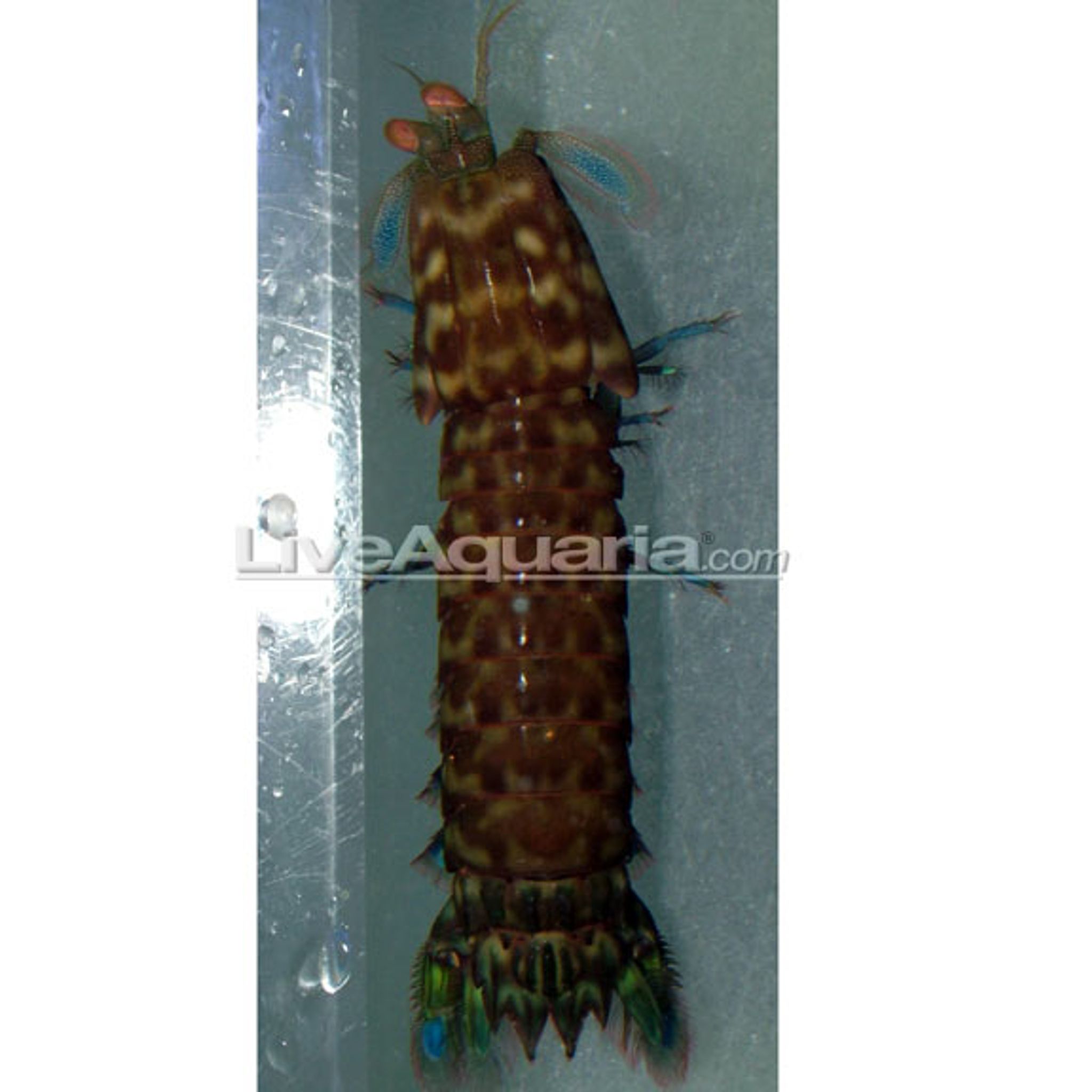
A pistol shrimp (family Alpheidae) is a true shrimp — small, mostly blind, and armed with one oversized claw it uses defensively and to stun small prey. A mantis shrimp is a stomatopod, not a true shrimp at all, and it is a genuinely dangerous predator that will actively hunt and kill fish, snails, and hermit crabs. Mantis shrimp are never considered reef safe or community safe and are typically kept alone in a species-only tank.
| Trait | Pistol Shrimp (Alpheus spp.) | Mantis Shrimp |
|---|---|---|
| Classification | True shrimp (Alpheidae) | Stomatopod, not a true shrimp |
| Reef safety | Reef safe for corals and sessile inverts | Never reef safe or community safe |
| Weapon type | Snapping claw (cavitation/sound-based stun) | Raptorial appendage (smashing or spearing strike) |
| Typical prey | Detritus, algae, tiny opportunistic catches | Actively hunts fish, crabs, snails |
| Can crack glass? | No — this is a myth | Yes, genuinely capable with repeated strikes |
| Housing | Community reef, size-appropriate tankmates | Species-only tank, isolated |
| Adult size | 1.5–2.5 in (4–6 cm) | Often much larger, more robust |
If an article about "shrimp that crack aquarium glass" or "shrimp you shouldn't keep with fish" doesn't distinguish these two animals, it's very likely actually describing a mantis shrimp while using the word "shrimp" loosely.
The "Can It Break Aquarium Glass" Myth
This claim shows up constantly, and it's worth debunking directly: a pistol shrimp's snap is not a mechanical hammer blow. The oversized claw snaps shut so fast that it forms a cavitation bubble in the water; when that bubble collapses, it produces the loud "pop," a brief flash of light, and a shockwave used to stun prey or warn off intruders. It's a sound-and-pressure weapon, not a physical strike against a hard surface.
A mantis shrimp's raptorial appendage, by contrast, delivers a direct high-speed physical strike — the trait genuinely associated with cracked glass in home aquariums. Conflating the two is where the folklore comes from. Outright shattering of standard aquarium glass from a pistol shrimp is essentially a non-issue; the loud, sudden snapping sound is simply startling enough that new owners assume something is breaking.
As an aside, the physics of that snap is a legitimately interesting hobby fact: the collapsing cavitation bubble is fast enough that it briefly reaches extreme, sun-surface-scale temperatures at a microscopic level for a fraction of a second — a genuine phenomenon, not hyperbole, even though it has zero bearing on your aquarium's structural integrity.
Compatibility With Corals and Sessile Invertebrates
Pistol shrimp are reef safe with corals in the most direct sense: they do not eat coral tissue, sponges, or zoanthids, and they have no interest in stinging or grazing on them. The practical risk to corals is indirect:
- Burial: a shrimp actively re-terracing sand around its burrow can bury a low-sitting frag or frag plug overnight.
- Toppling: loose rubble rock used as burrow support can shift and knock into nearby coral placements.
- Substrate turnover: constant digging keeps sand suspended near the burrow, which is generally harmless but worth accounting for when placing light-sensitive corals nearby.
The fix is straightforward: keep coral frags elevated on rock rather than resting directly on sand, and secure your aquascape's structural rockwork independently of loose sand and rubble so the shrimp can't undermine it. You can browse a range of options in LPS hard corals that do well elevated on rockwork away from a burrow zone.
Compatibility With Small Invertebrates and Snails
This is where "reef safe" needs an asterisk. Pistol shrimp are opportunistic scavengers and predators toward animals smaller or slower than themselves. In practice that means:
- Small ornamental shrimp (like peppermint or skunk cleaner shrimp) can be bullied or occasionally killed, especially in a tank too small to give both animals separation.
- Slow-moving or small snails are occasionally harassed or predated, though this isn't guaranteed or constant.
- Bristle worms and small crabs may be caught opportunistically if they wander too close to the burrow.
- Hermit crabs are generally left alone but not risk-free in a tight space.
The honest framing: reef safe for corals and other sessile invertebrates without qualification, but only "reef safe with caution" for small mobile invertebrates. The smaller the tank and the more static the small tankmate, the higher the risk.
Compatibility With Fish
Healthy adult reef fish are generally safe around a pistol shrimp. It is not an active fish hunter the way a mantis shrimp is — it doesn't stalk or chase. The exceptions are small, slow, or already-weakened fish that happen to rest or sleep right at the burrow entrance, which occasionally become opportunistic targets.
The bigger fish-related risk actually runs the other direction: larger predatory or crustacean-eating fish will happily eat the shrimp. Keep pistol shrimp away from:
- Larger wrasses
- Triggerfish
- Larger hawkfish
- Lionfish
- Eels
If you're stocking a peaceful reef community around a pistol shrimp, most standard community fish are a safe match. You can browse compatible options in marine fish sized appropriately for a reef community that includes small crustaceans.
The Goby Partnership
The behavior most people are chasing when they search for pistol shrimp is the burrowing pair with a watchman or shrimp goby. The shrimp is nearly blind and does the digging and burrow maintenance; the goby has strong eyesight and stands guard at the entrance, flicking its tail to signal danger while the shrimp keeps an antenna resting on the goby to feel that warning. It's a genuinely mutualistic relationship and widely regarded as one of the most rewarding beginner symbiotic pairs in the marine hobby.
Species Commonly Paired in the US Trade
| Pistol Shrimp | Common Goby Partners |
|---|---|
| Tiger pistol shrimp (A. bellulus) | Yellow watchman goby, tiger watchman goby |
| Candy cane / Randall's pistol shrimp (A. randalli) | Wide-banded prawn goby, four-striped goby |
| Red-banded pistol shrimp (A. rubromaculatus) | Various watchman gobies, pairing less predictable |
Pairing is not guaranteed in captivity, and not every combination bonds the same way it might in the wild. Success improves when you choose a species combination known to pair reliably at home and give them time and proximity rather than forcing an introduction. You can find both halves of this pairing among gobies and marine shrimp to plan the combination that fits your tank.
Importantly, a goby is enrichment, not a requirement. A pistol shrimp does perfectly well alone — the goby simply makes the burrowing behavior more visible since the shrimp itself rarely strays far from the tunnel entrance.
Introducing a Shrimp-Goby Pair to an Established Reef
Rather than treating compatibility as a static checklist, plan the introduction itself:
- Acclimate slowly, as with any marine invertebrate, using a drip method to match salinity and temperature gradually.
- Dim the lights for the first evening after introduction to reduce stress while the pair locates a burrow site.
- Choose the burrow zone in advance — a rubble or fine sand area away from delicate low-sitting frags.
- Give them settling time before doing any major aquascaping changes; let the pair establish a burrow before you judge the final layout.
- Avoid disturbing the burrow entrance for the first several days so the shrimp doesn't relocate repeatedly out of stress.
Tank Size and Water Parameters
Pistol shrimp aren't especially delicate. They tolerate standard reef parameters and don't demand anything beyond what corals and reef fish already need:
| Parameter | Recommended Range |
|---|---|
| Temperature | 72–78°F (22–26°C) |
| Specific gravity | 1.023–1.025 |
| pH | 8.1–8.4 |
| Alkalinity/calcium | Stable, reef-standard |
| Minimum tank size (single shrimp or pair) | 10–20 gallons (38–76 L) |
| Recommended size (full reef community) | 20+ gallons (76+ L) |
Scale the tank size up with the number and type of tankmates rather than treating any single number as fixed — a lone shrimp in a nano tank has different space needs than a shrimp-goby pair sharing a tank with an active reef community.
Diet and Ecological Role
Pistol shrimp are omnivorous scavengers, eating sinking pellets, meaty frozen foods like mysis or brine shrimp, algae, and detritus. Most thrive on leftover food and biofilm in an established reef without any dedicated feeding schedule.
Beyond being low-maintenance, they contribute positively to the tank: constant digging aerates and turns over sand similar to a sand-sifting janitor, helping with detritus processing and nutrient export rather than just being a behavior to tolerate.
Behavior, Molting, and Housing Notes
- One shrimp per burrow: keep a single pistol shrimp (or one bonded pair with its goby) per territory. Multiple unpaired individuals — same species or different — can fight, sometimes fatally, over burrow space.
- Escape risk: pistol shrimp can and do climb or jump out of open-top tanks, particularly when stressed. Use a tight-fitting lid or covered overflow.
- Molting: like all crustaceans, they molt periodically to grow. They're vulnerable during the soft-shell period right after molting and should not be handled or disturbed. A molted exoskeleton is normal and can be left in the tank as a calcium source or removed.
Common Mistakes and Troubleshooting
- Mistaking the snap for equipment failure. New owners often assume a pump, heater, or cracked glass is the source of the loud popping sound, especially at night or after adding new decor. This is normal hunting, defense, and communication behavior.
- Housing multiple unpaired shrimp together. Expecting several pistol shrimp to cohabitate peacefully usually leads to territorial fighting.
- Adding fragile small snails or ornamental shrimp expecting guaranteed safety. Occasional predation or harassment is possible, not a certainty, but not zero risk either.
- Assuming the aquascape is "ruined." Waking up to rearranged sand and rubble is normal terraforming around an active burrow, not damage. Anchor structural rockwork independently of loose substrate.
- Leaving the tank open-top. A shrimp found dried out on the floor is almost always an escape from an uncovered tank.
- Disturbing the burrow or handling a freshly molted shrimp. This is a high-stress, high-injury window — leave it alone.
- Assuming a goby will automatically pair. Pairing takes time and works best with species combinations known to bond in captivity; it isn't guaranteed just because both animals are present.
Frequently Asked Questions
Can pistol shrimp live with corals?
Yes. They don't eat or disturb coral tissue in any way. The main coral-related risk is indirect — accidental burial or toppling of low-sitting frags placed too close to an active burrow — so elevate frags on rock rather than sand nearby.
Will a pistol shrimp eat my fish?
Healthy adult reef fish are generally safe. Small, slow, or already sickly fish resting near the burrow entrance are occasionally at risk, but a pistol shrimp is not an active fish hunter the way a mantis shrimp is.
Do I need a goby for my pistol shrimp?
No. The goby partnership is optional enrichment, not a welfare requirement. The shrimp does perfectly well alone; pairing simply adds visible behavior and mutual protection between the two species.
Is the snapping sound dangerous or a sign of a problem?
No. It's normal behavior from the specialized snapping claw, used for hunting, communication, and burrow defense. It can be loud enough to hear through the glass, especially at night, but it doesn't indicate equipment trouble or tank damage.
Can a pistol shrimp crack aquarium glass?
No — that's a myth that conflates it with mantis shrimp. A pistol shrimp's snap is a cavitation-driven sound and shockwave effect, not a mechanical strike against a hard surface, and it poses no real risk to standard aquarium glass.
What size tank does a pistol shrimp need?
Roughly 10–20 gallons (38–76 L) minimum for a single shrimp or a shrimp-goby pair. Scale up to 20+ gallons (76+ L) or more for a fuller reef community with additional tankmates.
Are pistol shrimp reef safe with snails and hermit crabs?
Mostly, but not with a 100% guarantee. They can occasionally harass or kill smaller, slower snails or hermit crabs, particularly in tighter quarters, so treat this as "safe with caution" rather than fully risk-free.
What do pistol shrimp eat, and do I need to feed them separately?
They're omnivorous scavengers that eat leftover food, detritus, and algae, plus occasional meaty frozen foods like mysis or brine shrimp. Most thrive on tank scraps in an established reef without any dedicated feeding routine.
If you're planning a shrimp-goby pair or building out a peaceful reef community around one, start by browsing marine invertebrates to see current stock and pair options that fit your tank size.


