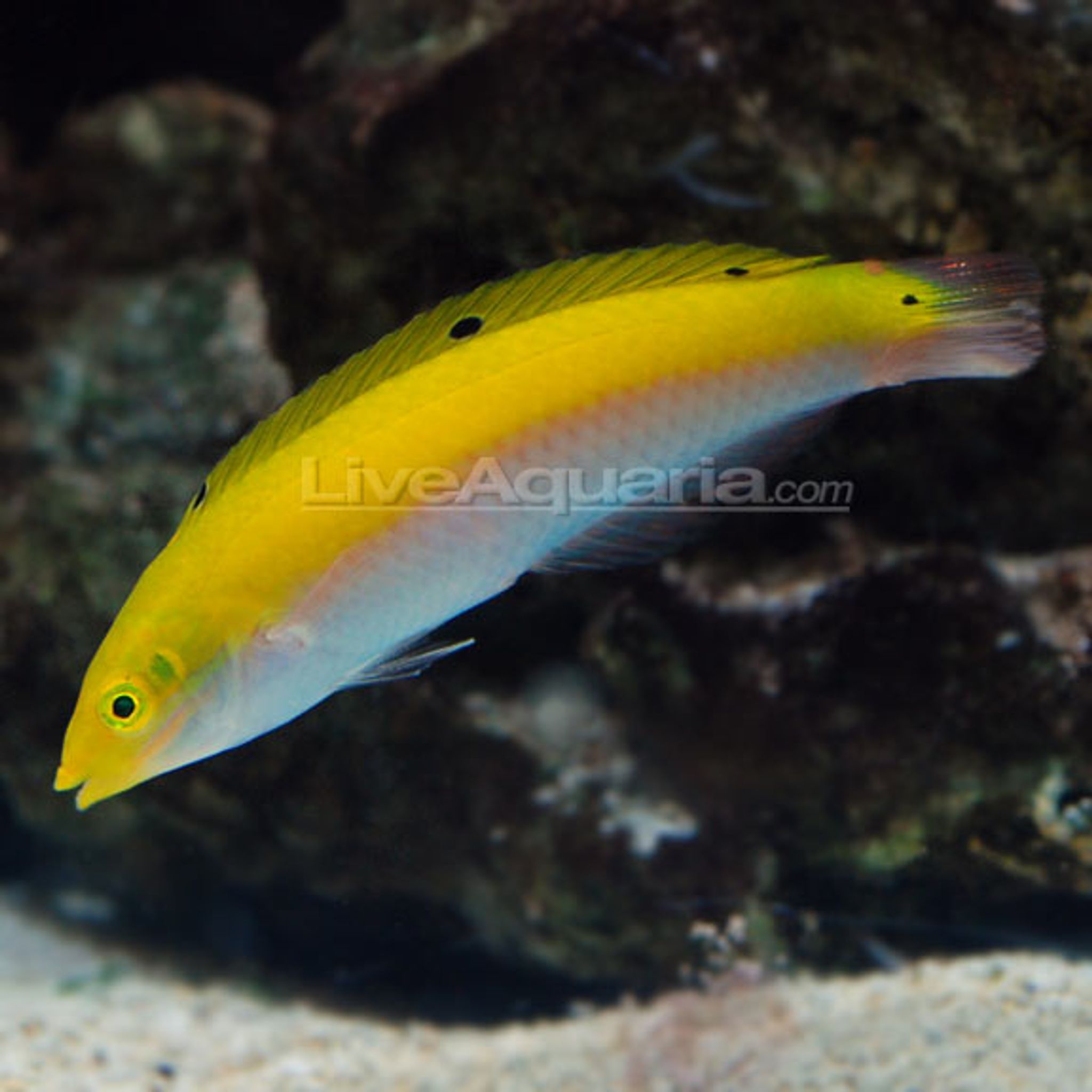

Is Melanurus Wrasse Reef Safe? Coral and Invertebrate Compatibility Explained
The melanurus wrasse will not touch your corals — that part is settled. What it will do is hunt small mobile invertebrates, which is why the honest label is "reef safe with caution" rather than a flat yes. Here's exactly what that means for your coral, your clean-up crew, and your stocking plan.
What Is a Melanurus Wrasse?
The melanurus wrasse (Halichoeres melanurus), also sold as the tail-spot wrasse, is an Indo-Pacific reef fish that reaches about 4–5 inches as an adult. It's a common pick for reef aquariums because of its color, activity level, and reputation as a pest hunter — but that same hunting drive is exactly why its "reef safe" status needs qualifying.
Coral Safety: A Clear Yes
For corals, the answer is unambiguous: the melanurus wrasse is fully coral safe. It has no documented pattern of picking at, sting-testing, or otherwise damaging:
- LPS corals
- SPS corals
- Soft corals and zoanthids
- Anemones
If your only concern is whether this fish will nip your frags, you can stop worrying. You can browse a wide range of options in LPS hard corals or soft corals without the melanurus wrasse factoring into the decision at all.
Invertebrate Safety: "Reef Safe With Caution" Explained
The caution label exists because the melanurus wrasse is a highly active carnivorous hunter of small, mobile invertebrates — not because it harms anything sessile. It patrols rockwork and sand looking for anything small enough to eat, which puts a specific category of tankmates at risk.
Invertebrates at Real Risk
- Small ornamental shrimp (sexy shrimp, small anemone shrimp)
- Small hermit crabs
- Tiny snails
- Feather duster worms
- Small crabs
- Amphipods and copepods (populations may decline over time)
Invertebrates That Are Generally Safer
- Larger, well-established cleaner shrimp (Lysmata species)
- Emerald crabs
- Larger hermit crabs
- Moderate-to-large snails (nassarius, larger turbo or nerite varieties)
Even in this "safer" group, risk isn't zero — it tends to climb as the wrasse matures, grows bolder, and gets more efficient at hunting. Reports on cleaner shrimp specifically are mixed: some hobbyists keep established Lysmata shrimp alongside a melanurus wrasse for years with no issues, especially when the shrimp were added first and had time to claim territory. Others report the same species eventually losing even large, established shrimp. Treat shrimp compatibility as a real, ongoing risk that increases with the wrasse's age and size — not a guarantee in either direction.
At-a-Glance Compatibility Table
| Category | Examples | Typical Risk Level |
|---|---|---|
| Coral (all types) | LPS, SPS, softies, zoanthids, anemones | None |
| Crustaceans (small) | Sexy shrimp, small hermit crabs | High |
| Crustaceans (large/established) | Adult cleaner shrimp, emerald crabs, large hermits | Moderate, rising with wrasse age |
| Mollusks (small) | Tiny snails | High |
| Mollusks (large) | Nassarius, larger turbo/nerite snails | Low to moderate |
| Worms | Bristleworms, pyramidellid snails, feather dusters | Bristleworms/pyramidellids: targeted as pests; feather dusters: at risk |
| Microfauna | Amphipods, copepods | Population reduction likely |
The Upside: A Built-In Pest Controller
The same hunting instinct that threatens small inverts makes the melanurus wrasse genuinely useful for pest control. It actively hunts and reduces:
- Flatworms, especially red and rust flatworms
- Bristleworms
- Pyramidellid snails (a common pest on clams and other mollusks)
- Other small nuisance hitchhikers
This is why it's frequently recommended specifically as a pest-cleanup fish rather than a general community addition. If your tank has a flatworm or pyramidellid problem, this is one of the more effective livestock-based responses available.
A caution for pod-dependent tankmates: if you also keep a mandarin dragonet or another fish that depends heavily on a healthy copepod population for grazing, factor in that a melanurus wrasse will compete for and reduce that same pod population. Running both together works better in a mature tank with an established pod culture or supplemental feeding, not in a newly cycled system.
Tank Requirements
| Parameter | Recommendation |
|---|---|
| Tank size (juvenile) | 50–55 gallons (190–208 L) minimum |
| Tank size (adult, long-term) | 100 gallons (378 L) recommended |
| Substrate | 2–3 in (5–7.5 cm), up to 4 in (10 cm), soft sugar-size sand |
| Lid | Tight-fitting, gapless — this fish jumps |
| Temperature | 72–78°F (22–26°C) |
| pH | 8.0–8.4 |
| Specific gravity | 1.020–1.025 |
| Lifespan | Roughly 4–10 years with good care |
On tank size, sources genuinely disagree. Some call 55 gallons workable, others insist on 100 gallons as a hard minimum. The sensible middle ground: 55 gallons is an acceptable floor for a small juvenile, but plan to house an adult in 100+ gallons long-term. A bigger tank isn't just about swimming room — it also dilutes predation pressure by giving vulnerable inverts more space and more hiding terrain relative to one hunting fish.
Soft, fine sand isn't optional. Melanurus wrasses dive into the sand bed at night to sleep and when startled during the day. Coarse or sharp substrate risks scraping or injuring the fish every time it does this — which is often, since it's instinctive behavior, not a rare event.
Diet and Feeding
This is a carnivore with a short digestive tract, which means food moves through quickly and the fish needs to eat often. Offer:
- Mysis shrimp
- Brine shrimp
- Finely chopped seafood
- A quality marine pellet
Feeding schedule for reducing invert predation: aim for at least two feedings per day, ideally three small feedings spread across the day rather than one large meal. A wrasse that's satisfied and fed on a predictable schedule has less incentive to spend its time hunting through your rockwork for shrimp and snails. Underfeeding is one of the most direct ways to increase invert losses.
Temperament and Compatibility With Other Fish
Toward unrelated fish, the melanurus wrasse is peaceful. Toward other wrasses of similar size, shape, or color, it can be aggressive. As a rule, keep it singly unless you have a confirmed, already-bonded pair — introducing two similar-looking wrasses without that confirmation is a common way to end up with ongoing fights.
Mitigation Tactics: Stocking a Reef Around a Melanurus Wrasse
If you want the pest-control benefits without unnecessary invert losses, sequencing matters more than almost anything else.
A Practical Stocking Timeline
- Cycle the tank and establish rock structure first, with plenty of rubble, crevices, and overhangs — hiding density is the single biggest factor in how much predation pressure your inverts actually face.
- Add coral early. Since coral is never at risk from this fish, there's no reason to delay stocking corals while you wait to add the wrasse.
- Add your clean-up crew and ornamental invertebrates next, giving them weeks to establish territory and identify hiding spots before any predator is introduced.
- Add the melanurus wrasse last, once inverts are settled in.
- Reassess every few months. As the wrasse grows, its hunting range and confidence increase, and your invert population changes too — treat stocking as an ongoing decision, not a one-time choice. This is the same adaptive mindset reef keepers already apply to lighting and coral color: spectrum and intensity get dialed in over time as a tank matures, and invert stocking deserves the same periodic review.
Additional Tactics
- Favor larger specimens of vulnerable species (bigger shrimp, bigger snails) over small ones — size alone deters some predation attempts.
- Keep feeding frequent and consistent, as noted above.
- Monitor closely for the first few weeks after introducing the wrasse, since this is when unestablished inverts are most exposed.
- Maintain dense rockwork throughout the tank's life, not just at setup — an open aquascape with little cover measurably raises the odds of small inverts getting picked off.
Common Mistakes to Avoid
- Adding the wrasse before invertebrates are established. New shrimp and crabs need time to find and claim hiding spots; introducing the predator first removes that window entirely.
- Assuming "reef safe" covers every invertebrate. It covers coral. Small mobile inverts are a different story, and being surprised when they disappear usually traces back to this misunderstanding.
- Underfeeding the wrasse, which drives it to hunt tank inverts more aggressively out of hunger.
- Using sand that's too shallow or too coarse, causing stress or physical injury when the fish tries to burrow.
- Skipping the lid, or using a loose-fitting one. Jumping out is one of the most commonly reported causes of losing this species.
- Housing two similar wrasses without confirming a bonded pair, which usually leads to persistent aggression.
- Skipping quarantine on wild-caught specimens, risking the introduction of ich or velvet to an established display.
Disease and Health
The melanurus wrasse is generally hardy once acclimated. Wild-caught individuals should go through a full quarantine period before joining a display tank. Watch closely during shipping and acclimation for signs of ich, velvet, or fin and eye injuries, which are more common in the first days after transport.
Frequently Asked Questions
Will a melanurus wrasse eat my corals?
No. It's considered fully coral safe and doesn't peck at LPS, SPS, soft corals, zoanthids, or anemones. There's no documented coral-eating behavior in this species.
Will it eat my cleaner shrimp?
Possibly, and the risk rises as the wrasse gets older and larger. Large, well-established shrimp with plenty of hiding places have better odds than small or newly introduced ones, but no shrimp should be considered guaranteed safe long-term.
Is it safe with snails and hermit crabs?
Larger specimens of both are usually fine. Small snails and small hermit crabs are at genuine risk of being hunted and eaten, especially soon after introduction.
Does it help control pests?
Yes. It's an effective hunter of flatworms (including red and rust flatworms), bristleworms, and pyramidellid snails, which is why it's frequently recommended specifically for pest cleanup in established reef tanks.
What size tank does it need?
Plan for a minimum of 50–55 gallons for a juvenile, with 100+ gallons recommended once the fish reaches full adult size and becomes a more active hunter.
Why does my wrasse disappear into the sand?
This is normal sand-sleeping and burrowing behavior, used at night and when the fish feels startled. It requires soft, fine, sufficiently deep sand to do safely without injury.
Can I keep two melanurus wrasses together?
Only if they're a confirmed, already-bonded pair. Otherwise, two similar-sized or similarly patterned individuals are likely to fight.
How do I stop it from eating my invertebrates?
Feed it well with two or more small meals daily, add vulnerable invertebrates before the wrasse so they're established first, and choose larger specimens of shrimp, crabs, and snails over tiny ones whenever possible.
Ready to plan your stocking order? Browse available specimens in marine fish wrasses and pair your search with hardy options from marine invertebrates to build a compatibility list suited to your specific tank.


