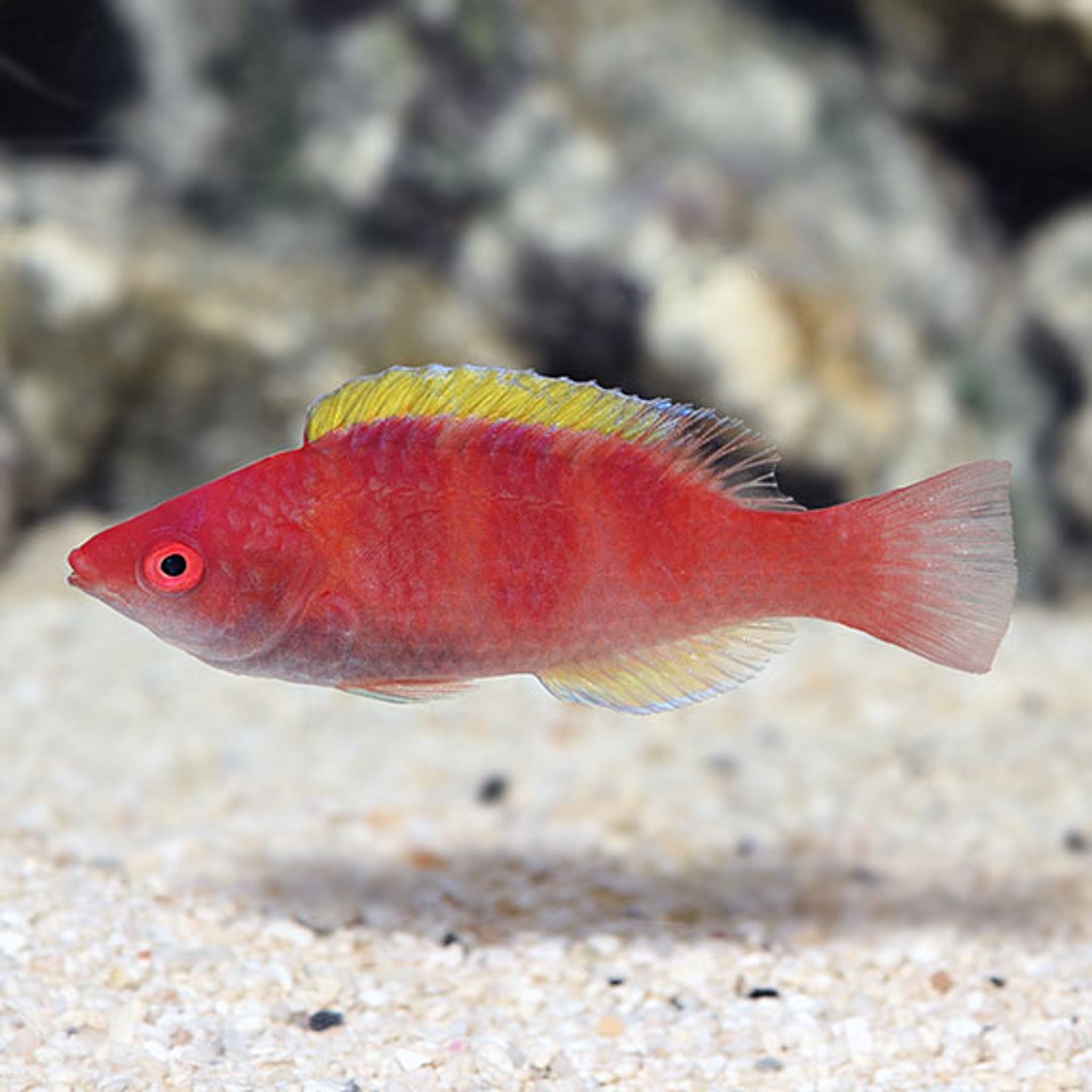

Is Fairy Wrasse Reef Safe? Coral and Invertebrate Compatibility Explained
Yes, fairy wrasses (genus Cirrhilabrus) are reef safe — they will not eat, nip, or host on stony corals, soft corals, zoanthids, or clams. The catch is that "reef safe" and "invertebrate safe" are not the same claim, and this guide draws that line clearly so you know exactly what's at risk in your own tank.
The Short Answer: Coral-Safe, Conditionally Micro-Fauna Safe
Fairy wrasses are mid-water planktivores, not coral-eaters. In the wild, they hover above reef structure picking zooplankton out of the current, and that feeding style carries over almost unchanged into captivity. They have no interest in coral polyp tissue, mucus, or the stinging cells that make some fish avoid certain corals altogether.
Where the "100% reef safe" label breaks down is with very small invertebrates. Fairy wrasses are opportunistic hunters of anything roughly pod-sized, and that includes:
- Copepods and amphipods
- Bristleworms
- Small feather duster worms
- Newly molted or juvenile ornamental shrimp
So the accurate answer has two tiers: reef safe for corals and larger invertebrates, conditionally safe for micro-fauna and tiny shrimp. Treat both halves of that sentence as equally important — a fairy wrasse that never touches a single LPS head can still quietly wipe out a refugium's pod population over a few months.
Coral Compatibility: What's Actually Safe
Fairy wrasses ignore coral tissue entirely, which makes them one of the more flexible fish choices for a mixed reef. They're compatible with:
- LPS corals (hammer, torch, frogspawn, bubble coral)
- SPS corals (acropora, montipora, birdsnest)
- Soft corals (leathers, zoanthids, mushrooms)
- Clams (tridacnid species)
A Good Match for Bubble Coral and Other Long-Tentacle LPS
One detail worth highlighting: fairy wrasses pair unusually well with bubble coral (Plerogyra) and other LPS species that extend long sweeper tentacles at night. Their small size and quick, agile swimming let them dart around extended tentacles without getting stung, and they show no tendency to peck at or harass the coral's inflated vesicles the way some bolder fish might. If you're building an LPS-heavy display and want a fish that adds movement and color without adding risk, a fairy wrasse is a reasonable fit. You can browse current stock in the LPS hard corals category if you're stocking a tank around this pairing.
Invertebrate Compatibility: The Real Risk Categories
This is where most generic care sheets stop short. Break invertebrate compatibility into three tiers instead of one blanket rule:
| Invertebrate type | Compatibility | Notes |
|---|---|---|
| Copepods, amphipods, bristleworms | At risk | Actively hunted; population will decline over time |
| Newly molted or juvenile shrimp | At risk | Soft-shelled or tiny shrimp are easy targets |
| Adult cleaner shrimp (skunk, fire/blood) | Generally safe | Established adults are usually left alone |
| Snails, hermit crabs, larger crabs | Safe | No aggression observed toward these |
| Sea stars, adult anemones | Safe | Not a target or threat |
"Reef Safe" vs. "Pod-Safe": Two Different Questions
If your goal is a display tank with a clean-up crew of snails, hermits, and a couple of adult cleaner shrimp, a fairy wrasse fits comfortably. If your goal is a pod-breeding refugium meant to feed other fish or seed the display over time, a fairy wrasse actively works against that goal — it will graze down copepod and amphipod numbers just like it would in the wild.
Some sources frame this pod predation as a benefit (natural control of an amphipod bloom), while others frame it as a drawback (loss of a breeding population you were counting on). Both framings are correct — it just depends on what you're using the pods for. Decide which one applies to your setup before adding the fish, not after.
Protecting Vulnerable Inverts During Introduction
A practical sequencing tip that most care guides skip: add the fairy wrasse after your clean-up crew is established and settled in, not on day one alongside brand-new hitchhiker shrimp or fragile inverts. During the fish's first one to two weeks, feed more heavily than usual — a well-fed wrasse is measurably less motivated to hunt down pods and small crustaceans, since foraging drive drops once appetite is satisfied.
Tank Size and Setup Requirements
Fairy wrasses need swimming room and a secure setup more than they need anything exotic in terms of equipment.
- Minimum tank size: 30–50 gallons (114–190 L) for a single fish, depending on species. Most Cirrhilabrus top out around 3–4 inches (7.5–10 cm), so the smaller, calmer species do fine at the 30–40 gallon end.
- Active species need more room: Bolder, more open-water swimmers — such as Scott's fairy wrasse or the lineatus fairy wrasse — do better in 70+ gallon (265+ L) systems where they can range without feeling boxed in.
- A tight-fitting lid is non-negotiable. Fairy wrasses are notorious jumpers, especially when startled or freshly introduced. Seal every gap in the canopy, including around cords and overflow cutouts.
- Sand substrate: provide 2–3+ inches (5–7.5 cm) of soft sand. Fairy wrasses bury themselves at night or when stressed, and a lack of sand leads to a fish that hides constantly or attempts to jump instead.
- Live rock with hiding spots reduces overall stress and, indirectly, jumpiness and disease risk.
Tankmate Compatibility Beyond Corals and Inverts
Fairy wrasses are generally peaceful community fish, but there's one wrinkle within their own genus: males of the same or similarly patterned species can fight when housed together. Keep it simple with these rules:
- One male per tank in most setups.
- A harem (one male, two to three females) can work, but only in a large enough system — think 75+ gallons (285+ L) — and ideally introduced together or with females added first so the male doesn't treat later arrivals as intruders.
Species Notes: Naoko's Fairy Wrasse
The Naoko's fairy wrasse (Cirrhilabrus naokoae) deserves a specific mention. It's a deepwater, twilight-zone species prized for its distinctive color pattern, and it follows the same general reef-safe and invertebrate-caution profile as other Cirrhilabrus. Two things set it apart:
- It's typically collected from greater depths, which usually means a higher price point than shallow-water fairy wrasses.
- It tends to do best under slightly cooler, dimmer conditions that echo its natural twilight habitat, rather than the brightest, warmest end of standard reef parameters.
Beyond those two points, care, diet, and compatibility rules are unchanged from any other fairy wrasse. Check current availability in the wrasse category when sourcing one for your tank.
Diet and Water Parameters
Fairy wrasses eat a straightforward carnivore diet:
- Mysis shrimp
- Brine shrimp
- Frozen carnivore or marine blends
- Quality marine pellets
Feed 2–3 times daily in small portions rather than one large feeding. This isn't just about the fish's health — a consistently well-fed fairy wrasse has less drive to pick at cleanup-crew members and pod populations, which directly supports the invertebrate compatibility goals above.
Water parameters don't need to be adjusted for a fairy wrasse specifically; standard reef parameters apply:
- Temperature: 72–78°F (22–26°C)
- pH: 8.1–8.4
- Salinity: 1.023–1.025 SG
- Stable alkalinity, calcium, and magnesium
Stability matters more than any single number here — fairy wrasses tolerate normal reef parameter ranges well but are sensitive to swings and poor water quality, which increases stress and disease susceptibility.
Common Mistakes to Avoid
- Leaving gaps in the canopy. An open top or a gap around a cord is often the difference between a thriving fish and a "carpet surfing" casualty. Check every seam before the fish goes in.
- Adding two similarly patterned males at once. This triggers territorial fighting, stress-related color loss, and sometimes death. Stick to one male, or a properly sequenced harem.
- Assuming reef safe means invertebrate-safe across the board. Losing a refugium's pod culture or a batch of tiny hitchhiker shrimp isn't a sign something's wrong — it's expected predator behavior from a healthy fish.
- Underfeeding. A hungry fairy wrasse hunts harder, putting more pressure on pods and clean-up crew, and can waste away since it doesn't scavenge detritus like some other reef fish.
- Skipping quarantine and slow acclimation. Fairy wrasses are moderately hardy once settled but are prone to shipping-stress diseases like marine ich and velvet. A 2–4 week quarantine period and a slow drip acclimation meaningfully reduce losses.
- No sand for nighttime burrowing. Without it, expect a chronically stressed fish that hides excessively or jumps at the first opportunity.
Bringing It Together
A well-fed fairy wrasse in a tank with a tight lid, adequate sand, and appropriate tankmates is one of the safer, lower-maintenance additions you can make to a coral-heavy reef. The compatibility question isn't really "is it reef safe" — it's "what am I keeping alongside it, and is that something pod-sized or shrimp-sized." Answer that honestly and stock accordingly.
If you're ready to add one to your system, you can browse available fairy wrasses and other compatible marine fish in FishyHub's marine fish category, along with cleanup-crew invertebrates in the marine invertebrates category to round out your stocking plan.
Frequently Asked Questions
Will a fairy wrasse eat my coral?
No. Fairy wrasses don't eat coral polyps or LPS/SPS tissue, and they're considered safe for all common coral types, including bubble coral and other long-tentacle LPS.
Will it eat my cleaner shrimp?
Established adult cleaner shrimp, such as skunk or fire/blood shrimp, are usually left alone. Very small, newly molted, or juvenile shrimp are more vulnerable and can be at risk.
Can I keep a fairy wrasse with copepods or amphipods in my display or refugium?
You can, but expect the population to decline over time as the fish hunts them. This makes fairy wrasses a poor match for a refugium meant to breed pods for feeding other fish, though it can work as informal population control in a display tank.
How many fairy wrasses can I keep together?
One male per tank is the safest approach. A harem of one male with two to three females can work in larger tanks, generally 75 gallons (285 L) or more, especially if introduced together or with females added first.
What size tank does a fairy wrasse need?
Plan for a minimum of 30–50 gallons (114–190 L) for a single fish, with more active species or a harem setup needing 70+ gallons (265+ L) for adequate swimming room.
Do fairy wrasses jump?
Yes, frequently, especially when startled or newly introduced. A secure, gap-free lid or canopy is mandatory, not optional.
What do fairy wrasses eat?
Mysis shrimp, brine shrimp, frozen carnivore or marine blends, and quality marine pellets, fed two to three times a day in small portions.
Are fairy wrasses reef safe with snails and hermit crabs?
Yes. Fairy wrasses show no aggression toward snails, hermit crabs, larger crabs, or sea stars, and these invertebrates are considered safe tankmates.


