
Is Engineer Goby Reef Safe? Coral and Invertebrate Compatibility Explained
Yes, the Engineer Goby is reef safe in the sense that matters most: it will not eat, sting, or otherwise bother corals, anemones, or other sessile invertebrates. The catch isn't its diet — it's its lifestyle. This fish is a nonstop burrower, and an aquarium that isn't built around that habit can end up with toppled rock and crushed coral even though the fish never touched anything on purpose.
What Is an Engineer Goby, Really?
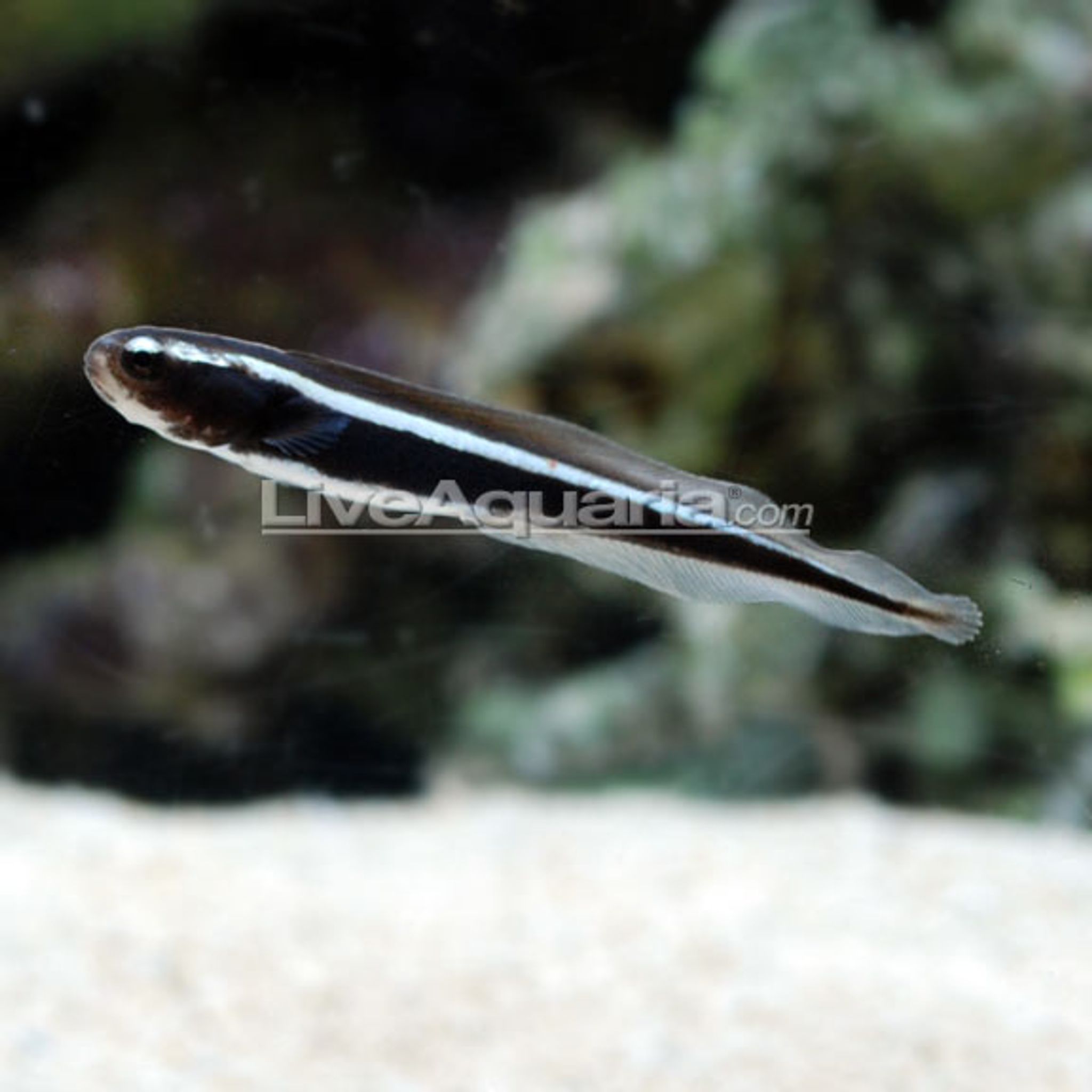
Juveniles arrive with bold black-and-white (sometimes yellowish) longitudinal stripes that make them easy to spot in a display tank. As they mature, that pattern fades into a duller brown or gray, and adults look far less flashy than the juveniles sold in stores.
Here's the classification quirk worth knowing before you buy one: despite the common name, the Engineer Goby is not a true goby at all. It belongs to the family Pholidichthyidae, commonly called convict blennies, and its scientific name is Pholidichthys leucotaenia. True gobies belong to family Gobiidae. The "goby" label stuck because of a superficial body-shape resemblance, but taxonomically the two groups aren't closely related. It's a minor point, but it explains why some care guides mix advice for this fish with advice meant for actual gobies — advice that doesn't always translate.
The Reef Safety Verdict, Broken Down
Most "reef safe" labels are too blunt for this species, because there are really two separate questions:
- Will it eat my coral? No. It ignores corals, zoanthids, mushrooms, sponges, clams, and other soft-bodied or sessile invertebrates entirely.
- Will it damage my reef tank some other way? Possibly, yes — through burrowing.
Engineer Gobies are relentless sand-sifters and tunnelers. They dig channels under live rock and substrate as a matter of instinct, not stress. Over weeks or months, that digging can undermine rock that isn't properly secured, leading to shifts or a full rockslide that crushes or knocks over the coral colonies sitting on top of it. The fish itself is completely innocent of the damage — the setup is what fails.
This is the nuance most generic listings skip: coral-safe and structurally harmless are not the same claim, and only the first one is actually true for this species.
Ideal Tank Setup Checklist
Because the risk is mechanical, the fix is also mechanical. Before adding an Engineer Goby to a reef system, confirm:
| Setup element | Recommendation |
|---|---|
| Rockwork | Secured to the tank bottom or an eggcrate base with aquascape epoxy putty or rock-locking pins/rods — never dry-stacked |
| Sand bed | 2–4+ inches (5–10+ cm) of fine sand for juveniles; adults tolerate coarser sand or fine gravel |
| Substrate type | Sand or fine substrate required; a bare-bottom tank prevents natural burrowing and causes stress |
| Tank lid | Tight-fitting cover with no gaps, including around overflow boxes and back openings |
| Tank size | 20–30 gallons (76–114 L) for juveniles; 55+ gallons (208+ L) once approaching adult size |
| Filtration/flow | Standard reef-level flow and biological filtration; stable water quality is essential given the fish's appetite |
Securing Rockwork the Right Way
Skip the "just stack it carefully" approach. Instead:
- Build the aquascape on a rigid eggcrate platform elevated slightly off the glass, so tunneling underneath doesn't undermine the base itself.
- Use rock-locking rods or fiberglass pins drilled through stacked rock pieces to lock them together vertically.
- Apply aquascape epoxy putty at contact points between rocks to prevent any single piece from shifting independently.
- Test the finished structure by gently pushing on it before adding sand or livestock — nothing should wobble.
Do this before the fish goes in, not after. Retrofitting a rockscape around an established, actively burrowing fish is much harder and riskier for existing corals.
Size and Growth: Bigger Than Most Buyers Expect
Engineer Gobies are typically sold as juveniles at just 1–2 inches (2.5–5 cm), which leads a lot of buyers to underestimate their adult footprint. In captivity, they commonly reach 12 inches (30 cm) or more, with some reports of specimens in large systems or the wild pushing toward 15–20 inches (38–50 cm). Estimates vary a fair amount across sources — some cite adult sizes as low as 8 inches — but the safer planning assumption is 12+ inches and a tank sized accordingly, not the smaller figure.
That growth trajectory is exactly why a 20–30 gallon tank should be treated as a juvenile starter setup, not a permanent home. Plan to upgrade to 55 gallons or larger as the fish matures.
Social Behavior: Solo or Group?
In the wild, juvenile Engineer Gobies form dense, tightly synchronized schools that move as one unit. This is a genuine predator-avoidance strategy — the striped pattern and unified movement can make a group of small juveniles look and move like a single larger, more dangerous animal (some describe the resemblance to a sea snake or eel) to would-be predators.
That schooling instinct carries over into home aquariums:
- Juveniles do best kept in small groups of similarly sized individuals rather than singly.
- Solitary adults generally adapt fine on their own, since the schooling behavior is strongest at the juvenile stage.
- If tank size and budget allow, starting with three or more juveniles together is more true to the species' natural behavior than keeping a single fish.
This is also a point where sources disagree — some listings suggest keeping just one is perfectly fine at any life stage. It's not wrong, exactly, but it undersells how strongly social juveniles are.
Diet and Feeding
Engineer Gobies are carnivores that need meaty foods, not algae or coral-adjacent grazing:
- Frozen or fresh mysis shrimp, brine shrimp, bloodworms, krill, and chopped fish or shrimp
- Quality sinking or slow-sinking pellets formulated for carnivorous marine fish
- No live food required — they adapt readily to prepared foods
Feed once daily, or in small portions, rather than large single feedings. Because this species eats a lot of meaty protein relative to its size as it grows, overfeeding is a common route to nitrate spikes — which stress corals even though the goby itself never interacts with them directly.
Invertebrate Compatibility: Where "Reef Safe" Gets Complicated
This is the most misunderstood part of keeping this species. It is genuinely safe with:
- Corals, anemones, zoanthids, mushrooms, and other sessile/soft-bodied invertebrates
- Clams and other filter-feeding sessile inverts
- Sponges
It is not reliably safe with:
- Small ornamental shrimp, including cleaner shrimp
- Tiny crabs and other small motile crustaceans
- Very small or slow-moving fish
As Engineer Gobies grow, they become opportunistic enough to eat small tankmates that fit in their mouth. So the accurate label isn't "reef safe with invertebrates" across the board — it's reef safe for corals, risky for small motile invertebrates.
Suitable Tankmates
Good pairings are fish too large to be swallowed and not aggressive enough to bully a shy burrower:
- Clownfish
- Larger goby species
- Tangs and surgeonfish
- Dottybacks
- Larger wrasse species
Avoid pairing with small ornamental shrimp or tiny crabs if you want those invertebrates to survive long term — browse marine invertebrates with this compatibility limit in mind, and consider keeping delicate shrimp in a separate system if the goby is already established.
Water Parameters
This is a strictly marine reef species, and it needs marine reef parameters — not the generic freshwater-style ranges that sometimes turn up on lower-quality care pages:
| Parameter | Target range |
|---|---|
| Temperature | 72–78°F (22–26°C) |
| pH | 8.1–8.4 |
| Specific gravity | 1.023–1.025 |
| Water changes | Regular, to maintain stability |
If you see a care page citing pH 6–8 or unusually low temperatures for this fish, that's freshwater-fishkeeping advice bleeding into a marine care sheet — it does not apply to a saltwater reef setup and should be disregarded.
Hardiness and Lifespan
Once acclimated, Engineer Gobies are generally hardy and disease-resistant. The one vulnerable window is acclimation itself: because they rely heavily on hiding and burrowing for security, being left exposed in an unfamiliar tank for too long during introduction can stress them more than it would a more open-swimming species. With stable water quality and appropriate tankmates, a well-maintained specimen can live 5 or more years in a home aquarium.
Breeding in Captivity
Breeding is uncommon among hobbyists but does happen. Pairs form a bond, lay eggs inside a burrow or cave rather than in the open, and the male guards the eggs until they hatch. Rearing the resulting fry at home is difficult, largely due to their tiny size and specific larval feeding requirements, so most captive-bred juveniles available to hobbyists come from larger-scale breeding operations rather than home tanks.
Acclimation and Introduction Tips
- Drip acclimate over an extended period rather than a quick float-and-dump.
- Add the fish only after rockwork is fully finalized and secured — never introduce it to a tank where the aquascape is still a work in progress.
- Expect it to hide heavily for the first several days to weeks. This is normal settling-in behavior, not a sign of illness.
- Keep the lid secure from day one, since this species can attempt to jump before it's even fully acclimated to its surroundings.
Common Mistakes to Avoid
- Adding the fish before securing rockwork. The collapse often doesn't show up for weeks or months, by which point coral has already been damaged.
- Underestimating adult size and outgrowing a 20–30 gallon tank far sooner than expected.
- Assuming "reef safe" covers every invertebrate. Small ornamental shrimp and nano crustaceans remain at risk as the fish matures.
- Insufficient sand depth, which prevents natural burrowing and can lead to stress or digging at glass edges and under equipment instead.
- Leaving gaps in the tank lid. This is a well-known jumper, and an unsecured lid is the most common way owners lose one.
- Panicking when the fish disappears. Engineer Gobies are largely subterranean by nature and often surface only at feeding time or after the lights go out — an unseen goby usually means a settled goby, not a dead one.
- Overfeeding meaty foods, which drives nitrate spikes that stress corals even though the fish itself never interacts with them.
Frequently Asked Questions
Will an Engineer Goby eat my coral?
No. It's carnivorous but does not target coral, zoanthids, or other sessile invertebrates as food. The only coral risk is mechanical — its burrowing can shift or collapse unsecured rock onto nearby coral.
Is it safe with cleaner shrimp or other small invertebrates?
Not reliably. As the fish grows, it may eat small ornamental shrimp and other small crustaceans. Treat it as reef safe for corals but risky for small motile invertebrates.
How big of a tank does it need?
Plan for 20–30 gallons (76–114 L) for juveniles and 55+ gallons (208+ L) once the fish approaches its adult size of 12 inches (30 cm) or more.
Do I need more than one?
Not strictly required, but juveniles are naturally social and often kept in small groups of three or more. Adults typically do fine solo or in small groups if the tank is large enough.
What do Engineer Gobies eat?
Meaty carnivore foods: frozen or fresh mysis shrimp, brine shrimp, bloodworms, chopped seafood, and quality pellets formulated for carnivorous marine fish. Live food isn't necessary.
Why does it dig so much, and is that bad for my tank?
Digging and burrowing is natural foraging and denning behavior, not a problem in itself. It only becomes destructive if rockwork isn't secured, since undermined rock can shift or collapse onto corals and other livestock.
Can it jump out of the tank?
Yes. It's a known escape risk, and a tight-fitting lid with no gaps — including around overflow boxes — is essential from the day it's introduced.
Is it really a goby?
Not technically. Despite the common name, it belongs to family Pholidichthyidae (the convict blennies) rather than the true goby family, Gobiidae.
An Engineer Goby can be an excellent, genuinely coral-safe addition to a reef tank as long as the aquascape is built to handle a full-time burrower. If you're planning a build around one, start by browsing marine fish on FishyHub to compare tankmates sized appropriately for a maturing Engineer Goby.


