Is Anthias Reef Safe? Coral and Invertebrate Compatibility Explained
Yes — anthias are reef safe. These schooling planktivores don't nip coral polyps, sting sessile invertebrates, or bother snails, crabs, cleaner shrimp, or clams. The one caveat worth knowing: a large group can compete with corals and other filter feeders for suspended zooplankton, which is a feeding-management issue, not a predation risk.
Why Anthias Don't Bother Corals or Inverts
Anthias belong to the genera Pseudanthias, Odontanthias, and Plectranthias, and every one of them is an obligate or near-obligate planktivore. In the wild they hover in open water above the reef, snapping at drifting copepods, larval crustaceans, and other zooplankton carried past on the current. They have no biological reason to graze coral tissue, and they lack the mouth structure that coral-eating fish (like some butterflyfish or triggerfish) use to pick at polyps.
Their natural behavior actually favors coral health. Anthias form large aggregations directly above branching stony corals on current-swept reef slopes, using the coral's branches as an escape route whenever a predator passes overhead. The fish dive headfirst into the coral skeleton, wait out the threat, and re-emerge to keep feeding. This means:
- Dense, branching Acropora-type aquascaping benefits anthias by giving them instant shelter.
- The relationship runs one way — the coral gets nothing extra from the fish, but it also isn't harmed. It's a neutral, low-conflict pairing rather than a symbiosis.
- Aquarists building an SPS coral-dominant tank with strong branching structure are, in effect, already building good anthias habitat.
Common Species and How They Differ
Not every anthias is equally easy to keep, and species selection matters more than most buying guides let on.
| Species/Group | Typical Hardiness | Notes |
|---|---|---|
| Lyretail Anthias (Pseudanthias squamipinnis) | Most hardy, most common | Best entry point; adapts well to aquarium feeding |
| Bartlett's Anthias | Moderate | Popular, slightly more food-driven |
| Squarespot Anthias | Moderate | Active swimmer, needs open space |
| Purple Queen Anthias | Moderate | Vivid color, benefits from varied diet |
| Dispar Anthias | Moderate | Peaceful, does well in small harems |
| Deepwater genera (Odontanthias, Plectranthias) | Delicate, expensive | Collected from mesophotic depths |
The deepwater genera deserve a closer look, since they get lumped in with shallow-water anthias in casual conversation but behave very differently.
Why Deepwater Anthias Are a Different Animal
Some anthias relatives are collected from mesophotic reef zones roughly 100 to 330+ feet (30–100+ meters) down, far below where most shallow-water Lyretails live. That depth explains three practical differences buyers should weigh before purchasing:
- Price — collection from deep water is harder and rarer, so these fish command a premium.
- Light sensitivity — fish adapted to dim, deep water can be stressed by the intense lighting typical of SPS-focused reef tanks.
- Temperature and acclimation sensitivity — deepwater species tend to be less tolerant of the swings a shallow-water fish shrugs off, and they're harder to acclimate successfully after shipping.
For most home aquariums, a shallow-water Lyretail or one of the other common species listed above is the more reliable choice; deepwater genera are better suited to experienced keepers with stable, controlled systems.
Tank Size and Setup Matched to Harem Size
Anthias are shoaling fish with a clear social structure, and undersizing the tank is one of the fastest ways to create stress that has nothing to do with coral compatibility.
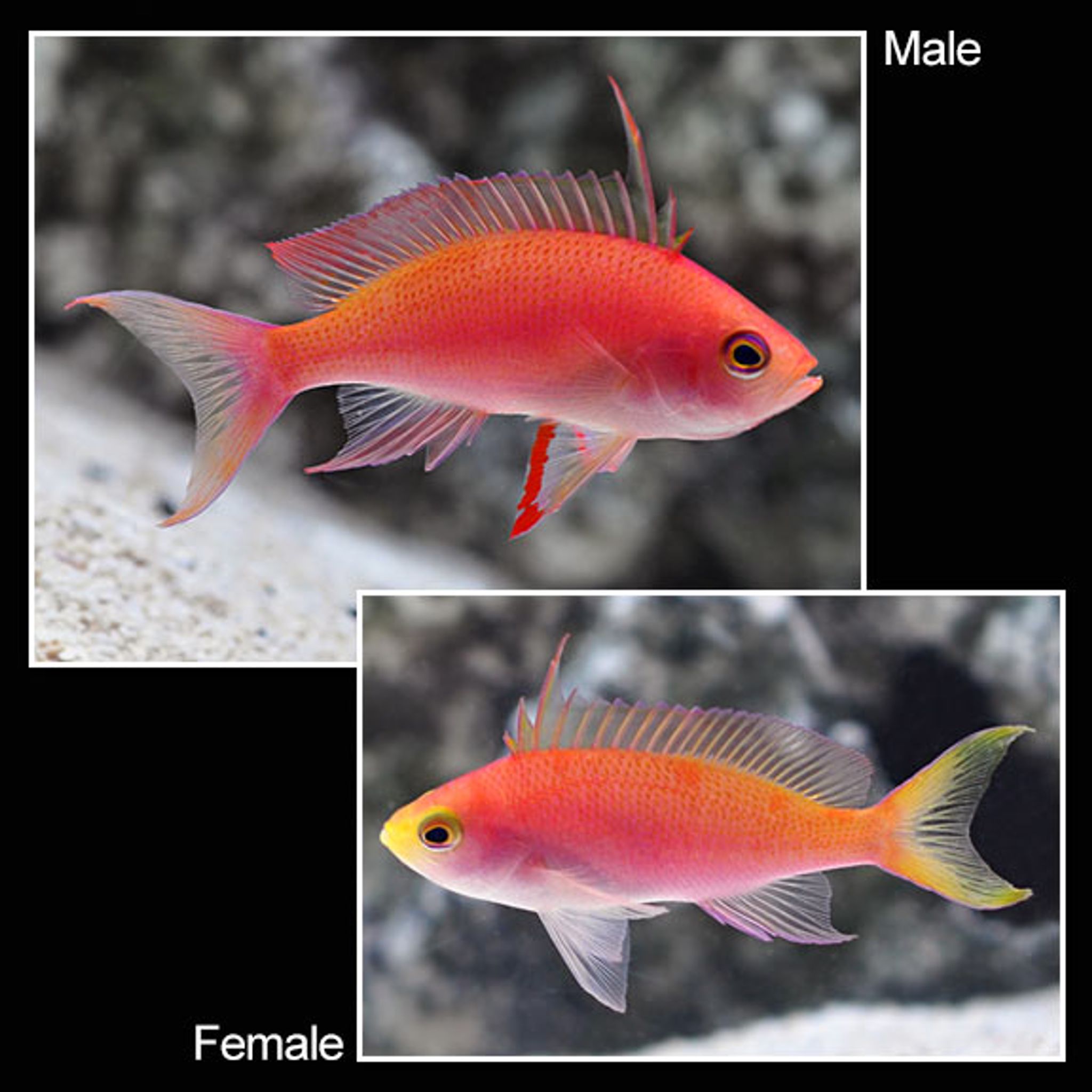
They're protogynous hermaphrodites: a harem consists of one dominant male and several females, and if the male dies or is removed, the largest female converts to male within roughly 2–3 weeks. Because of this, a tank needs enough swimming room and enough females to support stable harem behavior — a lone male or two males together is a recipe for aggression between the anthias themselves (not toward corals or inverts).
| Tank Size | Realistic Stocking |
|---|---|
| 75 gallons (~284 L) minimum | 1 male + 3 females |
| 125+ gallons (~473+ L) | 1 male + 5–6 females |
| 180+ gallons (~681+ L) | 1 male + 8–10 females, larger natural schooling |
A longer, wider footprint matters more than tank height — anthias swim horizontally in open water, and a tall, narrow tank restricts the schooling behavior that keeps a harem calm and well-fed.
Water Parameters
Anthias don't need anything beyond standard reef-tank targets, but consistency matters more for this genus than for hardier reef fish:
- Temperature: 72–78°F (22–26°C)
- pH: 8.1–8.4
- Specific gravity: 1.020–1.025
- Ammonia/nitrite: 0 ppm
- Nitrate: under 20 ppm (many SPS-focused reefers keep it lower)
- Water changes: 10–15% weekly
They also need strong water movement. Since they evolved feeding in open current, flow that mimics a reef slope — plus robust filtration and skimming to handle the bioload from frequent feeding — keeps both the fish and the corals sharing the tank in good shape. Lighting doesn't need to be tailored to the anthias themselves; match it to whatever coral is being kept, whether that's moderate LPS/soft coral lighting or higher-intensity SPS lighting.
Feeding: The Single Biggest Factor in Long-Term Success
If there's one husbandry detail that determines whether anthias thrive or slowly decline, it's feeding frequency. Anthias have high metabolisms and small stomachs, and a single daily feeding — which works fine for many reef fish — will starve them over weeks or months.
- Feed 2–4 small meals per day, not one large one. At minimum, aim for 2–3x daily; 3–4x is better if the tank's filtration can handle the extra bioload.
- Rotate foods: mysis shrimp, enriched brine shrimp, copepods, amphipods, finely chopped meaty frozen foods, and a marine flake or pellet blend.
- Favor vitamin- and HUFA-enriched foods for coloration and immune health, since anthias in the wild eat a steady stream of nutrient-dense zooplankton.
- An automated feeder set to dispense small portions several times a day can help hit the 3–4x target without requiring someone home at every meal — useful for reef tanks where manual overfeeding risks fouling water that corals also depend on.
Hobbyists frequently report anthias thriving for a year or two and then declining. In most cases this traces back to feeding fatigue: the same food offered repeatedly, a shrinking copepod population, or feeding frequency slipping as the initial routine relaxes. Rotating food types and periodically replenishing the tank's pod population helps sustain long-term health.
Invertebrate Compatibility in Detail
Anthias are considered safe with the ornamental invertebrates reef keepers commonly stock:
- Cleaner shrimp and peppermint shrimp — not predated on as adults.
- Snails and crabs — left alone.
- Clams — anthias don't interact with the mantle or shell.
The one nuance is scale. Anthias hunt drifting plankton by nature, so very small or larval invertebrates — newly hatched pods, larval shrimp, tiny snails — can occasionally get picked off incidentally. This isn't predation on your display animals; it's the same feeding behavior that makes them reef safe in the first place, just applied to microfauna. A large, actively feeding anthias group can measurably reduce a tank's standing copepod population over time, which also means they compete with corals and other planktivores for the same suspended food. Keeping the group appropriately sized for the tank, and replenishing pods periodically, keeps this in balance.
Tankmates Beyond Corals and Inverts
Anthias are peaceful community fish and pair well with wrasses, tangs, clownfish, gobies, cardinalfish, and dartfish. Avoid housing them with large or aggressive predators — lionfish, larger groupers, or aggressive triggerfish — that may bully or eat them outright. Browsing a curated selection of marine fish alongside your anthias order makes it easier to plan a compatible stocking list in one pass.
Common Mistakes to Avoid
- Underfeeding — a single daily feeding is the most common cause of slow starvation, color loss, and death.
- Buying a single fish or two males — causes stress and aggression; start with a proper male-to-female ratio.
- Adding anthias too early — an immature tank with low flow and little plankton stresses them before they've settled in.
- Skipping quarantine — anthias are prone to shipping stress, external parasites like ich and marine velvet, and internal parasites from wild collection. Quarantine and confirm a steady feeding response before moving them to the display.
- Mixing similar species/genera in a small tank — can trigger fighting between males that read each other as rivals.
- Treating "reef safe" as "low maintenance" — anthias need more frequent feeding attention than typical reef-safe fish like clownfish or gobies.
Frequently Asked Questions
Will anthias eat my coral polyps?
No. Anthias are planktivores and don't consume coral tissue. They'll often hover among coral branches for shelter, but that behavior doesn't damage the coral itself.
Are anthias safe with cleaner shrimp and snails?
Yes, generally. Anthias don't predate on adult ornamental invertebrates like cleaner shrimp, peppermint shrimp, snails, or crabs. Very tiny inverts or larval/pod-stage animals can occasionally get picked off since anthias hunt drifting plankton.
How many anthias should I keep together?
At minimum, one male with three or more females for stable harem behavior. Solo males or two males housed together often leads to conflict between the anthias, even though the fish remain harmless to corals and inverts.
Why do my anthias keep dying?
The most common causes are starvation from infrequent feeding, skipping quarantine before adding them to the display, or introducing them to a tank that isn't yet stable or doesn't have enough water flow.
Can anthias live in a nano reef tank?
It's not recommended below about 75 gallons (284 liters). Anthias need open swimming room and the kind of stable water quality that's harder to maintain in smaller volumes.
Do anthias change sex?
Yes. They're protogynous hermaphrodites, meaning the top female in a harem converts to male within roughly 2–3 weeks if the existing male dies or is removed.
What's the difference between Lyretail Anthias and deepwater anthias species?
Lyretails are shallow-water fish, hardy and common in the trade. Deepwater genera like Odontanthias and Plectranthias come from mesophotic depths, cost significantly more, and are considerably harder to keep alive long-term due to their sensitivity to light and temperature.
Do anthias compete with corals for food?
Yes, to a degree. A large, actively feeding anthias group competes with corals and other planktivores for suspended zooplankton and copepods, which can reduce the food available to filter-feeding tankmates if the group isn't matched to the tank's size and feeding capacity.
Ready to add a harem to your reef? Browse available Anthias Fish on FishyHub and pair your stocking plan with compatible marine invertebrates for a balanced, reef-safe community.


