How to Feed Tomini Tang: Foods, Frequency and Common Feeding Problems
The Tomini Tang is a grazer with a small stomach and a near-constant need for algae, which means the standard twice-a-day flake routine leaves it underfed. This guide covers exactly what to offer, how often, and how to fix the most common feeding problems: a sunken belly, pale color, coral nipping, and a new arrival that won't eat.
Species Snapshot
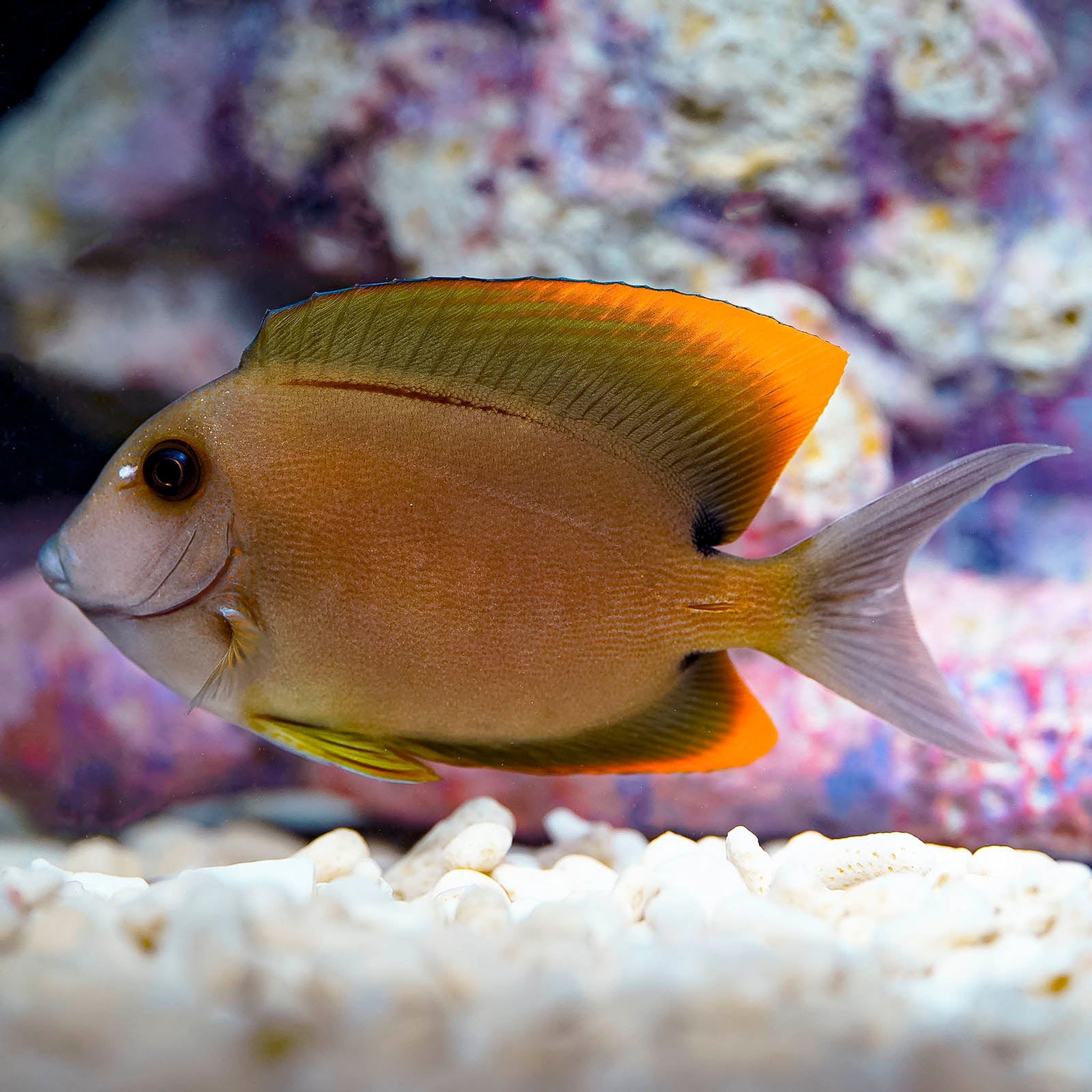
The Tomini Tang (Ctenochaetus tominiensis) is a small Indo-Pacific bristletooth surgeonfish, reaching about 4-5 inches (10-13 cm) as an adult. It has a brownish body with fine orange-to-yellow speckling and a distinctive blue-ringed eye. Compared to other tangs, it's fairly peaceful, and it's considered reef-safe: it doesn't eat coral tissue directly, though an underfed individual may nip at large-polyp coral flesh or clam mantles out of hunger or curiosity.
The name "bristletooth" comes from its comb-like teeth, which it uses to rasp filamentous algae, diatoms, and detritus (biofilm) off rock surfaces. That feeding style is the key to everything below: this fish is built to graze almost continuously on small amounts of material, not to eat one or two large meals a day.
Core Diet: What Grazers Actually Need
In the wild, a Tomini Tang spends most of its waking hours picking algae film and detritus off reef substrate. In captivity, its diet should mimic that pattern as closely as possible, built around three categories:
- Dried seaweed/nori sheets — the daily staple, clipped to a veggie clip on the glass or tucked into rockwork.
- Spirulina- or marine algae-based flake or pellet, plus algae wafers — a convenient supplement, not a replacement for seaweed.
- Vitamin-enriched frozen foods (mysis shrimp, brine shrimp, cyclops) — offered a few times a week as a protein boost, not a daily main course.
The single biggest factor in long-term health is often overlooked: mature, algae-covered live rock, or a well-lit refugium or algae turf scrubber. A tank that's scrubbed too clean of algae film will starve this species faster than any amount of store-bought food can compensate for. If you're stocking or restocking display rock, live rock with an established algae film gives a Tomini Tang something to graze on between formal feedings, exactly the way it would forage in the wild.
Feeding Frequency: Graze Often, Don't Overfeed Protein
The right philosophy is "graze often, don't overfeed protein." In practice:
- Nori/seaweed: offer daily, clipped in place. It's fine to leave a sheet in the tank for several hours or even overnight, since this fish grazes continuously rather than eating in one sitting — just remove uneaten scraps daily for water quality.
- Flake, pellet, or frozen food: small pinches 2-3 times a day, sized so the fish clears it in about 2 minutes. Larger, infrequent protein feedings aren't necessary and can foul water without adding real benefit.
A Practical Daily Schedule
| Time of day | What to offer | Notes |
|---|---|---|
| Morning | Nori/algae sheet on a clip | Leave in place several hours |
| Midday | Small pinch of spirulina flake or pellet | Should be gone in ~2 minutes |
| Afternoon/evening | Vitamin-soaked frozen mysis or brine shrimp | 2-3x per week, not daily |
| Overnight | Leftover nori sheet (if still present) | Remove by morning if uneaten |
This schedule works alongside — not instead of — ongoing grazing on live rock or refugium algae, which fills the gaps between formal feedings.
Tank Setup That Supports Healthy Feeding
Feeding problems often trace back to tank conditions rather than the food itself. A Tomini Tang does best with:
- Tank size: at least 75 gallons, with 125+ gallons preferred. This species is more active and territorial than its size suggests, and it needs room to establish a grazing territory without constant stress at feeding time. (Some care sheets cite 55-75 gallons as workable, but 75 gallons is a more realistic practical minimum given its temperament.)
- Stable reef parameters: specific gravity 1.023-1.026, temperature 72-78°F (22-26°C), and pH 8.1-8.4.
- Late addition to the tank: add it after most other fish are established, so it isn't bullied away from food by tankmates that were there first.
If you're planning a reef build around a Tomini Tang or other grazing species, you can browse Tangs & Surgeons on FishyHub to compare compatible species and sizes before adding one to your system.
Supplementation: Vitamins and Garlic
Soaking frozen or dried foods in a vitamin C or marine multivitamin supplement before feeding helps guard against lateral line and head erosion issues (more on this below). Garlic-soaked food is a useful trick for stimulating appetite in shy fish, newly acquired specimens, or anything sitting in quarantine and reluctant to eat.
Quarantine and New-Arrival Feeding
Newly imported Tomini Tangs are frequently thin from the stress of shipping and may refuse prepared foods for the first several days. In a quarantine tank, the most reliable approach is a step-by-step transition:
- Live rock rubble with an algae film in the QT tank first — this gives the fish something familiar and natural to graze on immediately.
- Garlic-soaked nori offered once the fish is settled, to reintroduce a recognizable prepared food.
- Vitamin-soaked frozen mysis or brine shrimp once it's readily taking nori.
- Spirulina flake or pellet last, once it's feeding confidently on the softer foods above.
Dim lighting and minimal disturbance during this period matter as much as the food itself — a stressed fish in a brightly lit, high-traffic tank is less likely to start eating regardless of what's offered.
Saltwater Grazers Share This Feeding Pattern
The Tomini Tang isn't unique in needing near-constant access to algae. Most saltwater herbivore grazers — other tangs, many blennies, and some angelfish — share the same core requirement: a marine algae-based diet delivered in frequent small feedings rather than one or two large meals a day. If you keep other grazing species alongside a Tomini Tang, the same nori-plus-live-rock approach generally applies, with adjustments for each species' specific size and temperament.
Common Feeding Mistakes and How to Fix Them
| Problem | Likely cause | Fix |
|---|---|---|
| Weight loss, pale color | Flake/pellet only, no seaweed | Add daily nori; increase algae-rich frozen food |
| Fish grazing on glass/decor | No live algae film in tank | Reduce scrubbing; add refugium or algae turf scrubber |
| Sunken belly | Chronic algae undereating, or bullying at feeding | Increase nori frequency; check for tankmate competition |
| Refuses food after introduction | Shipping stress | Live rock rubble, garlic-soaked nori, dim lighting |
| Head/lateral line erosion (HLLE) | Poor diet, vitamin deficiency, excess carbon use | Varied diet, vitamin soaks, review carbon use |
| Aggression at feeding time | Territorial competition over food | Feed in multiple spots; mix tang body shapes/genera |
Reading Body Condition
A quick visual check can catch feeding problems before they become disease. Look at the belly profile just behind the gills: a slightly convex or flat profile is normal, while a concave, pinched-in profile is an early sign of insufficient grazing intake — well before other symptoms appear. This is different from disease-related thinness, which usually comes with other signs like clamped fins, labored breathing, or spots.
Ich and Marine Velvet
Tangs as a group are notably prone to ich and marine velvet, and poor nutrition weakens immune resistance to both. A consistent grazing-based diet with vitamin supplementation is a preventive measure worth building into routine care, not something to reach for only after an outbreak.
Frequently Asked Questions
What do Tomini Tangs eat in the wild?
They graze on filamentous algae, diatoms, and detritus from reef substrate, using specialized bristle-like teeth to rasp material off rock surfaces.
How often should I feed a Tomini Tang?
Offer algae or nori daily, available for most of the day, along with small protein feedings 2-3 times daily that the fish can finish in about 2 minutes.
Can Tomini Tangs eat flake food?
Yes, as long as it's algae- or spirulina-based, but flake should supplement seaweed and live rock grazing, not replace them.
Will a Tomini Tang eat coral or clams?
Rarely, and mainly when underfed. A well-fed specimen with plenty of grazing material available is considered reef-safe.
Why won't my new Tomini Tang eat?
Shipping stress is common in newly imported specimens. Offer live rock with an algae film and garlic-soaked nori, and minimize tank disturbance for the first week or two.
How big a tank does a Tomini Tang need?
At least 75 gallons, with 125+ gallons preferred for long-term health and to reduce feeding-time aggression.
Why does my Tomini Tang look thin or pale?
This usually points to insufficient algae or grazing material. Increase nori feedings, add algae-rich frozen food, and check whether tankmates are outcompeting it at feeding time.
Do Tomini Tangs get along with other tangs?
They can be kept with other tangs of different body shapes and genera, provided the tank is large enough and every fish gets adequate food to reduce competition.
If you're building out a reef system for a Tomini Tang or another grazing species, browse Food & Supplements and Freeze Dried Food on FishyHub to put together a rotation of algae-based staples and protein supplements.


