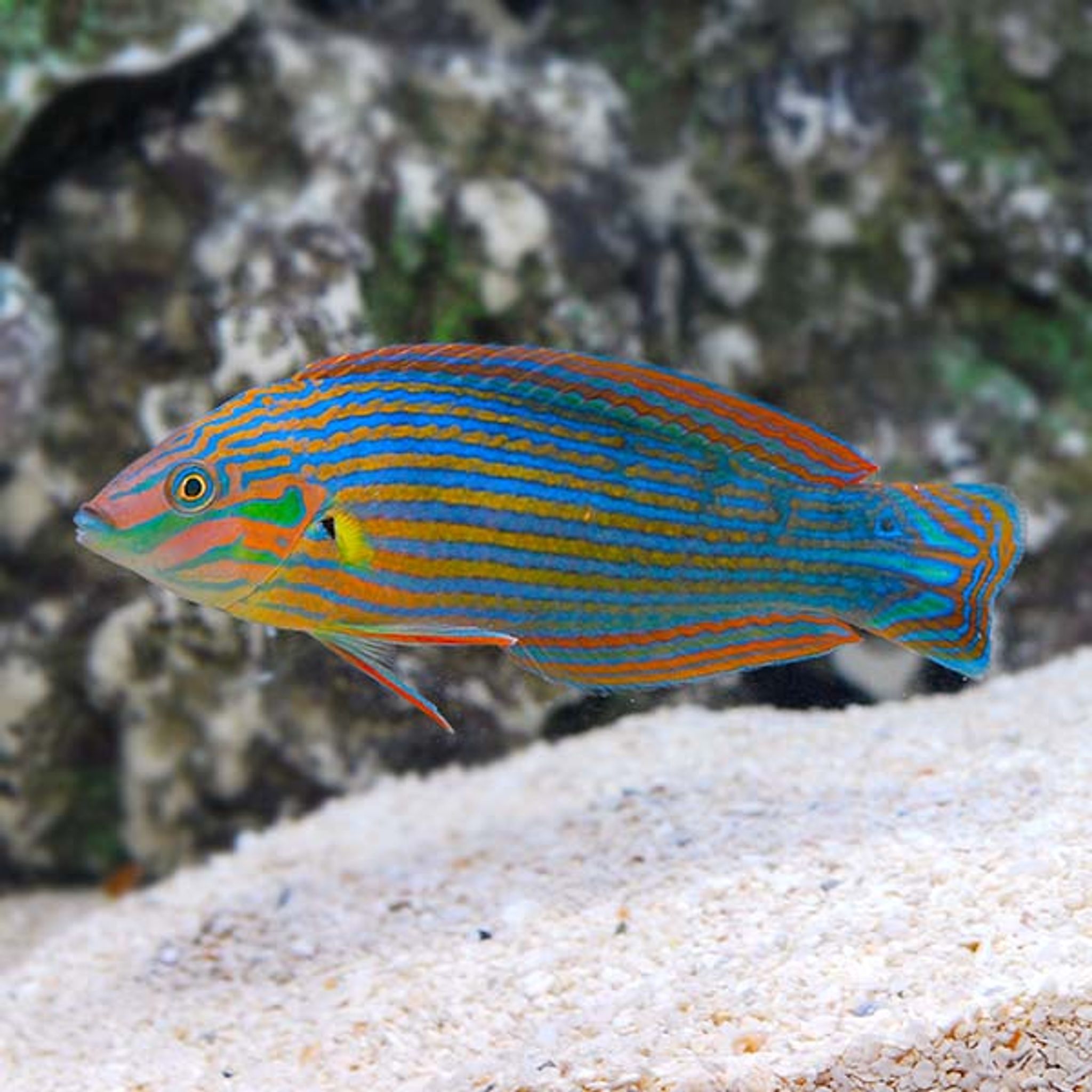

How to Feed Melanurus Wrasse: Foods, Frequency and Common Feeding Problems
The melanurus wrasse is a nonstop swimmer with a short gut and a fast metabolism, which means feeding it correctly is less about what's in the bag and more about how often and how it reaches the fish. This guide breaks down the foods this species actually needs, a realistic daily schedule, and how to troubleshoot the most common feeding failures, from wild-caught fish refusing food to a healthy eater that still looks pale.
Melanurus Wrasse Basics That Affect Feeding
Halichoeres melanurus is also sold under the common names Hoeven's wrasse or tail-spot wrasse. Adults reach roughly 4–5 inches and spend nearly all their waking hours cruising the tank hunting, which burns through energy reserves quickly.
In the wild, this wrasse picks motile invertebrates off live rock and sand almost continuously: amphipods, copepods, mysid shrimp, small worms, and mollusks. That constant-grazing lifestyle is the reason a single large daily meal doesn't suit it well in captivity — its digestive tract is built to process small amounts often, not one big feeding.
What to Feed a Melanurus Wrasse
Build the diet around meaty, protein-rich foods first, and treat dry foods as a supplement rather than the main course.
Ranked by feeding value:
- Vitamin-enriched frozen mysis shrimp – the closest match to natural prey size and nutrition; should be the staple.
- Enriched frozen brine shrimp – a solid secondary protein source, best rotated in rather than fed exclusively.
- Marine pellets – convenient for automatic feeders and useful once the fish is established.
- High-quality flake – acceptable variety food, lower priority than mysis or pellets.
- Live or frozen blackworms and bloodworms – occasional variety items, also useful as bridge foods for reluctant eaters.
Soaking frozen or dry foods in a vitamin supplement before feeding measurably helps color retention and immune health, since a diet of frozen foods alone can run short on certain vitamins over time.
Live Pest Prey
Melanurus wrasses will readily hunt several nuisance organisms, which is one reason reefers stock them:
- Bristleworms and fireworms
- Flatworms, including Acropora-eating flatworms and red flatworms
- Pyramidellid snails
- Overpopulated nuisance amphipod colonies
This pest control is a genuine bonus, but it is opportunistic hunting between meals — it doesn't replace a scheduled feeding routine, and a hungry wrasse simply looks for more of the same among your desirable invertebrates (more on that below).
How Often to Feed a Melanurus Wrasse
Feeding frequency is the one area where advice diverges. General consumer guidance often settles on 2–3 feedings a day, while specialist wrasse-keeping advice pushes for 3–4, pointing to the fish's fast metabolism and simple gut as the reason infrequent large meals aren't ideal.
A practical middle path:
| Life stage / condition | Feedings per day | Notes |
|---|---|---|
| Newly acquired or juvenile | 4 | Supports weaning and rapid growth |
| Underweight or recovering fish | 3–4 | Taper down once weight stabilizes |
| Established adult, mixed reef | 3 | Practical default |
| Long-term stable adult | 2–3 | Fine once color and weight are consistently good |
Feed roughly the same times each day. Consistency reduces stress and helps a newly acquired fish learn the routine faster than randomly timed feedings.
Portion Size
Offer only what the fish can finish in under two minutes per session — think a pea-sized cube of thawed frozen food, or a small pinch of pellets, per feeding. It's better to slightly underfeed each session and add another feeding later than to dump one oversized portion; leftover food that sinks uneaten just adds to the nutrient load in the tank.
Because multiple daily feedings mean multiple opportunities for uneaten food to accumulate, keep an eye on nitrate and phosphate levels if you're running four feedings a day in a reef system — this is a reasonable tradeoff for the fish's health, but it means your nutrient export (skimming, water changes, macroalgae) needs to keep pace.
Feeding Technique
Target-feed with a turkey baster or a feeding stick, aiming near the spot where the wrasse typically hangs out. This keeps food away from faster or more aggressive tankmates and ensures it actually reaches the wrasse rather than being intercepted at the surface.
Broadcast feeding (scattering food across the tank) works fine once a wrasse is established and confident, but it risks feeding sand-sifting fish or ornamental invertebrates that you may not want overfed. Since the melanurus wrasse often feeds mid-water and near the substrate rather than exclusively at the surface, make sure at least part of each feeding sinks into the water column instead of staying on top.
If you're not home during the day, a programmable automatic feeder loaded with pellets or a gel-based food can maintain 3–4 small feedings without you physically present — just supplement with a hand-fed frozen mysis session when you are around, since automatic feeders don't handle frozen food well.
Tank Setup That Supports Feeding Success
Feeding problems often trace back to the tank itself rather than the food. Before adding a melanurus wrasse, make sure the setup meets these baselines:
- Tank size: minimum of about 50–55 gallons (190–208 L), giving the fish room to patrol and reducing competition-driven stress at feeding time.
- Lid: a tight-fitting, gap-free lid or canopy. This species is a well-known jumper, especially during acclimation, at lights-out, or when startled during feeding.
- Sand bed: 3–4 inches (7.5–10 cm) of fine sand, not crushed coral. The wrasse dives into the sand at night and when frightened, and a bed that's too shallow or too coarse won't let it burrow properly.
A tank that's been running for at least three months, with an established sand-pod population of copepods and amphipods, gives a newly added wrasse a natural food supply to fall back on while it settles into a feeding routine — this cushion matters more for this species than for many other reef fish.
If you're stocking a system for the first time, finish a full nitrogen cycle before adding any fish, and prioritize the lid and appropriately sized tank as first purchases alongside the fish itself. Browse marine wrasses once your tank has matured to this point.
Weaning a Wild-Caught Melanurus Wrasse
Most melanurus wrasses sold are wild-caught, and it's normal for a new arrival to refuse prepared food initially.
Standard weaning approach:
- Start with live foods: live blackworms or live baby brine shrimp are usually accepted fastest.
- Move to frozen mysis or brine shrimp soaked in garlic or a vitamin supplement as an appetite stimulant.
- Keep lighting dim during early feedings to reduce stress.
- Feed at the same times daily to establish a predictable routine.
- Avoid rushing the fish into a busy display tank before it's eating reliably.
Quarantine matters here too. Because these are typically wild imports, a 2–4 week quarantine period with confirmed, consistent eating is standard practice before moving the fish to a display tank. Deworming or anti-parasitic treatment during this window is also common, since wild-caught wrasses frequently carry internal parasites that can suppress appetite on their own. During quarantine, feed smaller, more frequent portions than you would in a display tank — it's easier to monitor whether a fish is actually eating in a bare-bottom or low-decor QT setup.
Signs weaning is going well: the fish investigates food within the first few days, accepts live food readily, and begins taking frozen mysis within one to two weeks. Signs it's failing to acclimate: continued weight loss past two weeks, no interest in any food type including live offerings, or increasingly reclusive behavior — these warrant net-catching the fish for closer, more controlled feeding rather than waiting it out in the display tank.
Reef Compatibility and Feeding
The melanurus wrasse is reasonably described as reef-compatible for coral-only systems, but it is not invert-safe. It will hunt and eat ornamental shrimp, small snails, feather dusters, and tube worms whenever the opportunity arises, regardless of how well-fed it is.
Keeping the fish on a consistent, adequate feeding schedule reduces opportunistic predation on tankmates but does not eliminate it — plan your invertebrate stocking with this in mind rather than assuming a full stomach solves the problem entirely. Anyone building a mixed reef with ornamental shrimp or snails should weigh this tradeoff before adding one; browse marine invertebrates with this compatibility note in mind.
Common Feeding Problems and Fixes
| Problem | Likely cause | Fix |
|---|---|---|
| Won't eat prepared food | Wild-caught, still adjusting | Offer live blackworms/brine shrimp, dim lights, feed on a consistent schedule |
| Rarely seen at feeding time | Hiding in sand | Confirm food reaches mid-water/substrate, not just the surface |
| Weight loss or pale color despite eating | Monotonous diet or bullying by tankmates | Rotate foods, add vitamin/garlic soak, target-feed away from aggressive fish |
| Jumps out of tank | Startled or acclimating | Use a tight-fitting, gap-free lid |
| Shrimp/snails/feather dusters disappearing | Wrasse hunting between meals | Increase feeding frequency, choose tankmates with this risk in mind |
| Water quality declining | Overfeeding from multiple daily meals | Feed only what's cleared in ~2 minutes; monitor nitrate/phosphate |
| New wrasse losing out to established fish | Faster eaters outcompeting it | Target-feed the newcomer first, or feed it during a calmer window |
A well-stocked food and supplements selection makes it easier to rotate mysis, brine shrimp, pellets, and vitamin soaks without relying on a single product for every meal.
Frequently Asked Questions
How many times a day should I feed a melanurus wrasse?
Two to four small meals daily works, with three being a practical default for a settled adult. Juveniles and newly acquired or underweight fish benefit from four smaller feedings, tapering down to two or three once weight and color stabilize.
What is the best food for a melanurus wrasse?
Vitamin-enriched frozen mysis shrimp should be the staple, supplemented with enriched frozen brine shrimp, quality marine pellets or flake, and occasional live foods like blackworms for variety.
Will a melanurus wrasse eat pests like bristleworms and flatworms?
Yes. It actively hunts bristleworms, fireworms, flatworms (including Acropora-eating and red flatworms), and pyramidellid snails, which is a common reason hobbyists add one to an established tank.
Is a melanurus wrasse reef safe?
It's reef-compatible for coral-only systems but not invert-safe — it will eat ornamental shrimp, small snails, feather dusters, and tube worms whenever it gets the chance, regardless of feeding schedule.
Why won't my new melanurus wrasse eat?
It's likely wild-caught and still adjusting to captivity. Offer live foods first, keep lighting dim, feed at consistent times, and give it one to two weeks before assuming there's a bigger problem.
How big of a tank does a melanurus wrasse need?
A minimum of about 50–55 gallons (190–208 L) with a secure, gap-free lid, since this species is a determined jumper during acclimation and at feeding time.
If you're ready to add one to a mature reef tank, you can browse available wrasses and plan your feeding routine around the guidance above before the fish arrives.


