
Best Tank Mates for Trochus Snail in a Reef Aquarium
Trochus snails are one of the safest cleanup crew additions you can make to a reef tank, but a handful of common tank mates can turn from harmless to hazardous depending on size and species. This guide breaks down exactly which fish, invertebrates and corals pair well with trochus, which animals to avoid, and how to combine trochus with other snail species for full-tank algae coverage.
Trochus Snail Overview: Role in a Reef Tank
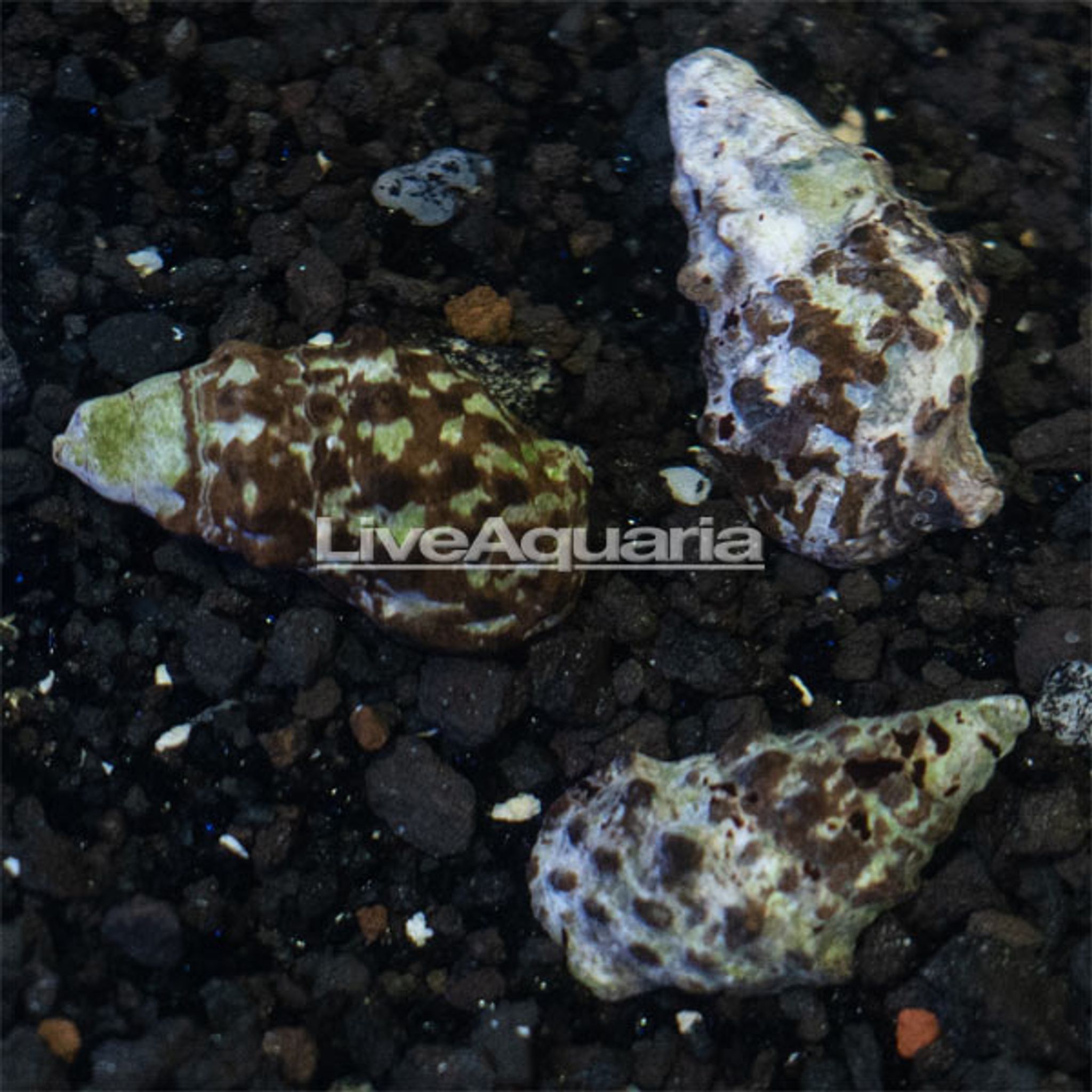
Trochus (genus Trochus, sometimes sold as top-shell or banded trochus snails) are herbivorous grazers. They spend their time working glass, live rock, and the upper substrate for film algae, diatoms, cyanobacteria, and soft algae growth. Because they leave coral tissue and coralline algae untouched, they're considered fully reef-safe with soft corals, LPS, and SPS alike.
Two traits set trochus apart from other cleanup-crew snails:
- Self-righting ability. Unlike many turbo and turban snails, trochus can flip themselves back over if knocked onto their backs by current or curious tank mates. This meaningfully cuts down on stranding deaths — a real practical advantage when stocking a busy reef tank.
- Slow, steady grazing. They aren't aggressive competitors for food, which makes them easy to combine with other cleanup crew species (more on that below).
A quick buying note: trochus are often sold alongside the closely related Tectus genus under the same common name. The two look similar, but self-righting ability and growth habits differ between them, so it's worth asking or checking closely if that specific trait matters to your stocking plan.
Ideal Water Parameters
| Parameter | Target Range |
|---|---|
| Temperature | 72–80°F (22–27°C) |
| pH | 8.1–8.4 |
| Specific gravity | 1.023–1.026 |
| dKH | 8–12 |
| Ammonia / Nitrite | 0 ppm |
| Nitrate | Under 20 ppm |
Trochus tolerate typical reef parameters well but are notably sensitive to chronically high nitrate, so regular testing matters even if everything else looks stable.
Best Fish Tank Mates for Trochus Snails
Most peaceful, community-oriented reef fish coexist with trochus without issue, since fish have no interest in a hard-shelled grazer that isn't part of their diet. Good options include:
- Clownfish — peaceful and unbothered by snails; browse clownfish for options.
- Gobies and blennies — bottom-dwelling and algae-focused themselves, they generally ignore trochus entirely.
- Firefish and dartfish — mid-water swimmers with no interest in the substrate or rockwork where trochus graze.
- Tangs and surgeonfish — larger algae grazers, but they target the same film algae rather than the snail itself; competition for food is minor since trochus work areas tangs often miss.
- Dwarf and pygmy angelfish — generally reef-safe and non-predatory toward snails.
- Dottybacks — territorial toward other fish but not a threat to invertebrates.
- Most damsels — peaceful toward snails, though some species can be territorial toward other fish.
- Wrasses — the majority of wrasse species are considered reef- and snail-safe. Browse the full range of wrasse species for a reef-community fit.
A Caution on Six-Line Wrasse
The six-line wrasse is generally reef-safe and not a serious threat to adult trochus. However, it has a reputation for picking at very small snails — pyramid snails in particular — and occasionally nipping at ornamental micro-snails. If you're stocking a full micro-fauna cleanup crew alongside larger trochus, keep this in mind, but a full-grown trochus itself is not typically at risk.
Best Invertebrate and Coral Tank Mates
Trochus integrate well into a mixed invertebrate community. Safe pairings include:
- Cleaner shrimp, peppermint shrimp, and coral banded shrimp — all peaceful toward snails. Explore marine shrimp for reef-compatible options.
- Other reef-safe snails — nassarius, cerith, and nerite snails all coexist peacefully with trochus. See the full snails selection to round out a cleanup crew.
- Brittle stars and serpent stars — peaceful scavengers that don't compete directly with trochus for algae.
- Corals — trochus are compatible with soft corals, LPS, and SPS. They graze nuisance algae without disturbing coral tissue or coralline growth, making them a low-risk addition to an established coral display.
Combining Trochus With Other Cleanup Crew Species
Trochus work best as part of a layered cleanup crew rather than as the sole grazer, because different snail species target different zones of the tank:
| Snail Type | Primary Grazing Zone |
|---|---|
| Trochus | Rock and glass, upper substrate |
| Cerith | Sand line, glass down to the substrate |
| Nassarius | Sand-sifting, detritus and leftover food |
Cerith snails pair especially well with trochus. Cerith work the sand line and lower glass, while trochus handle rock and glass above it — the two barely overlap, so you get more complete coverage without redundant competition for the same algae. Adding nassarius on top of that combination extends cleanup into detritus and sand-sifting, rounding out a full-tank crew that doesn't fight over the same food source.
Fish and Invertebrates to Avoid
A handful of tank mates pose a genuine risk to trochus and should be avoided or approached carefully:
- Pufferfish — equipped to crush shells and will actively prey on snails.
- Triggerfish — especially larger or more aggressive species, which readily crack open snail shells.
- Some large wrasse species — while most wrasses are snail-safe, larger predatory species outside the typical reef-community wrasses can pose a risk.
- Arrow crabs — opportunistic and occasionally predatory toward small snails in some tanks.
- Overstocked or undersized hermit crabs — see below for details on this specific risk.
The Hermit Crab Question
Hermit crab risk toward trochus is a genuinely debated point among reef keepers. Some report hermits attacking a trochus outright to steal its shell; others note the crab may simply be grazing algae off the shell's surface rather than attacking the snail itself. The realistic takeaway: the risk is real but occasional and opportunistic, and it gets worse when hermit crab populations are overcrowded or under-shelled (a hermit that has outgrown its own shell is far more likely to go after a live snail's). If you're stocking heavily with snails, either choose hermits that are well-matched to their own shell size or skip hermits altogether.
Feeding, Acclimation, and Long-Term Care
Feeding: In an established reef tank with visible algae, trochus need little to no supplemental feeding. Once film algae is depleted, offer dried seaweed, nori, or an algae wafer a few times a week — an evening feeding tends to work well since trochus are more active after lights-out.
Acclimation: Trochus are sensitive to sudden shifts in salinity and temperature. Always drip-acclimate slowly rather than doing a quick float-and-dump. They're also highly sensitive to copper-based medications — never treat a display tank stocked with snails using copper; move fish to a separate quarantine tank for any copper-based treatment.
Lifespan and reproduction: Well-cared-for trochus can live over a decade in a stable reef system. They're slow to mature, typically reaching reproductive age around two years. Established trochus can spawn in home aquariums, and a spawning event may temporarily cloud the water — this isn't a sign of a water quality problem, just a normal reproductive event.
New tank timing: Avoid adding trochus to a brand-new or barely cycled tank. Wait until some algae film has established on the glass and rock — otherwise there's nothing for them to graze, and they'll starve quickly in a tank with no food source yet.
Hitchhiker risk: Like any live rock or snail shipment, new trochus can occasionally arrive with unwanted hitchhikers — predatory micro-snails or other pests. A brief visual inspection (or dip, if you're following a quarantine protocol) before adding new snails to the display tank is a reasonable precaution.
Common Mistakes and Troubleshooting
- Overstocking too fast. Adding too many trochus at once lets algae run out quickly, leading to slow starvation. Watch for empty, undamaged shells — that's a sign of starvation, not predation.
- Skipping drip acclimation. Sudden salinity or pH shifts often don't kill immediately; snails may die days later from acclimation shock.
- Using copper medication in a display tank. Copper is lethal to trochus and all snails — always treat fish separately.
- Assuming every wrasse or hermit crab is automatically safe. Stock based on species specifics and watch behavior closely in the first days after introduction.
- Mistaking a flipped snail for a dead one. Trochus self-right — give a flipped snail time before assuming it's lost.
- Skipping nitrate testing. Trochus tolerate most reef parameters well but are stressed by chronically elevated nitrate even when everything else checks out.
Stocking Density: How Many Trochus Do You Need?
Recommendations vary from as light as one snail per 2–3 gallons up to as many as one to five per gallon, depending on algae load. The safer approach is to start conservative — one trochus per 2–3 gallons of display volume — and only add more if diatom or film algae is still visible after a few weeks. Overstocking risks starving your cleanup crew once the algae supply runs out, since trochus don't compete well for food once it's gone.
Frequently Asked Questions
Will trochus snails eat my coral or coralline algae?
No. Trochus graze nuisance and film algae and leave coral tissue and coralline algae alone, making them fully reef-safe with soft corals, LPS, and SPS.
Can I keep trochus snails with hermit crabs?
Generally yes, but watch for occasional shell-stealing attempts, especially if hermit crabs are overcrowded or under-shelled relative to their own shell size.
How many trochus snails do I need?
Start with roughly one snail per 2–3 gallons of display volume, then adjust upward gradually based on how quickly algae reappears after the initial cleanup.
Do trochus snails need supplemental feeding?
Not in an established tank with visible algae present. Once natural algae is depleted, offer nori or algae wafers a few times a week, ideally in the evening.
What fish will eat my trochus snails?
Mainly larger predatory species like pufferfish and some triggerfish. Typical reef community fish — clownfish, gobies, wrasses, tangs — leave trochus alone.
Can trochus snails live with other snail species?
Yes. Trochus pair especially well with cerith and nassarius snails, since each targets a different grazing zone: rock and glass, the sand line, and substrate detritus, respectively.
Why did my trochus snail flip over and stop moving — is it dead?
Not necessarily. Trochus can self-right, unlike many turbo and turban snails, so give it time before assuming it's dead or removing it from the tank.
Are trochus snails sensitive to medications?
Yes. Avoid copper-based treatments in any tank housing trochus or other snails — copper is lethal to them, so treat fish separately in a quarantine tank.
Ready to round out your cleanup crew? Browse the full range of reef-safe snails on FishyHub to pair trochus with complementary species for complete tank coverage.


