Best Tank Mates for Purple Tang: Peaceful, Risky and Incompatible Choices
A Purple Tang (Zebrasoma xanthurum) can be one of the most striking fish in a reef or fish-only display, but its territorial streak makes stocking decisions tricky. This guide sorts tank mates into three tiers — peaceful, risky, and incompatible — and walks through the tank size, introduction order, and quarantine steps that actually determine whether a new addition survives the first week.
Purple Tang Basics
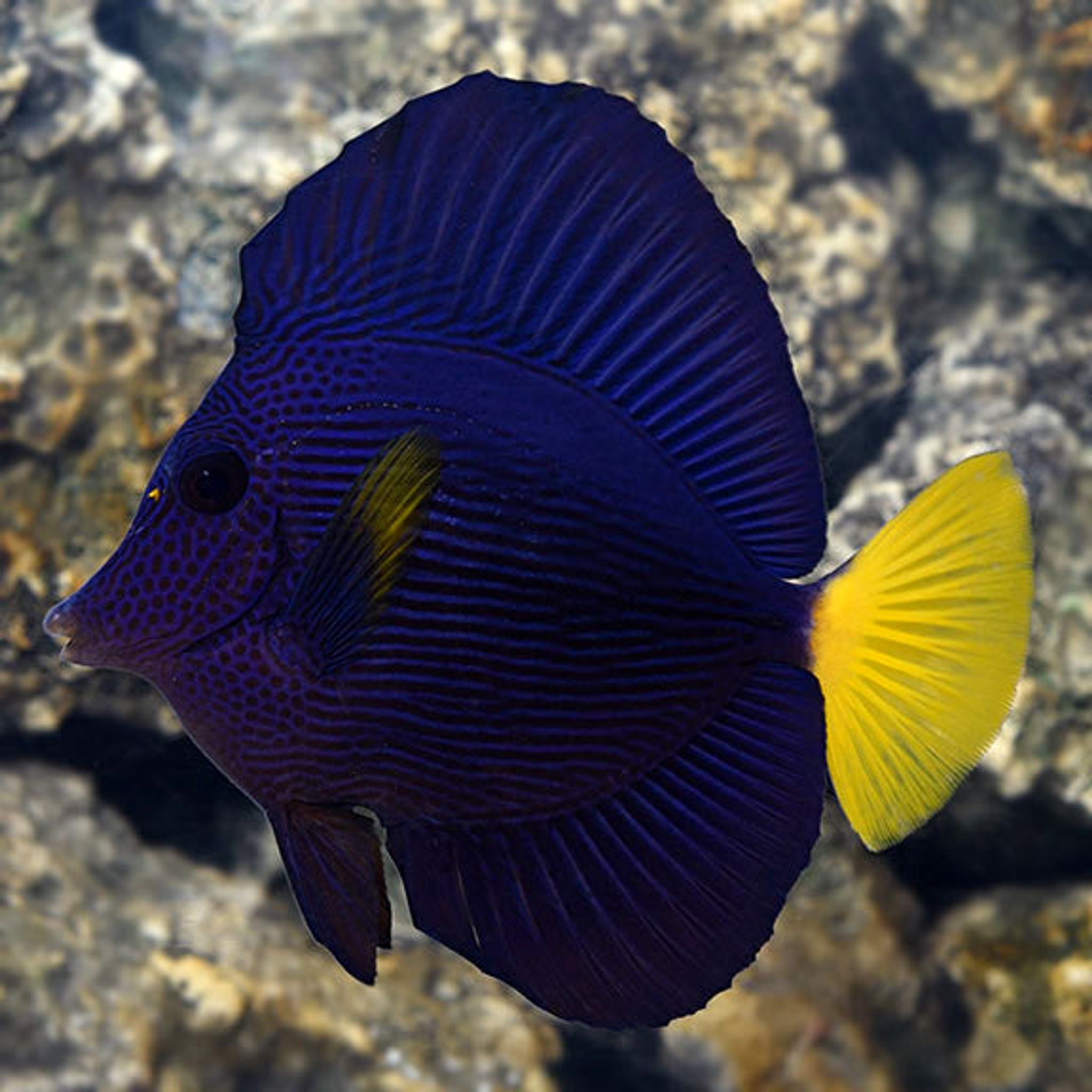
The Purple Tang is a deep-violet surgeonfish with a bright yellow tail, native to the Red Sea and western Indian Ocean. Adults reach roughly 9-10 inches, and like other members of the surgeonfish family, they carry a sharp scalpel-like spine near the tail base that they can use defensively against rivals.
Recommended parameters:
| Parameter | Range |
|---|---|
| Temperature | 72-78°F (22-26°C) |
| pH | 8.1-8.4 |
| Specific gravity | 1.020-1.025 |
| Water flow | Strong, with stable reef-grade filtration |
| Minimum tank size | 100 gallons (378 L), long/wide footprint |
Tank footprint matters more than raw volume — this is an active, constant swimmer, so a tall but narrow tank of the same gallonage gives it far less usable space than a long, wide one.
Is a Purple Tang Reef Safe?
Yes. A Purple Tang grazes hair and film algae and leaves coral polyps, shrimp, snails, and crabs alone, which makes it a genuinely reef-safe fish. That label only describes its relationship with corals and sessile invertebrates, though — it says nothing about how the fish behaves toward other fish sharing the tank. Confusing "reef safe" with "community safe" is one of the most common stocking mistakes with this species.
Tank Size and Temperament
Sources differ on the exact minimum, but a sensible read is:
- 100 gallons — absolute floor for a single Purple Tang.
- 125+ gallons — preferred for long-term health and color, giving room to establish a full territory.
- 180+ gallons — needed if a second tang or a large angelfish is part of the stocking plan.
Temperament runs semi-aggressive to aggressive, and it intensifies with age and size. A tang that tolerated tank mates as a juvenile in a cramped tank can turn hostile once it matures, especially toward fish of similar body shape or color — most notably other tangs and yellow-bodied species. Undersized housing is the single biggest driver of aggression: a tang confined below 100 gallons has nowhere to retreat from a perceived rival, so disputes escalate faster and last longer.
Peaceful and Recommended Tank Mates
These species generally coexist well with a Purple Tang because they occupy different body shapes, colors, or swimming zones, so the tang doesn't read them as competitors:
- Clownfish — hardy, host-anemone dwellers that stay near the rockwork.
- Fairy and flasher wrasses — active but not shaped like a tang, and usually too fast to bother chasing.
- Gobies and blennies — bottom- and rock-dwelling, low profile, minimal overlap in territory.
- Royal gramma — shy, cave-dwelling, rarely draws attention.
- Cardinalfish — slow-moving schoolers that stick to shaded areas.
- Dwarf or pygmy angelfish — generally safe when introduced carefully, though individual temperament varies.
- Firefish and dartfish — hover near burrows and retreat quickly, so they rarely trigger a chase.
You can browse live stock for several of these groups directly, including wrasse and dwarf angelfish.
Risky and Conditional Tank Mates
These pairings can work, but only under specific conditions — treat every one of them as a gamble rather than a guaranteed match.
- Other tangs of a different genus or body shape (such as a Naso Tang or a Sailfin Tang from the Zebrasoma line kept alongside a Purple Tang) can succeed in tanks of 180+ gallons when introduced simultaneously with heavy rockscaping to break sightlines. It rarely works in smaller systems.
- Semi-aggressive or large angelfish (flame angelfish, emperor angelfish) go either way. Because both species can be territorial, angelfish belong in the "conditional" tier, not a blanket-safe list — outcome depends heavily on individual temperament and which fish is introduced first.
- Dottybacks and larger, more assertive wrasses need ongoing monitoring after introduction, since some individuals are more territorial than the species norm suggests.
Incompatible Tank Mates
Avoid these combinations in anything short of an exceptionally large, carefully managed system:
- Other Zebrasoma tangs — a Yellow Tang or a Sailfin (desjardinii) Tang paired with a Purple Tang in a tank under roughly 180 gallons. The near-identical body shape triggers serious, sometimes fatal fighting, because the tang recognizes the same silhouette as direct competition for its territory.
- Very shy or passive species that can't tolerate a constantly active swimmer patrolling the tank — they tend to stay hidden and stop eating.
- Very small or slow fish that get outcompeted at feeding time, particularly if the tang isn't getting enough grazing material of its own.
Some hobbyists report success pairing a Purple Tang with a Yellow Tang after a rocky adjustment period, but most care guides advise against it outright. The technically-possible-but-real-gamble framing applies here: only attempt it in a large tank with simultaneous introduction, and have a backup plan — a divider panel or a return arrangement — ready if fighting hasn't settled within the first few days.
Purple Tang Compatibility at a Glance
| Tier | Examples | Conditions |
|---|---|---|
| Peaceful | Clownfish, fairy/flasher wrasses, gobies, blennies, royal gramma, cardinalfish, firefish, dartfish | Standard introduction; minimal monitoring needed |
| Risky/Conditional | Naso or Sailfin tangs (different genus/shape), flame or emperor angelfish, dottybacks, larger wrasses | 180+ gal tank, simultaneous introduction, heavy rockwork, close monitoring |
| Incompatible | Yellow Tang, Sailfin Tang (same genus), very shy species, very small/slow feeders | Avoid outside of 180+ gal tanks with a real contingency plan |
Introduction Order and Strategy
How you add fish matters as much as which fish you add.
- Add the Purple Tang last, or near last. Introducing it into an already-stocked tank means it has to establish territory around existing residents rather than claiming the whole tank first.
- Rearrange the rockwork immediately before adding any new fish. Resetting the aquascape disrupts established territorial boundaries so the tang can't simply defend the same ground it already knows.
- Use an acclimation box or floating container for several days. This lets the resident tang and the newcomer see each other without physical contact, defusing the initial burst of aggression before a direct introduction.
- In a large tank, add multiple tangs at once rather than one at a time. Simultaneous introduction spreads aggression across several targets instead of concentrating it on a single newcomer — a strategy that only makes sense at 180+ gallons.
Building the Acclimation Box Step by Step
A simple version needs a clear plastic breeder box or a mesh divider that clips inside the display tank, sized so the new fish has room to turn around and reach the surface. Float or clip it in a visible, high-traffic area of the tank — not a hidden corner — so the resident tang registers the newcomer's presence.
Leave the new fish in the box for 3 to 5 days, watching for the resident tang's interest to fade from aggressive posturing (flared fins, repeated passes at the box) to indifference. If aggression hasn't eased by day five, extend the isolation a few more days before releasing rather than gambling on a direct introduction. Release during daytime feeding, when attention is split between food and the newcomer.
Aquascape Design to Reduce Territorial Disputes
Rockwork layout has an outsized effect on tang aggression that most care guides only mention in passing:
- Break line-of-sight with multiple rock towers or overhangs so no single fish can survey the entire tank from one spot.
- Create more than one algae-grazing zone (rockwork with algae growth, plus a supplemental feeding clip) so a newly added grazer isn't forced to compete for the same patch the resident tang has claimed.
- Leave open swimming lanes in the middle of the water column — a tang that can patrol freely is less likely to fixate on cornering a specific tank mate.
Feeding Strategy to Reduce Food-Competition Aggression
Because the Purple Tang is an omnivore leaning herbivore that needs constant grazing access, food competition is a common but overlooked trigger for aggression:
- Scatter-feed nori or a gel food in two or three spots rather than one clip, so the tang doesn't guard a single feeding station.
- Feed shortly before lights-out, when activity naturally winds down, to reduce the window for post-meal territorial patrolling.
- Keep algae grazing material available around the clock — a hungrier tang is a more food-aggressive one, and a well-fed tang generally won't out-compete tank mates for meals.
Aggression Trajectory With Age and Size
A juvenile Purple Tang in a new tank often tolerates neighbors it will not tolerate as an adult. Aggression tends to climb as the fish grows toward its 9-10 inch adult size and fully claims its territory, which means a stocking plan needs to account for the tank several years out, not just the fish's size at purchase. A combination that looks peaceful in month one can turn contentious by year two, particularly with other tangs or similarly shaped fish.
Quarantining New Tank Mates
Every fish added to a tank housing a Purple Tang should pass through a 2 to 4 week quarantine first, and this matters more than usual here because the species is notably prone to ich (white spot disease) and marine velvet.
Pros of quarantining:
- Isolates new arrivals so ich, velvet, and other pathogens never reach the display tank.
- Allows medication that would harm reef invertebrates or a display tank's biofilter.
- Lets the keeper match salinity and temperature to the fish's shipping water for a gentler acclimation.
- Doubles as a hospital tank later if a fight or injury occurs.
Cons of quarantining:
- Requires a second tank and equipment, plus space to run it.
- A stressed fish can decline in a bare quarantine setup if it isn't monitored closely.
- Prophylactic medicating — treating before any symptoms appear — is debated; it's effective but adds its own medication stress to the fish.
A basic medication supply on hand makes it easier to respond quickly if ich or velvet symptoms appear during quarantine rather than after the fish is already in the display tank.
Recognizing Early Illness vs. Normal Stress
Distinguishing illness from ordinary new-tank stress matters, since both look similar at first glance:
- Ich shows up as small white salt-grain-sized spots, often starting on the fins before spreading to the body.
- Marine velvet produces a finer, dust-like golden or white sheen across the body and is typically more aggressive, with rapid breathing and appetite loss.
- Normal stress in a new tank mate usually means color paling, hiding, and skittish darting that gradually improves over a few days as the fish settles in — without spots, dust-like coating, or labored breathing.
Common Mistakes to Avoid
- Buying a Purple Tang for a tank under 100 gallons, then dealing with stress-related color loss, glass surfing, or aggression once the fish outgrows the space.
- Adding the Purple Tang first and introducing a second tang later — this almost guarantees an attack, since the resident has already claimed the tank.
- Assuming reef safe means community safe — reef safe refers only to corals and inverts, not compatibility with other fish.
- Skipping quarantine, which risks importing ich or velvet that then stresses out both the tang and every tank mate.
- Not providing enough grazing surface or nori, leading to a hungrier, more food-aggressive tang that harasses others at feeding time.
- Misreading early skittishness as incompatibility — a few days of acclimation-box observation often resolves what looks like a bad match.
- Combining a Purple Tang with a Yellow Tang or Sailfin Tang in a mid-size tank and hoping "they'll work it out" — this usually ends in injury.
Frequently Asked Questions
Can I keep two Purple Tangs together?
No. Same-species pairs fight over territory almost universally, so keep only one Purple Tang per tank. The one exception is an exceptionally large system with simultaneous juvenile introduction, and even then the outcome is a gamble.
Will a Purple Tang eat my corals or invertebrates?
No. It grazes algae and leaves coral polyps, shrimp, snails, and crabs alone, making it a genuinely reef-safe grazer.
What is the best order to add fish with a Purple Tang in the tank?
Add the tang last, or add several tangs and tank mates at once in a large tank to spread out aggression. Rearranging the rockwork right before introduction also helps reset territorial claims.
Can a Purple Tang live with a Yellow Tang?
It's possible in a large tank of 150-180+ gallons with careful, simultaneous introduction, but the similar body shape makes fighting common. It isn't recommended in smaller setups.
How big does a tank need to be for a Purple Tang?
Plan on 100 gallons minimum for a single fish, with 125+ gallons preferred. Go larger still if you're adding other tangs or large angelfish.
Do Purple Tangs get along with angelfish?
Sometimes — it depends on individual temperament and tank size. Treat angelfish as a conditional pairing rather than a guaranteed match.
Should I quarantine new tank mates before adding them with my Purple Tang?
Yes. A 2-4 week quarantine is the common recommendation, and it's especially important here because Purple Tangs are prone to ich and marine velvet.
What are signs of incompatibility to watch for after introducing a new fish?
Watch for persistent chasing that continues beyond the first few days, torn fins, a tank mate hiding constantly or refusing to eat, or one fish being repeatedly pinned in a corner. Occasional early skittishness that fades within days is normal and not a sign of a bad match.
Ready to plan your stocking list? Browse tangs and surgeonfish on FishyHub to compare available Purple Tangs and potential companions before you buy.


