
Best Tank Mates for Peppermint Shrimp in a Reef Aquarium
Peppermint shrimp are one of the most popular reef additions in the United States, mostly because they eat Aiptasia, the glassy pest anemone that spreads across live rock and torments coral colonies. Choosing the right tank mates matters just as much as the shrimp themselves, since the wrong fish or crab can turn a helpful cleanup crew into an easy meal. This guide covers exactly which fish, invertebrates, and corals pair well with peppermint shrimp, which animals to avoid, and how to combine them with other Aiptasia-control methods for the best results.
What Peppermint Shrimp Are (and What They're Not)
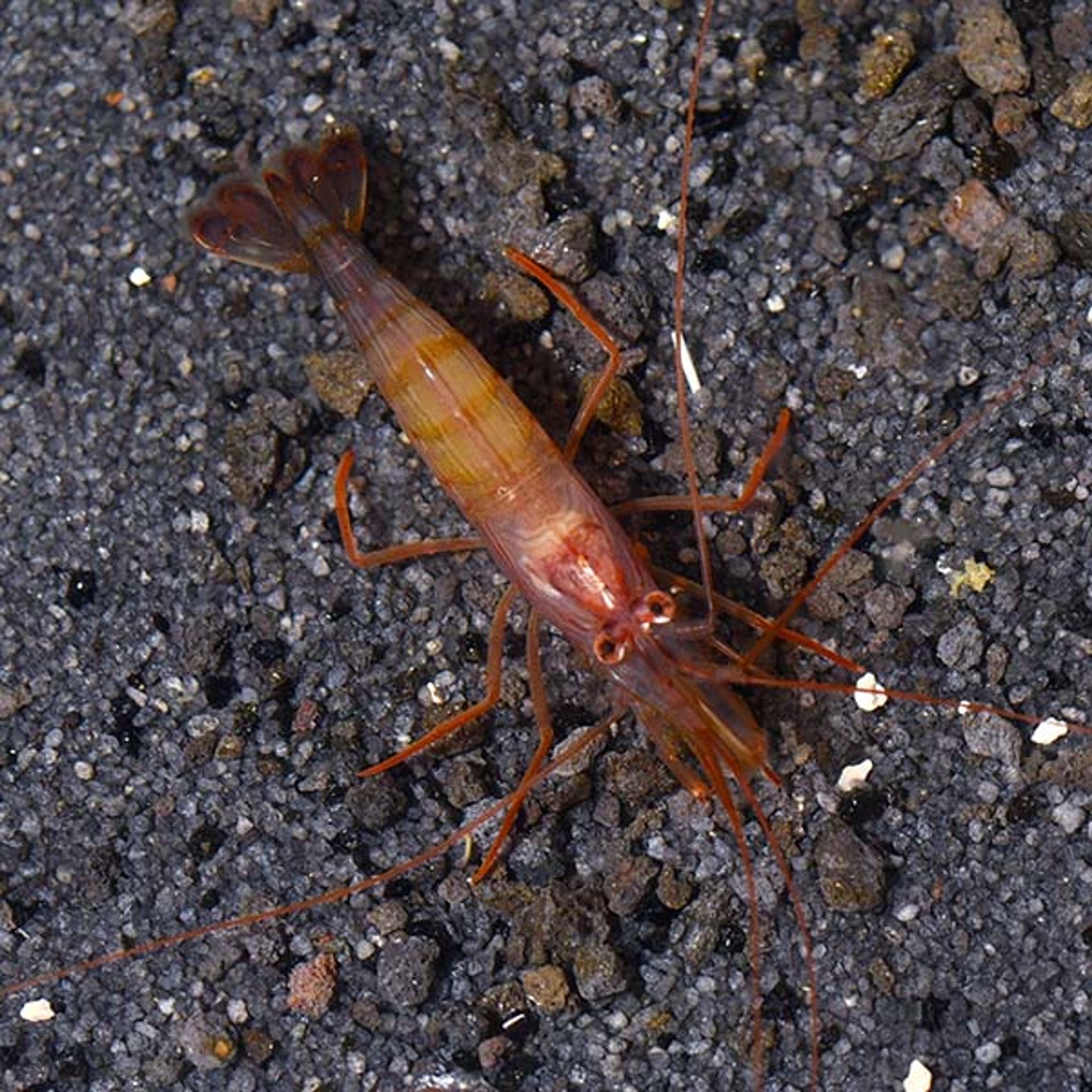
Peppermint shrimp (members of the Lysmata wurdemanni complex) are small, translucent, red-striped shrimp that grow to roughly 1.5–2 inches (4–5 cm). They're nocturnal-leaning omnivores and scavengers, most active at night or when the lights dim, and they're widely sold specifically for their willingness to eat Aiptasia anemones.
A few identity notes matter before stocking:
- They are not the same as cleaner shrimp, fire shrimp, or camelback (dancing) shrimp. These lookalike species have different diets and behaviors, and some are mislabeled as "Aiptasia-eating shrimp" at the point of sale even though they largely ignore the pest. Buy from a source that specifically identifies the Lysmata wurdemanni complex.
- Individual shrimp vary. Some graze on Aiptasia constantly; others barely touch it, especially if they're already well-fed on other foods. This inconsistency is the main reason peppermint shrimp shouldn't be treated as a guaranteed fix — more on that below.
How Many Peppermint Shrimp Do You Need?
Group size recommendations vary widely across the hobby, from "just two or three" to "one per ten gallons." A reasonable middle ground, scaled to typical reef tank sizes, looks like this:
| Reef Tank Size | Suggested Peppermint Shrimp | Notes |
|---|---|---|
| Nano (10–29 gal / 38–110 L) | 2–3 | Enough for light-to-moderate Aiptasia pressure |
| Mid-size (30–60 gal / 114–227 L) | 3–5 | Minimum needed for a noticeable dent in a real outbreak |
| Large (60–90+ gal / 227–341+ L) | 5–8+ | Add more for severe, tank-wide infestations |
As a rule of thumb, aim for roughly 1 shrimp per 10–20 gallons, with a minimum of 3–4 shrimp in any tank where you actually want to see Aiptasia numbers drop. A single shrimp or pair will graze occasionally but rarely makes a visible difference — more shrimp means more consistent, faster knockdown.
Good Fish Tank Mates
Peppermint shrimp do best alongside small, peaceful, reef-safe fish that have no interest in hunting shrimp. Good options include:
- Clownfish — a classic, peaceful pairing; browse clownfish for stock options
- Gobies — watchman, clown, and neon gobies all coexist well; see the gobies category
- Blennies — algae-grazing and generally non-aggressive toward shrimp
- Firefish — peaceful, shy, and reef-safe
- Cardinalfish — slow-moving and non-predatory
- Small wrasses — most community wrasses are fine, though six-line wrasses deserve a caution: they can be scrappy and occasionally harass small shrimp, especially in tight quarters
- Dwarf angelfish — generally compatible in most reef setups, though individual temperament varies
Fish to Avoid
Any fish with a mouth large enough to swallow a two-inch shrimp is a risk. Steer clear of:
- Lionfish
- Larger wrasses (harlequin tuskfish, in particular)
- Triggerfish
- Larger hawkfish
- Groupers
- Eels
- Larger puffers
These predators will treat peppermint shrimp as a snack, particularly right after a molt when shrimp are soft-shelled and slow.
Good Invertebrate Tank Mates
Peppermint shrimp mix well with most peaceful reef cleanup crew members:
- Hermit crabs (small to medium, non-aggressive species)
- Snails — turbo, nassarius, and cerith snails all share the same peaceful, scavenging niche
- Other peaceful shrimp — cleaner shrimp and fire shrimp generally coexist fine, though minor territorial squabbles can occur in small tanks
Invertebrates to Avoid
- Large or aggressive hermit crabs can bully or outright kill peppermint shrimp, especially over food or shelter
- Mantis shrimp will kill peppermint shrimp outright and should never share a tank with them
Are Peppermint Shrimp Reef-Safe With Corals?
Yes, peppermint shrimp are considered reef-safe and compatible with SPS, LPS, soft corals, and zoanthids. They don't sting or feed on healthy coral tissue.
There's one caveat worth flagging: a small number of hobbyists have reported large or hungry peppermint shrimp nipping at LPS coral mouths or clam mantles. This appears to be rare and tied to underfed or oversized individuals rather than typical behavior. A well-fed group in a reef with adequate other food sources is very unlikely to bother healthy coral.
Do peppermint shrimp bother display anemones? No — they target pest Aiptasia specifically, not desirable display or symbiotic anemones like a bubble tip hosting your clownfish. The rare exception is a large, hungry group possibly bothering an already weakened anemone, which is not typical behavior.
Molting and Tank Design
Like all shrimp, peppermint shrimp molt periodically, shedding their exoskeleton to grow. Right after a molt they're soft, slow, and highly vulnerable to being picked off by tank mates. Rockwork with caves, overhangs, and tight crevices gives freshly molted shrimp somewhere to hide until their new shell hardens. This is especially important in tanks that also house borderline-compatible fish like six-line wrasses — a shrimp caught out in the open during a molt is an easy target even for fish that otherwise ignore it.
Water Parameters and Acclimation
Peppermint shrimp need standard, stable reef parameters:
- Temperature: 72–78°F (22–26°C)
- Salinity: 1.023–1.025 specific gravity
- pH: 8.1–8.4
- Alkalinity, calcium, and magnesium: stable, reef-standard levels
Two acclimation rules matter more for shrimp than for most fish. First, drip acclimate over 30–60+ minutes — shrimp are sensitive to sudden salinity or pH swings, and rapid changes are a common cause of shrimp dying shortly after introduction. Second, never expose them to copper-based medications, including a quarantine tank that was previously dosed with copper. Copper is instantly lethal to shrimp and other invertebrates even at trace residual levels.
Feeding
Peppermint shrimp are omnivorous scavengers. Supplement their diet with meaty frozen foods like mysis or brine shrimp a few times a week — they won't starve without added feeding, but a well-fed shrimp typically eats less Aiptasia. If Aiptasia control is the priority, keep other feeding modest to encourage grazing.
What Else Eats Aiptasia?
Peppermint shrimp are one tool among several, not a guaranteed fix. For tanks with a heavier infestation, or for shrimp that simply aren't interested in grazing, consider these alternatives:
| Method | Reef-Safe Rating | Effectiveness | Notes |
|---|---|---|---|
| Peppermint shrimp | Fully reef-safe | Inconsistent, individual-dependent | Best for light-to-moderate infestations; slow and partial |
| Berghia nudibranch | Fully reef-safe | Highly targeted, thorough | Eats only Aiptasia; will starve once it's gone, so remove after |
| Aiptasia-eating (matted) filefish | Caution-rated | Effective when trained | Can nip other inverts and soft coral polyps |
| Manual removal (injection paste/gel, boiling water) | Reef-safe if done carefully | Immediate, precise | Labor-intensive for large outbreaks |
| Chemical dosing | Reef-safe if targeted correctly | Fast for visible polyps | Can affect nearby coral if overused |
Aiptasia-Eating Filefish Compatibility
The matted filefish (Acreichthys tomentosus) is sometimes sold as an Aiptasia solution. It needs a 30-gallon tank minimum, with 50+ gallons preferred, and grazes on hydroids, small anemones, and other encrusting life in addition to Aiptasia. It's only rated "caution" for reef safety — it can nip at soft coral polyps and other invertebrates, so it needs monitoring in SPS-heavy systems. Results are also inconsistent: tank-conditioned specimens that have already learned to target Aiptasia perform far better than untrained, wild-caught individuals.
Certain butterflyfish, such as the copperband, also eat Aiptasia, but they generally aren't considered reef-safe long-term since they tend to sample other coral polyps and desirable invertebrates over time.
Combining Approaches
For a heavy or stubborn infestation, most successful reefers combine methods rather than relying on shrimp alone:
- Biological control — peppermint shrimp and/or Berghia nudibranchs for ongoing grazing
- Manual removal — injecting a kalkwasser paste or an Aiptasia-specific gel directly into the polyp, or using boiling water or a lemon-juice/peroxide mixture on isolated specimens
- Prevention — quarantining and dipping new coral frags and live rock before adding them, since new Aiptasia is most often introduced this way
Biological control alone rarely eliminates a heavy infestation on its own; pairing it with manual spot-treatment gets you there faster.
Common Mistakes to Avoid
- Expecting overnight results. Aiptasia reduction from peppermint shrimp is usually slow and partial, unfolding over weeks, not days.
- Under-stocking for tank size. Adding one or two shrimp to a 75-gallon tank with a heavy outbreak won't move the needle.
- Overfeeding fish before adding shrimp. Well-fed fish and shrimp both graze less on Aiptasia, so consider reducing other feeding to encourage foraging behavior.
- Mixing shrimp with known shrimp-hunters, then assuming a "missing" shrimp jumped out of the tank. Check under rocks and in overflow boxes — predation is the more common explanation.
- Skipping drip acclimation, which leads to shrimp dying within hours or days of introduction.
- Using copper-dosed equipment or a previously medicated quarantine tank, which is lethal to shrimp even at low residual levels.
- Confusing species. A shrimp sold as an "Aiptasia eater" that turns out to be a lookalike species won't perform as expected — verify the actual species before you buy.
Order of Stocking
If you're building a reef tank around Aiptasia control, add peppermint shrimp before or alongside your fish rather than last. Introducing shrimp into a tank of well-established, well-fed fish means the fish have less incentive to leave them alone, and shrimp haven't had time to learn the rockwork's hiding spots. Giving shrimp a head start with rockscape cover in place lets them settle in before more assertive tank mates arrive.
Frequently Asked Questions
Do peppermint shrimp eat coral?
No, they're reef-safe with SPS, LPS, soft corals, and zoanthids. There are rare anecdotal reports of hungry or oversized individuals nipping at LPS mouths or clam mantles, but this isn't a general risk for a well-fed group.
How many peppermint shrimp do I need to control Aiptasia?
Roughly 1 shrimp per 10–20 gallons, with a minimum of 3–4 for a visible impact in a typical 40–90 gallon reef. Severe infestations may call for more.
Will peppermint shrimp eat my clownfish's host anemone?
No, they target pest Aiptasia, not desirable display or symbiotic anemones. Very large, hungry groups have rarely been reported bothering an already weakened anemone, but this isn't typical behavior.
Can I keep peppermint shrimp with cleaner shrimp or fire shrimp?
Generally yes. They're peaceful toward other shrimp species, though minor territorial squabbles can occur in smaller tanks.
What fish will eat my peppermint shrimp?
Larger predatory fish — lionfish, triggerfish, larger wrasses and hawkfish, eels, groupers, and puffers — pose the biggest risk and should be avoided, or added only after shrimp are established with plenty of hiding spots.
What if peppermint shrimp aren't eating my Aiptasia?
Add more shrimp, cut back on other feeding to encourage grazing, or supplement with manual removal (an injection paste or gel) or a Berghia nudibranch for a more targeted, thorough clean-up.
Can peppermint shrimp live in a nano reef?
Yes, they do well in tanks as small as 10 gallons given stable water parameters and enough rockwork for hiding spots, particularly during molts.
Ready to build out your reef's cleanup crew? Browse compatible options across marine invertebrates and marine fish to find peppermint shrimp tank mates suited to your reef's size and stocking plan.


