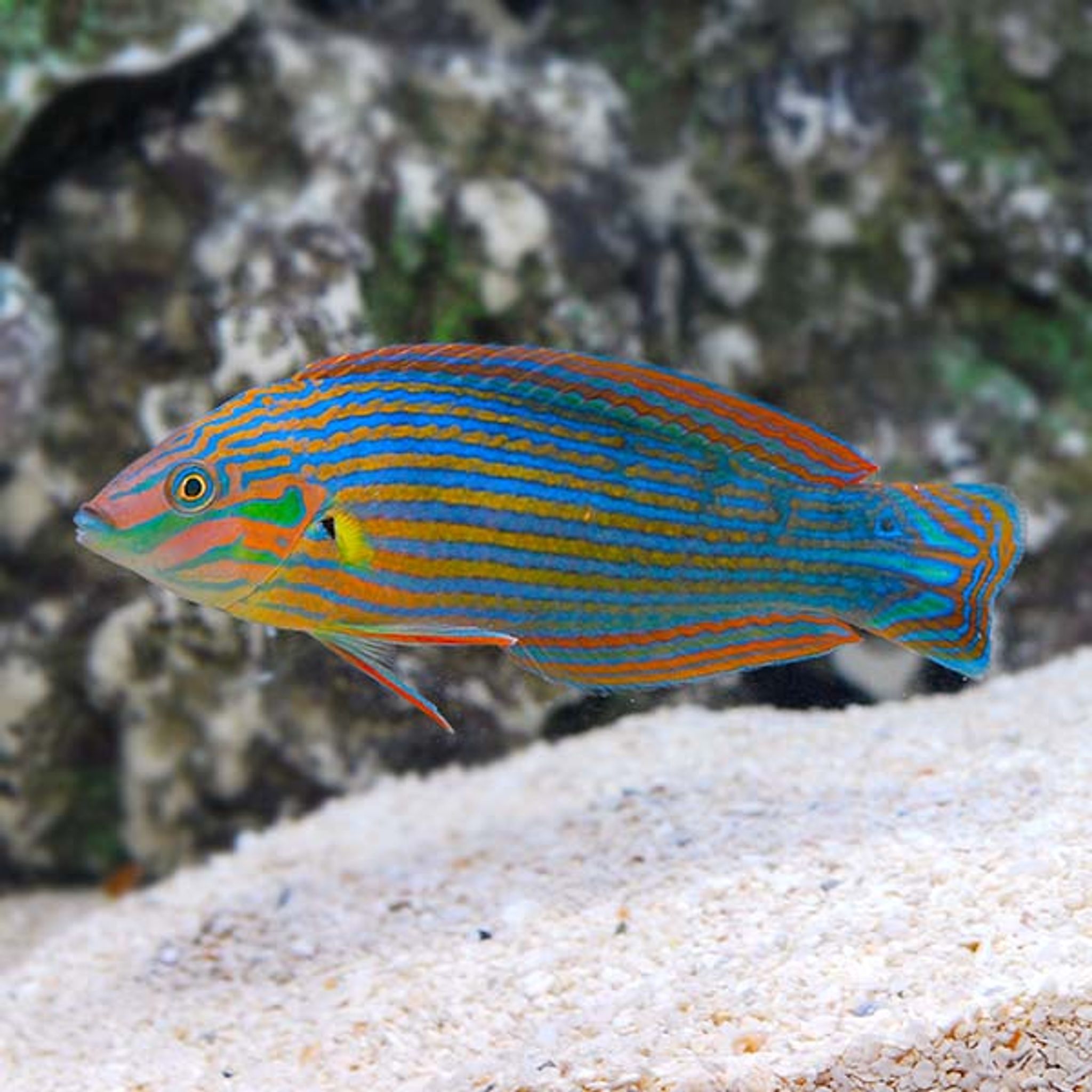

Best Tank Mates for Melanurus Wrasse: Peaceful, Risky and Incompatible Choices
The Melanurus wrasse is fast, bold, and a great pest-eater — but its speed and appetite make some tank mate choices genuinely risky, not just theoretical. This guide sorts stocking options into three clear tiers — peaceful, situational, and incompatible — and explains the temperament, size, and niche reasons behind each call so you can judge species not listed here too.
Melanurus Wrasse Care Basics, Briefly
Compatibility only works if the core setup is right first. The Melanurus wrasse (Halichoeres melanurus), also sold as the Hoeven's wrasse, is an Indo-Pacific reef fish that reaches about 4–5 inches (10–12 cm) and stays active across the mid-to-upper water column.
Key parameters to lock in before adding any tank mates:
- Tank size: 50–70 gallons (190–265 L) is the common recommendation for a community reef; 30 gallons (115 L) is workable only as an absolute floor for a solo specimen with no other competitors.
- Substrate: at least 4 inches (10 cm) of fine sand. The wrasse dives into it at night and when startled — crushed coral or sharp gravel can injure it.
- Water parameters: specific gravity 1.023–1.025, temperature 72–78°F (22–26°C), standard reef-stable pH and alkalinity.
- Diet: strictly carnivorous — mysis shrimp, enriched brine shrimp, chopped seafood, and a quality marine pellet, fed multiple times a day. It won't touch algae-based foods.
- Lid: a tight-fitting cover or overflow guard is non-negotiable. Melanurus wrasses are notorious jumpers, especially in the first few weeks.
Browse live specimens and compare individual sizes in the wrasse category before planning your stocking list.
Temperament: What Drives Its Compatibility
The Melanurus wrasse is generally peaceful toward unrelated species but becomes territorial toward other wrasses that look or behave like it, particularly in tanks under about 90 gallons (340 L). It's also opportunistic toward small invertebrates and slower fish it perceives as food or competitors — a tendency that increases as it matures.
Aggression is size- and maturity-dependent, not a blanket personality shift. Some individuals show aggression toward same-genus wrasses almost immediately, while general opportunism toward small tank mates tends to build gradually over months as the fish grows and settles in. Either way, the trigger is usually niche overlap — same body shape, same coloring, or same food source — rather than random hostility.
Peaceful Tank Mates
These species share little niche overlap with the Melanurus wrasse and are the safest starting point for a mixed community.
| Tank mate | Why it works | Notes |
|---|---|---|
| Clownfish | Different body shape, mid-tank behavior, generally unbothered | Pairs well in reef or FOWLR setups |
| Tangs and surgeonfish | Larger body size, herbivorous grazing niche | No food competition with a carnivore |
| Larger angelfish | Size and temperament mismatch works in their favor | Best in tanks 75+ gallons |
| Dottybacks | Usually fine, but case by case | Some dottybacks are aggressive back — watch first weeks |
| Cardinalfish | Slow, peaceful, different feeding style | Low-key mid-water dweller |
| Blennies and larger dartfish | Different niche, generally ignored | Give blennies rockwork to retreat to |
| Gobies | Mostly compatible | See feeding note below for shy individuals |
Clownfish, tangs, and gobies are among the most commonly recommended community fish for a Melanurus wrasse, and you can browse clownfish and gobies as starting points for a mixed stocking list.
Risky or Situational Tank Mates
These can work, but only with the right tank size, order of introduction, or extra monitoring.
- Other Halichoeres wrasses — similar body shape or coloring invites territorial disputes. Best avoided outright, or added at the same time with heavy rockwork to break sightlines.
- Very timid gobies or small dartfish — risk being outcompeted for food in tanks under about 75 gallons (285 L), since the wrasse is faster and bolder at feeding time.
- Ornamental shrimp — cleaner shrimp are sometimes tolerated for years, but reports are mixed. Decorative or small shrimp are most at risk, especially right after a molt when their shells are soft.
- Small hermit crabs and snails kept as clean-up crew — softer-shelled or smaller individuals may get picked at over time.
- Pipefish and seahorses — these are slow, deliberate feeders that consistently lose out to a fast wrasse unless target-fed separately.
Incompatible Tank Mates: Avoid Entirely
- A second Melanurus wrasse or near-identical Halichoeres species — near-guaranteed aggression in a typical home aquarium.
- Large predatory fish — groupers, lionfish, large triggerfish, and large eels can simply eat a 4–5 inch wrasse.
- Aggressive or territorial fish — large damselfish and aggressive triggerfish will harass it relentlessly.
- Ornamental shrimp or crabs meant as display pieces — not just cleanup crew, but showpiece invertebrates you want to keep long-term. The predation risk isn't worth it.
- Small non-aggressive gobies or blennies in nano tanks under 40 gallons (150 L) — competition for food and space is too tight at that scale.
Wrasse-to-Wrasse Stocking Rules of Thumb
If you want more than one wrasse in the same system:
- Add all wrasses simultaneously, or smallest to largest, never adding a similar species to an already-established Melanurus.
- Avoid similar body shape or coloring across species — this is the single biggest predictor of conflict.
- Provide heavy rockwork with multiple swim-throughs to break direct lines of sight.
- Stock only one fish per genus or feeding niche in tanks under 100 gallons (380 L).
- Keep only one Melanurus wrasse per tank unless the aquarium exceeds 150 gallons (570 L) with substantial rock cover, since intraspecies aggression is common even then.
Invertebrate and Clean-Up Crew Compatibility
"Reef safe with caution" is the accurate label here. The wrasse actively hunts bristleworms, pyramidellid snails, flatworms, and several pest snails — genuinely useful for reef pest control. But the same hunting instinct extends to ornamental invertebrates you may want to keep.
Reasonably safe:
- Larger, hard-shelled snails
- Fast-moving, larger hermit crabs
- Full-grown cleaner shrimp added to an established tank with plenty of hiding spots
At risk:
- Small or soft-bodied snails
- Small crabs
- Decorative or juvenile shrimp, especially during or right after a molt
- Feather dusters and small ornamental worms
- Ornamental sea stars
Never add molting-stage or very small shrimp expecting them to be ignored — that's the single most common cause of unexpected invertebrate losses. If you're stocking a cleanup crew or display invertebrates, check the current marine invertebrates selection and lean toward larger, hardier individuals.
Feeding Strategy in a Mixed Tank
A fast, hungry wrasse can dominate feeding time and leave shy or slow tank mates underfed. Fixes that work:
- Target feed shy species (gobies, dragonets, seahorses) using a feeding tube or turkey baster aimed at their specific spot.
- Spread food across multiple points in the tank rather than dropping it in one place, so the wrasse can't guard the whole feeding zone.
- Feed shy fish first, or dim the lights briefly while offering food to slower eaters, since the wrasse relies heavily on sight to hunt.
- Increase feeding frequency overall — since the wrasse is active and burns energy quickly, more frequent small feedings reduce food-guarding behavior compared to one or two large feedings a day.
Sand Bed and Aquascape as a Compatibility Factor
The fine sand a Melanurus wrasse needs to dive into can conflict with tank mates that want coarser substrate — garden eels and some goby species have their own sand preferences, so check compatibility on substrate grain size, not just temperament. Aquascape for a mixed tank should include:
- A sand bed at least 4 inches (10 cm) deep, kept fine and free of sharp material
- Open swimming lanes for the wrasse's active mid-water movement
- Caves and overhangs for shyer species to retreat to, away from the open water column
Common Mistakes to Avoid
- Adding a second Halichoeres wrasse to an established tank and getting surprise chasing — introduce simultaneously or don't combine at all.
- Skipping a tight lid, leading to jumping, especially during the first few weeks or a lights-out startle.
- Shallow sand bed causing stress that shows up as skittishness, hiding, or refusing food — the fish can't dive to "sleep."
- Assuming "reef safe" covers every invertebrate, then losing snails, small crabs, or shrimp and misdiagnosing the cause.
- Underfeeding with flake or algae-based food meant for herbivores, leading to weight loss in this active carnivore.
- Skipping quarantine — wrasses are prone to marine ich and flukes, and can spread parasites tank-wide if introduced directly.
- Housing with slow eaters like seahorses, pipefish, or mandarin dragonets without target feeding, causing those species to slowly starve.
Introduction Order and Acclimation
Add a Melanurus wrasse to an established tank with mature live rock and sand rather than a brand-new setup. Two approaches minimize aggression:
- Add the wrasse before more territorial fish move in, so it isn't seen as the intruder.
- Or add several new fish at once to diffuse any one individual's territorial response.
Use a slow drip acclimation, and plan for a 2–4 week quarantine — wrasses are known to be sensitive early on and susceptible to parasites that can affect the whole tank.
Frequently Asked Questions
Can I keep two Melanurus wrasses together?
Generally no in a typical home tank. Same-species pairs tend to fight unless the aquarium is very large with heavy rock cover and the two are introduced together as juveniles.
Is the Melanurus wrasse reef safe?
Mostly yes for corals, but use caution with small ornamental snails, crabs, and shrimp, which it may eat opportunistically.
Will it eat my cleaner shrimp?
Usually not once the shrimp is full-grown and the tank is established, but the risk isn't zero — especially right after the shrimp molts.
What fish should I avoid with a Melanurus wrasse?
Other similar-looking wrasses, large predators that could eat it, aggressive territorial fish that could bully it, and delicate small invertebrates kept as display pieces.
Does it get along with clownfish, gobies, and tangs?
Yes, generally — these are among the most commonly recommended safe tank mates due to minimal niche overlap and size compatibility.
How big of a tank does it need with tank mates?
Plan for 50+ gallons (190+ L) for a mixed community, and more if you're adding other wrasses or building out a full reef bioload.
Why does my wrasse dive into the sand — is that normal?
Yes, this is natural nighttime and startle behavior that requires a soft, deep sand bed. It's only a concern if it's prolonged or paired with other symptoms like refusing food.
Can it live with a mandarin dragonet or pipefish?
Possible but risky due to food competition, since these are slow, deliberate eaters. Target feeding and close monitoring are necessary to keep them from losing out at mealtime.
Ready to plan your stocking list? Explore current stock in Marine Fish to compare Melanurus wrasses alongside the tank mates covered above.


