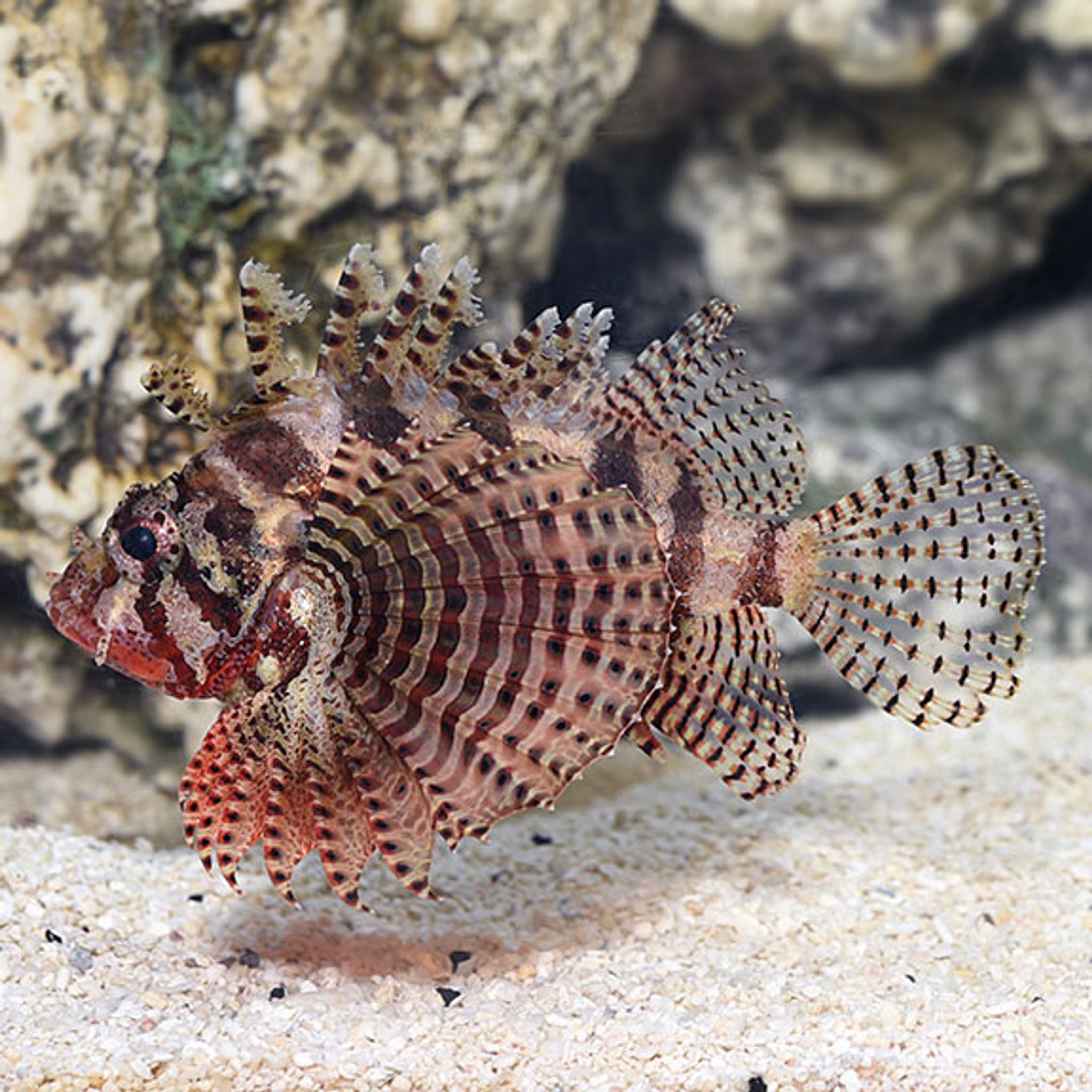

Best Tank Mates for Lionfish: Peaceful, Risky and Incompatible Choices
Choosing lionfish tank mates comes down to one question: can it fit in that mouth? This guide sorts species into peaceful, risky, and incompatible tiers using three filters — size, temperament, and feeding competition — so you can evaluate any fish, not just the ones on this list.
The Three Filters That Decide Compatibility
Lionfish are ambush predators, not brawlers. They rarely pick fights with fish their own size; instead, most "aggression" reports are really predation of anything small enough to swallow. Before adding any tank mate, run it through these three filters:
- Mouth-gape size: Anything that fits in a lionfish's mouth — roughly up to half the lionfish's own body length — is at risk of being eaten. Use the more conservative sizing rule if you're new to predator tanks, since a fuzzy dwarf lionfish has a smaller mouth than a volitans but can still swallow a surprisingly long-bodied, slim fish.
- Temperament: Lionfish are slow, deliberate swimmers. Fast, pushy tank mates can stress them into refusing food, while calm species coexist without triggering a chase response either way.
- Feeding competition: Two predators sharing the same meaty foods can lead to one being underfed. Diet overlap matters as much as size when picking a second predator for the tank.
Once you apply these filters, most stocking decisions become straightforward.
Peaceful and Safe Tank Mates
These species are consistently too large to be swallowed, eat a different diet, or carry a calm-to-moderate temperament that won't harass a slow-moving lionfish.
| Tank Mate | Why It Works |
|---|---|
| Large angelfish (rock beauty and similar large species) | Too big for the gape; moderate temperament |
| Large butterflyfish | Size and grazing diet reduce food competition |
| Tangs and surgeonfish (blue tang, yellow tang) | Herbivorous grazers, minimal diet overlap |
| Foxface rabbitfish | Herbivorous, calm, armored spines discourage predation attempts |
| Large or maroon clownfish | Adult size exceeds gape threshold |
| Larger wrasses (harlequin tuskfish) | Size and confident but non-aggressive temperament |
| Groupers of similar size | Comparable predator, different prey focus, non-competing |
| Clown triggerfish | Tough-bodied and generally too large, though see the caution below |
| Snowflake or other morays of comparable size | Slow-moving, different hunting style, low food competition |
Browse sizeable candidates like tangs and surgeonfish or large marine angelfish when building out this tier of your stock list.
Risky or Case-by-Case Tank Mates
These pairings can work, but only with attentive management, adequate tank size, and a willingness to separate feedings.
- Some triggerfish species: Sources disagree here. One view treats triggers as tough, compatible tank mates; a more cautious view warns that triggerfish can be unpredictable and may nip lionfish fins or dominate feeding time. The sensible approach: stick to even-tempered trigger species, add the trigger before or at the same time as the lionfish, and monitor closely for fin damage or food-guarding behavior.
- Aggressive angelfish species: Can compete hard for food or occasionally harass a slower tank mate even without predation risk.
- Anglerfish and frogfish: Both are ambush predators that generally ignore fish they can't eat, so they can coexist. The catch is that two ambush predators competing for the same live or meaty foods can leave one underfed. This pairing is workable in a large tank with deliberate, separate feeding, but it's not a beginner combination.
- Fast, aggressive fish in general: Even without direct conflict, constant chasing or feeding-time pressure can stress a lionfish into refusing food over time.
Incompatible Tank Mates
Anything that falls within gape size is prey, not a tank mate — no exceptions for "it seemed fine at the store."
- Small damselfish
- Small clownfish (standard ocellaris/percula size — only large maroon clownfish are the exception)
- Dwarf and pygmy angelfish (Centropyge species)
- Gobies
- Small blennies
- Cardinalfish
- Small anthias
- Cleaner shrimp and ornamental shrimp
- Small crabs and hermit crabs
Most of this hunting happens overnight. A lionfish tank that looks perfectly peaceful during the day can lose a fish or a shrimp by morning, since lionfish do the bulk of their hunting after lights-out.
What About Invertebrates?
Most ornamental shrimp and small crustaceans are natural lionfish prey and should be assumed lost if added to an established lionfish tank. Corals and other sessile invertebrates are generally safe from being eaten outright — lionfish don't target coral tissue — but a large, clumsy lionfish can still knock over frags or topple unsecured rockwork while cruising the tank.
Fuzzy Dwarf Lionfish: A Different Set of Numbers
The fuzzy dwarf lionfish (Dendrochirus brachypterus) is a popular choice for smaller predator setups, and its compatibility profile shifts along with its size:
- Adult size: Around 6-7 inches (15-18 cm), noticeably smaller than a common or volitans lionfish.
- Minimum tank size: 30-50 gallons (114-189 L) for a single fuzzy dwarf, versus 125+ gallons (473+ L) for full-size species.
- Still a capable hunter: Despite the smaller mouth, a fuzzy dwarf is an effective nighttime predator of small fish and shrimp — don't assume "dwarf" means "harmless."
- Good fit for nano and mid-size predator tanks, as long as tank mates are appropriately sized rather than merely small-looking.
- Same venom caution applies: A fuzzy dwarf's spines are just as venomous as a volitans', so handling care during maintenance is non-negotiable regardless of the species' smaller footprint.
Tank Size and Stocking Order
Lionfish species differ enough in adult size that "lionfish" shouldn't be treated as one stocking category:
| Lionfish Type | Adult Size (approx.) | Minimum Tank (Alone) |
|---|---|---|
| Fuzzy dwarf (D. brachypterus) | 6-7 in (15-18 cm) | 30-50 gal (114-189 L) |
| Volitans / common lionfish | Up to 15 in (38 cm) | 125+ gal (473+ L) |
| Antennata and similar mid-size species | 10-12 in (25-30 cm) | 75-125 gal (284-473 L), scaled to adult size |
Add generous headroom above these minimums once tank mates enter the picture — a large predator community needs both swimming room and filtration capacity to match the bioload.
Stocking order matters more than most guides mention. Add tank mates that are already too large to be eaten before introducing the lionfish, or add the lionfish last. This prevents the lionfish from imprinting on smaller fish as a food source over time — a lionfish that grows up alongside prey-sized fish is more likely to eventually treat them as such, even after they've grown.
Feeding Strategy to Reduce Predation
- Target feed the lionfish directly with tongs or a feeding stick so it stays well-fed and less driven to hunt tank mates on its own initiative.
- Feed in a way that doesn't force the lionfish to compete with faster eaters — lionfish are slow, deliberate feeders and will lose a race to a quick tang or wrasse every time.
- Watch total feeding volume in a mixed predator tank: overfeeding target foods to satisfy a second predator can tip water quality, while underfeeding leaves one fish stressed and hungry.
Water Parameters for a Predator-Heavy System
Lionfish tolerate standard marine parameters, but a heavily stocked predator tank needs consistent water quality to handle the bioload:
- Salinity: 1.020-1.025 SG
- Temperature: 74-80°F (23-27°C)
- pH: 8.1-8.4
- Ammonia and nitrite: undetectable
- Nitrate: kept reasonably low, given the higher bioload of a semi-aggressive predator system
Early-Warning Signs a Lionfish Is Sizing Up a Tank Mate
Daytime calm doesn't mean the tank is safe. Watch for these behavioral cues, which often show up before an actual predation event:
- Flaring fins directed at a specific tank mate, rather than general display behavior
- Stalking postures — slow, deliberate positioning near a particular fish, especially at dusk
- Refusing food at normal feeding times, which can indicate stress from a tank mate or a shift toward hunting instead of accepting offered food
- A tank mate that goes missing overnight with no other explanation — treat this as confirmation, not coincidence
Common Mistakes to Avoid
- Adding cleanup crew after the lionfish is established. Small shrimp and crabs added to a running lionfish tank tend to disappear overnight. Add cleanup crew before the lionfish, or skip shrimp and crabs in a lionfish tank altogether.
- Assuming "aggressive" tank mates are the risk. The real threat is predation, not fighting — temperament match matters far less than size when picking tank mates.
- Underestimating adult size when buying juveniles. A small lionfish and a small tank mate look compatible at purchase, but the lionfish's mouth catches up. Always stock for adult size, not current size.
- Overfeeding to satisfy a second predator, which can either starve one fish if portions aren't managed or crash water quality in an already high-bioload tank.
- Skipping quarantine on new tank mates. Disease introduced into a large mixed-species display is harder to treat than in a smaller quarantine setup. Quarantine new arrivals for at least four weeks before adding them, which also gives you time to confirm their size is stable before introduction.
- Judging compatibility from daytime behavior only. Lionfish hunt mainly after lights-out, so a tank that looks peaceful all day can still be losing fish at night.
Handling and Venom Safety
Lionfish spines are venomous to humans — not to tank mates — but every maintenance task around one requires care. Use a container or net technique that avoids direct contact during transfers or aquascaping work near the fish. If a sting does occur, first aid typically involves immersing the affected area in water as hot as tolerable without scalding, which helps denature the venom's proteins; seek medical attention for a serious reaction.
Frequently Asked Questions
Can lionfish live with clownfish?
Only larger or maroon clownfish are a reliable match. Standard ocellaris or percula-size clownfish fall within gape range and are at risk of being eaten, usually overnight.
Will lionfish eat shrimp?
Yes. Most ornamental and cleaner shrimp are natural lionfish prey and will be hunted, typically after lights-out.
Can two lionfish live together?
Generally yes, if they're similar in size and added to the tank together — lionfish don't view each other as prey. A large enough tank and careful feeding to prevent food competition between the two are still necessary.
What fish are lionfish afraid of?
None specifically. Lionfish aren't fear-driven, but they tend to avoid directly competing with equally large, confident predators like groupers or triggerfish rather than confronting them.
Can lionfish be in a reef tank with corals?
Yes, for most sessile corals and other fixed invertebrates, since lionfish don't eat coral tissue. Mobile ornamental invertebrates and any small fish sharing that reef tank remain at risk.
How big should the tank be for a lionfish with tank mates?
A single dwarf species can go in 30-50 gallons (114-189 L) alone, while full-size species need 125+ gallons (473+ L). Add more volume once you're stocking multiple sizable tank mates, both for swimming room and bioload.
Do lionfish get along with eels?
Generally yes with similarly sized moray eels, since both are slow-moving, non-competing predators with different hunting styles. A very large eel could still pose a risk to a smaller lionfish, so size-match carefully.
Ready to plan your stock list? Browse compatible options in marine fish on FishyHub to size up peaceful and risky tank mates before you buy.


