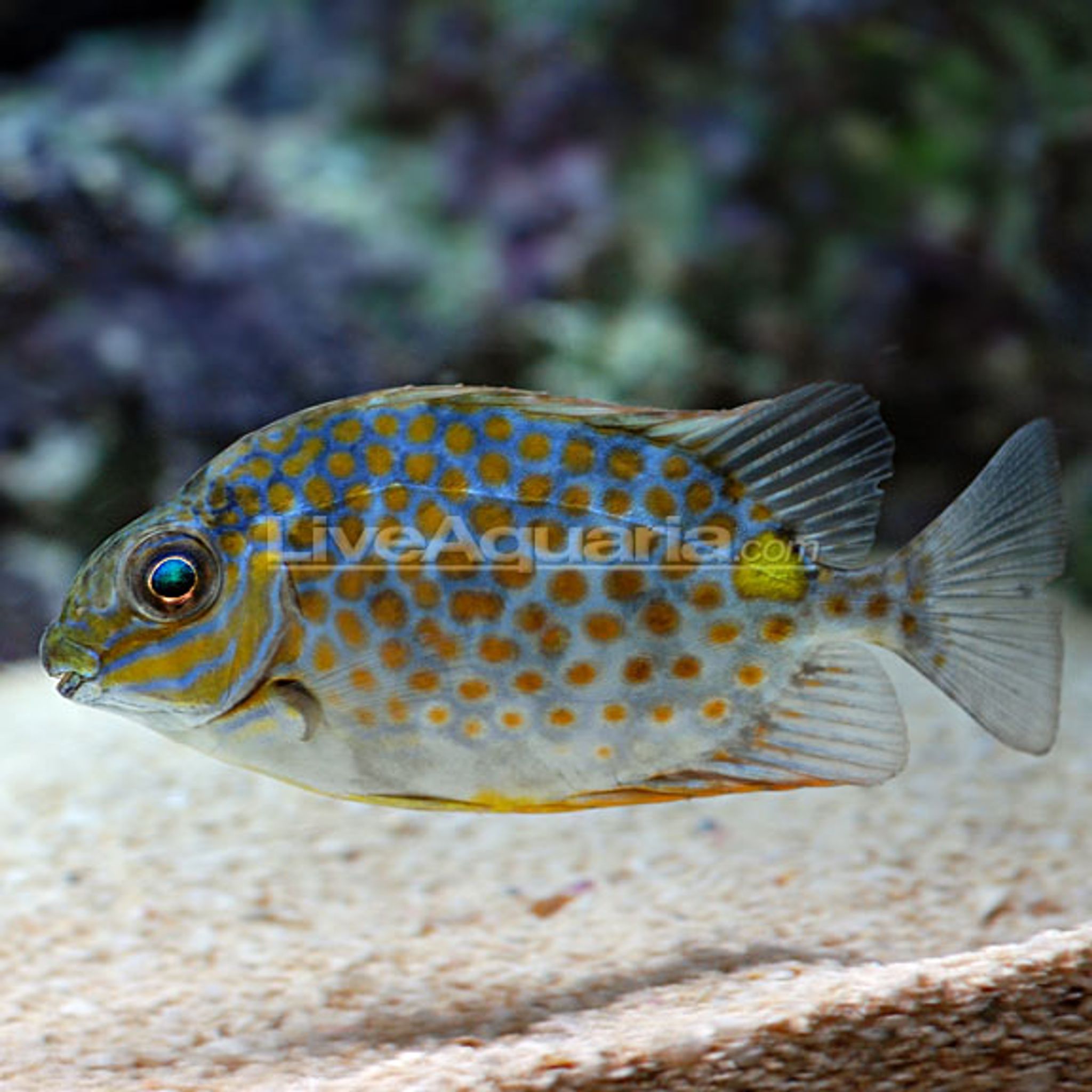
Best Tank Mates for Foxface Rabbitfish: Peaceful, Risky and Incompatible Choices
Foxface rabbitfish are grazers with a built-in weapon: venomous spines that let them shrug off bullies most other herbivores can't handle. That defense shapes almost every stocking decision around them, from which tangs are safe to mix in to why two rabbitfish rarely belong in the same tank. Here's how to sort tank mates into peaceful, risky, and off-limits categories.
Why the Foxface's Spines Drive Every Compatibility Call
Foxface rabbitfish (genus Siganus) carry venomous spines in their dorsal, anal, and pelvic fins. These aren't for hunting — they're purely defensive, and they change the entire compatibility equation:
- A mild aggressor that pesters a Foxface usually gets stung once and backs off permanently, which is why Foxface tolerate tankmate aggression better than most other herbivores.
- The sting is genuinely painful to humans — comparable to a bee or wasp sting — but not dangerous to a healthy adult. It is, however, a real reason to change how you handle the fish.
- Because the Foxface rarely needs to flee, it can hold territory against fish that would run smaller wrasses or gobies out of a display.
This tolerance is a double-edged sword: it makes Foxface unusually easygoing tank mates, but it also means a stressed or cornered Foxface can sting a curious fish (or your hand) that gets too close.
Foxface Species Differences
The name "Foxface" covers a handful of closely related Siganus species sold in the US trade, most commonly Siganus vulpinus (foxface), S. magnificus (magnificent foxface), and S. niger (blackface or onespot rabbitfish). They differ mainly in coloration and adult size, but share the same:
- Semi-aggressive-toward-same-species, generally peaceful-toward-others temperament
- Venomous spine defense
- Herbivore/omnivore grazing needs
- Genus-level aggression toward other rabbitfish
Everything in this guide applies across the genus. Availability and price at a given size vary between species and by season, so check current stock before assuming a specific Siganus is on hand.
Tank Size and Water Parameters Before You Stock Anything
Compatibility planning starts with the tank itself. Foxface reach 8–10 inches as adults and are active, open-water swimmers, so a cramped tank creates stress that spills over into aggression regardless of who else is in it.
| Requirement | Recommendation |
|---|---|
| Minimum tank size (single Foxface) | 100 gallons (379 L) long-term; some sources cite 70 gal (265 L) as a bare minimum, others 125+ gal (473+ L) |
| Multi-tang or mixed-genus stocking | 125+ gallons (473+ L), more rockwork and open swim space |
| Temperature | 72–78°F (22–26°C) |
| pH | 8.1–8.4 |
| Salinity | 1.023–1.025 SG |
| dKH | 8–12 |
| Tank maturity before introduction | 6+ months established |
Sources disagree on the exact minimum, but 100 gallons is a sensible baseline for one adult long-term, scaling up if you plan to mix multiple tangs or rabbitfish-adjacent species. Foxface are relatively hardy compared with some tangs, but they're still susceptible to marine ich and velvet under stress, so a stable, mature system matters more than raw parameter precision.
Peaceful Tank Mates
These are the classic safe choices — low overlap in territory, body shape, or diet, so friction is rare:
- Clownfish — different niche entirely, minimal conflict
- Gobies and blennies — bottom- or rock-dwelling, no competition for open water
- Dartfish — peaceful, occupy different water column zones
- Cardinalfish — passive, nocturnal-leaning feeders
- Chromis — schooling and non-territorial
- Peaceful wrasses (fairy, flasher) — active but non-confrontational
- Dwarf angelfish — generally fine, though watch individual temperament
- Other tangs of different body shape or color (yellow tang, blue tang) — best added simultaneously or with the Foxface going in last
You can browse a full range of options in Marine Fish when planning a stocking list around your Foxface.
Risky Tank Mates
These can work, but outcomes vary by individual temperament, tank size, and stocking order:
- Other tangs or surgeonfish that overlap heavily in shape or color — higher risk of territorial disputes than genuinely different-looking tangs
- Large or aggressive angelfish — may harass the Foxface, though the spines usually deter repeat attacks
- Aggressive damsels — persistent nippers that can provoke stinging incidents
- Triggerfish — mixed results; some tolerate a Foxface fine, others harass it
- Pufferfish — mixed reports, with some known to nip fins
If you're set on any of these combinations, add the Foxface last, provide dense rockwork with multiple sightlines, and monitor closely for the first several weeks.
Incompatible Tank Mates — Avoid These
- Other rabbitfish species — genus-level aggression makes fighting near-guaranteed, especially under roughly 150 gallons (568 L)
- A second Foxface of the same species — unless it's a true bonded pair purchased together or the tank is very large, this almost always ends badly
- Known fin-nippers — these can trigger a stinging incident that injures both fish
- Large aggressive predators — provoking a Foxface into stinging defensively puts both fish at risk
Keeping Two Rabbitfish Together
Sources split on this. Some say never mix rabbitfish species or genus members regardless of tank size. Others say it's possible in very large systems (200+ gallons / 757+ L) if you introduce similarly sized juveniles simultaneously, or if you buy a genuinely bonded pair together. The practical rule: only attempt pairs if they're bought together as juveniles or are an established bonded pair — otherwise, keep it to one Foxface per tank.
Will a Foxface Fight With Yellow Tangs or Other Surgeonfish?
It's possible, but the risk is generally lower than same-genus mixing, since the Foxface's body shape and coloration differ enough from most surgeonfish to reduce turf disputes. Reduce risk further by adding both fish simultaneously to a large, well-aquascaped tank and watching closely for the first few weeks.
Reef and Invertebrate Compatibility
Foxface are reef-safe with most corals and invertebrates, but "reef-safe" isn't the same as "zero risk." A well-fed Foxface rarely bothers anything; a hungry one will sample:
- Large-polyp stony (LPS) corals
- Zoanthids
- Clam mantles
- Soft corals, occasionally
Cleaner shrimp, snails, and most other inverts are not at risk — the nipping behavior targets sessile coral and clam tissue, not mobile invertebrates. If you're stocking corals alongside a Foxface, browse LPS Hard Corals with this feeding caveat in mind, and lean toward species known to be more resilient to occasional grazing.
Feeding Routine to Reduce Aggression and Coral Nipping
Diet and compatibility aren't separate topics for this species — an underfed Foxface is a more aggressive, more coral-nipping Foxface. A solid routine:
- Daily nori or seaweed clipped to a feeding clip
- A quality herbivore pellet as a staple
- Occasional mysis shrimp for variety
Insufficient greens is one of the most common causes of both coral picking and stress-driven aggression toward tank mates, so treat grazing material as a compatibility tool, not just a nutrition checkbox.
Introducing a Foxface to an Established Tank
Stocking order matters more with this species than with many others:
- Add the Foxface last, after territorial fish have already claimed spots — this measurably reduces aggression directed at the newcomer.
- Use a slow drip acclimation to match water parameters gradually.
- Dim the lights on introduction day to reduce stress and territorial displays.
- Rearrange rockwork before adding the new fish — this resets established territories for everyone, not just the newcomer.
- Feed established fish beforehand to reduce food-guarding aggression at the moment of introduction.
Conversely, adding a Foxface early into a tank you plan to later stock with another rabbitfish or tang increases the odds of a turf war once that second fish arrives — the Foxface will have already claimed the space as its own.
How Aquascape Layout Affects Aggression
Rockwork density and open swimming space directly influence how territorial a Foxface becomes. A tank with one dominant rock structure and little else encourages the Foxface to claim and defend that entire area. Breaking the aquascape into multiple separate rock formations with open water between them gives every fish its own defensible zone and reduces overlap-driven conflict — a practical lever that's easy to adjust during a rescape rather than after problems start.
Signs of Stress or Incompatibility
Watch for these behavioral cues, which typically appear before or during a tank mate conflict:
- Clamped fins
- Hiding more than usual
- Loss of appetite
- Color darkening or pale blotching
- Glass surfing
- Chasing or nipped fins on either fish
Spine-flaring posture and sudden dramatic color shifts often precede an actual aggressive encounter, so catching these early — and responding by rearranging rock or removing the aggressor — can prevent an injury before it happens.
Handling and Safety
- Never handle a Foxface bare-handed, even briefly during maintenance.
- Use a net or a container to transfer the fish rather than your hands.
- A sting causes intense pain and swelling; hot (not scalding) water immersion is the standard first response, since heat helps break down the venom proteins.
- Seek medical attention if you notice an allergic reaction or swelling that doesn't subside.
Common Mistakes to Avoid
- Impulse-buying a second rabbitfish of any species without researching genus-level aggression — this typically ends with one fish harassed to death or needing removal.
- Underestimating adult size and buying too small a tank, which stunts growth and drives stress-related aggression and illness.
- Not feeding enough greens, causing coral picking or an emaciated, sunken-belly appearance.
- Handling with bare hands during maintenance or catching, resulting in avoidable stings.
- Adding a Foxface too early into a tank being built out with other territorial tangs, setting up a turf war when a new fish later enters "its" territory.
- Assuming a reef-safe rating means zero risk — an underfed Foxface will still sample large-polyp corals and clam mantles.
- Skipping quarantine, which is riskier for Foxface than for hardier species given their moderate susceptibility to ich and velvet.
A 2–4 week quarantine before display introduction is worth the wait — it cuts disease risk and gives you a chance to observe temperament before the fish meets its permanent tank mates.
Frequently Asked Questions
Can I keep two Foxface rabbitfish together?
Generally no, unless they're a true bonded pair or you have a very large tank with simultaneous introduction of similarly sized juveniles. Same-genus aggression between rabbitfish is common and usually ends with one fish harassed out of the tank.
Are Foxface rabbitfish reef safe?
Mostly yes. Well-fed individuals rarely bother coral polyps, zoanthids, or clam mantles, but hungry ones will nip at all three, so consistent grazing food is the real determinant of reef safety.
What fish should never go with a Foxface?
Other rabbitfish or tangs with very similar shape and color, known fin-nippers, and large predatory species that could provoke a defensive sting are the main species to avoid entirely.
How dangerous is the Foxface's sting to humans?
It's painful — comparable to a bee or wasp sting — but not lethal to a healthy adult. Hot (not scalding) water immersion is the standard treatment, and you should seek medical attention for any allergic reaction or persistent swelling.
What tank size does a Foxface need?
A minimum of 100 gallons (379 L) is recommended for a single adult long-term, with 125+ gallons (473+ L) suggested if you're planning a multi-tang or mixed-genus stocking list.
Can Foxface live with clownfish and gobies?
Yes. Clownfish, gobies, and blennies are classic safe tank mates for Foxface, with minimal overlap in territory or diet.
Do Foxface get along with cleaner shrimp and other inverts?
Generally yes — the main invert-related risk from a Foxface is to sessile coral and clam tissue, not to shrimp, snails, or other mobile invertebrates.
Ready to plan your stocking list? You can browse available Foxface and other rabbitfish, along with compatible tank mates, in Foxface & Rabbitfish on FishyHub.

