
Best Tank Mates for Emerald Crab in a Reef Aquarium
Emerald crabs earn their spot in a reef tank as bubble-algae specialists, but they are opportunistic omnivores, not vegetarians on autopilot. The right tank mates, a full clean-up crew diet, and a bit of attention after feeding runs out are what keep an emerald crab peaceful instead of turning it into the tank's most-blamed resident.
What an Emerald Crab Actually Is
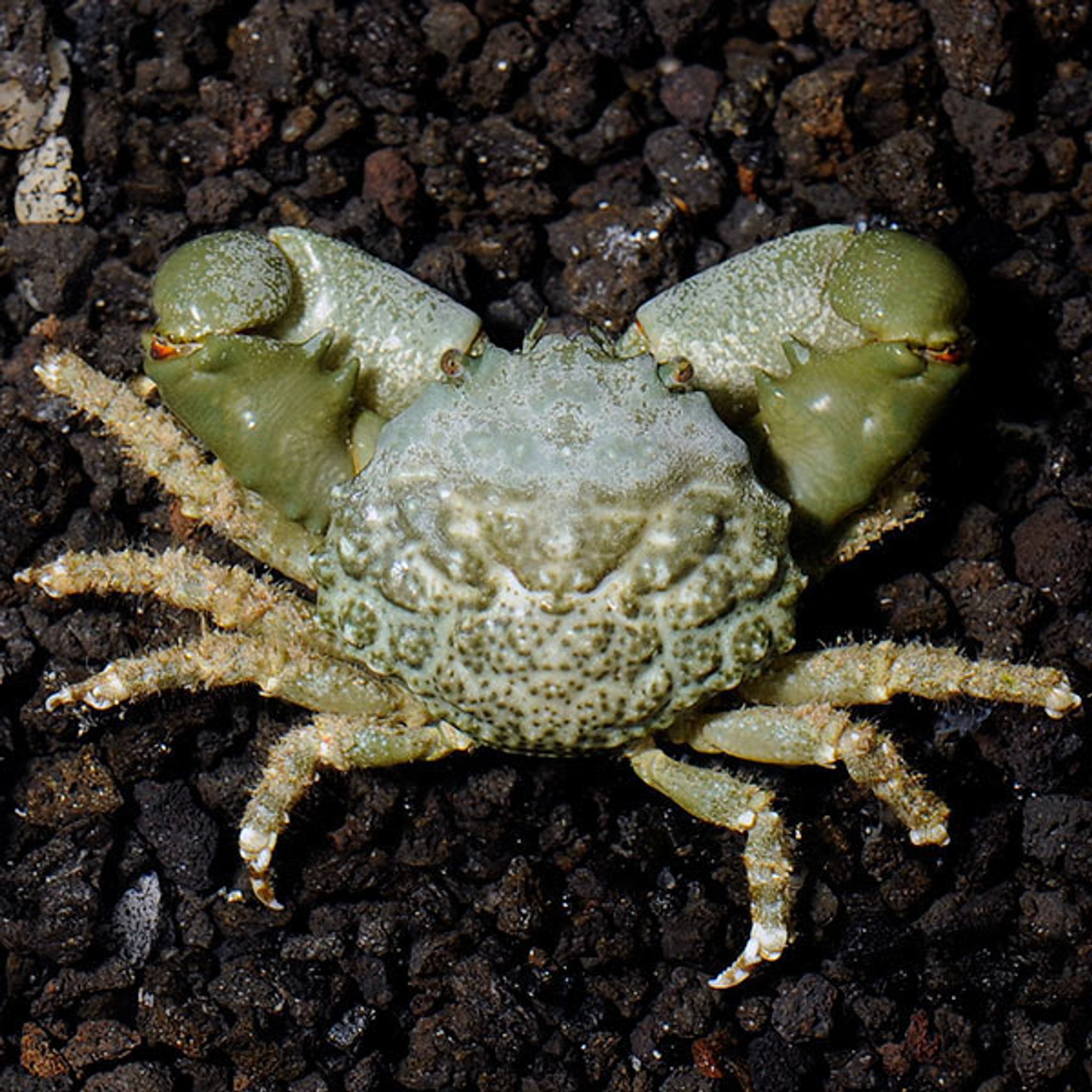
Mithraculus sculptus is a Caribbean reef crab that tops out around 2 inches across the carapace. Hobbyists add them almost exclusively for one job: clearing bubble algae (Valonia) and filamentous hair algae that snails tend to leave alone. A healthy adult can strip a rock's worth of bubble algae faster than most other clean-up crew members.
Basic housing requirements:
- Tank size: 20–30 gallons (76–114 L) minimum per crab, with established live rock offering plenty of rubble and crevices.
- Temperature: 72–82°F (22–28°C), targeting 75–80°F (24–27°C).
- pH: 8.0–8.4.
- Specific gravity: 1.023–1.025 (roughly 35 ppt salinity).
Stability matters more than hitting an exact number. Sudden swings in salinity or pH, and copper-based medications in particular, are lethal to crustaceans — never treat a display tank containing an emerald crab with copper.
The Core Compatibility Truth
Emerald crabs are conditionally reef safe, not unconditionally reef safe. As long as they're consistently fed, most individuals leave coral and fish alone. Once display algae runs low, hunger becomes the deciding factor: an underfed crab will nip at coral polyps, pick at slow-moving fish, or raid the rest of the clean-up crew for a meal.
Sources genuinely disagree on how far this goes. Most care guides describe emerald crabs as reliably reef safe with feeding caveats. Forum accounts and at least one documented fin-nipping incident argue the reputation is overstated, since individual crabs vary widely in temperament. The practical middle ground: treat an emerald crab as reef safe with supervision. Feed it properly, watch behavior closely for the first few weeks — especially at night — and be ready to remove or relocate an individual that turns aggressive.
Sources also split on whether crabs actively hunt fish or simply scavenge. Some frame fish predation as rare and only tied to starvation; others report unprovoked fin-shredding even in well-fed tanks. Err on the side of caution with small, slow, or bottom-resting fish regardless of how diligent your feeding schedule is.
Good Tank Mates
Peaceful fish that stay active in the mid-to-upper water column, rather than resting on the substrate, generally coexist well with an emerald crab.
- Clownfish — active swimmers, rarely at rest on rock at night.
- Most gobies and dartfish — many are fine, though bottom-sleeping species deserve extra monitoring (see the avoid list below).
- Wrasses (peaceful species) — you can browse options in wrasse.
- Small tangs — grazers that don't compete directly for the crab's food.
For invertebrate tank mates, peaceful clean-up crew members generally do fine alongside a well-fed emerald crab:
- Turbo, nassarius, and cerith snails
- Peppermint shrimp and cleaner shrimp
Most established, healthy coral colonies — LPS, SPS, and soft corals — tolerate a single well-fed crab without issue. You can browse compatible options such as lps hard corals and soft corals when planning a mixed reef around a crab.
Fish and Inverts to Avoid
Two categories create real risk:
Predators that hunt crabs. Hawkfish, triggerfish, puffers, and larger wrasses that specialize in hunting crustaceans will treat an emerald crab as a meal, often shortly after introduction. Adding a crab to a display that already houses these fish is a near-guaranteed loss for the crab.
Slow or nocturnal-resting fish. Emerald crabs forage at night. Fish that sleep wedged in rockwork or rest motionless on the substrate — certain gobies and blennies — are vulnerable to fin nipping while they're inactive, even in a tank with adequate daytime feeding.
| Category | Examples | Risk to Crab or Tank Mate |
|---|---|---|
| Crab predators | Triggerfish, puffers, aggressive hawkfish | Crab gets hunted and killed |
| Slow/nocturnal-resting fish | Certain bottom-resting gobies, blennies | Fins nipped while resting |
| Unattached coral frags | Any species, freshly placed | Read as "detached" food |
| Second emerald crab | Same species | Territorial fighting, cannibalism |
Coral Risk: What Actually Gets Eaten
The corals most commonly reported as casualties are newly placed frags that haven't fully attached and soft corals or zoanthids. Healthy, well-attached coral colonies are rarely targeted outright — crabs are far more often scavenging tissue that was already dying from poor flow, lighting problems, or pests than actually killing a thriving colony.
Before blaming a crab for coral damage, check whether the coral was stressed beforehand. This single troubleshooting step resolves a lot of unnecessary crab removals.
Sexing Emerald Crabs
Choosing a female emerald crab is one of the easiest ways to reduce aggression risk in a community reef tank.
- Males: narrower, more angular abdomen flap; broader, more robust claws; more active hunting and territorial behavior.
- Females: wider, rounder abdomen flap (used to carry eggs); smaller claws relative to body size; generally calmer temperament.
Flip the crab gently and look at the abdomen shape from underneath — this is the most reliable field method without specialized equipment. Buying based on color or size alone, without checking sex, is a common mistake that puts more aggressive males into peaceful community reefs.
Molting Care
Molting is how a crab grows, and it's also its most vulnerable period. Signs an emerald crab is approaching a molt include reduced activity, extended hiding, and a duller-looking shell. After molting, the crab is soft-shelled and defenseless for a day or two.
- Provide calcium- and iodine-supported water chemistry to support healthy shell formation.
- Make sure hiding spots — rubble piles, small caves — are available before the molt begins, not after.
- Tank mates should not be aggressive or overly curious during this window; a fish or shrimp that harasses a freshly molted crab can seriously injure or kill it.
Molt vs. dead crab: a shed exoskeleton looks like a hollow, translucent, crab-shaped shell — legs, claws, and even eye stalks are all present but empty inside. A dead crab, by contrast, smells strongly of ammonia within a day and often has missing limbs from scavengers. If you find an intact "crab" and can't tell which it is, gently lift it — a molt is nearly weightless.
Clean-Up Crew Ratios and Housing Multiple Crabs
There's no universally agreed formula for clean-up crew stocking, but a reasonable starting point for a new reef tank is:
| Clean-up crew member | Suggested ratio |
|---|---|
| Snails (turbo, nassarius, cerith) | 1 per 2–3 gallons of water |
| Hermit crabs | 1 per 3–5 gallons |
| Emerald crabs | 1 per 20–30 gallons, capped at one per display |
Do not keep multiple emerald crabs in the same display tank. Territorial fighting and cannibalism are common, especially between two males, and especially in tanks without enough rock surface area or food to go around. Adding a second crab to "boost" algae control almost always backfires into fighting rather than faster algae removal.
A Sample 40–75 Gallon Mixed Reef Stocking List
A popular US reef-community build that accommodates a single emerald crab well:
- A mated pair of clownfish (browse clownfish)
- A goby-and-pistol-shrimp pair
- One cleaner shrimp
- A small mixed coral collection of LPS and soft corals, fully attached before the crab is introduced
- One female emerald crab, added last once the rockwork and coral are established
Introducing the crab last, after corals have had time to attach, avoids the single most common coral casualty scenario.
Feeding Protocol to Prevent Nipping
Underfeeding is the single biggest driver of coral and fish nipping, and it's also the easiest problem to fix. Once display algae runs low, supplement with:
- Dried seaweed or nori sheets, clipped to the rockwork
- Algae wafers
- Occasional mysis or other meaty frozen food, 2–3 times per week
Keep an eye on how quickly the crab clears supplemental food; a crab that ignores it may still have enough natural algae, while one that swarms it the moment it hits the water is telling you feeding has been too sparse.
Acclimation and Introduction
Crustaceans are highly sensitive to rapid parameter shifts, so drip acclimate an emerald crab over 30–60 minutes rather than a quick float-and-dump. Skipping this step is a common cause of post-introduction death that gets mistaken for incompatibility.
Add the crab during lights-out or dim lighting to reduce stress, and have rockwork hiding spots ready immediately so it can retreat and settle in before exploring the rest of the tank.
Before adding any new crab to an established display, a short quarantine period is worth the extra time — it screens for hitchhiking pests and disease that could otherwise spread to existing livestock, a step that's easy to overlook since crabs don't get the same quarantine attention that fish typically do.
Long-Term Behavior as Crabs Age
A crab that behaved perfectly for its first year isn't guaranteed to stay that way forever. As emerald crabs grow larger, their food demands increase, and some hobbyists report older, larger individuals becoming more predatory purely as a function of needing more food — not because anything changed about the tank. Reassess feeding volume periodically as your crab grows, rather than assuming the feeding schedule that worked at six months will still be enough at two years.
Common Mistakes to Avoid
- Underfeeding once algae runs out — leads directly to coral nipping or fish predation.
- Adding a second crab to boost algae control — causes fighting and cannibalism instead.
- Blaming the crab automatically for coral damage — check for pre-existing coral stress first.
- Skipping sex identification at purchase — a male bought on looks alone raises aggression risk.
- Introducing a crab to a tank with established predators — triggerfish, puffers, and aggressive hawkfish will hunt it down quickly.
- Skipping drip acclimation — causes shock-related death that looks like incompatibility.
- Placing unattached frags near crab territory — freshly placed frags are the most common coral casualty.
Frequently Asked Questions
Are emerald crabs reef safe?
Generally yes when well fed and kept singly, but individual behavior varies enough that monitoring after introduction is still warranted. Treat the reputation as "reef safe with supervision" rather than a guarantee.
Will an emerald crab eat my coral?
Usually only if it's underfed, and even then it's often scavenging tissue from coral that was already dying rather than killing a healthy colony outright. Unattached frags are the exception and the most at-risk target.
Can I keep two emerald crabs in one tank?
Not recommended in typical home tank sizes. Two crabs, especially two males, frequently fight and can cannibalize each other rather than sharing algae-control duties.
What fish should I avoid with emerald crabs?
Avoid predators that eat crabs, such as triggerfish, puffers, and aggressive hawkfish or wrasses. Also be cautious pairing crabs with small, slow, or bottom-resting fish that could get nipped while sleeping at night.
What do I feed an emerald crab once the algae is gone?
Dried seaweed or nori, algae wafers, or occasional meaty frozen foods offered 2–3 times per week keep a crab satisfied without it turning to coral or tank mates.
How can I tell if my emerald crab is male or female?
Compare abdomen width and claw size. Females have a broader, rounder abdomen and are generally the calmer, safer choice for a community reef.
Is it normal for my emerald crab to hide for days?
It's likely pre- or post-molt behavior. Make sure hiding spots and stable water chemistry are in place, and don't assume the crab has died unless you find an empty molted shell rather than an actual carcass.
What tank size does an emerald crab need?
20 gallons (76 L) minimum, with 30+ gallons (114+ L) preferred, and plenty of live rock for foraging and hiding.
Ready to plan your stocking list? Browse marine invertebrates on FishyHub to find an emerald crab and compatible clean-up crew members for your reef build.


