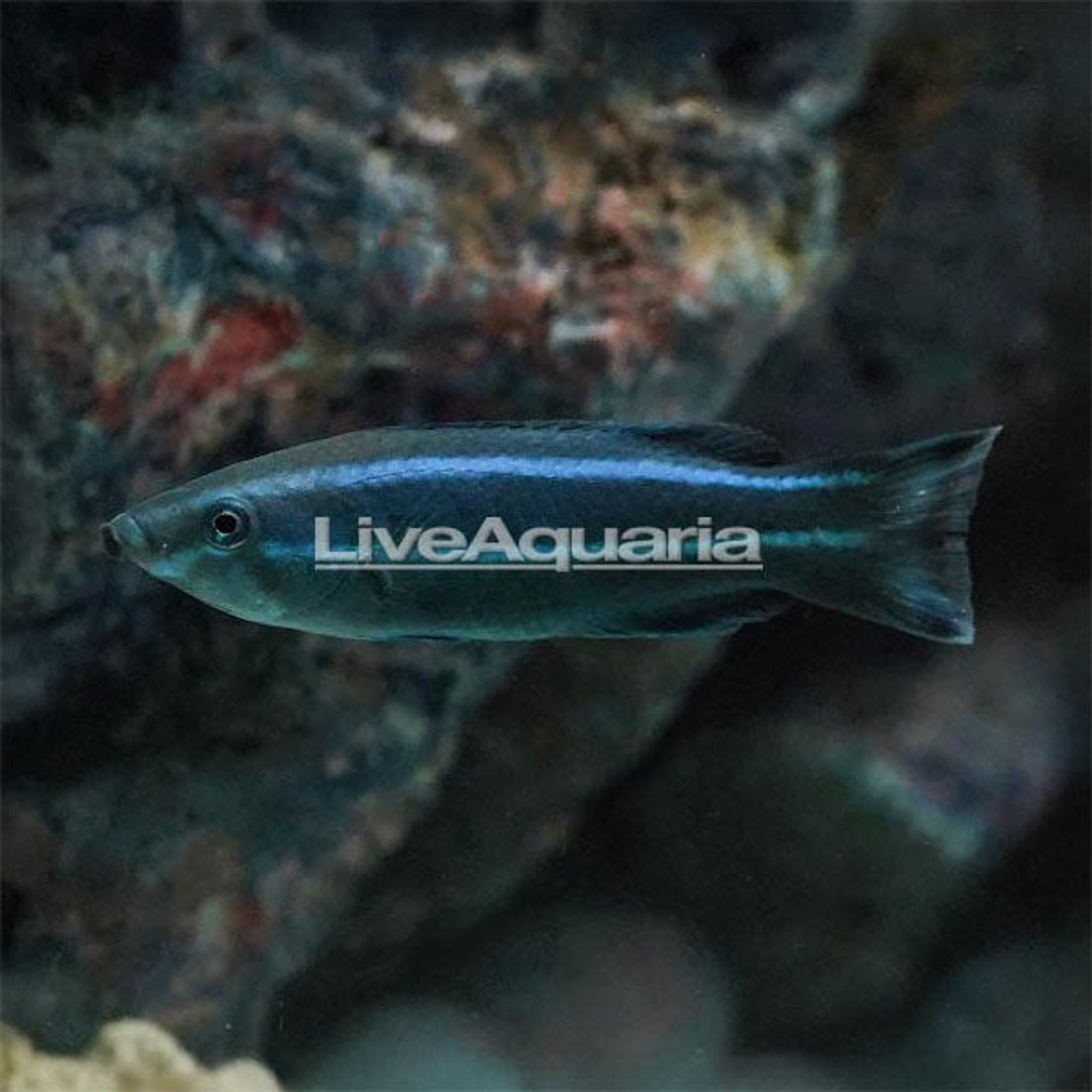

Best Tank Mates for Cleaner Wrasse: Peaceful, Risky and Incompatible Choices
The common cleaner wrasse (Labroides dimidiatus) is one of the few reef fish whose survival hinges on who else is in the tank. This guide breaks down which tank mates give it a real job to do, which create risk in either direction, and why picking the wrong combination is a leading cause of the species' poor track record in home aquariums.
An Honest Suitability Check Before You Buy
Before comparing tank mate lists, it's worth stating plainly: the true cleaner wrasse has a genuinely poor captivity survival record, and some marine fish welfare advocates argue it shouldn't be kept in home aquariums at all. Others consider it manageable with the right setup and disciplined feeding. Both views have merit, and a prospective buyer should understand the real requirements before committing rather than assume it will simply "figure itself out" like a generic community fish.
Unlike most reef fish, Labroides dimidiatus is an obligate cleaner in the wild — its diet is built around removing parasites and mucus from other fish. In a tank without a large, established "clientele," it has nothing to do and no reliable way to feed itself. Most captive deaths trace back to this mismatch rather than to aggression or disease.
Self-Score Before You Buy: A Readiness Checklist
Score your setup honestly against these four points before adding a cleaner wrasse:
| Readiness factor | Minimum bar | Better |
|---|---|---|
| Tank age | Established 6+ months | 1+ year, stable water parameters |
| Tank size | 70 gal (265 L) | 100+ gal (380+ L) |
| Existing fish population | Several established species | A diverse, active community |
| Feeding plan | Willing to target-feed daily | Frozen mysis/brine plus a cleaner-specific formula on hand |
If you can't confidently check all four boxes, it's worth waiting or reconsidering the purchase entirely.
Species Basics
- Size: Adults reach roughly 4–5 in (10–12 cm).
- Tank size: 70 gal (265 L) absolute floor; 100+ gal (380+ L) strongly preferred.
- Tank maturity: Should only go into a reef that's been running 6+ months, with established live rock biodiversity (pods, microfauna) supplementing its diet.
- Reef safety: Generally considered reef safe, though it may occasionally nip at large-polyp stony coral polyps or clam mantles out of curiosity or hunger, especially in fish-light tanks with little else to clean.
- Core survival requirement: A steady population of tank mates willing to be "serviced," plus consistent supplemental feeding. Neither one alone is enough.
The Cleaner Wrasse vs. Cleaner-Mimic Confusion
A frequent buying mistake is confusing the true cleaner wrasse with the bluestreak cleaner mimic (Aspidontus taeniatus), a blenny that copies its coloring and swimming style to approach other fish — then bites fins and scales instead of cleaning them. If a "cleaner" fish at a shop looks blenny-shaped with a more rigid, straight-line swim rather than the wrasse's characteristic dance-like motion, it is likely the mimic, and none of the compatibility advice below applies to it. Confirming the species before purchase changes the entire compatibility picture.
Peaceful and Compatible Tank Mates
The best tank mates are peaceful reef fish that will actually accept and benefit from cleaning — giving the wrasse both a food source and a reason to stay in a mid-water, visible cleaning station rather than roaming and nipping out of hunger.
- Tangs and surgeonfish — frequent, willing cleaning clients due to their larger body surface.
- Angelfish (dwarf and large) — generally receptive to cleaning behavior.
- Butterflyfish — good clientele, calm temperament.
- Clownfish — common, hardy, low-risk pairing.
- Gobies and blennies — peaceful bottom and rock dwellers.
- Fairy and flasher wrasses — larger, unrelated wrasse genera that don't trigger the territorial response true cleaner wrasses show toward their own kind.
- Anthias and chromis — active shoaling fish that add visible activity and cleaning demand.
- Cardinalfish — calm, compatible, non-competitive.
Stocking several of these species before adding the cleaner wrasse gives it an established "clientele" from day one, which is the single biggest factor in long-term success. You can browse peaceful reef species, including clownfish, on FishyHub when planning this order of introduction.
Risky Tank Mates: Proceed With Caution
Some pairings aren't clearly good or bad — they carry conditional risk depending on the wrasse's feeding status and the other fish's temperament.
- Large, aggressive angelfish or boisterous tankmates may bully a cleaner wrasse or outcompete it for food.
- Timid, shy fish can become stressed by a hungry cleaner wrasse's persistent, overly insistent cleaning attempts, which can shade into nipping.
- Slow-moving or heavily mucus-coated fish in general are at elevated risk once the wrasse turns from grooming to opportunistic feeding — watch closely if the tank's overall fish population is thin.
This behavioral shift — cleaning behavior reverting to nipping — is the core mechanism behind most cleaner wrasse-related problems, and it is driven by hunger, not innate aggression. A well-fed wrasse with plenty of willing clients rarely causes trouble.
Incompatible Tank Mates: Avoid These Combinations
Seahorses and Pipefish
These are the clearest incompatibility. Seahorses and pipefish are slow, have a thin mucus coat, and cannot escape or discourage a nipping wrasse. Nipping damage on these delicate fish can be serious or fatal. Avoid this pairing entirely.
Other Cleaner Wrasse or Labroides Species
Keep only one cleaner wrasse per tank. This species is territorial toward conspecifics and toward other visually similar Labroides species — multiple individuals in the same system will fight, often seriously.
Predatory or Very Aggressive Fish
Large groupers, aggressive triggerfish, lionfish, and large eels may see a cleaner wrasse as prey or as competition worth attacking. These species can injure or eat a cleaner wrasse outright.
Small Ornamental Shrimp and Other Cleaner Species
Skunk cleaner shrimp and similar cleaner shrimp are generally compatible with a cleaner wrasse — there isn't usually a direct safety issue — but the two occupy an overlapping ecological role, so some redundancy or occasional harassment is possible. This is a lower-stakes concern than the pairings above, but worth watching if you plan to run both. Interested in adding cleaner shrimp instead of or alongside a wrasse? Browse marine shrimp on FishyHub.
Quick Reference Table
| Category | Examples | Why |
|---|---|---|
| Peaceful/compatible | Tangs, angelfish, butterflyfish, clownfish, gobies, blennies, fairy/flasher wrasses, anthias, chromis, cardinalfish | Willing cleaning clients, low risk |
| Risky | Aggressive angelfish, timid fish, slow-moving or heavy-mucus species | Bullying risk one way, nipping risk the other, especially if wrasse is underfed |
| Incompatible | Seahorses, pipefish, other Labroides species, triggerfish, groupers, lionfish, large eels | Injury, predation, or fatal nipping risk |
| Conditional | Skunk cleaner shrimp, other cleaner species | Generally fine; some role redundancy |
Feeding: The Single Biggest Lever on Survival
Tank mates alone rarely provide enough food. A cleaner wrasse needs supplemental feeding — frozen mysis, brine shrimp, and specialized cleaner wrasse formulas — to avoid the slow, weeks-to-months starvation ("wasting") that is the most common cause of captivity deaths.
Weaning a New Cleaner Wrasse Onto Frozen Foods
A newly acquired wrasse, especially a wild-caught one, often needs a deliberate weaning period:
- Quarantine first. Wild-caught individuals frequently arrive with parasites or poor body condition; a proper quarantine and acclimation feeding period materially improves survival odds.
- Offer small, frequent portions of thawed mysis or brine shrimp several times a day rather than one large feeding, mimicking constant grazing.
- Use a feeding stick or turkey baster to target-feed directly, since a stressed or newly introduced fish may not compete well at a shared feeding.
- Watch body condition weekly — a sunken belly line is an early warning sign to increase feeding immediately, before nipping behavior toward tank mates appears.
A gel food or frozen preparation formulated for cleaner or micro-predator species, along with frozen mysis, can be browsed under food and supplements on FishyHub.
Introduction Order Matters
A common failure mode is adding a cleaner wrasse to an empty or newly cycled tank, where it has no clientele and no established pod population to graze on. Instead:
- Stock and stabilize the bulk of your peaceful fish community first.
- Let the tank mature for at least 6 months so live rock biodiversity (copepods, amphipods) builds up.
- Add the cleaner wrasse after a clientele already exists, so it has cleaning opportunities and supplemental food sources from day one.
The Velvet Transfer Method: A Myth Worth Retiring
A persistent piece of hobbyist folklore holds that adding a cleaner wrasse (or cleaner shrimp) to an infected tank will let it "clean off" marine velvet and cure the outbreak. This claim is widely discredited and should not factor into any stocking decision.
Here's why it fails: marine velvet is caused by Amyloodinium ocellatum, a dinoflagellate parasite whose free-swimming dinospore stage reproduces far faster than any cleaning fish can remove it. A cleaner wrasse targets visible ectoparasites like isopods and copepods on the skin surface — it has no mechanism to address a microscopic organism embedded in gill and skin tissue. Relying on this method delays real treatment, and in the meantime you risk losing your entire fish population and the cleaner wrasse itself, since it has no special resistance to velvet.
Buying a cleaner wrasse specifically to treat a disease outbreak is a common and costly mistake. If you're facing an active outbreak, skip straight to a real treatment protocol below.
Tank Terror: Identifying and Treating Marine Velvet
Symptoms
- Rapid breathing or gasping at the surface
- Flashing or scratching against rock and substrate
- A dusty, gold-to-white sheen across the skin
- Clamped fins and appetite loss
- Rapid progression — fish can die within 24–48 hours of visible onset
Cause
Amyloodinium ocellatum is a dinoflagellate parasite that attacks gill and skin tissue, and it spreads fast in a shared water column.
Treatment Protocol
- Quarantine immediately to separate visibly affected and exposed fish from unaffected stock where possible.
- Copper-based medication, dosed carefully — copper is not invertebrate-safe, so treatment must happen in a tank without corals, shrimp, or snails.
- Hyposalinity, lowering specific gravity to stress the parasite while it's carefully monitored.
- Tank-transfer method: moving affected fish to a fresh, parasite-free tank daily, since free-swimming dinospores die without a host within roughly 24–36 hours. This breaks the parasite's life cycle without medicating the fish directly.
- Fallow period: leave the main display fish-free for 6–8 weeks after an outbreak, since Amyloodinium cannot survive that long without a host, effectively resetting the tank's parasite load.
Medications and water treatment products for outbreaks like this are available under treatment and medication on FishyHub — but the fallow period and quarantine steps above do the real work; medication supports them, it doesn't replace them.
Common Mistakes and Troubleshooting
- Buying a cleaner wrasse to "cure" ich or velvet. It isn't a treatment tool, and this often kills the wrasse too while the outbreak continues untreated.
- Adding it to a small, sparse, or brand-new tank where there's nothing to clean and no natural food supply.
- Assuming tank mates alone will feed it and skipping target feeding — the classic path to slow starvation.
- Keeping two cleaner wrasses, or a cleaner wrasse alongside another Labroides species — expect fighting.
- Ignoring rising nip frequency toward slow or mucus-heavy tank mates. This is a direct signal the wrasse is underfed and needs more food immediately, not a fish to be removed first.
- Skipping quarantine before introduction. Wild-caught individuals often arrive with parasites or poor body condition, and a proper quarantine and feeding period meaningfully improves survival odds.
Frequently Asked Questions
Can cleaner wrasse live with seahorses?
No. Seahorses are too fragile and slow-moving to handle nipping from a hungry cleaner wrasse, and their thin mucus coat offers little protection. This pairing should be avoided.
Will a cleaner wrasse cure ich or velvet in my tank?
No. It may incidentally remove a small number of external parasites, but it cannot control or cure an active outbreak. Treat the disease directly with quarantine, medication, or the tank-transfer method instead.
How many cleaner wrasse can I keep together?
Just one per tank in nearly all home setups. Multiple individuals, or a cleaner wrasse paired with another Labroides species, will fight.
What size tank does a cleaner wrasse need?
70 gallons (265 L) is the minimum, with 100+ gallons (380+ L) strongly preferred. The tank should be established for at least 6 months and already stocked with a diverse fish community.
Is cleaner wrasse reef safe?
Generally yes. Occasionally it may nip at coral polyps or clam mantles, particularly in a fish-light tank where it has little else to clean, so monitor for this if your tank is lightly stocked.
Why do cleaner wrasse often die in captivity?
Usually a combination of starvation from insufficient supplemental feeding, too few tank mates to service, and stress from being wild-caught without an adequate quarantine and acclimation period.
Can cleaner wrasse live with shrimp, like skunk cleaner shrimp?
Generally yes. There's some overlap in cleaning role, which can mean occasional redundancy, but it's not typically a safety concern for either species.
What fish should never go with a cleaner wrasse?
Seahorses and pipefish, due to nipping risk, and large aggressive predators like triggerfish, groupers, and lionfish, due to bullying or predation risk.
Building a Tank That Actually Works for a Cleaner Wrasse
A cleaner wrasse's success comes down to two things: a genuine clientele of peaceful tank mates and a disciplined feeding routine that doesn't rely on that clientele alone. Get the readiness checklist right before you buy, avoid the incompatible pairings above, and treat any disease outbreak directly rather than hoping a cleaner fish will solve it. If you're stocking a mature reef and want to see which wrasse species and peaceful reef fish are currently available, explore the full wrasse selection on FishyHub.


