1–1 of 1
Explore freshwater Hatchetfish for sale in Singapore from aquarium shops, breeders and freshwater fish sellers on FishyHub. Compare Marbled Hatchetfish, Silver Hatchetfish and other species by size, appearance and seller.
Hatchetfish are small surface-dwelling freshwater fish known for their deep, hatchet-shaped bodies and unusual swimming behaviour. They are peaceful schooling fish that work especially well in planted community aquariums, but their strong jumping ability means a secure lid is essential.
Freshwater Hatchetfish are South American characins that spend most of their time close to the water surface.
Their compressed bodies and upward-facing mouths reflect their surface-feeding lifestyle, making them quite different from Tetras and Rasboras that spend more time in midwater.
Different Hatchetfish species vary in size, pattern and care requirements, so exact identification is useful when comparing listings.
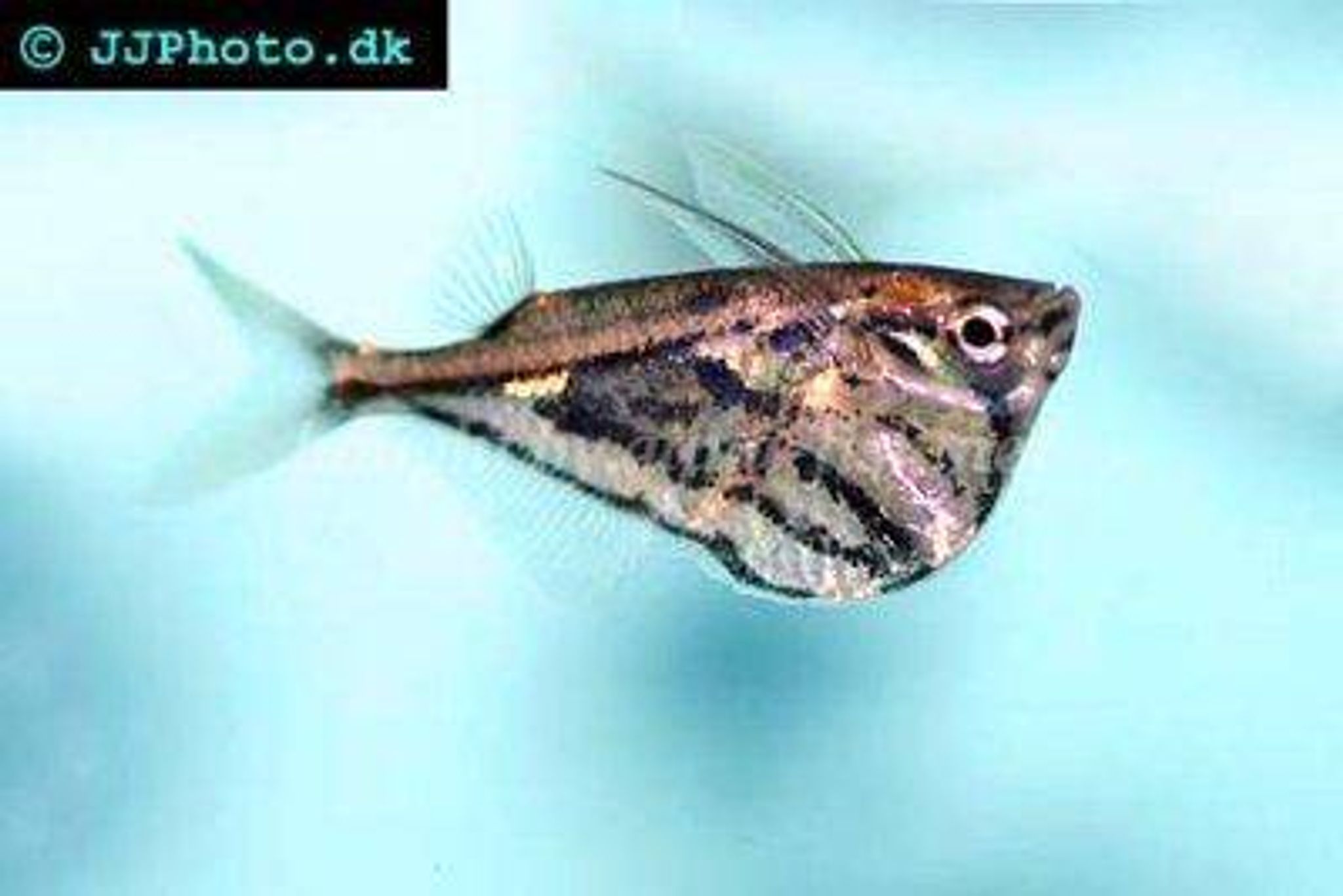
Marbled Hatchetfish are among the most recognisable species and are known for intricate dark marbling across a pale body. Their compact size makes them popular for peaceful planted community tanks.
Silver Hatchetfish have a bright metallic appearance and a classic hatchet-shaped profile. They are attractive schooling fish for aquariums with open surface space.
Pygmy Hatchetfish are smaller and more delicate, making them suitable for carefully planned nano and planted setups with peaceful tankmates.
Other freshwater Hatchetfish may appear depending on seller availability. Always compare adult size, feeding behaviour and water preferences before purchase.
Most commonly kept Hatchetfish remain relatively small.
Even so, they benefit from enough horizontal swimming space to move comfortably as a group near the surface.
Yes. Hatchetfish are social fish and generally do best when kept in a suitable group.
A group also makes them feel more secure and creates a more natural surface-level display.
Suitable tank size depends on species, group size and tankmates.
Because Hatchetfish spend most of their time near the surface, horizontal surface area is especially useful.
Yes. Hatchetfish are famous for their jumping ability and can escape through surprisingly small openings.
A secure aquarium cover is one of the most important parts of keeping them safely.
Hatchetfish are well suited to planted aquariums with calm surface areas and plenty of cover below.
Plants can help the fish feel secure while still leaving open surface space for swimming and feeding.
Floating plants can provide useful shade and cover for surface-dwelling Hatchetfish.
Leave enough open water between the plants so the group can move and feed comfortably.
Hatchetfish are generally peaceful and can work well in calm community aquariums.
Tankmates should be similarly peaceful and should not constantly chase or outcompete them near the surface.
Many peaceful Tetras can coexist with Hatchetfish.
The two groups often occupy different zones, with Hatchetfish near the surface and Tetras more commonly using the middle of the aquarium.
Small peaceful Rasboras may make suitable companions in planted community tanks.
Avoid overcrowding the upper water column with too many competing surface-oriented fish.
Corydoras and Hatchetfish occupy opposite parts of the aquarium.
This makes them a natural combination when their water requirements are compatible.
Smaller peaceful Plecos may coexist with Hatchetfish because they spend most of their time near the bottom and on hardscape.
Adult Pleco size should still be checked before adding one to a smaller community aquarium.
Gouramis and Hatchetfish can both use the upper areas of the aquarium.
Peaceful combinations may work in larger tanks, but avoid overly territorial Gouramis that dominate the surface.
Hatchetfish and Bettas can sometimes coexist, but both spend significant time near the surface.
Individual Betta temperament and enough surface space are important when considering this combination.
Adult shrimp can often coexist with Hatchetfish because most shrimp remain closer to plants and substrate.
Very small shrimp or juveniles may still be eaten if encountered.
Hatchetfish are surface-oriented feeders and naturally consume small insects and other suitable foods near the water surface.
Fine floating foods and appropriately sized frozen or live foods can be used depending on the species and individual fish.
Food should remain near the surface long enough for Hatchetfish to recognise and eat it.
Fast-sinking food can be missed entirely because these fish rarely search the bottom for meals.
Hatchetfish benefit from stable, clean freshwater and consistent aquarium maintenance.
Exact temperature, hardness and pH preferences differ by species, so care should be matched to the particular Hatchetfish being kept.
Hatchetfish benefit from effective filtration with relatively calm surface conditions.
Avoid directing strong filter output across the entire surface where the fish normally rest and feed.
Many commonly kept Hatchetfish prefer gentle to moderate surface movement rather than strong turbulence.
Provide calm areas where the school can hover comfortably near the surface.
Hatchetfish are generally peaceful community fish.
Their main compatibility challenge is usually stress from larger, boisterous or predatory tankmates rather than aggression from the Hatchetfish themselves.
Sexing Hatchetfish can be difficult, particularly outside breeding condition.
Mature females may appear fuller-bodied, but differences are often subtle and species-dependent.
Hatchetfish breeding is more specialised than breeding many common community fish.
Successful spawning depends on species-specific conditions, compatible adults and careful management of eggs and fry.
Hatchetfish can be kept successfully by beginners who provide a stable aquarium and secure lid.
Their jumping behaviour and surface-feeding habits require a little more attention than many common community fish.
When comparing Hatchetfish for sale, look for:
Spending most of their time near the surface is normal for Hatchetfish and should not by itself be mistaken for poor health.
Introduce new Hatchetfish carefully to avoid abrupt changes in temperature and water chemistry.
Keep the aquarium securely covered throughout acclimation because newly introduced fish may be especially prone to jumping.
Hatchetfish prices in Singapore vary according to species, size, rarity, source and seller.
Commonly available species may be relatively accessible, while specialist or less frequently imported Hatchetfish can cost more.
FishyHub brings Hatchetfish listings from aquarium shops, breeders and freshwater fish sellers across Singapore together in one marketplace, making it easier to compare available species from multiple sources.
When comparing Hatchetfish listings, consider:
Availability changes regularly, particularly for specialist Hatchetfish species.
Yes. Aquarium Hatchetfish are freshwater fish commonly kept in peaceful tropical community tanks.
Yes. They are strong jumpers and require a secure aquarium lid.
Yes. They are social fish and generally do better in a suitable group.
Many peaceful Tetras can coexist with Hatchetfish when water conditions and tank size are suitable.
They sometimes can, but both use the upper part of the aquarium, so Betta temperament and surface space matter.
Adult shrimp can often coexist with Hatchetfish, although very small juveniles may be eaten.
They are surface feeders that do well with appropriately sized floating foods and suitable complementary foods.
They can be, provided the aquarium is stable, securely covered and set up with suitable peaceful tankmates.
Explore Hatchetfish for sale on FishyHub and compare Marbled, Silver, Pygmy and other freshwater Hatchetfish from aquarium shops and breeders across Singapore. Compare species, size, group requirements, condition and price to find suitable Hatchetfish for your community aquarium.