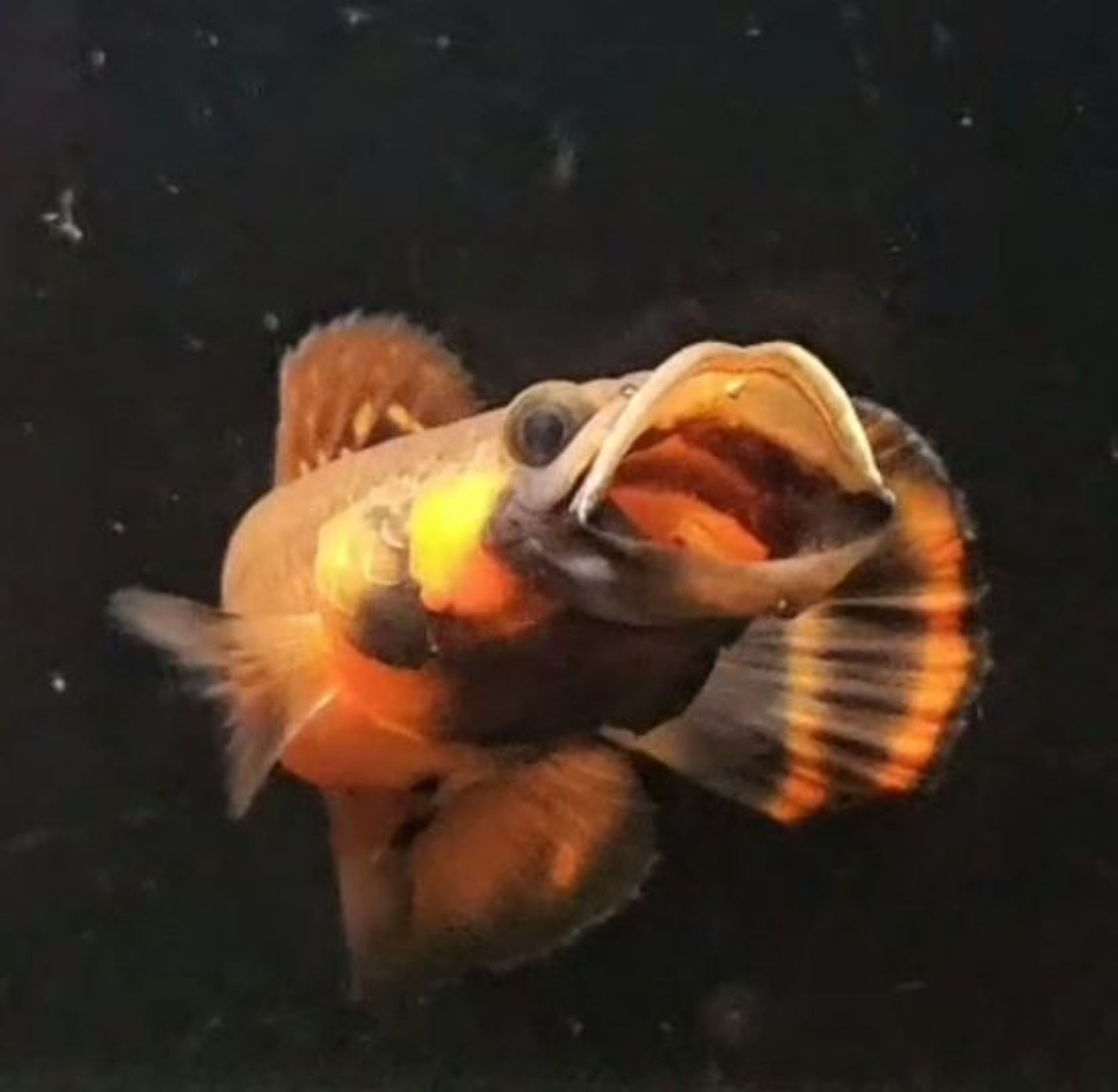
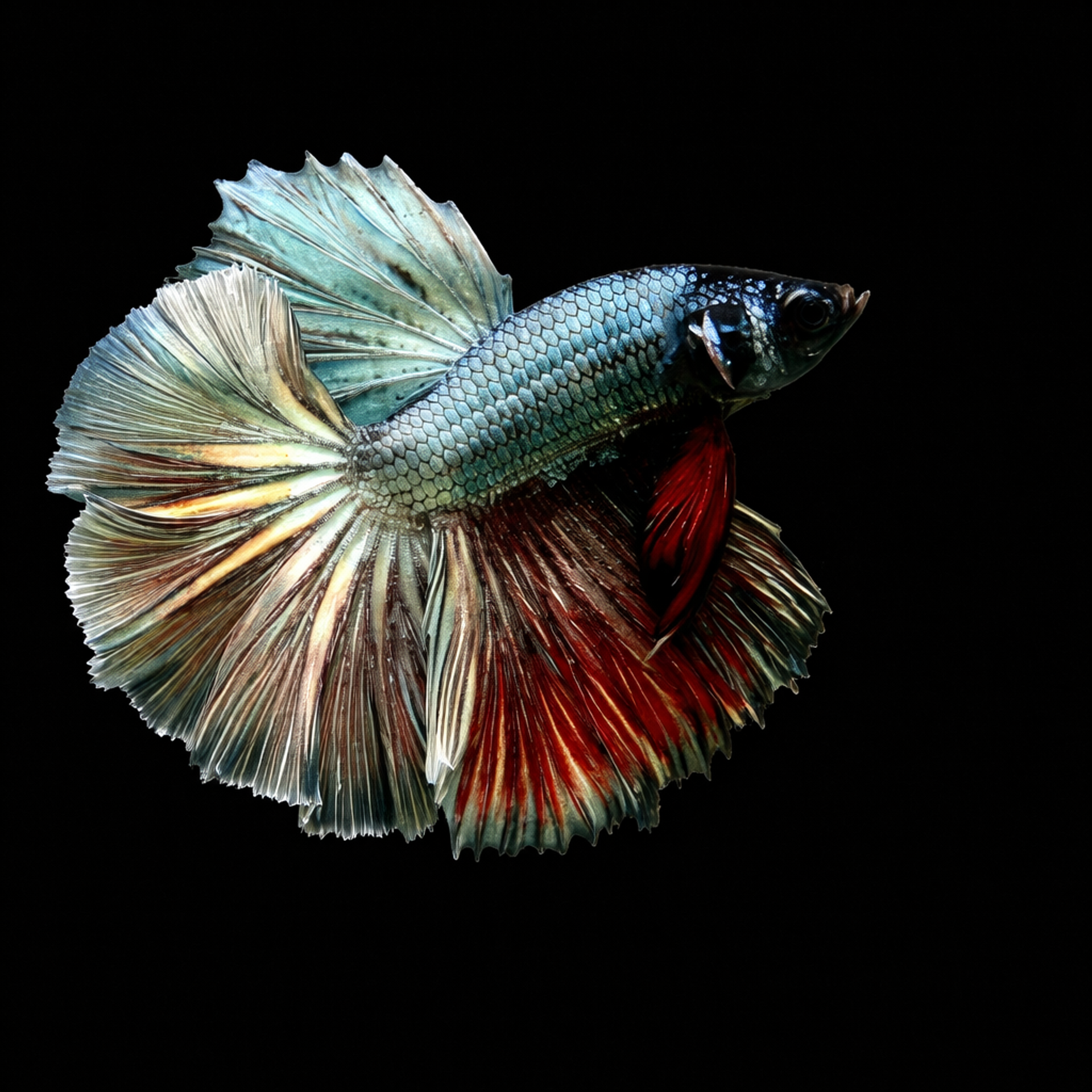
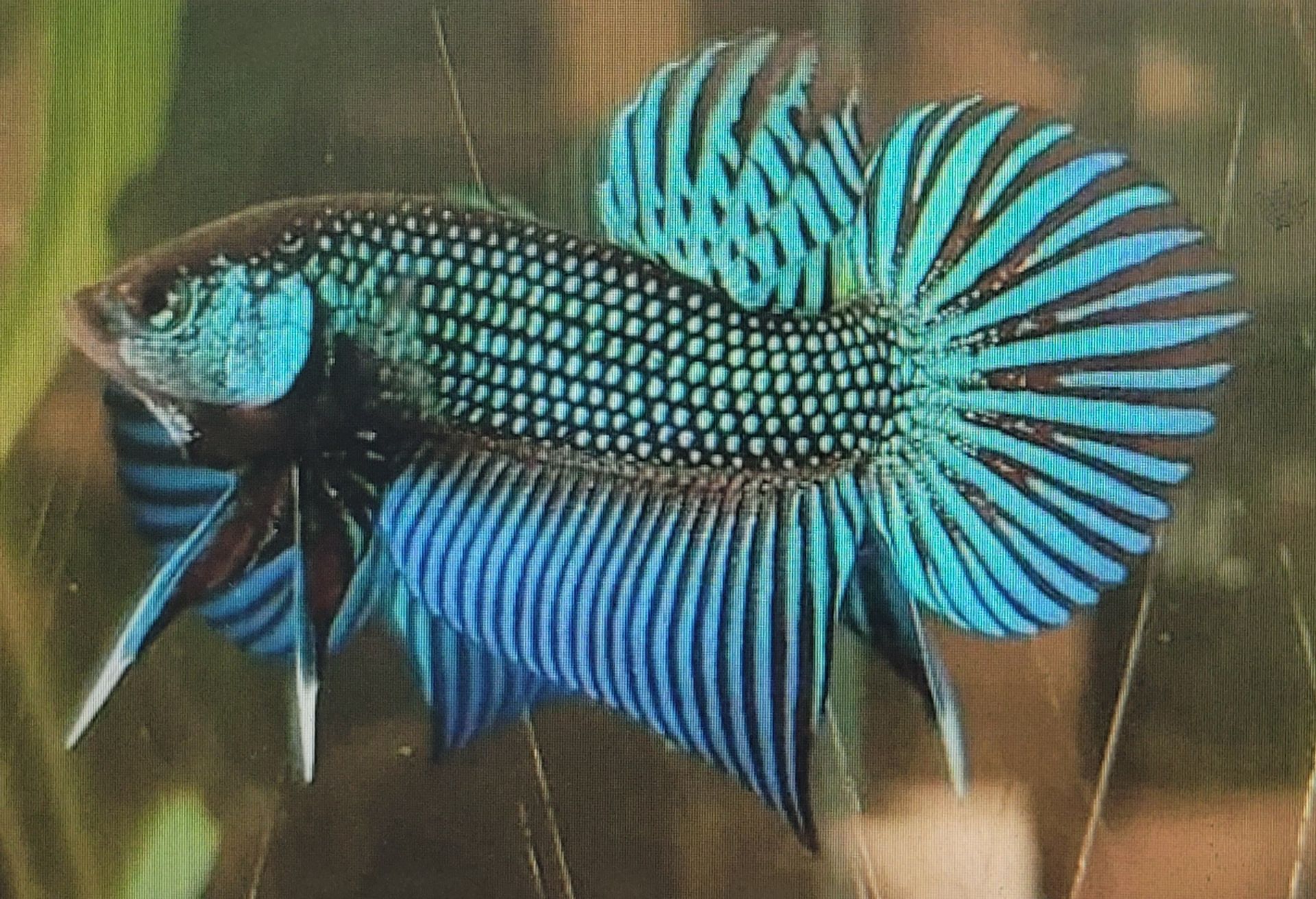
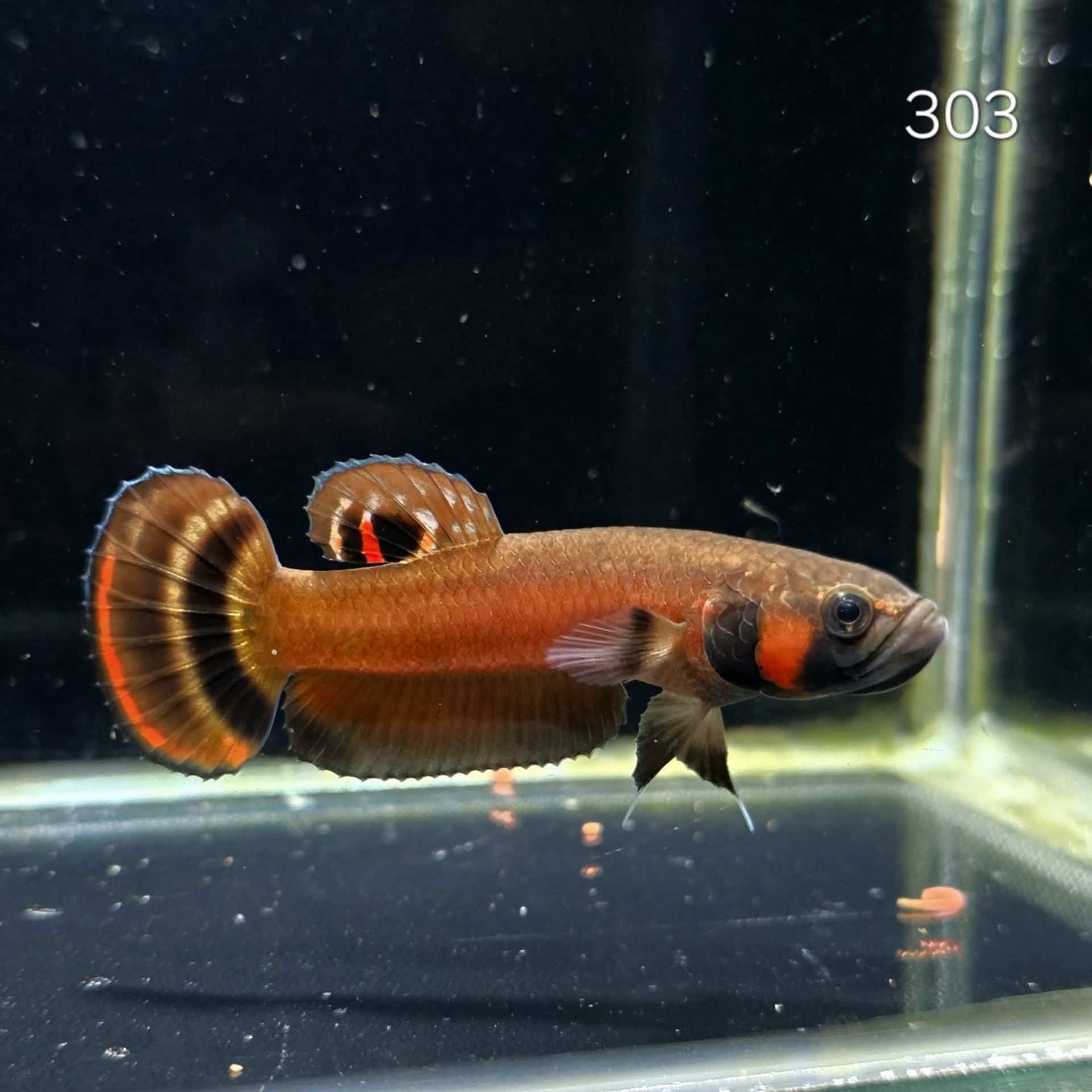
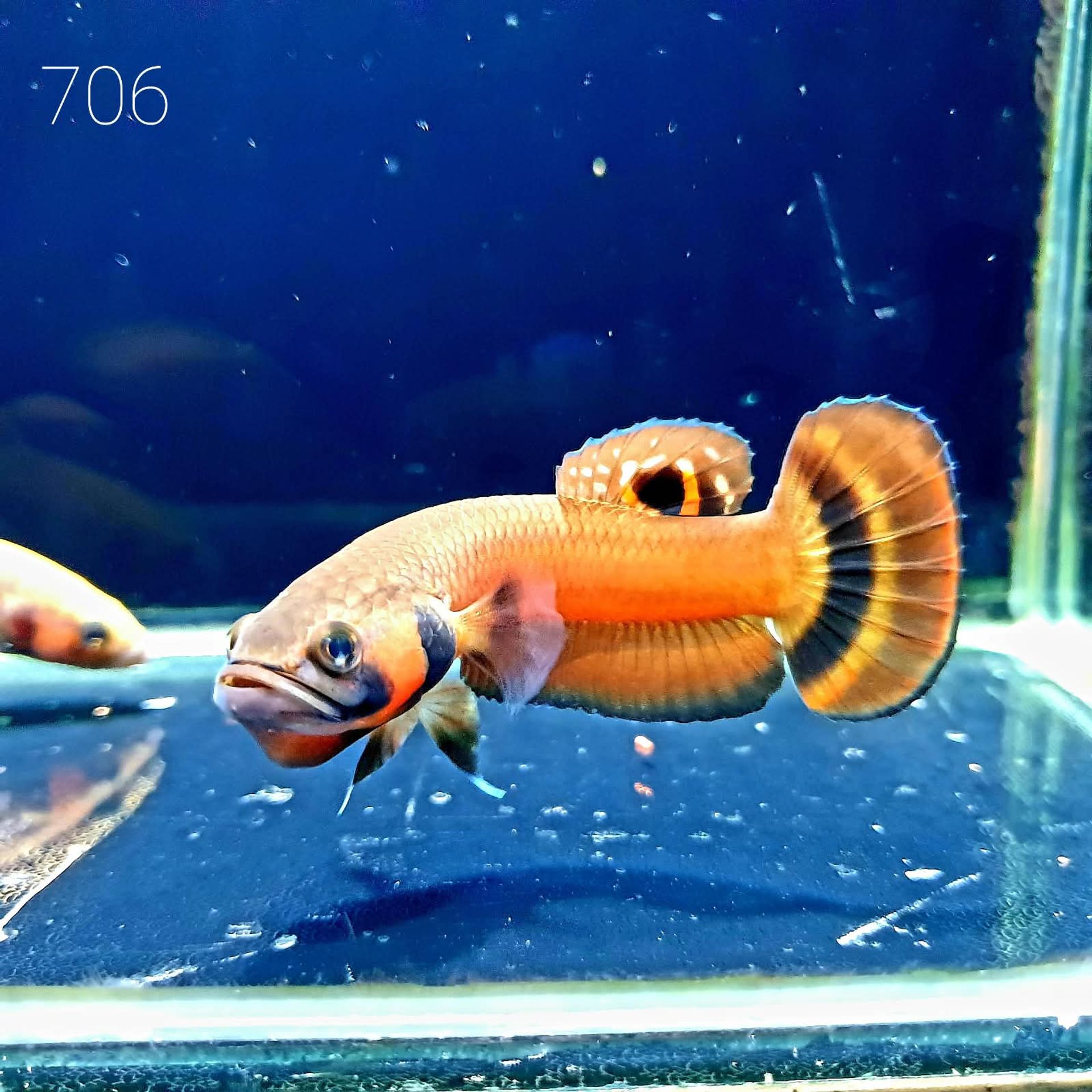
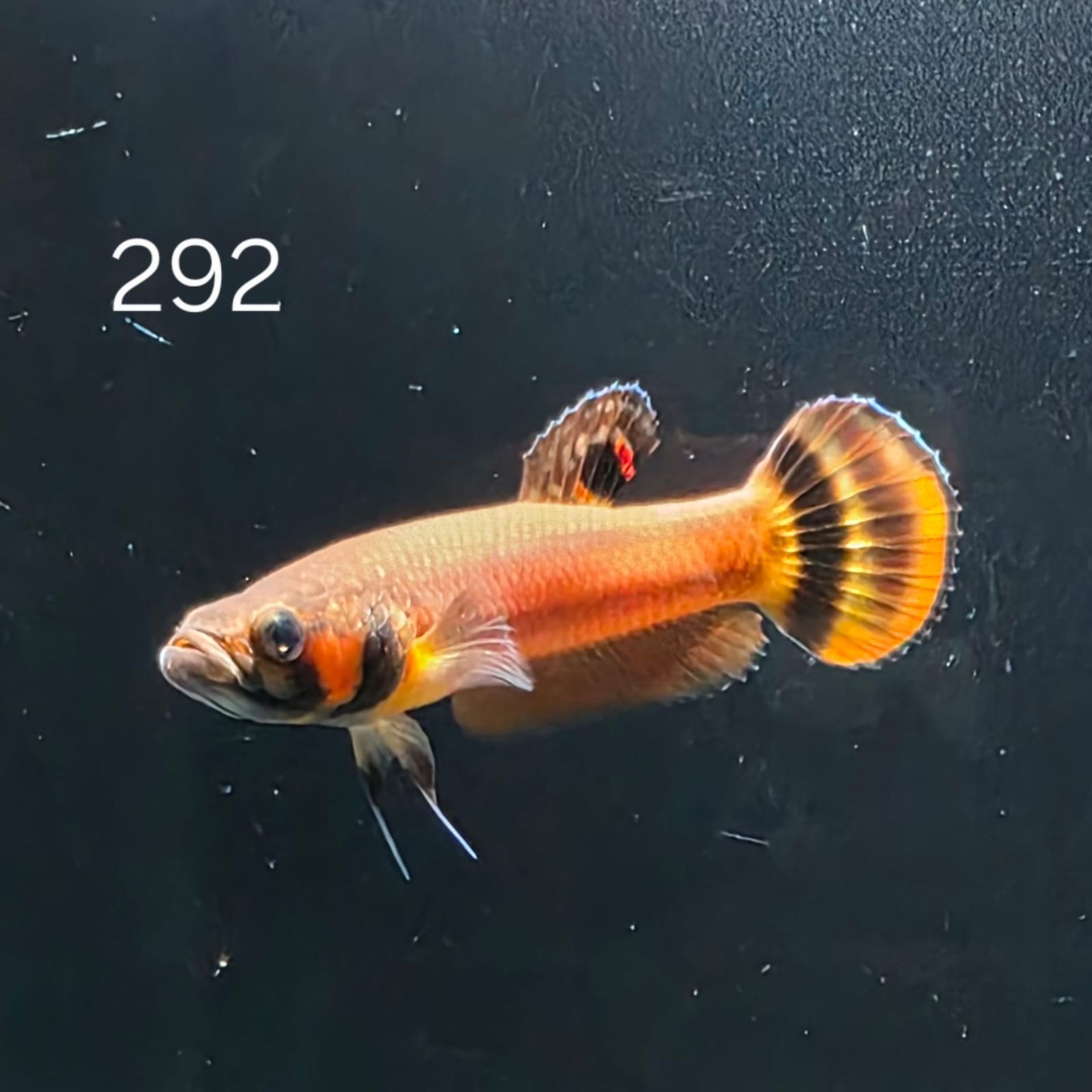
High-pH waters breed a seven-centimetre brawler with a jaw-first philosophy.
Betta macrostoma, the Brunei beauty, is a striking mouthbrooding betta for alkaline water — an aggressive 7–8cm showpiece best kept by experienced aquarists.
- Water conditions: Unlike most ornamental bettas, Betta macrostoma will not tolerate a soft, acidic blackwater setup. Offer stable, neutral-to-alkaline water with a pH of 7.0–8.0, general hardness of 8–15 dGH and a carbonate hardness of 4–8 dKH. Temperature should sit between 24–27°C, and it must stay consistent — this species reacts badly to sudden shifts in pH or temperature, so always acclimatise by drip method and never add it to an immature filter. Run a well-cycled, generously filtered system with moderate flow and good surface agitation; a gentle current is appreciated, a torrent is not. Keep ammonia and nitrite at zero and nitrate below 20ppm, and buffer hardness if your tap water is soft using crushed coral or aragonite in the filter. A tightly fitted lid is essential — this is a powerful, determined jumper with a reputation for finding any gap. Dim, diffused lighting, floating plants, subdued substrate and areas of shade will settle new arrivals quickly.
- Tank size and aquascaping: A single pair needs at least 100 litres and a footprint of 90cm; a 120cm tank is a far better starting point and gives you the flexibility to keep a small group if you intend to breed. Build the layout around cover rather than open swimming space: dark sand, driftwood, smooth stones, weighted pipework, terracotta caves and dense planting such as Anubias, Java fern and Vallisneria. Visual barriers are critical because sight lines between individuals trigger aggression. Keep the tank mature and the filter fully cycled before introducing fish.
- Suitable tank mates: This is a predatory, territorial species that will eat anything small enough to swallow and will not back down from a challenge, so a species-only setup is by far the safest option. If you do mix, choose robust, fast-moving mid-water fish that suit hard, alkaline water — Denison barbs, larger rasboras, mid-sized Australian rainbowfish, Garra, small loaches and gobies can all work in a well-structured tank. Avoid other Betta species, gouramis, paradise fish, slow or long-finned fish, small tetras, cherry barbs, shrimp and other bite-sized livestock. Every tank mate should be added before the macrostoma where possible, so the territory is already established around them.
- Feeding habits: In the wild this is an ambush hunter that takes insect larvae, small prawns and fry, and your feeding regime should reflect that. Offer a varied, protein-heavy diet of live and frozen foods: bloodworm, mysis shrimp, brine shrimp, krill, small prawn pieces, grindal or white worms, and the occasional live cricket or small earthworm. Many specimens can be trained onto carnivore pellets or sticks, but never assume they will accept dry food — feed one or two small meals a day, skip a day each week, and remove anything uneaten. Do not use fatty mammal or poultry-based foods, and remember that a male holding a brood will fast for around three to four weeks, which is normal.
- Care and breeding notes: Betta macrostoma is a paternal mouthbrooder, and the sight of a male carrying a clutch is one of the biggest draws of the species. After spawning, remove the female and leave the male undisturbed with no feeding, gentle flow and dim light; he will hold for roughly three to four weeks before releasing large, well-developed fry that can take baby brine shrimp and microworms almost immediately. Outside of spawning, monitor for fin damage from confrontations, avoid obesity from overfeeding, and quarantine any new fish for at least three weeks. With stable water and quality food, expect a lifespan of around three to five years. Captive-bred stock settles far more reliably than wild imports, and our specimens are sourced and held to that standard.