

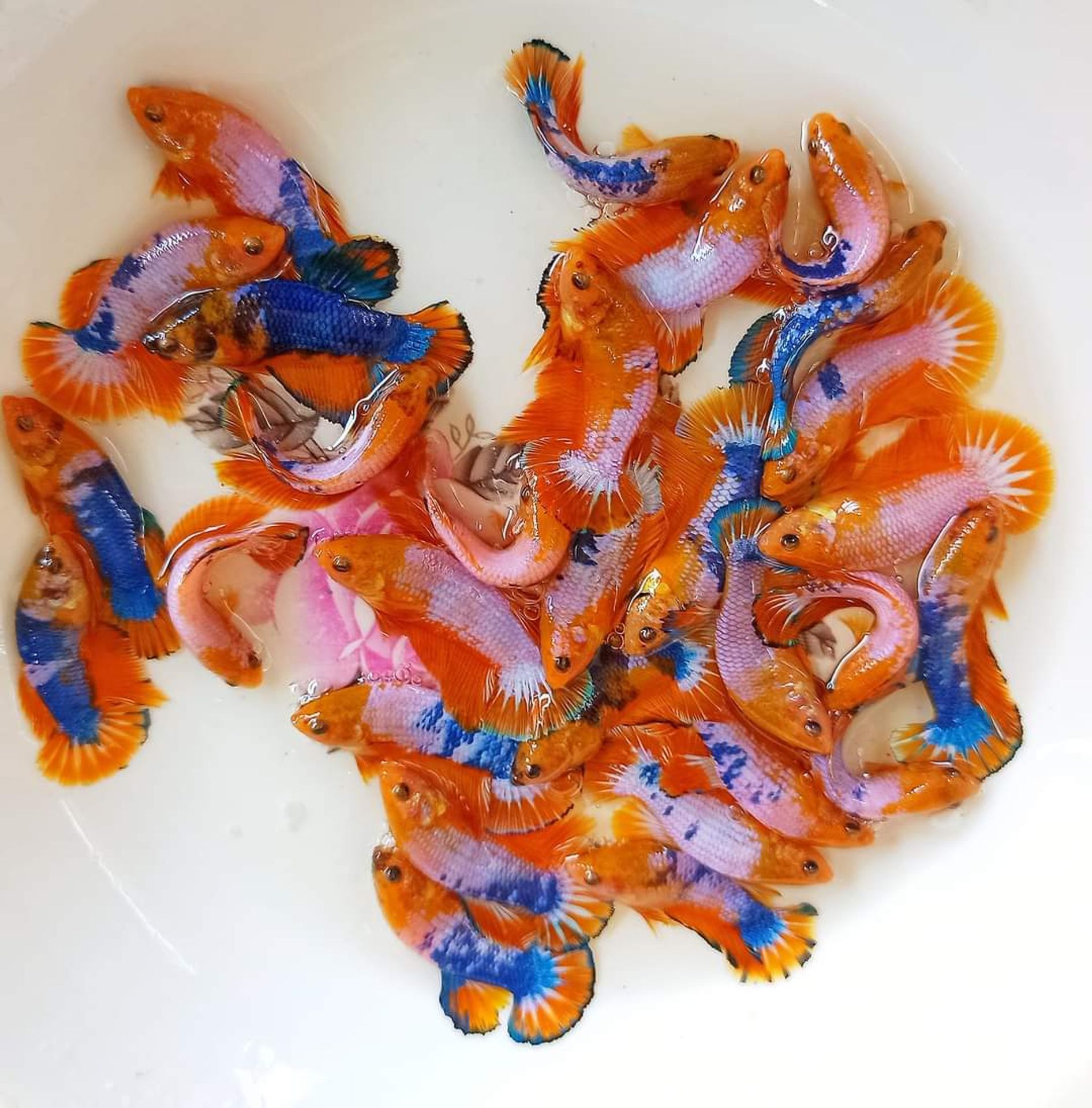

Penyakit Ikan Laga: Common Betta Diseases, Signs & Treatment
Most penyakit ikan laga (betta diseases) start with the water, not with bad luck. Fin rot, fungus and many bacterial infections usually follow ammonia build-up, dirty containers or sudden temperature swings, and many mild cases improve with clean, treated water alone. Parasites such as velvet and white spot, and serious infections such as columnaris, need the right ubat ikan quickly. Use the table below to match the signs to the likely problem, fix the water first, then medicate only when you know what you're treating.
Penyakit Ikan Laga Quick-ID Table: Tanda Ikan Laga Sakit
| What you see | Likely problem | Urgency | First step |
|---|---|---|---|
| Ragged, shrinking fins, dark or white edges | Fin rot | Medium | Water changes, clean tank; antibacterial if it spreads |
| Gold or rust "dust" on body, clamped fins | Velvet | High | Dim lights, anti-parasite medicine for velvet |
| Salt-like white dots | White spot (ich) | High | White spot medicine, water changes |
| Body swollen, scales stick out like a pinecone | Dropsy (sisik nanas) | Very high | Isolate, clean water; poor prognosis |
| Floating sideways, sinking, can't stay level | Swim bladder problem | Low to medium | Fast 1–3 days, shallow clean water |
| White or grey cottony patches, saddle-shaped mark | Columnaris or fungus | Very high | Isolate, antibacterial / antifungal promptly |
| One or both eyes bulging | Popeye (mata menonjol) | Medium | Water quality, antibacterial if one-sided with injury |
| Swollen belly, not pooping | Constipation / bloat | Low | Fast, then feed less |
| Red streaks, gasping, lethargy | Ammonia or nitrite poisoning | High | Large water change, test water |
| Lying on bottom, pale, not eating | Stress, cold, poor water or early illness | Medium | Test water, check temperature |
If several symptoms appear at once, or the fish is getting worse daily, act quickly; small fish decline fast.
Before Using Ubat Ikan: Fix the Water
Ask these questions first:
- Is the water treated? Malaysian tap water is chlorinated, so every bucket needs anti klorin. See the water condition additives range.
- When was the last tukar air? Small, unfiltered containers build up ammonia in days.
- Has the temperature changed suddenly? An aircond blowing on the tank, or a sunny window, can swing the water by several degrees.
- What do the tests say? An ammonia/nitrite/pH test kit takes the guessing out.
For a mild problem (slightly ragged fins, mild lethargy), 2–3 days of clean water changes, a daun ketapang leaf and careful feeding often resolve it.
Common Betta Diseases in Detail
Fin rot
Signs: fin edges look torn, ragged, shorter, sometimes with black, white or red edges. In advanced cases the rot reaches the body. Cause: usually bacteria taking hold in poor water or after fin damage. Treatment: move to clean water, do frequent partial water changes, and add ketapang. If fins keep receding after a few days, use an antibacterial ubat ikan from our medication range. Fins regrow, often clearer or slightly different in colour. Don't confuse with: fin biting (tail biting) from stress, where fins have clean, bitten-off edges but no colour change.
Velvet
Signs: a fine gold or rust-coloured dust, best seen with a torch from the side; clamped fins, rubbing against decor, rapid breathing. Cause: a parasite (Oodinium-type). Spreads quickly. Treatment: act fast. Dim the lights (the parasite relies partly on light), use a medicine labelled for velvet, and follow the full course. Treat all fish that shared water.
White spot (ich)
Signs: salt-grain white dots on body and fins; flashing and rubbing. Treatment: white spot medicine for the full course, plus water changes. Our white spot treatment guide covers dosing and the parasite's life cycle in detail. Malaysian room temperature is already warm, so there's usually no need to raise it further.
Dropsy: penyakit sisik nanas
Signs: swollen body, scales lifting so the fish looks like a pinecone (sisik nanas), sometimes bulging eyes. Cause: dropsy is a symptom, not a single disease: fluid builds up, often from internal bacterial infection or organ failure. Treatment: isolate the fish, keep water very clean, and use an antibacterial if available. Some keepers use Epsom salt baths to help reduce swelling. Sadly, by the time scales lift, many bettas don't recover. Prevention through good water is the real cure.
Swim bladder problems
Signs: floating at the top, sinking, swimming sideways or head-down. Cause: often overfeeding, constipation or gulping too much air; sometimes infection or injury. Treatment: fast for 1–3 days, lower the water level so the fish doesn't struggle, then feed smaller meals. Many recover within days.
Columnaris and fungus (kulat)
Signs: white or grey cotton-like patches, a pale "saddle" band across the back, fraying mouth or fins that worsen rapidly. Cause: columnaris is bacterial and can kill in a day or two; true fungus usually appears on existing wounds. Treatment: move to a hospital container immediately and use an appropriate antibacterial or antifungal. Methylene blue (ubat biru) is commonly used for fungal problems and as a gentle dip, but follow the label carefully because it stains and can harm filter bacteria.
Popeye: mata menonjol
Signs: eye bulging out. Both eyes usually means water quality; one eye often means injury. Treatment: clean water, ketapang, and antibacterial if it doesn't improve within a few days.
Cara Merawat Ikan Laga Sakit: Step by Step
- Isolate the sick fish in a clean container or small hospital tank with treated water. A breeding and isolation box works for a short time inside a larger tank, but medication should go in a separate container.
- Identify the problem using the table above. Take a photo with a torch from the side to check for velvet.
- Water first: daily 30–50% changes in the hospital container, with anti klorin and matched temperature.
- Medicate correctly: follow the label, dose for the real water volume, and finish the course.
- Feed lightly: sick fish need less food; leftovers make things worse.
- Watch and record: note changes each day. If there's no improvement after the course, ask an experienced keeper or the seller for advice.
Ubat ikan laga basics
- Antibacterial: fin rot, columnaris, popeye, dropsy attempts
- Anti-parasite: white spot, velvet
- Methylene blue (ubat biru): fungus, egg protection, mild infections
- Aquarium salt (garam ikan): some keepers use a little for mild problems; dose carefully and don't combine with every medicine
- Daun ketapang: releases tannins; supportive care, not a cure
Don't mix medicines without checking compatibility, and don't add medicine "just in case". Overmedicating stresses bettas too.
Preventing Betta Diseases
- Use a filtered tank of 1 kaki or larger, not a tiny cup
- Treat every bucket of tap water with anti klorin
- Change water weekly (more often in small containers)
- Feed small portions; fast once a week
- Keep the tank out of direct sun and away from aircond vents
- Quarantine new fish before adding them to shared water
- Don't share nets between tanks without rinsing
Our betta care guide covers the full setup, and why aquarium fish die helps when a fish dies suddenly without clear symptoms.
Frequently Asked Questions
Apa tanda ikan laga sakit?
Tanda biasa ialah sirip tertutup atau koyak, warna pudar, tidak mahu makan, duduk diam di dasar, bintik putih atau debu keemasan pada badan, perut bengkak dan sisik menegak. Jika nampak tanda ini, tukar air dahulu dan kenal pasti penyakitnya sebelum beri ubat.
Ubat ikan laga apa yang sesuai?
Bergantung pada penyakit. Ubat antibakteria untuk reput sirip dan columnaris, ubat white spot atau velvet untuk parasit, dan ubat biru untuk kulat. Daun ketapang dan air bersih membantu pemulihan, tetapi bukan pengganti ubat untuk penyakit serius.
Ikan laga sisik nanas boleh sembuh?
Kadang-kadang, jika dikesan awal. Asingkan ikan, jaga air sangat bersih dan guna ubat antibakteria. Tetapi apabila sisik sudah menegak seperti nanas, ramai ikan laga tidak pulih.
Can betta fin rot heal by itself?
Mild fin rot often heals with clean water changes alone. If fins keep shrinking after several days, add an antibacterial treatment.
Is velvet contagious to other fish?
Yes, it spreads quickly through shared water. Treat every fish that was in the same water, and don't share equipment.
Find bettas and fish medication from Malaysian sellers on FishyHub, and check each product's label for dosing and species safety.