

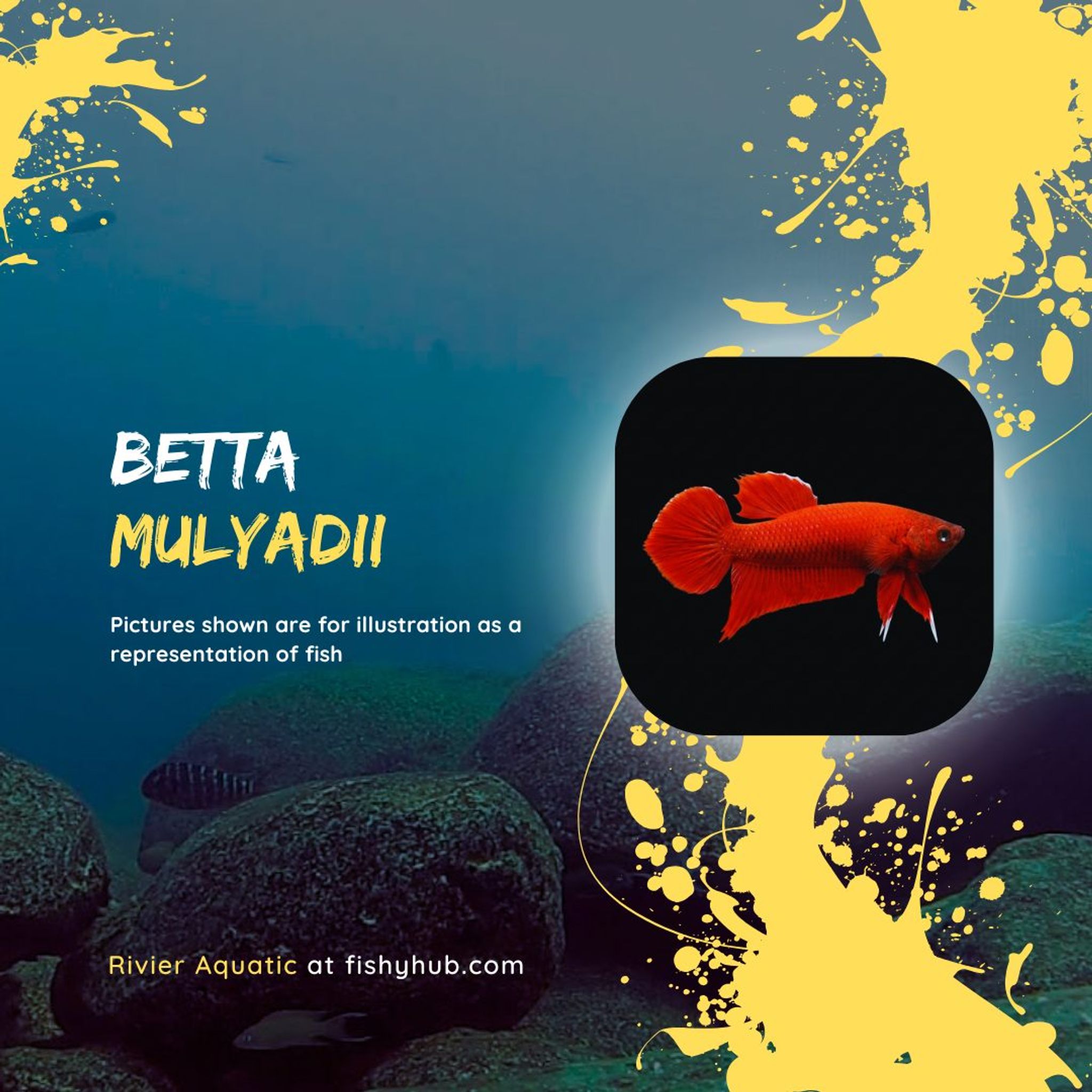
Click to enlarge
Unless stated otherwise, photos show the species, not the exact fish you'll receive.
Betta Mulyadii
USD 63.00
Delivery Information
Delivery takes 3 to 7 working days. Delivery fees will be shown upon checkout.
Dead-on-arrival protection: report within 24 hours of delivery with a photo or video for an exchange or return.
Product Variations
Quantity
Stock: 100
Product Details
Size
3cm - 4cm
Temperament
Semi Aggressive
WYSIWYG
Representative Photo Only
Product Description
A petite blackwater betta, named for its discoverer and at home in tea-stained streams.
Betta mulyadii is a rare, beautiful wild betta from Sumatran blackwater streams, perfect for soft, acidic biotopes with peaceful tank mates and live foods.
- Water conditions: Betta mulyadii is a blackwater species and must be kept in soft, acidic water to thrive. Aim for a pH of around 4.0–5.5, with some stable setups running slightly higher, but avoid hard, alkaline water entirely. Carbonate hardness should be very low, ideally 0–2 dKH, with general hardness around 1–5 dGH and a low TDS value, typically 40–120 ppm. Temperature should be maintained at 24–28°C. Use RO/DI water remineralised very lightly, or peat-filtered water, and add Indian almond leaves, alder cones or driftwood to release tannins and support the natural blackwater environment. Filtration should be gentle, such as a sponge filter or low-flow internal filter, because these fish dislike strong current. Keep ammonia and nitrite at zero and nitrate as low as possible through small, regular water changes with water that matches the tank’s soft, acidic parameters. Stability matters more than chasing an exact pH number, so acclimatise new arrivals slowly and avoid sudden swings in temperature or chemistry.
- Suitable tank mates: This is a peaceful but somewhat shy wild betta that does best in a species-only blackwater biotope or with very small, calm fish that also tolerate soft, acidic water. Good options include small Boraras species such as chili rasboras and least rasboras, Sundadanio species, small peaceful loaches such as Pangio kuhlii, and other diminutive blackwater schooling fish. Avoid boisterous tank mates, fin nippers, large barbs, goldfish, livebearers that require harder water, and aggressive cichlids. Do not keep Betta mulyadii with Betta splendens or other betta species, and do not mix different wild betta species, as territorial behaviour and hybridisation are real risks. Adult Amano shrimp or larger shrimp may be tolerated, but smaller shrimp and fry can be eaten. If keeping more than one B. mulyadii, use a spacious tank with dense planting, leaf litter, caves and visual barriers so males can establish territories without constant confrontation. A single pair or a small group in a well-structured species setup is usually safer than a mixed community.
- Feeding habits: Betta mulyadii is a carnivorous micropredator that naturally feeds on small aquatic invertebrates, insect larvae and zooplankton. In captivity, offer a varied diet of live and frozen foods such as baby brine shrimp, daphnia, moina, cyclops, microworms, grindal worms, small bloodworm and white worms. These foods encourage natural hunting behaviour and help condition fish for breeding. High-quality micro pellets or crushed carnivore pellets can be offered, but they should not form the entire diet, and some wild-caught or shy specimens may ignore dry foods at first. Feed small portions once or twice daily, giving only what the fish can clear in a few minutes. Overfeeding is easy to do and can lead to obesity and water quality problems, so remove any uneaten food promptly. A varied feeding schedule with live foods several times a week will support colour, activity and overall health.
- Care requirements: Betta mulyadii is best suited to a mature, well-planted aquarium with a footprint of at least 45–60 cm for a pair, and a larger tank for a group. Adult size is typically around 3–4 cm, so these are small fish that appreciate cover rather than open swimming space. Use a tight-fitting lid because wild bettas can jump. Provide dim lighting, floating plants, driftwood, caves, botanical litter and tannin-stained water to mimic the species’ natural habitat. Keep the filter gentle and the surface calm. Perform small weekly water changes of around 10–20% with matched soft, acidic water, and avoid large water changes that can destabilise the system. Monitor aggression carefully, especially in groups, and use plants and hardscape to break lines of sight. Quarantine new fish and acclimatise slowly. Betta mulyadii is not an ideal beginner fish because it is sensitive to unstable water chemistry, hard water and sudden changes; it rewards careful, consistent blackwater management with interesting behaviour and excellent natural colour.
More from Rivier Aquatic
Rivier Aquatic