
Why Is My Salvinia Melting or Turning Brown? Causes and Fixes
Salvinia leaves that collapse, blacken at the edges, or turn to mush almost always trace back to one of a handful of causes: wet leaf hairs, weak light, too much surface current, or a nutrient or water-quality swing. This guide walks through how to tell them apart and what to do about each one, plus when browning is just a normal adjustment phase rather than a real problem.
Why Salvinia Melts in the First Place
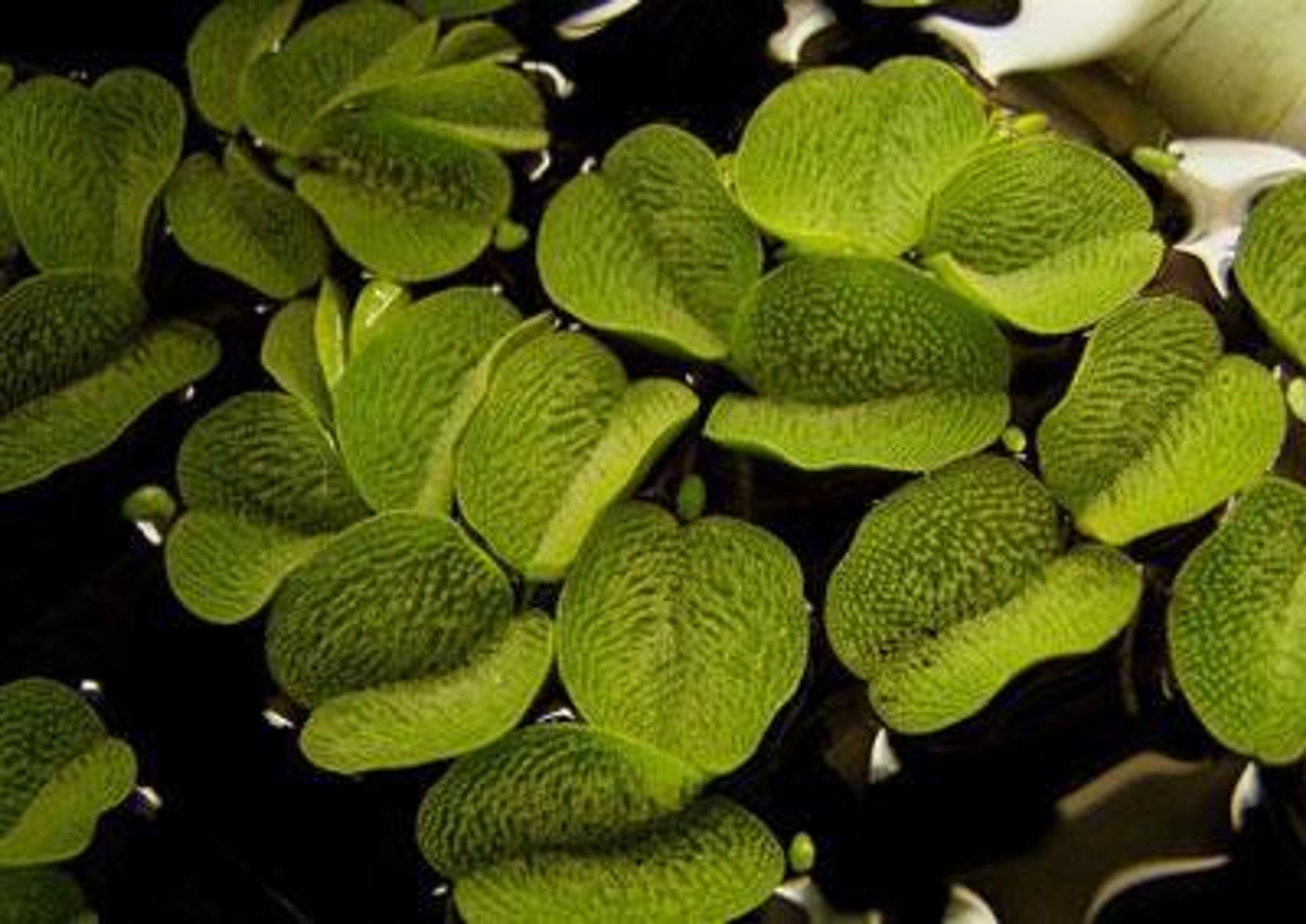
Salvinia (Salvinia minima, natans, auriculata, and the larger cucullata) is a floating fern, not a rooted plant. Its upper leaf surface is covered in fine, water-repellent hairs that trap a layer of air against the leaf. That air layer is what keeps the plant afloat and lets it photosynthesize efficiently in direct light.
Once those hairs get wet — from splashing during a water change, a strong current pushing the leaf under, or the mat getting flipped by turbulence — the leaf can no longer shed water. It stays waterlogged, photosynthesis stalls, and the tissue rots and blackens within a day or two. This single mechanism explains a large share of "my salvinia is melting" cases, and it's worth ruling out before you touch light, fertilizer, or water chemistry.
The Five Most Common Causes
1. Wet or Submerged Leaves
Any time the leaf top gets soaked or pushed underwater, expect localized black, mushy rot. Common triggers include pouring water directly onto the mat during a water change, aiming a hose or bucket at the surface, or letting a filter return blast the floaters continuously.
Fix: Pour new water gently down the glass or into an empty corner, never over the plants. Redirect any strong output away from the mat entirely.
2. Insufficient Light
Salvinia needs light hitting the leaf tops directly and without heavy filtering through deep water. In a tall tank, under a closed low-output hood, or shaded by taller plants and decor, growth turns pale, thin, and weak — and that weak tissue eventually browns and dies back. Hobbyist opinion varies on whether Salvinia strictly needs "high" light the way some other floaters do, but the safer rule for a home aquarium is simple: the more direct light reaches the top of the leaves, the faster and healthier the growth, and low light won't necessarily kill the plant outright but makes melting far more likely over time.
A fixture positioned close to the surface, such as a compact LED aquarium light, gives floating plants the intensity they need without heating the water excessively.
3. Excess Surface Agitation or Flow
A little ripple at the surface is fine and even helps gas exchange. Constant strong current that flips leaves over, drags the mat into a corner, or repeatedly pushes it underwater causes ongoing physical damage that looks a lot like disease.
Fix: Baffle the filter output (a sponge, a piece of foam, or an angled deflector works), redirect flow along the glass instead of across the surface, or grow Salvinia in a sheltered corner away from the main current. Browsing filters with adjustable flow or a spray bar makes this easier to dial in.
4. Nutrient Deficiency or Excess
Salvinia has no true roots — what looks like roots is actually a modified, feathery leaf structure hanging below the floating pad, and the plant pulls nutrients straight from the water column through both structures. It's a heavy surface feeder, and a healthy colony can double in size within days to a couple of weeks, which burns through available nutrients fast, especially in a heavily stocked floater tank that isn't dosed at all.
- Nitrogen or potassium deficiency: older, lower leaves yellow and brown first.
- Iron deficiency: new growth at the tips comes in pale or yellowish.
- Fertilizer overdose: floaters absorb nutrients very efficiently, so heavy dosing meant for rooted plants can shock Salvinia or trigger an algae bloom instead of helping it.
Fix: Dose a general liquid planted-tank fertilizer at a reduced rate and watch the response over a week or two before adjusting further. Under-dosing and observing beats guessing high.
5. Water Chemistry and Temperature Swings
Salvinia tolerates a wide range — roughly pH 6.0–7.5 and soft to moderately hard water — so chronic decline over several weeks is more likely tied to very hard, alkaline water than to a specific number. Sudden changes are the bigger risk:
- Temperature: comfortable range is about 65–85°F (18–29°C). A cold snap or a water change with noticeably colder tap water can shock and brown leaves within a day or two.
- Ammonia or nitrite spikes: these cause rapid browning across the whole mat at once, not just the older leaves.
- Large water changes with very different parameters: even with safe ammonia and nitrite, a big swing in hardness or temperature in one go can stress the whole colony.
Test water regularly and don't skip routine partial water changes in an attempt to "protect" the plant — stagnant, nutrient-depleted or ammonia-laden water causes far more damage than a well-matched water change ever will.
Leaf Symptom Triage Table
Use this table to narrow down the likely cause before changing anything.
| Symptom pattern | Most likely cause |
|---|---|
| Isolated black, slimy patches on leaf tops | Wetted or submerged leaves from splashing or current |
| Whole mat browning within 24–48 hours | Ammonia/nitrite spike, big temperature drop, or a large mismatched water change |
| Pale, thin leaves before browning, especially in a tall or dim tank | Insufficient light |
| Older/lower leaves yellow-brown, newer growth still green | Nitrogen or potassium deficiency |
| New growth pale or yellow, older leaves fine | Iron deficiency |
| Bottom layer of a thick mat browning while the top looks healthy | Self-shading from overcrowding |
| Leaves shredded, roots chewed or missing | Grazing by snails, shrimp, or fish |
| Original leaves melting in the first 1–3 weeks after purchase, new leaves emerging | Normal transition melt (see below) |
Normal Transition Melt vs. an Actual Problem
Most commercially grown Salvinia is raised emersed — out of water, in a "dry-start" nursery form — and its original leaves are shaped for that environment. Once submerged in an aquarium, those leaves commonly melt back over the first one to three weeks as the plant converts to its aquatic leaf form. This is normal and expected, and it's the single most misunderstood cause of "my new Salvinia is dying."
The distinction that matters: if new, healthy leaves are emerging while the old ones melt, the plant is transitioning normally. If there's total die-off with no new growth at all after a few weeks, something else — light, flow, nutrients, or water quality — is the real problem and needs to be addressed directly.
Other Contributing Factors
Grazing Damage
Snails, shrimp, and some fish — certain cichlids, goldfish, and silver dollars among them — will graze on or shred the feathery submerged structures and leaf edges. The resulting physical damage and subsequent rot can look exactly like disease. If you keep species known to nibble floaters, check for bite marks and torn tissue before assuming a water-quality cause.
Surface Film and Debris
An oily sheen or a layer of dust and biofilm on the water surface blocks both gas exchange and light, effectively smothering the leaves underneath. Overfeeding and organic buildup are common causes. Skim the surface regularly, or drag a paper towel lightly across it to lift the film, and cut back on feeding if debris keeps reappearing.
Overcrowding and Self-Shading
A thick, multi-layer mat shades its own lower leaves, which then brown and die even though the top of the colony looks perfectly healthy. Because Salvinia grows so quickly, this is one of the most common self-inflicted causes of chronic browning. Thin the mat regularly — remove excess plants so light reaches the whole colony, not just the top layer.
Species Differences
Not all Salvinia species behave identically:
- Salvinia minima — smallest leaves, most common in the hobby, relatively forgiving.
- Salvinia natans — similar size to minima, slightly more cold-tolerant.
- Salvinia auriculata — larger leaves, benefits from more light and space to avoid self-shading.
- Salvinia cucullata — the largest, most light- and nutrient-demanding of the group; struggles fastest under dim light or nutrient-poor water.
If you're troubleshooting a mixed floater tank, factor in which species you actually have before assuming a fix that works for minima will work the same way for cucullata.
Supporting Water-Quality Tools (Not a Melting Fix)
A UV sterilizer or an in-line UVC clarifier won't fix melting on its own, but both can support overall water clarity in a floating-plant tank, which indirectly helps light reach the leaves.
UV Sterilizer Sizing Basics
A UV sterilizer works by passing water past a UV-C bulb at a controlled flow rate, which damages the DNA of free-floating algae cells and many waterborne pathogens so they can no longer reproduce. Match the unit to your tank:
- Wattage vs. volume: as a rough guideline, low-wattage units (5–9W) suit tanks up to roughly 20–40 gallons (75–150 L), while larger tanks need proportionally higher wattage.
- Flow rate: water needs enough dwell time in the chamber for the UV dose to work — running water through too fast reduces effectiveness, so check the unit's rated flow range against your pump or filter output.
- Effect on floaters: a UV unit helps keep green-water algae and free-floating pathogens down, contributing to a clearer water column, but it does nothing for light intensity, surface flow, or nutrient dosing — the actual drivers of Salvinia health.
In-Line UVC Clarifiers
An in-line UVC clarifier plumbs directly into a canister filter's output line, treating water as it returns to the tank rather than sitting in its own separate chamber. It serves the same basic purpose — knocking back green-water algae and free-floating pathogens — with a simpler footprint since it uses existing filter plumbing. Bulbs typically need replacement every 6–12 months even if the unit still lights up, since UV output degrades well before the bulb fails outright. Like a standalone sterilizer, treat it as a supporting water-clarity tool for a floating-plant tank, not a treatment for melting itself.
Common Mistakes to Avoid
- Spraying or pouring water directly onto the leaves during maintenance.
- Leaving strong filter or powerhead output blasting the mat continuously.
- Assuming all browning is disease and reaching for medication when the real cause is light, flow, or nutrients.
- Leaving dead, mushy leaves in the tank — they foul the water and speed decline of nearby healthy tissue, so net them out promptly.
- Expecting newly purchased, emersed-grown Salvinia to keep its original leaves green instead of recognizing normal transition melt.
- Overdosing fertilizer meant for rooted plants, which can burn floaters or trigger an algae bloom.
- Keeping floaters under a closed, low-output lid or letting tall plants and hardscape shade the surface.
Quick Fix Checklist
- Confirm light reaches the surface without heavy shading.
- Calm excess surface flow near the floating mat.
- Test ammonia, nitrite, and nitrate, and keep up with regular water changes.
- Dose a balanced liquid fertilizer at a reduced rate.
- Remove any leaves that are already black or mushy.
- Keep temperature stable, especially during water changes.
- Skim surface film and debris regularly.
A Note on Excess Salvinia
Because Salvinia grows so fast, healthy tanks often produce more than needed. It's classified as invasive in many US waterways, so never release excess plants into local ponds, lakes, or storm drains. Instead, compost it, feed small amounts to livestock that accept plant matter, or seal it in a bag in household trash. If a colony has crashed beyond saving, starting over with a fresh batch is often faster and cheaper than nursing a badly stressed mat back to health — Salvinia multiplies quickly once conditions are right, so a restart isn't a major setback.
If you're rebuilding a floater colony from scratch or setting up a new water-conditioning routine after a parameter crash, you can browse freshwater livestock and water conditioners and additives on FishyHub to get the tank back on track.
Frequently Asked Questions
Is it normal for Salvinia to melt after I first add it to my tank?
Yes. Brief transition melt of the original, often emersed-grown leaves within the first one to three weeks is common. Watch for new leaves emerging during that window as reassurance that the plant is adjusting, not dying.
Can Salvinia recover after turning brown, or should I remove it?
Individual brown or mushy leaves won't turn green again and should be removed to stop rot from spreading. The colony as a whole recovers fine once the underlying cause is fixed, since Salvinia reproduces quickly from healthy fragments.
Does Salvinia need CO2 injection?
No. It draws carbon dioxide directly from the air at the water surface, so injected CO2 isn't necessary and won't fix melting.
What lighting is best for Salvinia?
Direct, unobstructed light at or above the water surface for at least several hours a day works best. Shaded or very deep tanks are the main light-related cause of decline.
Why does my Salvinia mat look fine on top but brown underneath?
This is usually self-shading from an overly thick, multi-layer mat. Thin it out regularly so light can reach the lower leaves.
Can too much fertilizer hurt Salvinia?
Yes. Floaters absorb nutrients very efficiently and can be shocked, or fuel an algae bloom, from heavy dosing. Go lighter than you would for rooted plants and observe before adding more.
Will a UV sterilizer stop my Salvinia from melting?
No. A UV sterilizer addresses algae and pathogens in the water column, not the light, flow, or nutrient issues that actually cause floater melt. It's a useful supporting tool for water clarity, not a cure for melting.
How fast should healthy Salvinia grow?
Fast — a healthy colony can noticeably expand within one to two weeks. Stalled or shrinking growth signals a light, flow, or nutrient problem worth investigating right away.


