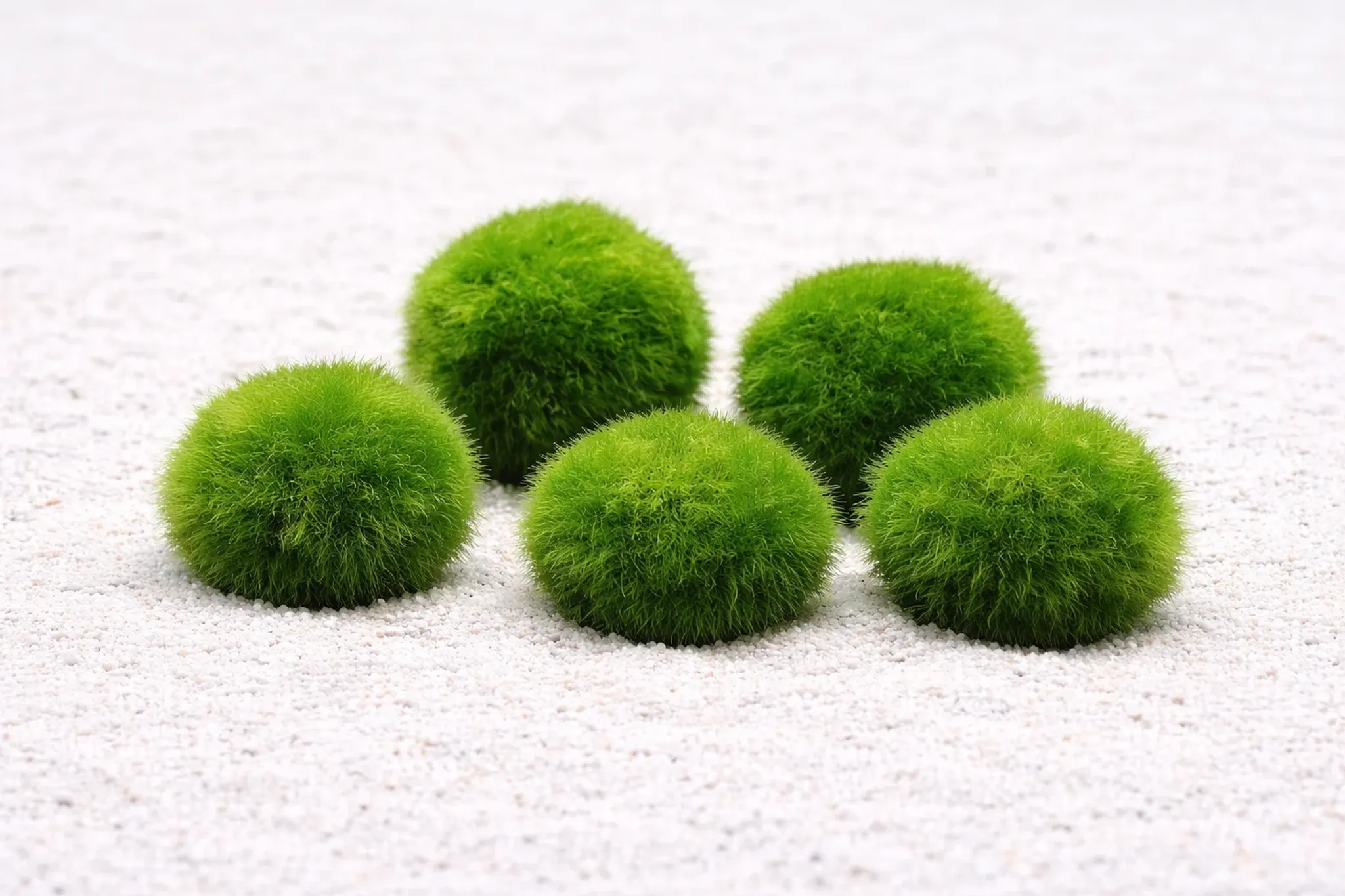

Why Is My Marimo Moss Ball Melting or Turning Brown? Causes and Fixes
A marimo that was bright green last month can suddenly look dull, brown, or mushy, and it's easy to assume it's dying. In most cases the ball is salvageable if you catch the problem early and know which cause is behind it. This guide walks through what's normal, what's a warning sign, and the exact cleaning and reshaping steps to bring a struggling marimo back.
What a Marimo Ball Actually Is
A marimo isn't a moss at all. It's a round colony of filamentous green algae — Aegagropila linnaei (also called Cladophora aegagropila) — that grows naturally in a handful of cold lakes in Japan, Iceland, Ukraine, and Estonia, where wave action rolls loose algae strands into dense balls over years. In an aquarium, it's kept intentionally for its neat shape and low care needs, unlike the "hair algae" that shows up uninvited on glass or decor (more on that distinction below).
Marimo is naturally hardy and grows slowly, often just a few millimeters a year, so most of what looks alarming is fixable with a rinse, a trim, and a change in placement.
Normal vs. Trouble: What to Look For
Healthy marimo is uniformly vivid to deep green and feels springy and firm, almost like a damp sponge, and it holds its round shape without falling apart when handled gently. It's also completely normal for a marimo to bob to the surface during the day and sink back down at night — that's trapped oxygen from photosynthesis, not a malfunction.
Signs that something is actually wrong include:
- Brown or gray patches, especially at the core when you squeeze or cut the ball open
- A mushy, slimy texture instead of firm springiness
- A foul or rotten-egg smell
- Strands separating and falling apart rather than staying bundled
- Persistent floating with a flat, deflated feel (not the normal daily bob)
- White or bleached-looking spots on the surface
Quick Visual Triage
Use this sequence to decide what to do in under a minute:
| Step | What you check | Result |
|---|---|---|
| 1. Color check | Is the ball uniformly green, or does it show brown/gray patches? | Uniform green → healthy. Patchy → go to step 2. |
| 2. Squeeze & smell | Gently squeeze out water; does it smell clean and spring back? | Springs back, smells fine → clean and monitor. Stays limp or smells foul → go to step 3. |
| 3. Cut test (if needed) | Slice a small section to check the core color | Green core with brown surface only → clean and trim. Fully brown, mushy core → salvage healthy strands or discard. |
| 4. Float behavior | Does it float/sink daily, or sit flat and lifeless? | Normal cycling → fine. Constant limp floating → treat as failing. |
Why Marimo Balls Brown or Melt: The Real Causes
Browning has several possible causes, and they often overlap. Here they are roughly in order of how often they show up.
1. Uneven or Wrong-Intensity Light
If a ball sits in the same position for weeks, the side facing away from the light — often the underside — never photosynthesizes properly and builds up dead tissue. Overall low light causes fading and pale color rather than outright browning, but very intense, direct, or reef-grade lighting can stress the ball just as much, bleaching or browning the surface facing the fixture. The safest approach is moderate, indirect light for 6–8 hours a day, and never a windowsill in direct sun.
2. Water That's Too Warm
Marimo comes from cold, temperate lakes, and it shows. The safe long-term range is roughly 60–75°F (16–24°C). Between 75–80°F it's tolerable for a short stretch but becomes a real risk factor if you're already seeing browning, and sustained temperatures above about 78–80°F accelerate internal decay at the core. This matters a lot for a betta bowl or tropical community tank typically run at 78°F or warmer — if your display tank runs tropical and the ball keeps browning despite cleaning, moving it to a cooler tank or an unheated jar is often the fix that finally works.
3. Stagnant Placement and Poor Circulation
A ball left resting in one spot on the substrate collects detritus and debris inside its structure, which blocks light and creates a low-oxygen pocket where anaerobic rot sets in. This is one of the most preventable causes — regular rotation keeps every side exposed to light and flow.
4. Physical Damage
Squeezing too hard, dropping the ball, or cutting into it exposes interior tissue that can brown at the wound site. If the outer layer around the damage stays healthy and green, the ball usually recovers on its own within a few weeks.
5. Poor Water Quality
High ammonia or nitrite, persistently elevated nitrates, or skipped water changes stress marimo the same way they stress any other plant or livestock in the tank. "It's just a moss ball" is a common excuse for skipping maintenance, but the algae still responds to water chemistry.
6. Natural Aging
Outer strands slowly die and shed over months to years. A light brown tinge on the oldest outer fibers, especially if it regrows green after a rinse, is often just aging rather than a crisis — don't discard a ball over cosmetic wear alone.
7. Fish or Invertebrate Interference
Grazing shrimp and snails are typically harmless and even beneficial, cleaning biofilm off the surface. The real risk comes from larger fish that pick at the ball, or burrowing loaches, catfish, and crayfish that can bury or shred it, cutting off light and oxygen.
Cold-Water vs. Heated Tropical Setups
Since FishyHub's US customers keep both cold-water and tropical tanks, it's worth separating the two:
- Unheated bowls and goldfish tanks: Usually run in the 60–72°F range already, which is close to ideal for marimo. Browning here is more often about stagnant placement or light than temperature.
- Heated tropical and betta tanks: Commonly run 76–82°F, above marimo's comfort zone. In these setups, expect faster browning at the core and consider a dedicated unheated jar or a cooler tank instead of the main display, especially if you notice repeat browning after cleaning.
The Swish-and-Squeeze Rescue Routine
When you spot brown patches or a bad smell, this is the standard fix:
- Remove the ball from the tank into a bowl of tank water or dechlorinated water.
- Squeeze it repeatedly, releasing water and re-soaking, until the water runs mostly clear instead of cloudy or brown.
- Rinse away loose brown strands and any debris that shakes free.
- Trim dead or mushy sections with clean scissors, cutting back to healthy green tissue.
- Reshape by rolling the ball gently between your palms to redistribute the remaining strands into a round shape again.
Mild, surface-level browning caused by fixable conditions like debris, low light, or heat usually reverses within a few weeks of this treatment combined with better placement. A fully brown, foul-smelling, disintegrating core will not regreen, no matter how much you rinse it.
Salvaging a Badly Decayed Ball
If the center is fully rotten but the outer strands are still green and springy, unravel the whole ball rather than trying to save its shape. Discard the mushy core material, keep only the healthy green filaments, and re-roll those surviving strands into a new, smaller ball. Expect the re-rolled remnant to look loose and uneven for the first 1–2 weeks; with regular rotation and gentle rolling during water changes, it typically tightens into a presentable round shape within 4–8 weeks, though full density can take several months longer given how slowly marimo grows.
If, after cleaning, the ball still smells foul, stays limp, or has no green tissue left to salvage, it's reasonable to discard it rather than keep nursing something that's fully dead.
Preventing Browning Going Forward
| Task | Frequency |
|---|---|
| Rotate/flip the ball | Every 1–2 weeks, or at each water change |
| Squeeze and rinse | Every 2–4 weeks (more often in heavy-bioload tanks) |
| Check temperature | Keep it in view — target 60–75°F |
| Light exposure | 6–8 hours/day of moderate, indirect light |
| Partial water changes | Routine schedule alongside the rest of the tank |
| Substrate contact | Keep off substrate if the tank floor collects heavy mulm |
In brighter, warmer tanks, splitting one large ball into two or three smaller ones can help — smaller balls let light and water circulate more evenly through the whole structure, which reduces the odds of a rotting core.
Marimo doesn't need substrate or plant fertilizer since it doesn't root into anything; in fact, excess fertilizer or nutrient buildup can encourage nuisance algae to grow on its surface instead of helping it. If you're setting up a dedicated cool-water jar or refreshing a betta bowl, a small sponge filter keeps gentle circulation going without blasting the ball with current.
Marimo vs. Nuisance Filamentous Algae
It's easy to confuse marimo itself with the loose, stringy "hair" or filamentous algae that shows up as a tank nuisance. They're biologically related but not the same situation:
- Marimo is a cultivated, intentionally kept ball of algae that you want in the tank.
- Filamentous/hair algae is loose, stringy nuisance algae that grows freely on decor, glass, or substrate, usually triggered by excess light or nutrients.
If you see thin green strands growing on or tangled around your marimo ball itself, that's hair algae attaching to the ball, not the marimo's own strands shedding. Manually pull it off during a squeeze-and-rinse session and reduce light duration or nutrient levels; don't mistake it for normal marimo aging.
A Quick Note on Other Aquarium Algae
Since browning or odd growth near a marimo often gets a curious owner searching about algae in general, here's a short reference:
- Green spot/green dust algae — excess light paired with low CO2 or nutrients
- Brown/diatom algae — common in newly set-up tanks, often tied to silicates
- Blue-green algae (cyanobacteria) — technically bacteria, not algae; linked to poor flow and high organics
- Black beard/brush algae — associated with high organics and unstable CO2 in planted tanks
- Filamentous/hair algae — excess nutrients and light, as noted above
None of these directly cause marimo browning, but distinguishing them helps you figure out whether what you're seeing is a separate tank issue or the ball itself.
Marimo in Shrimp Tanks and CO2-Injected Planted Tanks
In shrimp tanks, marimo is generally a safe, beneficial addition — shrimp graze biofilm off its surface, which helps keep it clean rather than damaging it. Keep temperatures on the cooler end of shrimp-safe ranges where possible, since many popular shrimp species also prefer cooler water than typical tropical community fish.
In CO2-injected planted tanks, nutrient and CO2 levels run higher than in a low-tech setup, which can shift what grows on the ball's surface. Higher nutrient and light levels aimed at demanding plants can encourage nuisance algae to colonize a marimo's surface faster than in a low-tech tank, so more frequent squeeze-and-rinse maintenance is worth building into your existing CO2 tank routine.
For tanks running warmer than marimo prefers, a dedicated cool-water display alongside your main setup — stocked with hardy cold-tolerant fish or kept as a plant-only jar — is often simpler than fighting the temperature every week. Browse freshwater livestock on FishyHub if you're planning a cooler companion tank.
Frequently Asked Questions
Can a brown marimo moss ball turn green again?
Often, yes, if the browning is superficial or on the outer layer and caused by fixable conditions like low light, debris buildup, or heat. Clean the ball, trim any dead sections, and correct the underlying condition, and healthy strands typically regreen within a few weeks. A fully brown, mushy core will not regreen and needs to be removed rather than left in place.
Is it normal for marimo to float instead of sink?
Yes. Trapped oxygen from photosynthesis makes the ball float during light hours, and it sinks again as that gas releases in the dark. Occasional gentle squeezing helps release trapped gas along with any debris caught inside.
What temperature is too hot for a marimo ball?
Sustained temperatures above roughly 78–80°F stress marimo and speed up internal browning and rot. For the best long-term health, aim to keep it in the 60–75°F (16–24°C) range.
Can I cut a marimo ball in half if it's rotting inside?
Yes. Cutting out the mushy, brown core while keeping the healthy green outer layer is a standard rescue method. The surviving piece or pieces can then be reshaped by hand into one or more smaller balls.
Do marimo balls need substrate or special fertilizer?
No. Marimo doesn't root, so it doesn't need substrate or plant fertilizer to survive. In fact, excess fertilizer or nutrient buildup in the water can encourage unwanted algae growth on the ball's surface.
How often should I clean a marimo ball?
A gentle squeeze-and-rinse every 2–4 weeks, done alongside your routine water changes, is typically enough for most tanks. Tanks with a heavy bioload or substrate that collects a lot of debris may need it more often.
Can shrimp or snails damage a marimo ball?
Generally no — shrimp and snails grazing on the surface is beneficial, since it removes debris and biofilm. Damage is far more likely from larger fish nibbling at the ball, or from burrowing loaches, catfish, or crayfish that can bury or shred it.
Why does my marimo ball smell bad?
A foul, rotten-egg or sulfur-like smell usually points to anaerobic decay happening inside the ball from trapped debris and low oxygen at the core. Squeeze and rinse it thoroughly, trim any affected sections, and if the smell persists after cleaning, the ball is likely too far gone to save.
If your marimo keeps struggling despite cleaning and cooler placement, it may be time to rethink the tank it's living in. You can browse freshwater livestock on FishyHub to find compatible tankmates for a cooler, marimo-friendly setup.


