Which Aquarium Fish Are Getting Cheaper?
FishyHub cannot yet measure which aquarium fish are getting cheaper in the US, because its US marketplace is new and does not yet have a year-on-year price history. What it can show is where buyers have the most choice, which is usually where prices soften first: groups with very high US supply such as clownfish, discus, goldfish, tetras, guppies, barbs, plecos, catfish and freshwater shrimp, and reef corals such as SPS, LPS and polyps. Many of these are fish and corals that are now bred or farmed in captivity, which is the long-term force making the hobby more affordable.
Key Findings
- FishyHub data does not yet include US price-direction signals; the findings below describe supply and choice, not measured price falls.
- FishyHub marketplace data shows very high US supply for clownfish, discus, goldfish, guppies, tetras, barbs, plecos, catfish, freshwater shrimp, American cichlids and other cichlids.
- FishyHub data shows SPS corals, LPS hard corals and polyps have very high supply in the US, alongside reef fish such as tangs, wrasse, gobies and butterflyfish.
- FishyHub data shows discus sit in the upper mid-range in the US with very high supply and a narrow price spread, a sign of a mature, well-supplied market.
- FishyHub data shows clownfish have a very wide price spread in the US, because common captive-bred fish and rare designer morphs share one category.
- FishyHub data shows mollies, swordtails, guppies, barbs, rainbowfish and rams have narrow price spreads in the US entry-level tier, so the cheapest fish are consistently cheap.
- FishyHub data shows new US listings are rising across almost every group, which adds competition among sellers.
What FishyHub Can and Cannot Show
To say a fish is getting cheaper, you need its price this year compared with last year. FishyHub tracks that in Singapore, but its US marketplace is still building the history needed for a reliable comparison. This page therefore looks at the conditions that usually make prices soften:
- Abundant supply. Many listings for the same fish mean sellers compete for buyers.
- Consistent pricing. A narrow price spread shows a fish has become a standard item rather than a rarity.
- Captive breeding and farming. Fish and corals that no longer depend on wild collection can be produced in greater numbers.
Where US Supply Is Deepest
These are the groups with very high supply on FishyHub in the US, by type and listed alphabetically.
Freshwater
- American cichlids
- Barbs
- Catfish
- Discus
- Fancy guppies
- Goldfish
- Other cichlids
- Other tropical fish
- Plecos
- Shrimp
- Tetras
Saltwater
- Butterflyfish
- Clownfish
- Gobies
- LPS hard corals
- Polyps
- SPS corals
- Tangs and surgeonfish
- Wrasse
The Fish Becoming More Affordable, and Why
Discus: from rarity to standard
Discus were once a byword for expensive, difficult fish. Breeding by farms and hobbyists, in the US and abroad, has turned many colour strains into dependable stock. FishyHub shows discus in the upper mid-range in the US, with very high supply and a narrow price spread, which means sellers broadly agree on what a discus is worth. That is the profile of a fish that has become easier to buy, even if it is not cheap.
Clownfish: captive breeding at scale
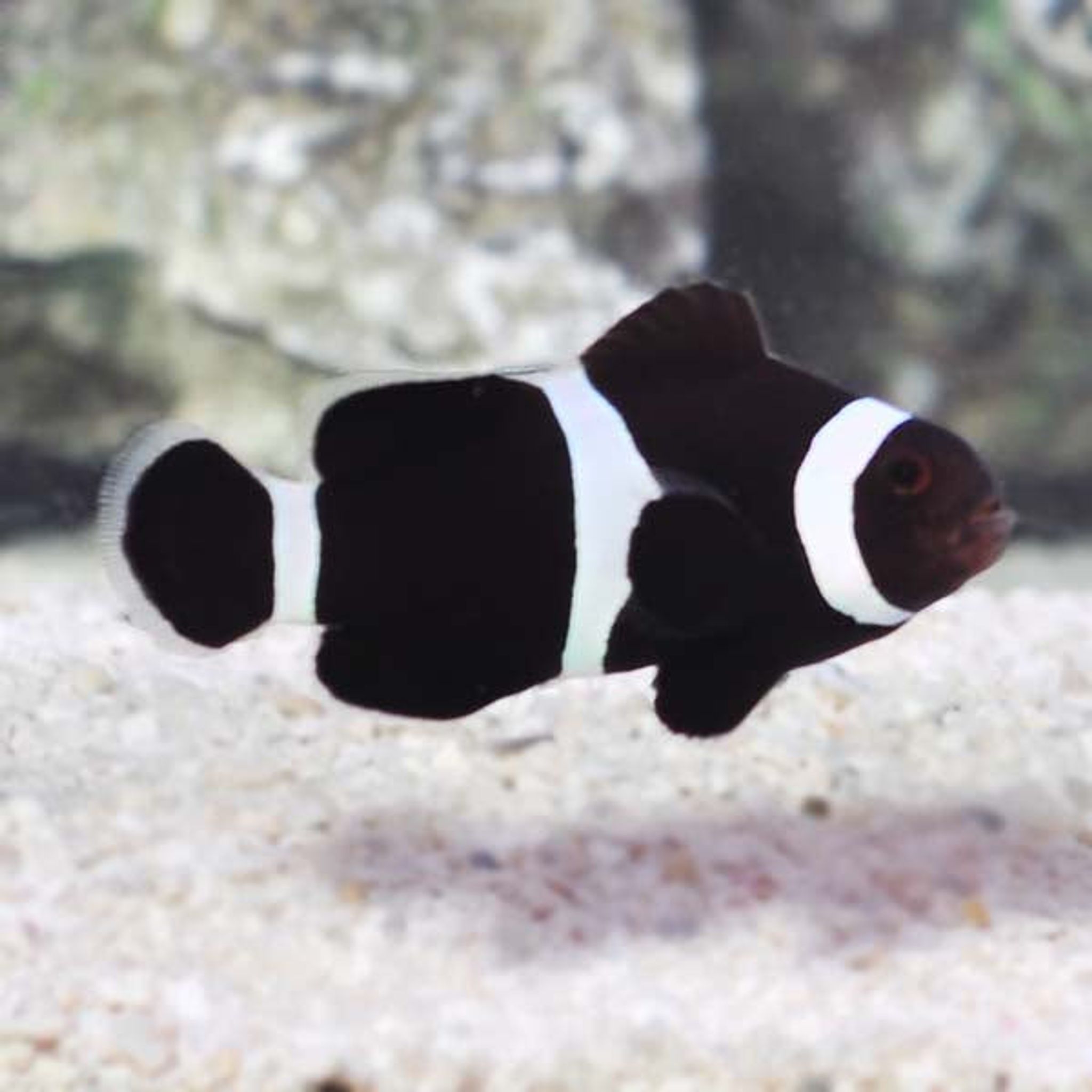
Clownfish were among the first marine fish bred commercially, and most sold in the US today are captive-bred. FishyHub shows very high US supply for clownfish. Their very wide price spread comes from the designer morphs, such as heavily marked and unusual colour lines, that sit alongside standard ocellaris and percula. For a buyer who wants a classic clownfish, the abundance of captive-bred fish keeps prices reasonable.
Corals: aquaculture and fragging
Reef keepers increasingly buy frags, small cuttings grown from a parent colony, rather than wild-collected colonies. Coral farms and hobbyists can grow these in quantity, and FishyHub shows very high US supply for SPS corals, LPS hard corals and polyps. SPS corals sit in the upper mid-range, while LPS hard corals reach the collector tier because rare colour forms carry high prices. As more popular forms are fragged and spread, they typically become more affordable over time.
Goldfish and community fish
Goldfish, tetras, barbs and guppies are bred in very large numbers by US and overseas farms. FishyHub shows very high US supply for all four, and the community fish among them sit in the entry-level tier. These are not getting cheaper in a dramatic way, but they are reliably affordable, with plenty of sellers to compare.
Where Prices Are Least Likely to Fall
Abundant supply is the clearest sign of softening prices, and the opposite is just as useful to know. On FishyHub, these US groups combine high price tiers with limited supply, so buyers should not expect them to get cheaper soon:
- Black arowana
- Datnoids
- Giant halfmoon plakat bettas, where demand clearly outpaces supply
- Jardini arowana
- Rays
- Sharks
How to Find a Better Price in the US
- Compare several sellers. In very high supply groups such as discus, clownfish and tetras, the marketplace gives buyers room to compare.
- Choose standard varieties over designer morphs. In wide-spread groups such as clownfish and plecos, the common forms are much cheaper than rare ones.
- Buy frags, not colonies. For corals, a small frag costs far less and grows into a colony in a healthy reef tank.
- Combine orders to save on shipping. Live fish travel by overnight courier in insulated boxes, so several fish in one box cost less to ship than several separate orders. Shipping costs more to distant areas, especially the Alaska, Hawaii & territories zone.
- Watch the season. Mild spring and fall weather reduces the need for heat or cold packs and lowers the risk of losses, particularly for buyers in the Midwest & Central and West Coast & Mountain West zones, where winter and summer extremes can be harsh.
Methodology
This page is based on FishyHub marketplace activity in the US over the 2026-2027 period. We looked at active US listings, typical listed prices, the spread of prices within each group, and how new listings have changed over time. Findings are reported as tiers and directions (for example "very high supply", "narrow spread", "upper mid-range"), not as figures.
FishyHub does not yet have US price-direction data or US order history, because the US marketplace is new. This page therefore does not say that any fish has fallen in price; it reports where supply and pricing conditions favour buyers. FishyHub does not report state-by-state figures. Comments on captive breeding, coral aquaculture, shipping and seasons come from general hobby knowledge.
Frequently Asked Questions
Which aquarium fish are getting cheaper?
FishyHub does not yet measure US price direction. Its data shows the most choice for buyers in very high supply groups such as clownfish, discus, goldfish, tetras, guppies, barbs, plecos and freshwater shrimp.
Are discus fish cheaper than they used to be?
Discus have become far easier to buy as breeding has spread. FishyHub shows them in the upper mid-range in the US with very high supply and a narrow price spread.
Are captive-bred clownfish cheaper?
Standard captive-bred clownfish are widely available, which keeps them affordable. FishyHub shows very high US supply for clownfish, with designer morphs priced much higher.
Why are corals becoming more affordable?
Many corals are now grown as frags on coral farms and by hobbyists, rather than collected from the wild, which increases supply.
Which fish are unlikely to get cheaper?
Scarce collector fish such as black and jardini arowana, datnoids, rays and sharks, and giant halfmoon plakat bettas, where FishyHub shows demand clearly ahead of supply.
How to Cite This Page
Source: FishyHub, "Which Aquarium Fish Are Getting Cheaper?" (2027), https://fishyhub.com/us/blogs/blog-detail/which-aquarium-fish-are-getting-cheaper


