
What Do Odessa Barb Eat? A Practical Feeding Guide
Odessa barbs (Pethia padamya) are omnivores that eat a mix of high-quality flake or micro-pellet food as a staple, plus regular servings of frozen or live protein like bloodworms and brine shrimp, with occasional blanched vegetables. Getting the ratio right matters more than most owners realize: feeding schedule and food choice directly affect this species' hallmark red coloring, growth, and long-term water quality.
Species Snapshot
Odessa barbs originate from freshwater streams in Myanmar and are a relatively recent addition to the hobby compared to other barbs. A few basics shape how you should feed them:
- Adult size: about 2–2.5 inches (5–6 cm)
- Lifespan: roughly 3–5 years with good care
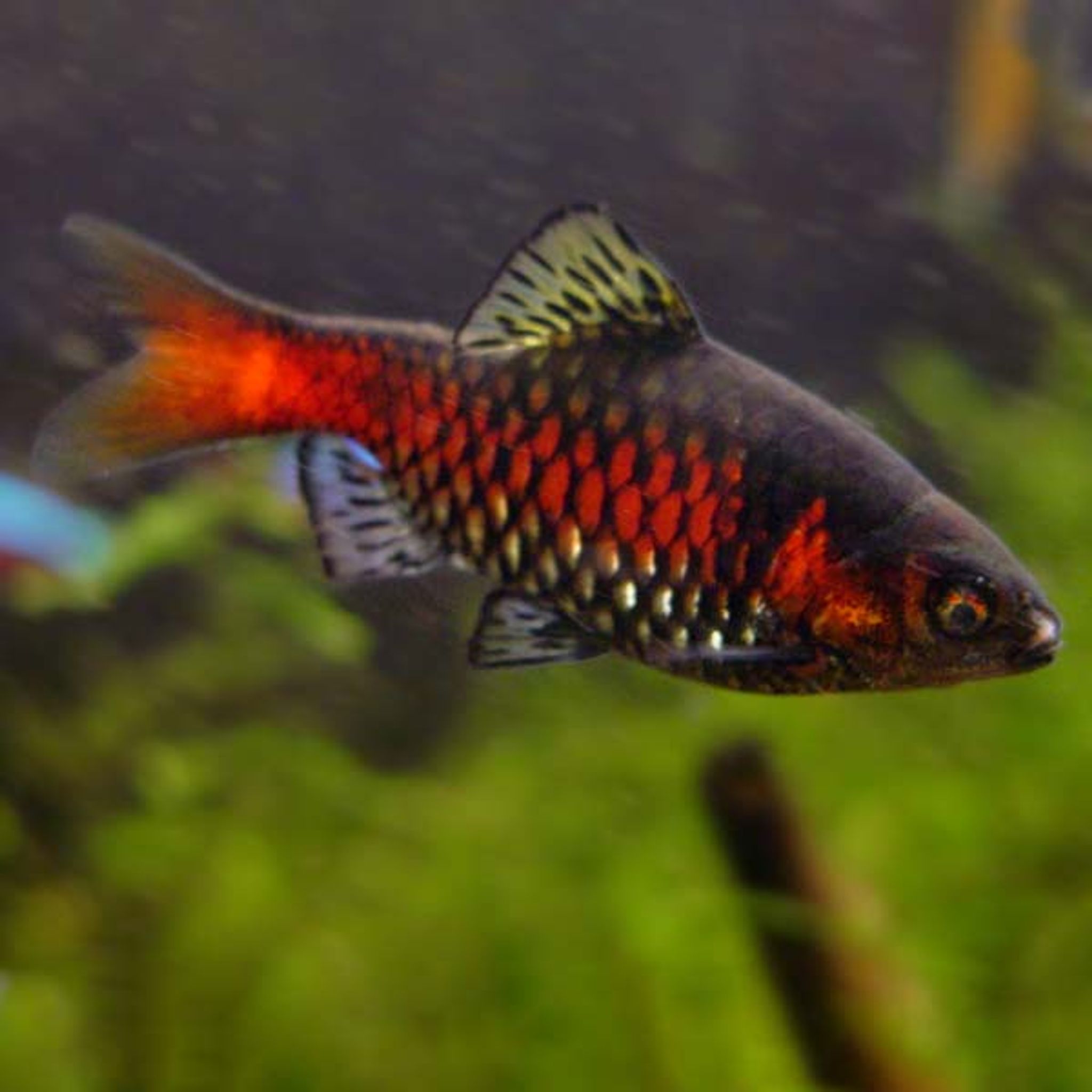
- Sexual dimorphism: males are slimmer with a bold red lateral stripe; females are rounder-bodied and duller in color
That dimorphism is directly relevant to feeding. Males need carotenoid-rich foods to develop and maintain their red stripe, while females need steady protein intake to support egg development if you plan to breed.
What Odessa Barbs Eat in the Wild
In their natural streams, Odessa barbs forage almost constantly on small invertebrates, insect larvae, algae, and soft plant matter. This background explains their eager, opportunistic appetite in captivity — they are not picky, and they will investigate almost anything that drops into the water column. Replicating that varied diet, rather than defaulting to a single flake product, is the foundation of good feeding.
Building a Balanced Diet
Staple Food
The base of the diet should be a high-quality tropical fish flake or micro-pellet that contains both animal protein and plant or algae content — look for formulas that list spirulina or algae meal alongside fish or shrimp meal. This covers day-to-day nutrition and should make up the bulk of weekly feedings. You can browse flake and pellet options, along with other prepared diets, in FishyHub's Food & Supplements category.
Supplemental Protein
Several times a week, add frozen or live:
- Bloodworms
- Brine shrimp (Artemia)
- Daphnia
- Tubifex worms
These foods boost protein intake, support breeding condition, and are a major driver of the species' color intensity. Freeze-dried versions of many of these proteins are a convenient, lower-mess alternative to live cultures and are worth keeping on hand.
Vegetable Matter
Odessa barbs will also pick at occasional blanched zucchini, spinach, cucumber, or lettuce. This isn't a large part of their diet, but it adds fiber and mirrors the plant matter they graze on in the wild. Offer a small piece once or twice a week and remove it after a few hours if uneaten.
The Color-Diet Connection
This is the detail most feeding advice skips, and it's worth understanding well: the red lateral stripe that makes male Odessa barbs distinctive is driven largely by carotenoid pigments obtained through diet, not just genetics. Foods containing spirulina, krill meal, or astaxanthin help males develop and hold deeper red coloring over time.
A flake-only diet, especially one low in these pigments, tends to produce noticeably duller males within a few months. If your males look pale, diet is the first thing to check — see the FAQ below for specifics.
Feeding Schedule and Portions
How Often to Feed
Feed small amounts two to three times a day rather than one large meal. Twice daily is perfectly adequate for most home aquariums; three smaller feedings can support faster growth and better coloring, and are especially useful when conditioning fish for breeding. Either approach works as long as portions stay small.
How Much to Feed
A practical rule of thumb: for a shoal of 6–8 Odessa barbs, offer a pinch of flake or a small pinch of pellets that the group clears in about 2–3 minutes. If food is still visible on the surface or substrate after that window, you're feeding too much. Odessa barbs have hearty appetites and will gorge readily if given the chance, so portion discipline — not the fish's own restraint — is what prevents overfeeding.
| Feeding Aspect | Recommendation |
|---|---|
| Staple food | Flake or micro-pellet with protein + algae content |
| Protein extras | Bloodworms, brine shrimp, daphnia, tubifex — 3–4x/week |
| Vegetables | Blanched zucchini, spinach, cucumber — 1–2x/week |
| Frequency | 2–3 small feedings daily |
| Portion size (shoal of 6–8) | Cleared within 2–3 minutes |
| Color-boosting foods | Spirulina, krill meal, astaxanthin-fortified pellets |
Tank Conditions That Affect Feeding
Feeding success is tied closely to the tank environment. Odessa barbs do best at 70–79°F (21–26°C), pH 6.0–7.0, and moderate hardness around 4–10 dKH, in a tank of at least 20 gallons long (76 L) for a shoal of six — 29–30 gallons or more is preferable since it reduces competition at feeding time. They're active swimmers that prefer moderate-to-fast flow, and in that current, food scatters quickly. Aim pinches of food directly over where the school is actually schooling rather than in one fixed spot, and consider a planted layout with open swimming lanes so the group can move together to feed.
Two environmental factors are easy to overlook:
- Temperature and appetite: at the cooler end of their tolerance range, metabolism and feeding activity slow down. If your tank runs closer to 70°F than 79°F, expect slightly reduced appetite and adjust portions down rather than feeding on a fixed schedule regardless of temperature.
- Planted vs. sparse tanks: in a heavily planted, well-established tank, Odessa barbs graze on algae and biofilm between meals. This natural grazing supplements their diet and often means slightly smaller portions are needed compared to a bare or lightly decorated setup.
Shoaling and Feeding Behavior
Odessa barbs should be kept in groups of at least 5, ideally 6–8 or more. This isn't just a welfare guideline — it directly affects feeding. A shoal that's too small tends to produce skittish, stressed fish that either feed inconsistently or bully one another over food. A properly sized group spreads feeding activity across more individuals, so less-dominant fish still get their share.
Tank Mates and Food Competition
Odessa barbs pair well with other peaceful, similarly sized community fish — tetras, rasboras, corydoras, and other barbs all make suitable tank mates. Avoid slow-moving or long-finned species, which Odessa barbs may nip, and avoid small snails, which they may eat. From a feeding standpoint, fast-moving community fish adapt well alongside them, but slower eaters or dedicated bottom feeders like corydoras may need a separate sinking food offered away from the main feeding zone to make sure they get enough before the barbs clean up.
Breeding and Conditioning
Odessa barbs are egg-scatterers with no parental care, so feeding plays a direct role in spawning success.
Conditioning before breeding: for 1–2 weeks before attempting to spawn, feed breeding stock frequent, protein-rich live or frozen foods to build up condition, using a ratio of more females than males in the group.
Spawning setup: use a separate spawning tank with fine-leaved plants or a mesh/marble layer at the bottom to protect eggs from being eaten, and remove the adults promptly after spawning since they will consume their own eggs given the chance.
Feeding Fry
Fry require a staged approach as they grow:
- First several days after free-swimming: infusoria or a liquid fry food
- Once large enough: newly hatched baby brine shrimp and microworms
- As they continue growing: gradually step up to crushed flake and adult foods
Jumping straight to adult-sized foods too early is a common mistake — fry can choke on particles that are too large or simply fail to eat them, so patience with the progression matters.
New Arrivals and Quarantine Feeding
Odessa barbs are often wild-caught or farmed under variable conditions, and transport stress can suppress appetite for the first several days in a new tank. During quarantine, offer small amounts of highly palatable foods — finely crushed flake or thawed frozen bloodworms tend to work well — and don't panic if intake is light initially. Keep water parameters stable and avoid overfeeding an uneaten tank, since leftover food fouls water quickly in a smaller quarantine setup.
Vacation and Automatic Feeding
For trips of a few days, healthy adult Odessa barbs can typically go without food, since their natural grazing on any algae or biofilm present will tide them over. For longer absences, a small automatic feeder dispensing a pre-measured pinch of flake once or twice daily is a reasonable option — just test the dispensed amount beforehand so it matches the 2–3 minute clearance guideline rather than guessing.
Common Feeding Mistakes to Avoid
| Mistake | Consequence | Fix |
|---|---|---|
| Overfeeding | Ammonia spikes, cloudy water, bloating | Feed only what's cleared in 2–3 minutes; siphon leftovers |
| Flakes only, no protein/color foods | Dull males, nutritional gaps | Rotate in frozen/live foods several times weekly |
| Too small a shoal | Stressed, skittish, uneven feeding | Keep a minimum of 5–6, ideally 8+ |
| Ignoring feeding zones | Food missed by mid-water or bottom fish | Feed in small pinches across the surface; use sinking food for bottom dwellers separately |
| Sudden diet or water changes | Stress, suppressed appetite | Transition foods gradually; keep parameters stable |
| Adult food for fry too soon | Fry choke or fail to eat | Follow the staged fry-food progression |
Health Notes Related to Feeding
Odessa barbs are generally hardy fish, but water quality problems from overfeeding — particularly ammonia buildup from uneaten food — can make them more susceptible to ich and other common freshwater diseases. Consistent portion control is as much a health measure as it is a feeding technique.
Frequently Asked Questions
How often should I feed Odessa barbs?
Feed two to three times daily in small portions that the shoal clears within a few minutes. Twice daily works well for most home aquariums, while three feedings can support faster growth and better coloring.
What is the best staple food for Odessa barbs?
A quality flake or micro-pellet that combines animal protein with plant or algae content is the best everyday staple. Look for spirulina or algae meal on the ingredient list alongside a fish or shrimp protein source.
Do Odessa barbs need live food?
Not strictly — a good staple diet will sustain them. However, occasional live or frozen protein noticeably improves health, breeding condition, and the intensity of male coloring.
Why are my male Odessa barbs pale or not very red?
This is usually a diet issue rather than genetics. Add carotenoid-rich foods like spirulina, krill meal, or astaxanthin-fortified pellets a few times a week to help restore and deepen the red stripe.
Can Odessa barbs eat vegetables?
Yes. Offer occasional blanched zucchini, spinach, cucumber, or lettuce once or twice a week as a treat and fiber source, removing any uneaten portion within a few hours.
How do I feed Odessa barb fry?
Start with infusoria or a liquid fry food for the first several days after the fry are free-swimming, then move to newly hatched baby brine shrimp and microworms once they're large enough, and finally step up to crushed flake as they continue growing.
Do Odessa barbs overeat?
Yes — they have big, eager appetites and will gorge if given the opportunity. Portion control and prompt removal of uneaten food are essential to prevent bloating and water quality issues.
What tank mates compete with Odessa barbs for food?
Fast, similarly sized community fish like tetras, rasboras, and other barbs compete well and generally get their share. Slower eaters or dedicated bottom feeders such as corydoras may need food offered separately so they aren't outcompeted.
Odessa barbs are active, colorful shoalers that reward a bit of feeding attention with brighter males and a healthier tank overall. If you're setting up a shoal or looking to add more schooling companions, you can browse Small Community Fishes and the barb selection on FishyHub to round out your community setup.


