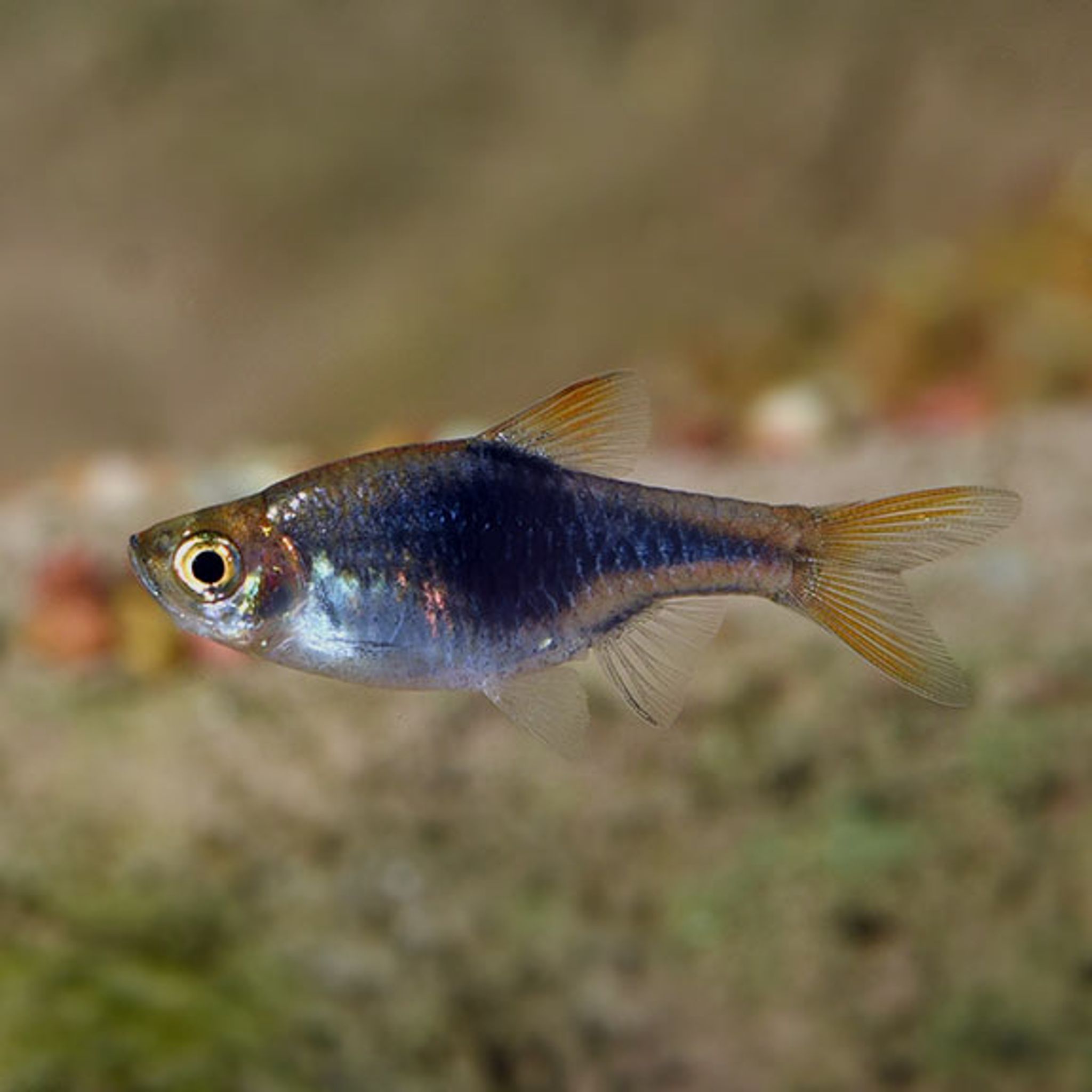

What Do Harlequin Rasbora Eat? A Practical Feeding Guide
Harlequin rasboras (Trigonostigma heteromorpha) are easy keepers, but their tiny mouths make food choice and portion control more important than for most community fish. This guide covers exactly what to feed, how much, how often, and how to avoid the water-quality problems that trip up most new keepers.
Why Mouth Size Matters More Than Food Type
Harlequin rasboras only grow to about 1.5–2 inches (4–5 cm), and their mouths are proportionally even smaller. They're omnivores that lean slightly toward animal protein in the wild, grazing on small invertebrates, insect larvae, algae, and biofilm. In the aquarium, that translates into one core rule: particle size matters more than the label on the container. A premium food is wasted if the shoal physically can't fit it in their mouths.
The Basic Framework: How Fish Diets Break Down
Before getting into specifics, it helps to know the general categories any aquarium diet draws from:
- By diet type: herbivore, carnivore, or omnivore — harlequins fall into the omnivore camp, closer to the carnivore side.
- By format: dry (flake or pellet, floating or sinking), frozen, freeze-dried, live, and fresh greens.
- By fit: matching both the format and the particle size to the species is the actual skill — not just picking a "good" food.
For harlequins, that means small dry foods as a base, supplemented with correctly sized frozen or live protein, with plant matter as an occasional extra rather than a staple.
The Base Diet
A high-quality micro-pellet or flake food formulated for small tropical fish should form the foundation of the diet. Look for:
- Protein around 30–40%, since harlequins are more carnivorous than herbivorous.
- Some plant-based content included in the formula, even if it's not the main ingredient.
- A particle size small enough to be swallowed whole — crush standard flakes between your fingers if needed, and skip pellets sized for medium or large fish entirely.
Relying on one dry food indefinitely tends to produce dull coloration and weaker conditioning over time, so treat the base diet as a foundation, not the whole plan.
Building a Weekly Rotation
Variety is what keeps color, vigor, and breeding condition up. Rather than feeding the same pellet twice a day forever, rotate through several protein sources across the week.
Good protein options sized for a harlequin's mouth:
- Baby brine shrimp (fresh-hatched or frozen)
- Daphnia
- Micro or small bloodworms, chopped if needed
- Cyclops
- Mosquito larvae
- Grindal worms
- Microworms
Plant matter is optional rather than essential — a crumbled algae wafer or a small piece of blanched vegetable now and then is enough; it doesn't need to appear daily.
| Food type | Format | Frequency | Notes |
|---|---|---|---|
| Micro-pellet or flake | Dry | Daily base | Crush if particles look too large |
| Baby brine shrimp | Frozen or live | 2–3x/week | Excellent conditioning food |
| Daphnia | Frozen or live | 1–2x/week | Light, easy to digest |
| Bloodworms (micro/chopped) | Frozen or freeze-dried | 1–2x/week | Rehydrate freeze-dried versions first |
| Grindal or microworms | Live | 1–2x/week | Great pre-breeding boost |
| Algae wafer / blanched veggie | Fresh/dry | Occasional | Optional, not essential |
For frozen and live foods, browse the Freeze Dried Food selection to round out a rotation without committing to home culturing.
How Often and How Much to Feed
Feeding frequency is one area where general advice varies. Some guides say once daily is fine for adult community fish; others recommend twice daily for small, active schooling species. For harlequins specifically, twice daily in small amounts is the better default, since they're constant grazers in the wild — dropping to once a day is acceptable if you're watching water quality closely or traveling often.
- Adults: 1–2 feedings per day.
- Fry and juveniles: 3–4 smaller feedings per day to support faster growth.
Portion size follows one rule: feed only what the entire shoal eats within 2–3 minutes. Err on the side of too little — overfeeding fouls water far faster than underfeeding stresses fish. Because harlequins school and feed as a group, scatter food across a wider area of the surface and water column rather than dropping it in one spot, so slower or more timid fish get a fair share instead of being crowded out by bolder ones.
A Weekly Fast Is a Good Habit, Not a Warning Sign
Skipping food one day a week is widely recommended for community fish, and harlequins are no exception. It gives their digestive system a break and encourages natural grazing on biofilm and infusoria that develop on plants and hardscape in a planted tank — which harlequins do anyway between feedings. A planted tank with some maturity supports this grazing well, so a fasting day rarely means an empty stomach.
Handling Frozen and Freeze-Dried Foods Correctly
Two habits prevent most water-quality complaints tied to frozen and freeze-dried foods:
- Thaw frozen food first. Drop the cube or portion into a small cup of tank water for a minute or two before adding it to the tank. Adding it frozen can cause localized temperature shock and tends to create a messy cloud that's harder to control.
- Rehydrate freeze-dried food briefly. Freeze-dried tubifex, bloodworm, or mysis expands after being eaten dry, which can contribute to bloat or constipation. A quick soak in tank water before feeding reduces that risk.
Removing Leftovers: Why the "24-Hour Rule" Doesn't Apply Here
General fishkeeping advice sometimes says uneaten food can sit for up to 24 hours before it becomes a real problem. That guidance is built around larger tanks with more water volume to dilute waste. Harlequin rasboras are typically kept in smaller planted community tanks, where the same amount of leftover food represents a much bigger share of the total water volume.
For a rasbora-scale setup, remove uneaten food within 30–60 minutes rather than waiting. Smaller water volumes swing toward ammonia spikes much faster, and a shoaling fish tank with several dozen mouths can generate more waste per gallon than the fish count alone suggests.
Water Conditions That Affect Appetite
Feeding behavior and water quality are linked both ways: overfeeding degrades water, and poor water suppresses appetite. Harlequins do best with:
- pH: roughly 6.0–7.5, on the soft and slightly acidic side
- Temperature: 73–82°F (23–28°C)
A stressed fish in poor water often eats poorly or hides at feeding time, which can look like a feeding problem when it's really a water-quality one.
Feeding for Breeding Conditioning
Live foods aren't just a treat — they play a specific role in breeding prep. Offering daphnia, grindal worms, and brine shrimp for 1–2 weeks before a planned spawning attempt tends to improve egg yield and fry vigor. This is a detail most general feeding guides skip entirely, but it's directly useful for anyone hoping to breed their shoal rather than just maintain it.
Culturing Live Food at Home vs. Buying It
Culturing your own live food gives the freshest, most nutritionally complete protein, but it takes ongoing attention. The practical approach is to treat culturing as optional: buy frozen or live food from a store for convenience, and culture at home only if you're a dedicated hobbyist or breeder who wants a steady, free supply.
Culturing Grindal Worms (The Easy Option)
Grindal worms are one of the more approachable live-food cultures for a harlequin keeper:
- Use a soil-free setup: moist substrate like coco fiber or plain foam in a small, shallow container.
- Feed a small amount of oatmeal or a fish food paste every few days.
- Keep the culture around 70–75°F.
- Harvest by picking worms off the surface of the substrate — they cluster there when food is added, making collection simple.
This is a good ongoing protein source, and it's especially useful in the 1–2 weeks before a breeding attempt.
Culturing Bloodworms (The Hard Option)
Live bloodworm culturing is worth knowing about mainly so you know why most people skip it:
- It requires organic decaying matter in water to feed the larvae.
- The larval stage lasts roughly 2–7 weeks before pupating.
- Adult midges emerge within about a month from the start of the cycle but live only 3–5 days, and must be enclosed so they lay eggs back into the water rather than flying off.
- Harvesting is easiest at night, when adults are most active.
Given the multi-week cycle and short adult lifespan, most hobbyists find that buying frozen or live bloodworms is far more practical than maintaining a culture at home.
Raising Fry: A Feeding Progression
If you're attempting to raise harlequin rasbora fry, feeding needs to scale down further than anything covered above. Fry mouths are far smaller than adult mouths, so the food has to shrink accordingly:
- Infusoria (free-swimming microorganisms) for the first several days after the fry become free-swimming.
- Microworms or vinegar eels once fry are large enough to take slightly bigger particles.
- Baby brine shrimp (nauplii) as fry continue to grow, providing a protein boost that speeds development toward juvenile size.
Fry should be fed 3–4 small meals a day throughout this progression, since their growth rate depends heavily on consistent, appropriately sized food.
Common Feeding Mistakes and How to Fix Them
| Mistake | What happens | Fix |
|---|---|---|
| Overfeeding | Cloudy water, algae blooms, ammonia spikes | Feed smaller amounts; remove leftovers promptly |
| Food particles too large | Fish can't eat it; it fouls the tank | Crush pellets or switch to a micro-pellet |
| Dry food only, long-term | Dull color, poor conditioning | Add frozen or live protein weekly |
| Frozen food added unthawed | Localized ammonia spikes, temperature shock | Thaw in a cup of tank water first |
| Shy or new fish not eating | Fish hide, skip meals | Dim lights, offer live/frozen food, feed at a consistent time and spot |
| Bloated or constipated fish | Sluggish, swollen fish | Offer blanched, skinned, mashed peas or fast for a day |
| Too small a shoal | Bullying and uneven feeding | Keep groups of 8–10+ and spread food over a wider area |
Because harlequins are shoaling fish, group size and feeding success are connected — a shoal that's too small tends to develop a pecking order that leaves some fish underfed even when total food amounts look correct. If you're building out or expanding a group, harlequin rasboras and similar small schooling species can be found under Small Community Fishes.
Frequently Asked Questions
How often should I feed harlequin rasboras?
Once or twice daily is standard for adults, feeding only what the shoal finishes within a couple of minutes. Twice daily in small amounts suits their active grazing habits best, though once daily is fine if you're monitoring water quality closely.
What is the best staple food for harlequin rasboras?
A quality small or micro pellet or flake formulated for small tropical fish, sized so it can be swallowed whole. Look for roughly 30–40% protein with some plant content included.
Can harlequin rasboras eat brine shrimp?
Yes — baby or adult brine shrimp, fresh or frozen, is an excellent supplemental protein and a good conditioning food before breeding attempts.
Do harlequin rasboras need vegetables?
Not essential. Harlequins lean more carnivorous than herbivorous, but an occasional crumbled algae wafer or bit of blanched vegetable can round out the diet.
How long can harlequin rasboras go without food?
Healthy adults tolerate a few days to about a week without harm, which is useful for short trips. A regular weekly fasting day is a maintenance practice for digestive health, not a survival tactic.
Should I feed live or frozen food to harlequin rasboras?
Both work well as supplements to a staple dry food. Frozen is generally more convenient and lower-risk, since it avoids the parasites or disease vectors sometimes carried by wild-collected live food.
Why are my harlequin rasboras not eating?
Check water parameters first, since stressed fish in poor water often eat poorly. Then consider whether the food particles are too large, the fish are still settling in after transport, or tank conditions are otherwise stressing the shoal.
Can I overfeed harlequin rasboras?
Yes, and it's the most common feeding mistake in these small schooling setups. Excess food breaks down quickly in the smaller water volumes typical of harlequin tanks, driving cloudy water, algae blooms, and ammonia spikes.
Once you've settled on a feeding rotation, you can browse a full range of small-mouth-friendly foods and supplements under Food & Supplements to keep your harlequin shoal well-conditioned year-round.


