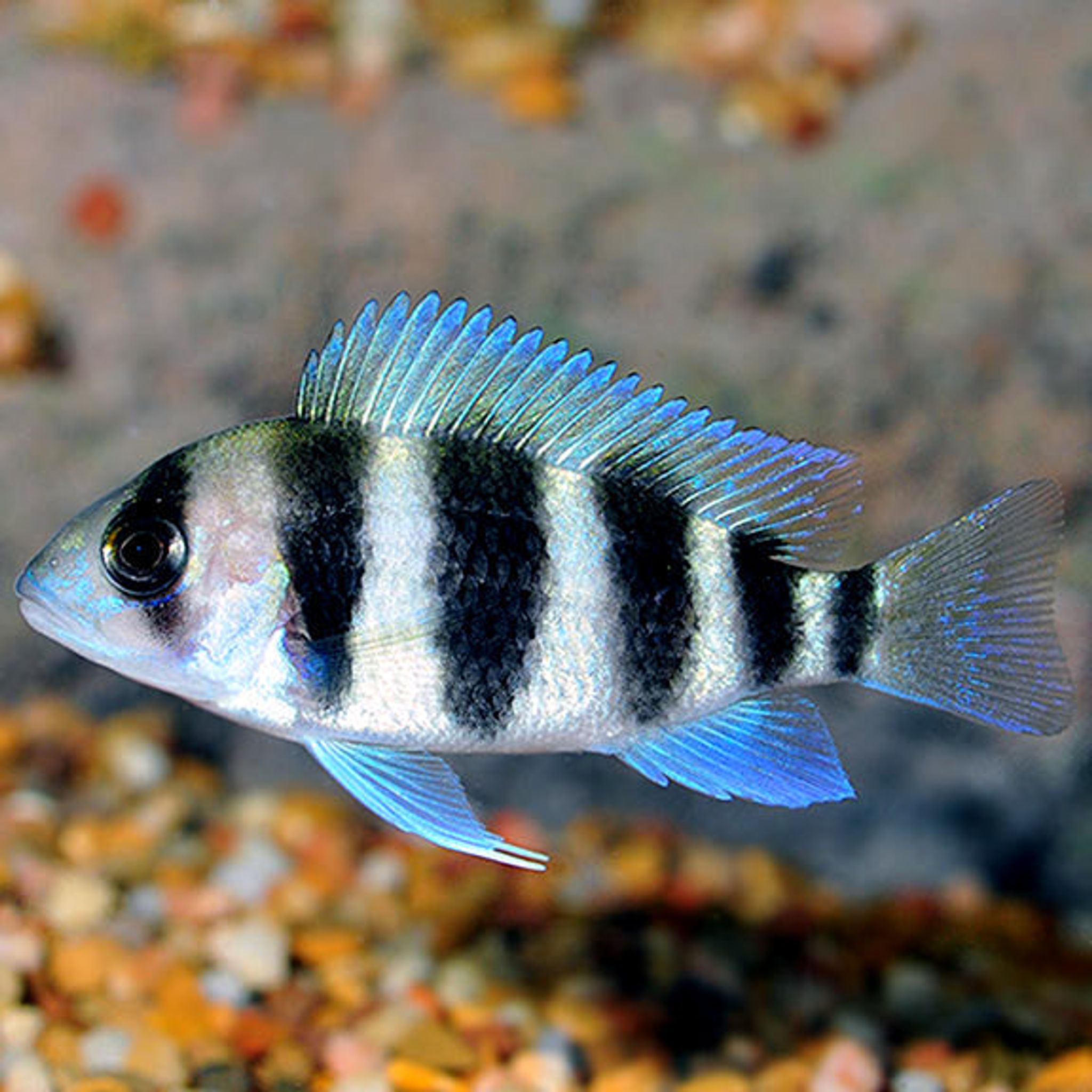
What Do Frontosa Eat? A Practical Feeding Guide
Frontosa (Cyphotilapia frontosa) are large, slow-growing Lake Tanganyika cichlids that eat very differently from the fast, aggressive African cichlids many keepers come from. This guide gives a concrete what/how much/how often feeding plan, plus the digestive risks tied to overfeeding or the wrong protein level.
What Frontosa Eat in the Wild
In Lake Tanganyika, Frontosa are predominantly carnivorous and piscivorous. They patrol deep, rocky habitat picking off:
- Small fish and fish fry
- Shrimp and other crustaceans
- Insect larvae and invertebrates
They're also opportunistic feeders and will incidentally take in some biofilm or algae while foraging over rock, but meaty prey makes up the bulk of a wild diet. This matters in the aquarium because a Frontosa's gut is built to process moderate-to-high protein animal matter — not the algae-heavy diet of a Mbuna or the mostly herbivorous diet of some other Tanganyikans.
The Right Protein Target for Captive Frontosa
The biggest mistake new keepers make is applying generic "African cichlid" feeding advice to Frontosa. Some general cichlid-feeding guidance pushes high-protein carnivore formulas across the board, while species-specific Tanganyikan guidance (often built around Tropheus) warns against excess protein and fat causing bloat. Frontosa sit in the middle.
Recommended target: roughly 35-45% crude protein, with moderate fat. That's high enough to satisfy a carnivore-leaning fish but well short of the ultra-high-protein formulas made for pure carnivores (some trout- or salmon-heavy foods). Feeding those exclusively, long-term, can stress the liver and contribute to bloat-type illness.
Staple: a high-quality sinking cichlid pellet or flake formulated for carnivorous/omnivorous African cichlids. You can browse cichlid-appropriate stock and supplies in FishyHub's African Cichlids category.
Building a Feeding Rotation
A single food fed forever creates nutritional gaps. Rotate a staple pellet with meaty and vegetable foods.
Good Supplemental Foods
- Frozen or live mysis shrimp
- Adult brine shrimp (not just the baby/nauplii size)
- Krill
- Bloodworms — occasional treat only, not a staple, due to fat content
- Chopped earthworms
- Other meaty foods sized for their large mouths
Foods to Avoid
- Beef heart and other mammal-based meats — poorly digested by cichlids and linked to fatty liver and digestive disease
- Pure high-fat carnivore formulas fed exclusively (fine as an occasional component, not the whole diet)
Vegetable Matter, in Moderation
Frontosa need less plant matter than herbivore-leaning Tanganyikans, but not zero. A few times a week, offer:
- Spirulina flakes or pellets
- Blanched spinach
- Peas
- Algae wafers
This supports gut health and mimics the incidental algae grazing they do in the wild.
Pellet Size and Feeding Zone
Frontosa reach 8-14+ inches (20-35 cm) as adults and are mid-to-bottom feeders — they prefer to pick food off the water column near rockwork rather than surface-feed. Use large or "cichlid" sized sinking pellets for adults rather than standard flakes. Both flakes and pellets are nutritionally workable, but sinking pellets sized to their mouth suit their feeding style far better than floating food.
How Often and How Much to Feed
Frontosa are slow, deliberate eaters — feeding sessions genuinely take longer than with a tank of fast-moving Mbuna. Don't rush them or dump in excess food to compensate.
| Life stage | Frequency | Portion / food type |
|---|---|---|
| Fry | 3+ small feedings/day | Micro-pellets, baby brine shrimp |
| Juvenile | 2-3 feedings/day | Finely crushed pellets, small meaty foods |
| Adult | 1-2 feedings/day | Sinking cichlid pellets, eaten within 2-3 minutes |
The 2-3 minute rule: only feed what adults can finish within about 2-3 minutes. Leftover food fouls water and drives the ammonia and nitrate spikes that are the top cause of poor water quality and disease in a cichlid tank.
Juveniles and fry can eat more frequently because their notoriously slow growth rate benefits from more, smaller meals — but portions should increase gradually as they mature rather than jumping straight to adult amounts.
Feeding Fish: General Principles That Apply Here
- Match food to feeding zone. Frontosa feed mid-to-bottom, so sinking foods beat floating flakes.
- Portion control beats frequency. Small, fully-eaten meals are better than large ones with leftovers.
- Overfeeding is the top cause of water-quality problems in a cichlid tank, not underfeeding.
Fasting and Water Quality
Fasting one day per week is commonly recommended for large cichlids like Frontosa to let digestion catch up and reduce bloat risk. It's a normal, healthy part of a feeding schedule, not a sign of neglect.
Frontosa are also sensitive to nitrate buildup and declining water quality, and overfeeding is one of the fastest ways to get there. Feeding and water quality are directly linked: excess food and waste drive the ammonia and nitrate spikes that stress this species, so a disciplined feeding routine is also a water-quality strategy.
Feeding Behavior: Lighting and Placement Matter
Frontosa prefer dim lighting and a slow, gentle presentation of food. Dropping food near their preferred rock caves — rather than broadcasting it across a brightly lit tank — encourages natural feeding behavior and reduces stress-related refusal to eat. If a Frontosa seems reluctant to feed, check the lighting and delivery method before assuming something is wrong.
Feeding in Mixed Tanks: Slow Eaters vs. Fast Tankmates
Because Frontosa eat slowly and deliberately, fast or aggressive tankmates — many Mbuna, for example — can out-compete them for food entirely. If Frontosa share a tank with quicker feeders:
- Favor calmer Tanganyikan tankmates where possible
- Use spot-feeding: drop food directly near Frontosa's territory
- Feed at multiple points in the tank so faster fish don't monopolize a single feeding spot
Five Traits of a High-Quality Cichlid Food
When comparing pellets and flakes, "high quality" has specific, checkable meaning:
- Named-protein-first ingredients — fish meal, krill, or shrimp listed at the top, not vague "meat meal" or fillers
- Minimal fillers and binders — less wheat/corn-heavy bulking
- Appropriate pellet size for the fish's mouth (large/cichlid-sized for adult Frontosa)
- Correct sinking rate — sinks steadily rather than floating or dropping instantly
- Part of a rotation — a staple pellet plus frozen meaty foods plus occasional vegetable matter, rather than one food used forever
FishyHub stocks a range of prepared and freeze-dried options in Food & Supplements, including options in Freeze Dried Food that work well as part of a rotation.
How Frontosa Compare to Other Tanganyikans
Not every Tanganyikan cichlid eats like a Frontosa, which matters if you're stocking a mixed Rift Lake tank.
- Leleupi cichlid (Neolamprologus leleupi): smaller and even more strictly carnivorous than Frontosa, preferring small, high-protein meaty foods. It's a useful example that protein needs vary even within Lake Tanganyika, and a compatible tankmate note for Frontosa keepers.
- Yellow belly (Msobo/Petrochromis-type) cichlids: lean far more herbivorous, grazing algae in the wild. They need more spirulina and vegetable content plus smaller, more frequent feedings — the opposite emphasis from Frontosa.
- Tropheus: the classic cautionary example for bloat disease driven by high-protein, high-fat diets. Frontosa tolerate more protein than Tropheus, but the same core principle — avoid excess fat and avoid overfeeding — still applies to both.
Feeding a Mixed Frontosa + Tropheus Tank
If you keep Frontosa alongside Tropheus, feed compromises are necessary: default to the lower-protein, vegetable-forward diet Tropheus requires, and supplement Frontosa separately with occasional meatier feedings (spot-fed away from the Tropheus) so Frontosa still get adequate protein without pushing Tropheus toward bloat.
A Simple Weekly Rotation Template
| Day | Food |
|---|---|
| Mon | Staple sinking pellet |
| Tue | Frozen mysis or brine shrimp |
| Wed | Staple sinking pellet |
| Thu | Spirulina pellet or blanched spinach |
| Fri | Frozen krill or chopped earthworm |
| Sat | Staple sinking pellet |
| Sun | Fast day (no feeding) |
Adjust portions up gradually as juveniles grow, and swap in bloodworms occasionally in place of another meaty feeding — not as a daily food.
Common Feeding Mistakes to Avoid
- Overfeeding or dumping too much at once — uneaten food fouls water and raises bloat risk. Use the 2-3 minute rule and a weekly fast day.
- Feeding one food type long-term — creates nutritional gaps; rotate pellets, frozen meaty foods, and greens.
- Feeding high-fat land-animal protein (beef heart, etc.) — avoid entirely.
- Ignoring slow eating behavior — rushing feedings or pulling food too soon can effectively starve Frontosa in a mixed tank; fix with spot-feeding or multiple feeding locations.
- Feeding fry the same pellet size as adults — causes choking or refusal; use crushed or micro-pellets sized to their mouths.
- Not increasing portions as fish grow — because growth is slow, portions should scale up gradually rather than jumping straight to adult amounts.
- Mistaking water-quality stress for a feeding problem — appetite loss or lethargy is sometimes ammonia or nitrate stress rather than the food itself. Check parameters before changing the diet.
Frequently Asked Questions
How often should I feed my Frontosa?
Adults do best with one to two feedings a day, in small portions eaten within a few minutes. Juveniles can eat slightly more often — two to three smaller feedings daily.
What is the best staple food for Frontosa?
A quality sinking cichlid pellet or flake with named fish, krill, or shrimp protein sources listed first, at roughly 35-45% crude protein. Rotate it with frozen meaty foods and occasional vegetable matter.
Can Frontosa eat flakes or do they need pellets?
Both are nutritionally workable, but sinking pellets sized for their mouth suit their mid-to-bottom feeding style better than floating flakes, which they have to work harder to reach.
Do Frontosa need vegetables in their diet?
Yes, though in smaller amounts than more herbivorous Tanganyikans need. Spirulina, blanched spinach, or peas a couple of times a week support digestion and gut health.
Why is my Frontosa not eating or eating slowly?
Slow, deliberate eating is normal for this species. Before assuming illness, rule out poor water quality, new-tank stress, dim lighting issues, or being out-competed by faster tankmates.
Can I feed Frontosa the same food as Mbuna or Tropheus?
Not exclusively. Frontosa tolerate more protein than the more herbivorous Mbuna or Tropheus, so in a mixed tank favor the lower-protein staple those species need and supplement Frontosa separately with meatier foods.
What causes bloat in Tanganyikan cichlids and how does diet play a role?
Overfeeding, high-fat or high-protein diets fed to species that need more vegetable matter, and poor water quality are the main contributors. Moderate feeding, an appropriate protein level, and a weekly fast day all reduce the risk.
How much should I feed baby or juvenile Frontosa?
Small, frequent feedings — two to three times a day — of finely crushed food or micro-pellets. Gradually increase portion size and reduce frequency as they mature toward adult size.
If you're setting up or stocking a Tanganyikan cichlid tank, browse compatible species and feeding supplies in FishyHub's African Cichlids category.


