
What Do Firemouth Cichlid Eat? A Practical Feeding Guide
Firemouth cichlids (Thorichthys meeki) are omnivores that need a pellet-based staple diet, regular protein-rich supplements, and occasional plant matter to grow well and hold their signature throat color. This guide covers exactly what to feed, how much, how often, and the mistakes that quietly cause water-quality problems and dull, undersized fish.
What Firemouths Eat in the Wild
In their natural habitat, firemouths sift through sand and fine gravel looking for crustaceans, small invertebrates, and insect larvae, while also grazing on algae, plant material, and organic detritus. Their digestive tract is built to process both animal and plant matter, which is why a captive diet limited to one or the other tends to fall short. This natural sifting behavior also explains why firemouths are semi-bottom-oriented feeders and respond well to sinking foods.
The Staple Diet: Pellets vs. Flakes
A high-quality sinking or slow-sinking cichlid pellet should form the base of every meal for adult firemouths, since it matches their bottom-feeding habits and keeps food from dissolving in the water column before they can eat it. Juveniles with smaller mouths generally do better on flakes or crumbled pellets until they're large enough to handle full-size pellets.
When choosing a staple, check the ingredient list rather than the marketing:
- Look for fish meal, krill, herring, or sardine meal as the first ingredients — these are aquatic-protein-forward formulas that firemouths digest efficiently.
- Be cautious of formulas relying heavily on terrestrial proteins like beef heart as a primary ingredient; these digest poorly in cichlids and can contribute to bloating and fatty deposits over time.
- Buy small quantities and store the container away from light and heat. Pellets and flakes lose vitamin potency as they age, and a bag that sits open for a year is delivering less nutrition than the label promises, even if the fish still eat it.
You can browse sinking and slow-sinking cichlid formulas in FishyHub's Food & Supplements category.
Protein Supplements: 2-4 Times a Week
Meaty, protein-dense foods round out the staple diet and support growth, muscle tone, and breeding condition. Good rotating options include:
- Frozen or live brine shrimp
- Bloodworms
- Daphnia
- Blackworms
- Mosquito larvae
- Tubifex
- Chopped earthworms
Rotate two or three of these per week rather than relying on just one. Variety closes nutritional gaps that a single protein source can't cover, and it keeps feeding time stimulating for an active, food-motivated fish. Frozen and freeze-dried options are a practical way to keep several proteins on hand without the upkeep of live cultures — worth checking FishyHub's Freeze Dried Food selection for that purpose.
Plant Matter and Vegetables
Because firemouths naturally graze on algae and detritus, plant matter isn't optional garnish — it's part of a balanced omnivore diet and helps maintain their coloration. Spirulina-based flakes or pellets are the easiest way to add this consistently, since they can simply be worked into the regular rotation alongside protein foods.
Occasional blanched vegetables are a useful treat:
- Spinach
- Zucchini
- Cucumber
- Lettuce
Blanch briefly to soften the texture, then remove any uneaten pieces within a few hours so they don't decompose in the tank.
How Often to Feed
| Life stage | Feeding frequency | Notes |
|---|---|---|
| Adults (maintenance) | Once daily | Good default for a stable, non-breeding tank |
| Adults (growth or breeding conditioning) | Twice daily, smaller meals | Splitting the daily ration supports color and condition |
| Adults (minimum acceptable) | Every other day (3-4x/week) | Fine occasionally, not ideal long-term for muscle tone or color |
| Juveniles | 2-3 times daily | Faster metabolism and smaller stomachs need more frequent, smaller meals |
| Fry (newly free-swimming) | Several small feedings daily | See fry feeding section below |
Sources disagree on the "right" frequency for adults — some recommend twice daily, others say every other day is adequate if the portion is correct. Twice-daily feeding isn't necessary for a stable adult that isn't breeding or growing; once daily as a baseline, with an occasional skipped day, works well for most home setups. A useful cichlid-keeping habit that's often left out of firemouth-specific advice is a weekly fasting day — skipping food one day per week gives the digestive tract a break and is standard practice for many cichlid keepers, not a sign of neglect.
Portion Size: A Practical Rule
Because firemouths are enthusiastic, food-motivated eaters that rarely refuse a meal, their behavior is not a reliable guide to how much they need. A firemouth will beg for more food whether it's hungry or already full, so measured portions matter more than watching for interest.
Use these two rules together:
- Time-based: Feed only what the fish can fully clear in about 2 minutes. Add food in small pinches rather than dumping a fixed amount, and stop as soon as interest clearly drops.
- Size-based: As a simple numeric starting point, offer roughly 2-3 pellets per inch of body length per feeding, adjusting up or down based on how quickly it disappears. This scales naturally as a fish grows from a 2-inch juvenile toward its adult length of about 5-6.5 inches (13-16 cm), rather than feeding the same flat pinch regardless of size.
If you're unsure, err toward less. It's far easier to add a few more pellets than to remove excess food that's already sinking into the substrate.
Soaking Dry Food to Reduce Bloat
Deep-bodied cichlids like firemouths are prone to bloat when fed dry pellets straight from the container, since the pellets can expand somewhat after swallowing. Briefly soaking pellets in a small cup of tank water for a minute or two before feeding lets them rehydrate first, which is a simple step that reduces this risk without changing anything else about the diet.
Feeding Fry and Juveniles
Firemouth fry typically become free-swimming and start independent feeding within a few days of hatching. At that point:
- Start with live, newly-hatched brine shrimp nauplii or a fine commercial fry powder.
- Feed small amounts several times a day — fry have tiny stomachs and burn through energy quickly.
- As they grow, step up to crushed flake and then small pellets.
Breeders often use a separate rearing tank for fry so feeding can be controlled precisely without competition from adults or other tankmates, and so uneaten fry food doesn't foul the main display tank.
Water Parameters That Affect Appetite
Digestion and appetite are closely tied to stable water conditions. Firemouths do best at:
- Temperature: 70-82°F (21-28°C)
- pH: 6.5-8.0
Fish under stress from swings in these parameters, or from poor water quality generally, often eat less even when food is available. Stable conditions reduce the chance of stress-related appetite loss and feeding-linked disease.
Tank Mates and Predation
One thing that's easy to overlook when planning a firemouth's diet is that its predatory instinct doesn't switch off in captivity. Firemouths will eat small fish, shrimp, and snails that fit in their mouth — this is diet-driven behavior, not simply aggression. Avoid pairing them with:
- Small tetras or rasboras
- Ornamental shrimp
- Small snails
Instead, choose tankmates of similar size that aren't fin-nippers. If you're stocking a firemouth tank, browsing appropriately-sized options in Angelfish, Discus, Rams & Cichlids is a safer starting point than mixing in small community fish.
Water Quality Maintenance Around Feeding
Firemouths are semi-messy omnivores, and their feeding habits directly affect water quality:
- Siphon uneaten food during routine water changes, especially from corners and under decor.
- Keep filtration sized for a cichlid that eats a varied, protein-inclusive diet, not just a light community-tank load.
- Watch ammonia and nitrite closely for the first few days after introducing a new food, since some fish take time to adjust and leave more uneaten.
A bottom-dwelling tankmate such as a pleco or corydoras can help clean up occasional scraps, but this is a supplement to good portion control, not a substitute for it — leftover food still needs to be physically removed.
Sand vs. Gravel Substrate
Because firemouths naturally sift substrate for food, the substrate type changes how feeding plays out day to day. Fine sand lets them sift effectively and makes it easier to spot uneaten food sitting on the surface. Coarser gravel, by contrast, can trap small food particles between grains where they're harder to see and siphon out, so gravel-bottomed tanks warrant a closer look during water changes.
Diet and Color
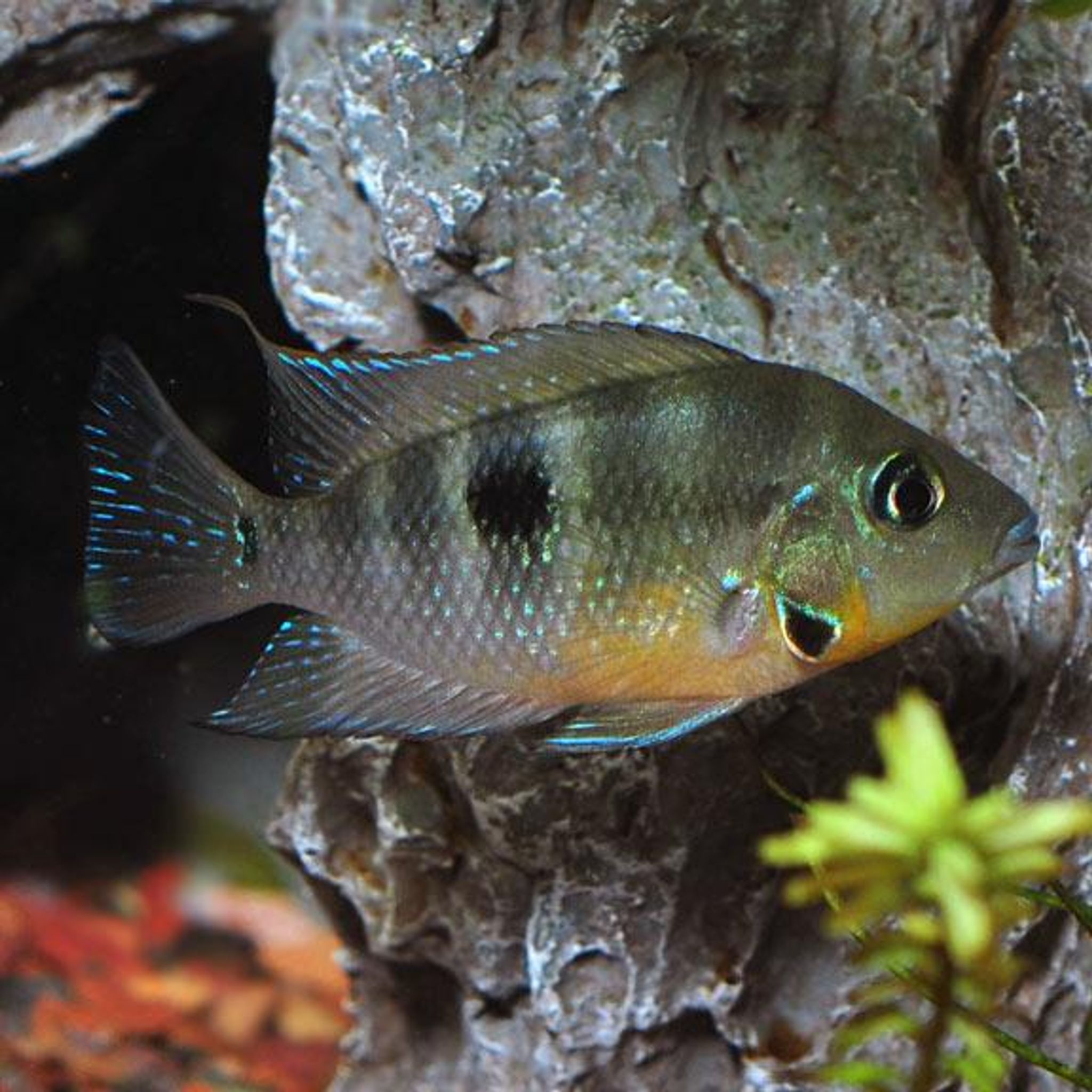
Firemouths are named for the vivid red-orange coloring on their throat and lower body, and this coloration is directly influenced by diet. Consistent protein intake combined with carotenoid-containing foods — shrimp and spirulina in particular — helps maintain and intensify this color, which is typically most vibrant when a fish is in breeding condition. A diet of flakes or pellets alone, with no variety, is one of the most common reasons a firemouth's color looks duller than it should.
Common Feeding Mistakes to Avoid
- Overfeeding because the fish is "always hungry." Firemouths beg regardless of how full they are — stick to timed, size-based portions rather than feeding until interest stops entirely.
- Feeding only flakes or pellets long-term. No protein or plant variety leads to dull color, slower growth, and potential nutritional deficiency over time.
- Ignoring the difference between juvenile and adult needs. Adult-size portions fed to fast-growing juveniles can stunt growth; juvenile frequency fed to full-grown adults contributes to obesity and water-quality strain.
- Leaving uneaten food in the tank. Pellets and flakes that sink into substrate decay unnoticed, spiking ammonia and increasing the risk of fin or gill irritation.
- Assuming refusal to eat is about the food. A firemouth that suddenly stops eating is more often responding to stress — a new tank, tankmate aggression, or poor water parameters — than rejecting a particular food. Check temperature, pH, and ammonia before changing the diet.
- Being surprised when shrimp or small fish disappear. This is predatory feeding behavior tied to natural instinct, not a sign of an unusually aggressive individual.
Frequently Asked Questions
How often should I feed my firemouth cichlid?
Once or twice daily for adults, in portions they fully consume within about 2 minutes. Juveniles and fry need more frequent feeding, typically 2-3 times a day, because of their faster metabolism and smaller stomachs.
What is the best staple food for firemouth cichlids?
A high-quality sinking or slow-sinking cichlid pellet (or flake for smaller fish) with fish-based protein like fish meal, krill, or herring listed as a primary ingredient. This should form the base of most meals, supplemented with protein and plant variety.
Can firemouth cichlids eat vegetables?
Yes. Spirulina-based flakes or pellets work well as a regular part of the diet, and blanched spinach, zucchini, cucumber, or lettuce make good occasional treats. This reflects their natural omnivorous, algae-and-detritus-grazing habits.
Do firemouth cichlids eat other fish?
They can and will eat fish, shrimp, or snails small enough to fit in their mouth, since this predatory instinct persists in captivity. Avoid housing them with small tetras, rasboras, ornamental shrimp, or small snails.
How do I feed firemouth cichlid fry?
Start with live, newly-hatched brine shrimp nauplii or a fine fry powder, offered in small amounts several times a day. As fry grow, gradually switch to crushed flake and then small pellets.
Why is my firemouth cichlid not eating?
Usually stress or water-quality related rather than a problem with the food itself. Check temperature (70-82°F / 21-28°C), pH (6.5-8.0), and ammonia/nitrite levels before assuming the diet needs to change.
How much should I feed at each meal?
Only what the fish can fully consume within about 1-2 minutes, added in small pinches rather than one large scoop. As a rough numeric guide, 2-3 pellets per inch of body length per feeding is a reasonable starting point to adjust from.
Does diet affect firemouth cichlid color?
Yes. Consistent protein intake along with carotenoid-rich foods such as shrimp and spirulina supports the vivid red-orange throat coloration firemouths are known for, which tends to be most vibrant when a fish is in breeding condition.
Getting the staple-plus-supplement balance right is most of what separates a firemouth with strong color and steady growth from one that just gets by. If you're setting up or restocking a cichlid tank, FishyHub's Angelfish, Discus, Rams & Cichlids category is a good place to browse compatible fish and plan your feeding routine around the whole tank.


