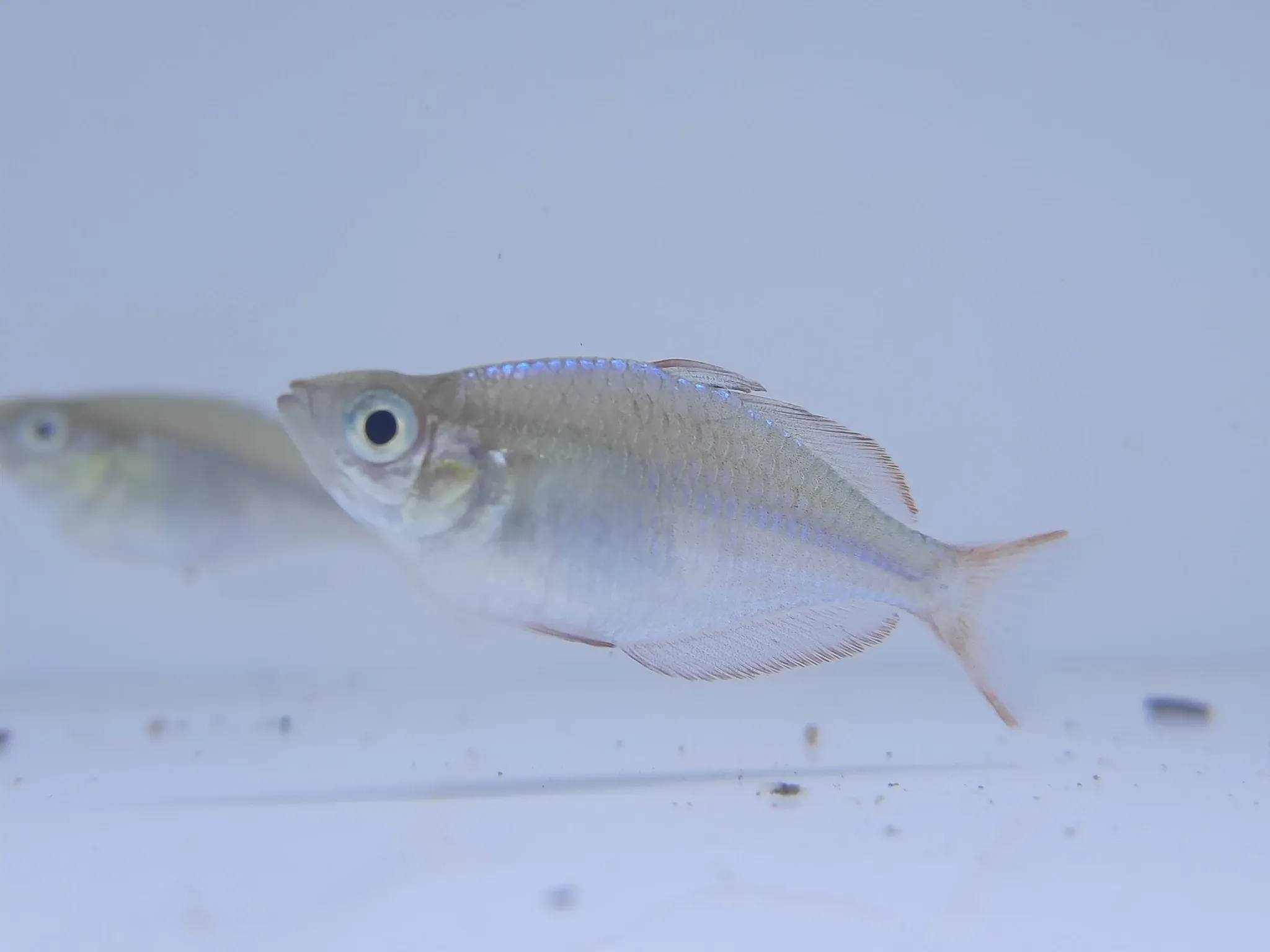

What Do Dwarf Neon Rainbowfish Eat? A Practical Feeding Guide
Dwarf neon rainbowfish (Melanotaenia praecox) are easy to feed once you know the basics: a small-particle staple food, regular protein rotation, and portions sized to a fast-swimming school. This guide covers exactly what to buy, how much to offer, a copy-ready weekly schedule, and how to fix the most common feeding mistakes.
Why Dwarf Neon Rainbowfish Are Easy to Feed
In the wild, dwarf neon rainbowfish graze almost constantly on small aquatic insects, insect larvae, zooplankton, and the algae and diatoms coating plants and rocks. That grazing habit carries over into the aquarium: this species is genuinely unfussy and will accept nearly any food sized appropriately for its mouth. That adaptability is the single biggest advantage this fish offers a new keeper — you don't need exotic foods, just the right size and a bit of variety.
Adults typically reach only about 1.2–2 inches (3–5 cm), so mouth size is the limiting factor for almost every feeding decision you'll make.
What to Feed: The Core Diet
Staple Food
A high-quality tropical flake or micro/small pellet should form the backbone of the diet. Because of this fish's small mouth, look for pellets 1mm or smaller, or a flake you can crumble between your fingers before feeding. Offered once or twice a day, a good staple covers the bulk of nutritional needs.
Protein and Live-Food Rotation
Rotating in protein-rich foods supports color, conditioning, and breeding readiness. Good options include:
- Frozen or live brine shrimp (baby brine shrimp for smaller fish, adult for larger individuals)
- Daphnia
- Cyclops
- Bloodworms — in moderation only, since they're fatty and can cause bloating if overused
- Tubifex worms — best treated as an occasional treat, not a regular item
Plant and Algae Matter
Dwarf neon rainbowfish also benefit from some vegetable content. Options include spirulina flakes, small amounts of blanched zucchini, lettuce, or spinach, and whatever algae or biofilm they naturally graze from tank surfaces. This plant matter aids digestion and, notably, contains carotenoids that support the fish's signature blue-and-orange coloration — more on that below.
Best Food Types Compared
Each food format has a different role in the diet. Here's how they stack up:
| Food Type | Best Used As | Pros | Cons |
|---|---|---|---|
| Flake | Daily staple | Convenient, balanced, easy to crumble to size | Can lose nutritional value if stored too long |
| Micro-pellet (1mm or smaller) | Daily staple | Less waste/cloudiness than flake, sinks slowly | Must confirm size fits juvenile mouths |
| Frozen (brine shrimp, daphnia, bloodworms) | 2–3x weekly supplement | High palatability, boosts color and conditioning | Needs freezer storage, can foul water if overfed |
| Live (brine shrimp, daphnia, microworms) | Occasional treat / fry food | Strong feeding-response trigger, ideal for fry | More effort to culture or source, higher cost |
For everyday health, a quality dry staple is entirely sufficient. Live foods are not strictly required, but rotating in frozen or live options 2–3 times a week measurably improves coloration, conditioning, and breeding success — so it's a worthwhile habit rather than a necessity.
How Much and How Often to Feed
Feeding Frequency
The standard baseline is 1–2 feedings per day. Some keepers prefer 3 or more small feedings to mimic this species' natural grazing behavior, and that approach can even support slightly better color and growth — as long as filtration and water quality are monitored closely enough to handle the extra food input. If you're unsure which to choose, start with two feedings daily and adjust from there.
Portion Sizing
The rule of thumb is to feed only what the school can finish in about 60 seconds, up to 2 minutes. As a concrete starting point for calibration:
- For a school of 6–8 fish, start with a pinch of flake or a small scatter of pellets (roughly a few dozen 1mm pellets) and watch how quickly it disappears.
- Adjust the next feeding up or down based on what's left after two minutes.
- Because dwarf neon rainbowfish are primarily mid-to-upper water column feeders, not bottom feeders, food should be offered as floating or slow-sinking. Anything that reaches the substrate uneaten is usually missed entirely, so precise, smaller portions matter more here than with bottom-dwelling species.
Spreading Food Across the School
As a schooling fish best kept in groups of 6 or more, feeding in one spot lets faster or bolder individuals monopolize the food while shier fish miss out. Scatter food across two or three points on the water's surface so the whole group gets a fair share.
A Simple Weekly Feeding Rotation
Here's a copyable template for a beginner-friendly week:
| Day | Feeding |
|---|---|
| Monday | Staple flake or micro-pellet |
| Tuesday | Staple flake or micro-pellet |
| Wednesday | Frozen brine shrimp or daphnia |
| Thursday | Staple flake or micro-pellet |
| Friday | Frozen daphnia or cyclops |
| Saturday | Spirulina flake or blanched vegetable |
| Sunday | Staple flake, small amount of bloodworms as a treat |
Adjust portions and frequency to your own school size, and skip a feeding occasionally (a "fasting day") if you notice any bloating.
Feeding Fry and Juveniles
Dwarf neon rainbowfish are a popular breeding project, and fry have very different needs from adults:
- First days: Free-swimming fry are too small for anything but infusoria or a liquid fry food.
- Next stage: Once slightly larger, move to newly hatched baby brine shrimp (Artemia) and microworms, offered 3–4 times a day in small amounts.
- Transition to adult food: Over several weeks, gradually introduce finely crushed flake or micro-pellet alongside the live foods, phasing out infusoria and microworms as the fry grow large enough to handle bigger particles.
A useful technique at this stage is gut-loading: feeding your live baby brine shrimp or daphnia a nutrient-rich food (such as a crushed flake or spirulina powder) a few hours before offering them to your fry. This passes along extra nutrition to the fry indirectly, since the fry are essentially eating what the live food just ate.
Diet, Color, and Breeding Condition
A varied, well-fed diet directly supports the neon blue-and-orange stripe this species is named for, along with more reliable spawning behavior. Carotenoid-rich foods — spirulina, krill-based foods, and similar options — specifically support pigment intensity, so working spirulina flakes or a frozen krill-based food into your rotation is one of the more effective, low-effort ways to boost coloration alongside good lighting.
Tank Mates and Community Feeding
Dwarf neon rainbowfish are peaceful schoolers commonly kept alongside other small community fish. If you're keeping a mixed community tank, watch for faster or larger tankmates outcompeting the rainbowfish at feeding time. Spreading food across multiple points (as noted above) and feeding at more than one location in the tank helps ensure your rainbowfish school gets a fair share rather than losing out to more assertive neighbors.
Feeding in Heavily Planted Tanks
This species is frequently kept in planted aquariums, which adds a wrinkle: uneaten food can drift into dense plant growth and hide there, decomposing unnoticed. Feed slightly smaller amounts than you might in a bare tank, watch closely for food settling among stems and leaves, and consider a turkey baster or net to remove any food that escapes into planted areas.
Water Quality and Feeding
Overfeeding is the most common feeding-related problem in this species, precisely because leftover food is a column feeder's blind spot. Excess food that sinks unnoticed can foul water, spike ammonia, and cloud a planted tank as it decomposes. Tie your feeding routine to your maintenance routine: remove any visibly uneaten food after a few minutes, and treat consistently clear water as your best sign that portions are correctly sized.
Common Mistakes and Troubleshooting
| Problem | Likely Cause | Fix |
|---|---|---|
| Cloudy water, ammonia spikes | Overfeeding, food sinking uneaten | Feed smaller amounts, remove leftovers after a few minutes |
| Dull color, poor breeding condition | Flakes/dry food only, long term | Add frozen/live food rotation 2–3x weekly |
| Bloating or constipation | Too many bloodworms or fatty foods | Limit bloodworms to a treat; add spirulina or blanched veggies for fiber |
| New fish won't eat | Transport stress, unfamiliar tank | Try live or frozen food to trigger a feeding response; dim the lights |
| Food ignored or spat out | Pellets/flakes too large | Crush flakes and use 1mm or smaller pellets, especially for juveniles |
| Some fish look thin despite feeding | Uneven feeding within the school | Spread food across multiple spots instead of one location |
You can browse tropical fish food and supplements, including freeze-dried options suited to small-mouthed community fish, to build out a rotation that covers staple, protein, and plant-based needs.
Frequently Asked Questions
How often should I feed dwarf neon rainbowfish?
Feed 1–2 times daily as a baseline, offering only what the group can finish in under a minute or two. If you prefer, you can split this into three or more smaller feedings a day to mimic natural grazing, as long as water quality stays stable.
What is the best staple food?
A quality small-pellet (1mm or smaller) or flake tropical fish food sized for their small mouths works well as the daily staple, supplemented with frozen or live foods a few times a week for conditioning and color.
Can they eat bloodworms?
Yes, but only as an occasional treat rather than a staple. Bloodworms are fatty, and overuse is a common cause of bloating and constipation in this species.
Do they need live food?
No, live food isn't strictly required — a quality dry staple is sufficient for general health. That said, rotating in live or frozen foods 2–3 times a week noticeably improves coloration, conditioning, and breeding readiness.
What do fry eat?
Newly free-swimming fry need infusoria or a liquid fry food for the first few days, then move on to newly hatched baby brine shrimp and microworms, fed 3–4 times daily as they grow toward adult food over several weeks.
Will they eat algae?
They'll graze some biofilm and algae off plants and tank surfaces, and it's a natural part of their diet in the wild. However, this shouldn't be relied on as a primary food source in the aquarium — it's a supplement, not a substitute for regular feeding.
How much should I feed per feeding?
There's no fixed measured quantity — instead, scale a small pinch or scatter to your school size (for example, a pinch for 6–8 fish) and adjust so it's fully consumed within about a minute.
Why isn't my rainbowfish eating?
Usually stress from a new tank or transport, poor water parameters, or food that's too large for its mouth. Check your water quality first, then try offering live or frozen food, which often triggers a feeding response even in a stressed fish.
Ready to stock or restock your school? You can browse dwarf neon rainbowfish and other rainbowfish on FishyHub to build out a healthy, well-fed community tank.


