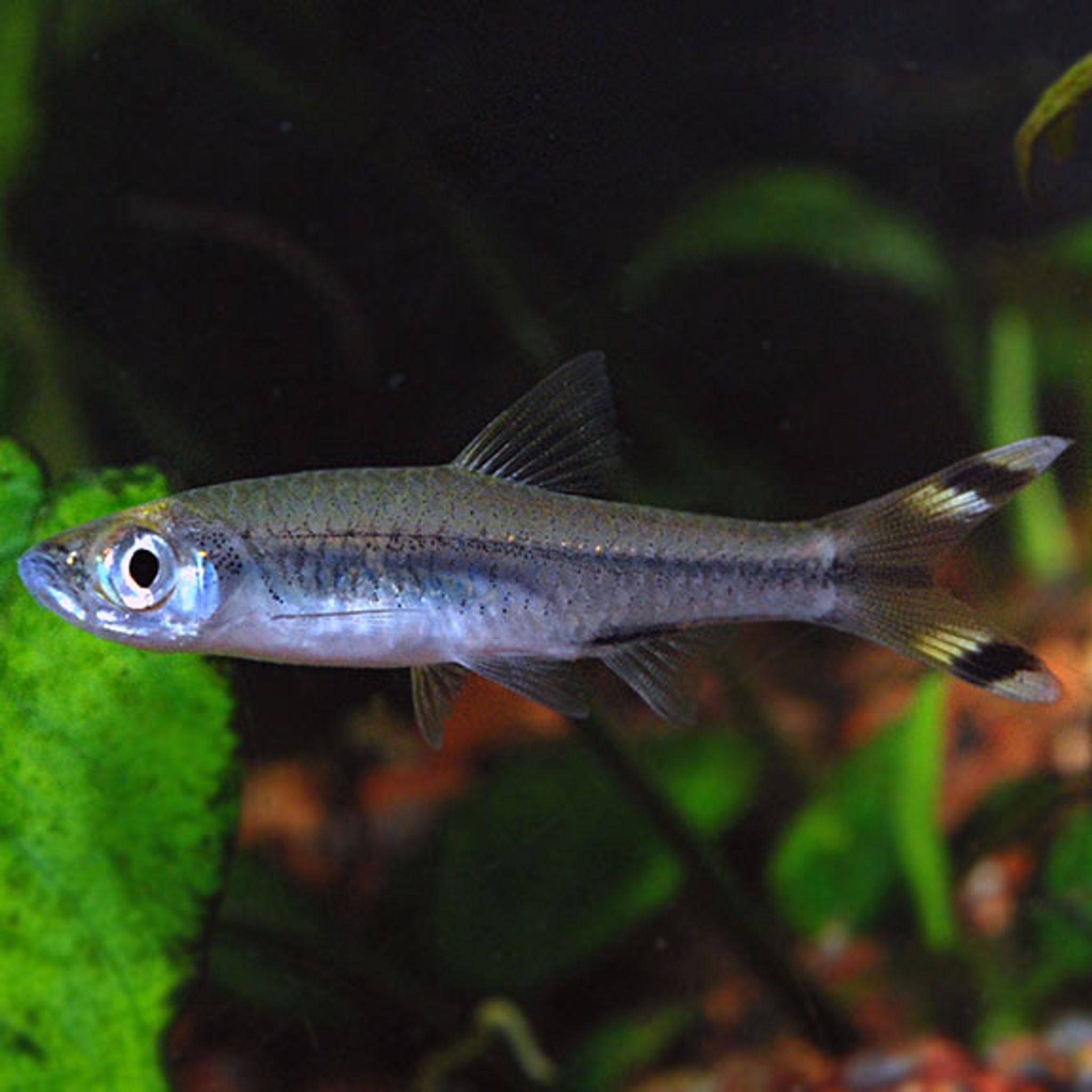

What Do Chili Rasbora Eat? A Practical Feeding Guide
Chili rasbora (Boraras brigittae) are among the smallest fish in the hobby, and that tiny size drives nearly every feeding decision you'll make for them. This guide breaks down exactly what to feed, how much, how often, and how to handle fry, breeding conditioning, and the shy feeding behavior that trips up a lot of new keepers.
Why size drives everything
Adult chili rasboras top out at roughly 0.6–0.8 in (1.5–2 cm), and their mouths are proportionally tiny even for a fish that small. Standard tropical fish flakes and pellets are simply too large for them to eat, no matter how hungry they are. Nearly every feeding mistake with this species traces back to ignoring this fact.
Although chili rasboras are technically classified as omnivores, in the wild they behave as micropredators, picking off small insects, insect larvae, worms, and zooplankton rather than grazing on plant matter. Your feeding plan should reflect that: this is a fish that wants small, meaty, protein-rich food, not algae wafers or leafy greens.
The staple diet: crushed micro-pellets and flakes
The base of a healthy chili rasbora diet is a high-quality micro-pellet or flake food formulated for small fish. To make it usable:
- Pellets should be sized under about 0.5 mm — look for products labeled "micro" or "nano" pellets.
- Flakes should be crushed to a fine powder between your fingers before feeding, even if the package is marketed for small fish.
- Look for foods targeting roughly 45–50% protein and 10–15% fat, which supports growth and helps maintain color without excess filler.
A rotating stock of a quality staple and a couple of protein-dense extras from FishyHub's Food & Supplements selection covers most of what a chili rasbora school needs.
Protein and color-boosting supplements
Rotating in live or frozen protein foods a few times a week improves color, conditioning, and overall vigor. Good options, all small enough for a chili rasbora's mouth, include:
- Baby brine shrimp (newly hatched nauplii)
- Daphnia
- Microworms
- Vinegar eels
- Small or finely chopped bloodworms
- Small, wingless fruit flies
- Mosquito larvae
Frozen versions of brine shrimp, daphnia, cyclops, and finely chopped bloodworms work just as well as live foods for everyday feeding and carry no parasite risk, which makes them the more convenient and lower-risk default for routine use.
Color enhancement
Foods containing carotenoids — brine shrimp, daphnia, cyclops, and color-enhancing flake — intensify the fish's red coloring over time. Frozen cyclops stands out as a particularly good choice here: the particle size suits the fish's mouth well and the nutritional value supports both color and condition.
Bloodworms: use with caution
Bloodworms are a common point of disagreement among keepers. A whole bloodworm is oversized for a chili rasbora's mouth, so they shouldn't be a daily staple. Used correctly, though, they're a fine occasional treat:
- Use frozen or freeze-dried bloodworms only.
- Chop or crush them into small pieces before feeding — never offer them whole.
- Treat them as an occasional protein boost, not a core part of the rotation.
FishyHub carries a range of freeze-dried food options sized for small fish, useful for building out this kind of rotation without keeping live cultures.
How much and how often to feed
The general nano-fish standard applies here: 1–2 small feedings per day. Growing juveniles or fish being conditioned for breeding can do well on the higher end of that range (2–3 very small feedings), while adults in a stable maintenance routine often do fine on once a day.
Portion control matters more with chili rasboras than with most community fish, because a school of tiny fish in a small footprint tank has very little water volume to dilute waste:
- Feed only what the group finishes in 1–2 minutes.
- Err on the side of feeding less than you think — leftover food fouls a nano tank fast.
- Remove any obviously uneaten food after a couple of minutes rather than letting it sit.
Bioload math to keep in mind: a 10-gallon (38 L) tank holding a school of chili rasboras has a tiny water volume relative to even a modest overfeeding mistake. A pinch of food that would barely register in a 40-gallon (150 L) community tank can measurably spike ammonia in a nano setup. When in doubt, feed a smaller pinch than the package suggests and watch how quickly it disappears before adding more.
A sample weekly feeding rotation
Alternating staple days with protein/supplement days keeps the diet varied without overcomplicating your routine. Portions stay minimal at every feeding regardless of what's on the menu.
| Day | Morning feeding | Evening feeding (optional) |
|---|---|---|
| Monday | Crushed micro-pellet | — |
| Tuesday | Frozen baby brine shrimp | Crushed flake |
| Wednesday | Crushed micro-pellet | — |
| Thursday | Frozen daphnia or cyclops | Crushed flake |
| Friday | Crushed micro-pellet | — |
| Saturday | Chopped frozen bloodworm (small amount) | — |
| Sunday | Crushed flake | — |
Adjust frequency up or down based on the "1–2 minutes, then it's gone" rule rather than the clock.
Feeding times and shy schooling behavior
Feed during active, well-lit hours, and avoid feeding right before lights-out — food that goes uneaten overnight fouls the water with no one watching it happen.
Chili rasboras are shy and often slow to come out for food, especially in a new or brightly lit tank, and they don't compete aggressively at the surface the way many community fish do. A few adjustments help make sure the whole school gets fed, not just the boldest individuals:
- Use sinking micro-pellets, or gently push floating food down into the water column with a turkey baster or your finger.
- Spread food across multiple points in the tank rather than dropping it all in one spot.
- Feed in or near planted areas where the fish feel secure enough to approach.
- Avoid keeping chili rasboras with fast, pushy tankmates that outcompete them for food.
A mature, established tank with live plants helps naturally: it generates infusoria, biofilm, and micro-crustaceans that supplement the diet between feedings, which particularly benefits a shy species reluctant to compete hard for prepared food.
Breeding conditioning
When conditioning a pair or group for spawning, step up the proportion of live and frozen foods — brine shrimp nauplii, daphnia, and microworms — in the weeks leading up to breeding. This extra protein supports egg and sperm production more effectively than dry staple food alone. Outside of active conditioning, frozen foods are perfectly adequate for everyday health; live foods become genuinely important specifically when you're prepping fish to spawn.
Feeding fry
Newly hatched fry are too small to eat baby brine shrimp right away, even though nauplii are the standard first food for many other species. Start fry on:
- Infusoria or green water for the first several days
- Biofilm grazed from established surfaces in the tank
- Baby brine shrimp nauplii and microworms once fry are roughly 1–2 weeks old and large enough to handle them
Jumping straight to baby brine shrimp before fry are ready is a common cause of fry starving — the food is simply too large for their mouths at that stage.
Hatching your own brine shrimp
A basic brine shrimp hatchery setup is straightforward and gives you a steady supply of highly nutritious food for both fry and adults:
- Mix brine shrimp cysts into salted water in a hatching container.
- Provide light and continuous aeration to keep cysts suspended and oxygenated.
- Cysts typically hatch within 24–48 hours.
- Harvest the nauplii once hatched and rinse before feeding.
Nauplii are most nutritious in their first 12–24 hours after hatching, while they still carry their yolk sac — nutritional value drops off after that window. Rather than hatching one large batch, run small batches on a rotating daily schedule so you always have freshly hatched, high-value nauplii on hand instead of older, less nutritious ones.
Common feeding mistakes to avoid
| Mistake | Why it's a problem | Fix |
|---|---|---|
| Feeding whole flakes, standard pellets, or whole bloodworms | Fish physically can't eat food that's too large for their mouths | Crush flakes to powder; use sub-0.5 mm pellets; chop bloodworms small |
| Overfeeding | Leads to cloudy water, ammonia spikes, and bloating in a small water volume | Feed smaller, more frequent portions; remove leftovers after a couple minutes |
| Relying only on dry flake | Causes dull color and possible nutritional gaps over time | Rotate in live or frozen protein foods weekly |
| Assuming fish "aren't eating" | Often shyness, stress, or competition from tankmates rather than a lack of appetite | Use sinking food, feed near plants, avoid pushy tankmates |
| Heavy feeding in a new, uncycled tank | Ammonia and nitrite spikes are especially dangerous for a fish this small and sensitive | Feed sparingly until the tank is fully cycled and established |
| Jumping straight to baby brine shrimp for fry | Food is too large for very young fry, leading to starvation | Start with infusoria or biofilm, then graduate to nauplii |
Quarantine and new-arrival feeding
Freshly acquired chili rasboras are often stressed from shipping and acclimation and may refuse food entirely for the first day or two. During quarantine:
- Offer small amounts of food and don't panic if it's ignored at first.
- Try live or frozen foods before dry staples — they tend to trigger a feeding response faster in stressed fish.
- Keep lighting dim and the environment calm; a heavily lit, exposed quarantine tank discourages a naturally shy fish from coming out to eat.
- Avoid overfeeding "just in case" — uneaten food in a bare quarantine setup fouls water quickly and adds stress on top of stress.
Vacation and auto-feeder considerations
Automatic feeders are convenient, but most are calibrated for larger community fish and tend to dispense too much food for a nano species. If you're using one for chili rasboras:
- Test the calibration for several days before relying on it, adjusting the portion dial to the smallest realistic setting.
- Consider a feeder that dispenses crushed flake or micro-pellet rather than one designed for larger pellets.
- For trips under a few days, healthy adult chili rasboras generally tolerate skipping feedings better than they tolerate an auto-feeder dumping too much food into a small tank.
Frequently Asked Questions
What is the best staple food for chili rasboras?
A crushed, high-quality micro-pellet or flake made for small or nano fish, fed in small amounts once or twice a day. Make sure pellets are sized under about 0.5 mm and flakes are crushed to a powder before feeding.
Can chili rasboras eat bloodworms?
Yes, but only chopped or crushed frozen or freeze-dried bloodworms fed as an occasional treat. A whole bloodworm is too large for their mouth and shouldn't be a daily staple.
How often should I feed chili rasboras?
Once or twice a day, offering only as much as the school can finish within about a minute or two. Growing or breeding fish can handle the higher end of that range; adults in maintenance mode often do fine on a single small feeding.
Do chili rasboras need live food?
Not for basic health — frozen and dry foods cover routine nutritional needs well. Live or frozen foods like brine shrimp, daphnia, and microworms improve color and become genuinely important when conditioning fish for breeding.
Why aren't my chili rasboras eating?
Usually it comes down to shyness or stress in a new tank, food that's too large for their mouths, or competition from bolder tankmates. Check water parameters first, then try smaller, sinking food spread across multiple spots in the tank.
What do chili rasbora fry eat?
Newly hatched fry start on infusoria or green water, since they're too small for baby brine shrimp initially. After roughly 1–2 weeks of growth, they can graduate to baby brine shrimp nauplii and microworms.
How do I hatch brine shrimp for my rasboras?
Use a brine shrimp hatchery setup with salted water, light, and aeration; cysts typically hatch within 24–48 hours. Harvest the nauplii and feed them promptly, since their nutritional value is highest in the first 12–24 hours after hatching.
Will chili rasboras eat algae or plant matter?
Rarely. Despite being classified as omnivores, they function as micropredators that target small insects and zooplankton, so they won't meaningfully help control algae in a tank.
If you're stocking or restocking a nano setup, you can browse chili rasbora and other rasbora species on FishyHub to plan your school size alongside the feeding routine above.


