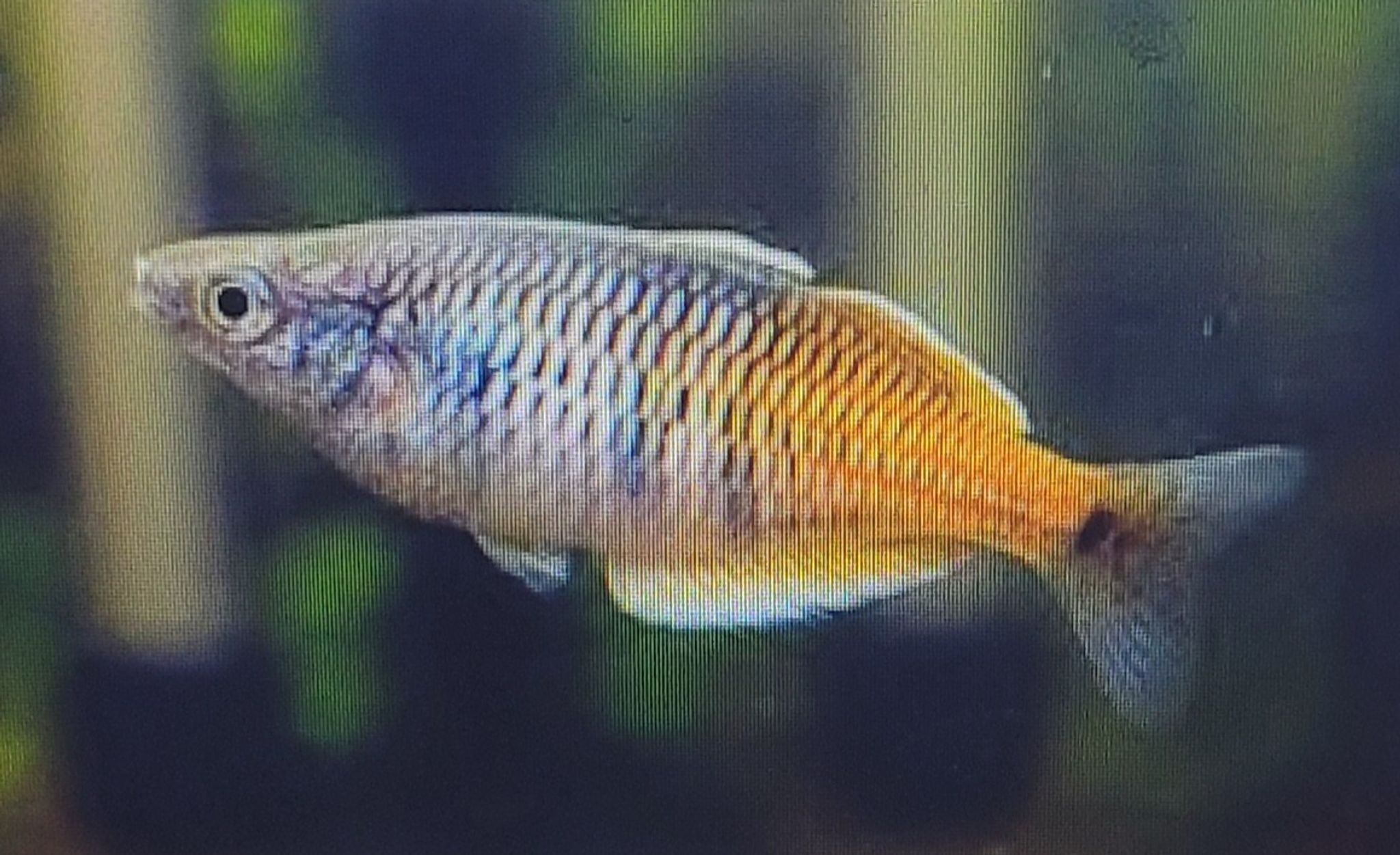

What Do Boesemani Rainbowfish Eat? A Practical Feeding Guide
Boesemani rainbowfish are easygoing eaters, but a flakes-only diet will leave them thin on color and nutrition over time. This guide covers exactly what to feed, how often, and how much, plus fixes for the feeding problems keepers run into most.
Natural Diet Background
In the wild, Boesemani rainbowfish are found only in a small area of lakes and streams around West Papua (Irian Jaya), Indonesia. There, they forage almost constantly through the water column, picking off small insects, insect larvae, worms, tiny crustaceans, algae, and bits of plant matter. That grazing pattern is the reason captive diets built around a single dry food tend to underperform: this species evolved on variety, not a single formula.
Two things follow directly from that wild diet:
- They're omnivores with a meat-leaning bias — protein should make up the bulk of the diet, with plant matter as a smaller supporting piece.
- They're constant, opportunistic grazers, which is why multiple small feedings suit them better than one large meal.
Best Food Types for Boesemani Rainbowfish
Boesemani rainbowfish have small, narrow mouths, so food size matters more for them than for larger cichlids or barbs. Oversized pellets get spat back out or ignored entirely. Here's how the main food categories stack up.
Flakes and Small Pellets (Daily Staple)
A high-quality tropical flake or small/micro pellet should form the daily foundation of the diet. Look for:
- Decent protein content (fish meal, shrimp meal, or similar near the top of the ingredient list)
- Natural color-enhancing ingredients like astaxanthin or spirulina
- A flake or pellet size the fish can swallow whole without difficulty — crush flakes further for juveniles
Pros: convenient, long shelf life, easy to dose precisely. Con: nutritionally complete on paper, but monotony over months is linked to dull color and gaps in the diet — it shouldn't be the only thing offered.
Frozen Foods (2–4x/Week)
Frozen bloodworms, brine shrimp, and daphnia are an easy way to add real protein without the biosecurity concerns of live food. They thaw quickly, and most rainbowfish attack them immediately.
Pros: strong nutritional value, widely available, no live-culture maintenance. Con: needs freezer space and a quick rinse before feeding to reduce excess liquid going into the tank.
Freeze-Dried Foods (2–4x/Week or Rotation Filler)
Freeze-dried bloodworms, brine shrimp, or tubifex worms are a shelf-stable middle ground between flake and frozen. They're useful for topping off a feeding rotation or for travel/backup feeding.
Pros: no freezer needed, long shelf life, good enrichment value. Con: some freeze-dried foods can cause bloating if not briefly soaked first, since they expand once wet. You can browse freeze-dried food options alongside other staple foods for a rotation.
Live Foods (Occasional to Nice-to-Have)
Live daphnia, brine shrimp nauplii, or microworms trigger natural hunting behavior and are genuinely useful when conditioning fish for breeding. For everyday display-tank keeping, though, frozen or freeze-dried equivalents deliver very similar nutrition without the extra culturing effort or risk of introducing parasites from an unreliable source.
Pros: highest enrichment value, strong conditioning effect before spawning. Con: requires culturing or a trustworthy source, and any live food should be rinsed and sourced carefully to avoid introducing parasites or pathogens into the tank.
Vegetable Matter (1–2x/Week)
Blanched zucchini, cucumber, or spinach, along with spirulina-based flakes or wafers, round out the diet with fiber and vitamins. Boesemani will also pick at algae and biofilm on decor, but this grazing shouldn't be counted on as a real food source.
Because the species is more meat-leaning than herbivorous, vegetables are best treated as good practice rather than mandatory — once or twice a week is plenty for gut health without diluting the protein they need.
Feeding Schedule: How Much and How Often
For most home aquariums, 2 small feedings a day — one in the morning, one in the evening — is the sensible default. Bump this to 3 small feedings for actively breeding fish, fish being conditioned for color, or fast-growing juveniles.
Portion rule: offer only what the school clears in 2–3 minutes. If food is still visible on the surface or drifting down after that window, you're feeding too much — remove the excess with a net or siphon rather than letting it break down in the tank.
A simple weekly rotation removes the guesswork:
| Day | Morning | Evening |
|---|---|---|
| Monday | Color-enhancing flake | Frozen bloodworms |
| Tuesday | Small pellet | Frozen brine shrimp |
| Wednesday | Color-enhancing flake | Blanched zucchini or spinach |
| Thursday | Small pellet | Freeze-dried daphnia |
| Friday | Color-enhancing flake | Frozen bloodworms |
| Saturday | Small pellet | Live or frozen brine shrimp |
| Sunday | Color-enhancing flake | Spirulina flake or wafer |
This gives roughly five protein-supplement feedings, one vegetable day, and a daily flake or pellet base — matching the balance of meat and plant matter they'd encounter naturally. You can find flake, pellet, frozen, and freeze-dried options together in FishyHub's food and supplements category to build out a rotation like this.
Feeding Fry and Juveniles
Young Boesemani rainbowfish grow fastest with frequent, small feedings rather than the twice-daily adult schedule. Feed finely crushed flake, powdered fry food, or baby brine shrimp/microworms 3–4 times a day in amounts small enough to be cleared within a minute or two.
Consistency matters more than variety at this stage — even, frequent feeding supports uniform growth across the batch and reduces size disparity (and the pecking-order problems that come with it) as the fry mature.
Tank Mates and Feeding Compatibility
Boesemani rainbowfish are a schooling species and do best kept in groups of six or more. That has a direct feeding implication: food needs to be spread across the surface or water column rather than dropped in one spot, so every fish in the school gets a fair share instead of the boldest few monopolizing it.
There's also a predation angle worth planning around. Adult Boesemani are opportunistic feeders and will eat anything that fits in their mouth — including very small tankmates like fish fry or juvenile shrimp. Adult shrimp are generally too large to worry about, but a shrimp colony's babies can be at risk in a mixed tank. If you're keeping rainbowfish with bottom feeders or shrimp, note that Boesemani feed mid-to-upper in the water column — sinking a portion of the food, or feeding bottom dwellers in a separate spot, helps slower eaters get their share instead of losing it to the school above.
Diet and Color Development
The blue-to-purple body and red-orange tail that make mature males so striking are heavily diet-dependent. Consistent access to protein, carotenoids, and vitamins — from shrimp-based frozen foods, spirulina, and color-enhancing flake — is directly tied to how vivid that coloration becomes as fish mature. A flake-only diet fed long-term is one of the more common reasons keepers see duller color than expected, even in fish that are otherwise healthy.
Water Quality and Feeding
Overfeeding is one of the fastest ways to destabilize water parameters, since uneaten food breaks down into ammonia and eventually pushes up nitrate. Boesemani rainbowfish do best in stable, well-oxygenated, slightly alkaline water, which makes consistent feeding discipline part of water quality management, not just a nutrition issue. Stick to the 2–3 minute rule, siphon out anything left over, and keep an eye on nitrate trends if feeding volume increases for breeding or juvenile fish.
Common Feeding Mistakes
- Overfeeding: leftover food fouls the water and drives ammonia/nitrate spikes. Feed only what clears in a couple of minutes and remove the rest.
- Flake-only diet long-term: causes dull coloration and nutritional gaps over time — rotate in protein and vegetable matter.
- Food too large: oversized pellets or unbroken flakes get spat out or ignored by their small mouths. Crush flake for juveniles and choose a small pellet size for adults.
- New or stressed fish refusing food: try live or frozen bloodworms or brine shrimp as an appetite stimulant before assuming illness.
- Fading color: often a nutrition issue rather than lighting or age — upgrade to a color-enhancing staple and add regular protein/carotenoid supplementation.
- Bloating or constipation from an all-protein diet: add fiber through blanched vegetables or occasional spirulina to keep digestion regular.
- Skipping rinsing on frozen or live foods: rinse frozen food briefly before feeding, and source live foods from a reputable supplier to avoid introducing parasites.
Frequently Asked Questions
How often should I feed Boesemani rainbowfish?
Feed 2 small meals a day for typical adults — morning and evening — increasing to 3 for actively breeding, color-conditioning, or juvenile fish. Only offer what the school can clear in about 2–3 minutes each time.
What is the best staple food for Boesemani rainbowfish?
A high-quality tropical flake or small pellet with solid protein content and natural color-enhancing ingredients like astaxanthin or spirulina makes the best daily base. It should be sized small enough for their narrow mouths.
Do Boesemani rainbowfish need live food?
No, it's not required. Frozen or freeze-dried bloodworms, brine shrimp, or daphnia offered a few times a week provide very similar nutrition and coloration benefits; live food is more of a nice-to-have, most valuable when actively conditioning fish for breeding.
Can Boesemani rainbowfish eat vegetables?
Yes. Blanched zucchini, cucumber, or spinach, or a spirulina-based flake or wafer, offered once or twice a week supports digestion and adds variety, though it shouldn't replace protein as the main diet.
Will Boesemani rainbowfish eat shrimp or fry?
Adults are opportunistic and will eat anything small enough to fit in their mouth, including fish fry and juvenile shrimp such as young cherry shrimp. This is worth factoring in before adding a breeding shrimp colony to a Boesemani tank.
How do I feed baby or juvenile Boesemani rainbowfish?
Offer finely crushed flake, powdered fry food, or baby brine shrimp and microworms 3–4 times a day in small amounts. Frequent, consistent feeding supports faster, more even growth than fewer large meals.
What causes dull color in Boesemani rainbowfish and can diet fix it?
Dull color is often tied to nutrition rather than lighting or age alone. Switching to a color-enhancing staple food and adding regular protein- and carotenoid-rich supplements typically restores noticeably better color within a few weeks, alongside stable water quality.
How much should I feed my rainbowfish school at once?
Spread small pinches of food across the surface rather than dumping it in one spot, so the whole school — not just the boldest individuals — gets access. Stop once it's mostly cleared within 2–3 minutes.
Ready to build out a feeding rotation? Browse flake, pellet, frozen, and freeze-dried options in FishyHub's food and supplements category to keep your Boesemani school well-fed and colored up.


