
What Do Blood Parrot Cichlid Eat? A Practical Feeding Guide
Blood parrot cichlids eat a varied omnivorous diet of small sinking pellets, occasional frozen or freeze-dried protein, and regular vegetable matter — but the real challenge isn't what to feed, it's how they physically eat it. Their unusual mouth shape means feeding this fish well takes a different approach than feeding most other cichlids.
Why the Mouth Shape Matters
A blood parrot cichlid is a man-made hybrid with no wild population, so there's no "natural diet" to research or mimic. Feed it as you would any omnivorous cichlid — but with one major exception that overrides everything else: the mouth.
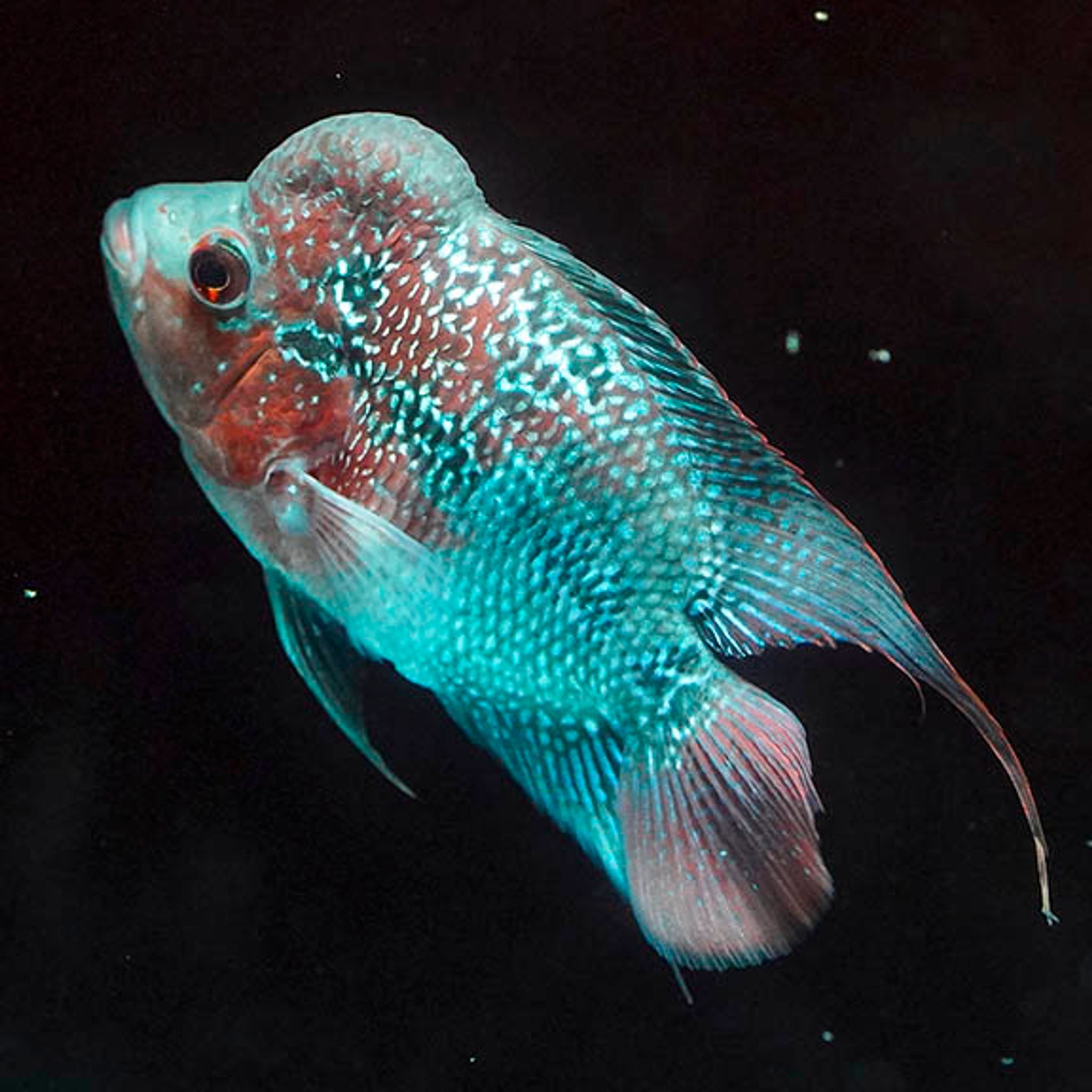
The mouth is small, rounded, and opens vertically like a beak rather than the normal side-to-side gape of most fish. In many individuals, the upper and lower "lips" don't line up correctly, so the fish can't fully close its mouth at all. Its actual teeth — the pharyngeal or throat teeth — sit deep in the throat and are used to crush food only after it has already been scooped inside.
Because of this anatomy, a blood parrot can't bite off a piece of food or suck it in with force the way a normal cichlid does. Instead, it swims forward and scoops food into its mouth almost by accident. Food frequently falls back out, which is why these fish are often described as messy eaters. Feeding sessions take longer, and more food ends up uneaten on the substrate than with a typical fish. Every recommendation below — pellet type, pellet size, feeding frequency — exists because of this one anatomical quirk.
One thing worth checking on your own fish: the severity of this mouth deformity varies quite a bit from individual to individual. Some blood parrots have a nearly normal bite and handle food with little trouble, while others struggle noticeably. Watch a feeding session closely during the first week or two and adjust pellet size and type based on how easily your particular fish manages, rather than assuming every blood parrot needs the same setup.
What to Feed: The Core Diet
Pellets: The Foundation
Sinking or slow-sinking cichlid pellets are the most widely recommended base food, since these fish generally struggle to feed efficiently at the surface. Look for small or mini pellets sized to fit through the narrow mouth opening — large pellets or big flake fragments simply won't fit and will be spat back out, wasting feed and foreling the water.
That said, sources don't fully agree here. A minority of keepers report good results with floating pellets, reasoning that the fish can approach from underneath and let gravity help drop the food into its mouth. The safer, more widely supported default is sinking or slow-sinking pellets, but since mouth function varies fish to fish, it's reasonable to try both types and watch which your fish handles more comfortably.
Cichlid-formulated flakes are usable in a pinch but are less ideal than pellets, since flakes float and scatter, making them harder for a fish with this mouth shape to capture consistently.
Protein Variety
Two to three times per week, supplement the pellet base with frozen or freeze-dried protein foods for variety and nutrition:
- Bloodworms
- Brine shrimp
- Mysis shrimp
- Krill
- Daphnia
Live foods like earthworms or blackworms can be offered occasionally as enrichment, but they're optional, not required. If you do offer live food, source it from a reputable, captive-bred supplier — wild-caught live foods carry a real risk of introducing parasites or bacteria to the tank.
Vegetable Matter
Vegetable matter supports digestive health and adds fiber that this species particularly benefits from:
- Blanched, shelled peas (skins removed) — specifically useful for preventing constipation and bloat
- Blanched zucchini or squash
- Cucumber
- Romaine lettuce
- Spirulina-based foods
Vegetables shouldn't be an occasional afterthought. Working them into the regular rotation, not just as a rare treat, is part of preventing the digestive problems this species is prone to.
Portion Size and Feeding Frequency
Overfeeding is the single biggest risk in blood parrot care. It's directly linked to bloating, constipation, and swim bladder problems, where the fish struggles with buoyancy and floats or sinks oddly.
Sources vary on exact frequency, ranging from twice to three times daily. In practice, total daily food volume matters more than the exact number of meals, so a reasonable rule is:
- 2–3 small feedings per day
- Each feeding should last only 2–3 minutes
- Offer only what gets eaten in that window, then physically remove any leftovers with a net or turkey baster
As a relatable portion guide, a single small feeding for an adult blood parrot is roughly a pinch of mini pellets — think a small cluster no larger than the fish's own eye — rather than a scattered handful across the tank. If you're consistently seeing pellets sitting untouched on the substrate after a few minutes, you're feeding too much per session.
Sample Weekly Feeding Schedule
Here's a simple rotation you can adapt as a starting routine:
| Day | Morning Feeding | Evening Feeding |
|---|---|---|
| Monday | Sinking cichlid pellets | Sinking cichlid pellets |
| Tuesday | Sinking cichlid pellets | Frozen bloodworms or brine shrimp |
| Wednesday | Sinking cichlid pellets | Sinking cichlid pellets |
| Thursday | Sinking cichlid pellets | Blanched peas or zucchini |
| Friday | Sinking cichlid pellets | Frozen mysis shrimp or krill |
| Saturday | Sinking cichlid pellets | Sinking cichlid pellets |
| Sunday | Fasting day (no feeding) | Fasting day (no feeding) |
A weekly fasting day isn't a punishment or a sign of a problem — it's a common preventive practice in general cichlid keeping that gives the digestive system a break and reduces the odds of constipation-related swim bladder trouble building up over time. Treat this schedule as a template rather than a rulebook; you can shift protein or veggie days around, but the overall balance — mostly pellets, a few protein feedings, at least one veggie feeding, and one fasting day — is what matters.
Juvenile vs. Adult Feeding
Young blood parrots have smaller mouths and higher metabolic needs relative to their size, so their feeding differs from adults:
- Juveniles: Feed baby-sized or crushed mini pellets, in smaller amounts more frequently through the day. Their small mouths make oversized food an even bigger problem than it is for adults.
- Adults: Move to standard mini pellets sized for the fish. Adults can tolerate slightly larger portions per feeding but should still stick to the 2–3 minute rule.
Regardless of age, always size the food to the mouth, not the body — a large adult blood parrot still has the same small, awkward mouth opening it had as a juvenile, just scaled up modestly.
Color-Enhancing Diet
Blood parrots are prized for their red-orange coloring, and diet plays a real role in maintaining or boosting that color. The key ingredients to look for are carotenoids — compounds like beta-carotene, astaxanthin, and canthaxanthin. Commercially available color-enhancing cichlid foods typically combine several carotenoid sources along with krill and other protein meals aimed specifically at pigment.
It's worth setting realistic expectations: diet supports color, it doesn't create it out of nothing. Genetics set the underlying potential for a fish's color, and tank lighting affects how vibrant that color appears to the eye. If a fish's color seems to be fading, check the carotenoid content of its diet and your lighting setup before assuming illness — dull color is very often a diet or lighting issue rather than disease.
You can browse cichlid and other American cichlid species on FishyHub if you're building out a tank around a blood parrot, and pair the diet above with a freeze-dried food rotation for the protein variety component.
Water Quality and Feeding
Because blood parrots are inherently messy eaters, more food ends up in the substrate than with tidier-eating fish. That uneaten food breaks down and fouls water faster than expected for the bioload of a single fish. Practical implications:
- Plan on more frequent gravel vacuuming around feeding areas than you would with a fish that eats cleanly.
- Keep an eye on water changes — a blood parrot's messy feeding habits can push nitrate and organic waste up faster than the fish count alone would suggest.
- A capable filter matters more here than for a similarly sized fish that doesn't scatter food; undersized filtration combined with heavy feeding is a common path to poor water quality.
Common Feeding Mistakes
| Mistake | Why It's a Problem |
|---|---|
| Overfeeding | Leads to bloating, constipation, poor water quality, and swim bladder issues |
| Large pellets or flakes | Can't fit the mouth opening; spat out and wasted |
| Floating flake as the sole diet | High miss rate given mouth shape; more waste in the water |
| Not removing uneaten food | Fouls water quickly given how much food is dropped during feeding |
| All-protein diet, no vegetables | Associated with digestive issues and constipation |
| Assuming faded color is disease | Often a diet or lighting issue, not illness |
| Feeding wild-caught live food | Carries parasite and bacteria risk |
Swim Bladder and Bloat: Prevention and Response
Because this species is predisposed to digestive and swim bladder trouble, prevention should be an ongoing part of the diet plan, not just a reaction after problems appear. Regular vegetable matter (especially peas), correct portion sizes, and a weekly fasting day are the preventive backbone.
If swim bladder symptoms do appear — the fish floats oddly, struggles to hold a normal position, or looks bloated — a commonly described short-term approach is:
- Increase fiber and protein variety (bloodworms, brine shrimp, shelled peas) for several weeks.
- Fast the fish for 1–2 days to let its digestive system reset.
- As a last resort, an Epsom salt bath, which is a general aquarium remedy rather than something specific to this species.
These steps address mild, feeding-related buoyancy issues. If symptoms persist beyond a couple of weeks, treat it as a broader health question rather than a diet-only fix.
Feeding Around Tank Mates
Blood parrots are slow, awkward eaters, which puts them at a disadvantage against faster or more aggressive tank mates at feeding time. If you're keeping a blood parrot in a community setup with boisterous fish, watch the first few feedings closely. If it's consistently missing out, target-feed or spot-feed it in a corner of the tank, away from competition, so it gets its fair share before other fish clean up the rest.
Frequently Asked Questions
Can blood parrot cichlids eat regular tropical fish flakes?
Yes, occasionally. However, sinking pellets suit their mouth shape far better than flakes, which float and scatter, making them harder for a blood parrot to capture efficiently. Use flakes sparingly rather than as a staple.
How often should I feed my blood parrot cichlid?
Aim for 2–3 small feedings a day, each finished within a couple of minutes. Total daily volume matters more than the exact number of meals, so starting at twice a day and adjusting based on your fish's appetite is a reasonable approach.
Why does my blood parrot spit out food?
This is normal for the species. The vertical, often non-closing mouth makes scooping and holding food genuinely difficult, so some food loss during feeding is expected and isn't necessarily a sign of illness.
What foods make blood parrots more red or orange?
Carotenoid-rich foods — shrimp, krill, and foods containing astaxanthin or canthaxanthin — support vibrant color. Genetics and tank lighting also play a significant role in the final result, so diet alone won't guarantee maximum color.
Can blood parrots eat vegetables?
Yes. Blanched peas, zucchini, cucumber, and spirulina-based foods support digestion and should be offered regularly as part of the normal rotation, not just as an occasional treat.
Do blood parrots need live food?
No. Live food is optional enrichment rather than a dietary requirement. If you do offer it, use captive-bred sources to avoid introducing parasites or bacteria.
Why is my blood parrot bloated or floating strangely?
This is usually related to overfeeding, causing swim bladder or digestive trouble. A brief fast followed by fiber-rich foods like shelled peas once feeding resumes is the standard first response.
Will tank mates steal my blood parrot's food?
Possibly. Faster or more aggressive tank mates can outcompete a blood parrot at feeding time due to its slow, awkward eating style. Spot-feeding in a quiet corner of the tank helps ensure it gets enough.
Getting the mouth-shape constraint right is really the whole game with blood parrot feeding — once pellet size, portioning, and a bit of vegetable matter are dialed in, the rest of the routine is straightforward. If you're setting up or restocking a cichlid tank, you can browse freshwater cichlids on FishyHub to find compatible tank mates and stock for your setup.


