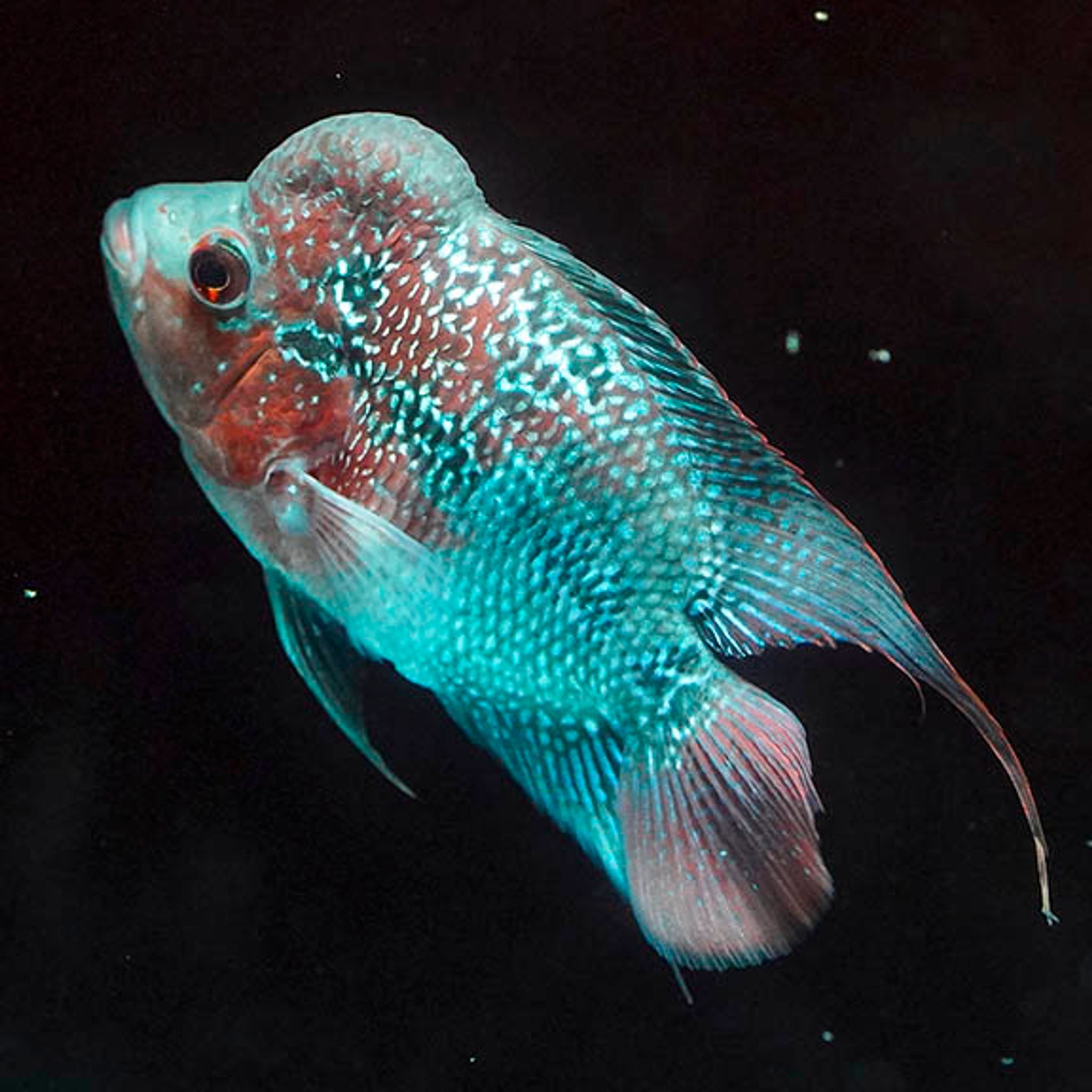
What Do African Peacock Cichlid Eat? A Practical Feeding Guide
African peacock cichlids (Aulonocara species from Lake Malawi) need a protein-forward diet built around a sinking cichlid pellet, supplemented with frozen foods and the occasional vegetable matter. Get the ratios and portions wrong, though, and you're looking at a common and sometimes fatal problem called Malawi Bloat. Here's exactly what to feed, how much, and how often.
Why Diet Matters So Much for Peacocks
In the wild, peacock cichlids aren't grazers — they're micro-predators. They patrol sandy zones along rocky drop-offs, sifting through sediment to hunt insect larvae, tiny crustaceans, and zooplankton, with some incidental algae and biofilm grazing along the way. That natural diet is protein-forward but lean, not fatty. A captive feeding plan should mirror it: meaty but not rich, varied but not indulgent.
This matters because peacocks, like most Rift Lake cichlids, have a digestive tract that's poorly suited to fatty, mammal-based proteins. Get the fat and fiber balance wrong for long enough, and digestive trouble follows.
The Staple: A Sinking Cichlid Pellet
The base of a peacock's diet should be a high-quality sinking cichlid pellet or granule, sized small-to-medium for their mouths. Sinking format isn't a minor detail — peacocks feed mid-water to bottom, not at the surface, so a floating flake often goes untouched until it turns to mush.
When reading a label, look for:
| Label metric | Target for peacocks | Why it matters |
|---|---|---|
| Crude protein | Roughly 35–45% | Matches their carnivore-leaning, invertebrate-hunting diet |
| Crude fat | Moderate, not high | Excess fat is a leading contributor to digestive blockages |
| Crude fiber | Present, not negligible | Aids gut transit; pure high-fat, low-fiber formulas are a bloat risk |
| Formulation target | "Cichlid" or "African cichlid," not generic tropical flake | Many mass-market tropical flakes are formulated for South American cichlids and run too fatty and low-fiber for Malawi species |
Avoid using a plain community-fish flake as the sole diet — it's nutritionally mismatched for a Rift Lake predator, even though peacocks will eat it readily. You can browse dedicated African Cichlids stock on FishyHub if you're still building out a Malawi community.
Supplementing: Frozen, Freeze-Dried, and Plant Matter
Pellets should make up the daily base — roughly 70–80% of the diet by frequency — with frozen and live-style foods filling the rest as enrichment, not the main event.
2–3 times a week, offer:
- Mysis shrimp
- Vitamin-enriched brine shrimp
- Cyclops or daphnia
- Bloodworms — occasionally, and only a small amount
1–2 times a week, add plant matter to mimic natural algae grazing and support digestion:
- Blanched spinach or zucchini
- A spirulina-based pellet or granule
A freeze-dried food option is a convenient way to rotate in mysis, brine shrimp, or similar without keeping a freezer stash going.
Foods to Avoid Entirely
- Beef heart and other mammalian meat — the fat profile is a poor match for a cichlid gut and a well-documented bloat trigger.
- Feeder or tubifex worms — high fat/protein load, plus disease-carrying risk.
- Dried bloodworms as a staple — too rich and too low in fiber to feed daily; fine as an occasional treat only.
How Much and How Often
Feeding frequency is one area where advice varies. Some guides say twice a day is enough; others push three times daily for better color and growth. The safe, workable range is 2–3 small feedings per day — several small meals consistently beat one large one, both for digestion and for reducing waste in the tank.
Two rules of thumb keep portions in check:
- Eye-size rule: aim for roughly the size of the fish's own eye per feeding.
- Two-minute rule: feed only what the group finishes in about 1–2 minutes. Anything left after that is excess.
Juveniles and fry grow fast and burn through energy quickly, so they need 3–4 feedings a day of finely crushed pellet or baby brine shrimp rather than the adult schedule.
A Sample Weekly Feeding Rotation
| Day | Feeding focus |
|---|---|
| Monday | Sinking cichlid pellet only |
| Tuesday | Pellet + frozen mysis shrimp |
| Wednesday | Sinking cichlid pellet only |
| Thursday | Pellet + vitamin-enriched brine shrimp or daphnia |
| Friday | Sinking cichlid pellet only |
| Saturday | Pellet + blanched spinach, zucchini, or a spirulina pellet |
| Sunday | Fast day — no food |
Why the Fast Day
Skipping food one day a week is a common, low-risk practice that gives the digestive tract a chance to clear and reduces the buildup associated with bloat. It isn't a punishment or a sign something's wrong — it's routine maintenance, the same way a water change is.
Malawi Bloat: The Feeding Mistake With the Highest Stakes
Malawi Bloat is a serious, sometimes fatal digestive and bacterial condition seen in Lake Malawi cichlids, peacocks included. It's strongly associated with:
- High-fat or high-protein diets, especially mammalian meat
- Low-fiber diets (including flake foods not formulated for cichlids)
- Overfeeding
- Poor or unstable water quality
Symptoms include abdominal swelling, loss of appetite, stringy white feces, and lethargy. By the time symptoms are visible, the condition is already advanced — prevention through correct diet, portion control, a weekly fast, and stable water parameters works far better than trying to treat it after the fact.
Water quality deserves equal billing here: a fish that suddenly stops eating is just as likely to be reacting to an ammonia spike as to bad food. Test parameters alongside reviewing recent meals whenever appetite drops.
Tank Conditions That Affect Feeding
Feeding behavior doesn't happen in isolation — the tank setup either supports natural foraging or works against it.
- Temperature: 74–82°F (23–28°C). Below roughly 74°F, metabolism slows, and continuing a normal feeding schedule in a slightly cool tank is an under-discussed cause of digestive sluggishness. Cut portions back slightly if the tank runs cool.
- pH: 7.5–8.5, moderately hard water.
- Filtration: strong turnover, roughly 8–10x tank volume per hour, since a protein-forward diet produces more waste than a flake-only community tank.
- Substrate: fine sand supports the natural sifting and foraging instinct peacocks use in the wild; coarse gravel can damage gills and blocks that behavior entirely. Scattering a small amount of sinking food into the sand occasionally is a simple enrichment step most feeding guides skip over. A gravel and sand substrate swap is worth considering if your current setup is coarse.
- Tank size: minimum ~30 gallons (114 L) for a small group, ideally 55+ gallons (208+ L) given adult size and territoriality.
- Water changes: weekly or biweekly, 20–30%.
In multi-male or larger tanks, feed at multiple points around the tank. A single dominant male will otherwise monopolize food near one spot, leaving subordinate fish underfed and stressed.
African Cichlids: Quick Background
Peacocks belong to a much larger family of cichlids native to Africa's Great Rift Lakes — Malawi, Tanganyika, and Victoria — among the most species-diverse and rapidly-evolved groups of vertebrates on the planet. That diversity shows up directly in feeding strategy: some lineages are algae grazers, some are predators, some crush mollusks, and reproduction across the group is dominated by mouthbrooding.
Types of Malawi Cichlids and Diet Differences
| Group | Feeding style | Temperament |
|---|---|---|
| Mbuna | Largely algae/herbivore grazers, need high-fiber diet | Small, hardy, aggressive |
| Peacocks & Haps (including Aulonocara) | Carnivore-leaning, invertebrate hunters | More peaceful |
| Tanganyikan / Victorian cichlids | Separate lakes, distinct diets | Varies by species |
Peacocks and mbuna can usually share the same pellet base, but mbuna need more plant- and fiber-heavy food layered on top. Avoid loading peacocks up with a high-vegetable mbuna-formulated diet, and avoid mixing feeding time with more aggressive mbuna, since the pace and competition don't suit peacocks' calmer feeding style. An Acei cichlid (a milder, more elongated Malawi species that leans more herbivorous, grazing algae in the wild) sits somewhere between the two and is a reasonable diet-contrast reference if you're stocking a mixed Malawi tank.
Mouthbrooding and Feeding Fry
Peacocks, like many Rift Lake cichlids, are maternal mouthbrooders — the female holds fertilized eggs and fry in her mouth for protection. Two behavioral patterns exist across cichlids generally (eggs picked up then fertilized, versus fertilized directly in the mouth), and clutch sizes vary widely by species.
During the 21–28 day holding period, the female stops eating entirely, so she needs strong body condition going into it. A ratio of about one male to 3–4 females spreads out male attention and reduces the harassment that can cause a stressed female to spit or eat her brood prematurely.
Once fry are released, they need to catch up fast on the growth lost during the female's fasting period:
- Very fine, crushed pellet or baby brine shrimp
- Several small feedings a day (3–4x)
- The same finely-crushed approach works for the recovering female, who also needs frequent small meals to rebuild condition quickly
Common Feeding Mistakes
- Overfeeding at once — leftover food fouls water and drives ammonia spikes. Fix: smaller, more frequent portions using the two-minute rule.
- Feeding mammalian meat or worms regularly — a direct bloat risk. Fix: switch to cichlid pellets plus appropriate frozen foods.
- One dominant male hogging food — leads to uneven growth and stressed subordinates. Fix: multiple feeding points and correct male-to-female ratios.
- Using flake food as the only staple — nutritionally mismatched for Malawi cichlids. Fix: a dedicated sinking cichlid pellet as the base diet.
- Ignoring water quality when appetite drops — appetite loss is often a parameter problem, not just a diet problem. Fix: test ammonia, nitrite, nitrate, and pH whenever a fish stops eating.
- Skipping the fast day — continuous feeding without a rest day contributes to digestive buildup. Fix: one no-feed day weekly.
Frequently Asked Questions
How often should I feed my peacock cichlid?
Feed 2–3 small meals a day, offering only what the fish consume in about 1–2 minutes. More frequent, smaller feedings are safer than one large daily meal.
What is the best staple food for peacock cichlids?
A high-quality sinking cichlid pellet or granule, sized appropriately for their mouths, with roughly 35–45% protein and moderate fat. This should form the daily base of the diet, not an occasional add-in.
Can peacock cichlids eat bloodworms?
Yes, but only occasionally and in small amounts. Bloodworms are too rich and low in fiber to serve as a staple, and overuse is linked to digestive problems including Malawi Bloat.
Why is my peacock cichlid not eating?
Common causes include stress, poor water quality, illness (including early bloat), or adjustment to a new tank. Check ammonia, nitrite, nitrate, and pH first, then review recent feeding history.
What causes Malawi Bloat and how do I prevent it?
It's linked to high-fat or mammalian-protein diets, overfeeding, and poor water quality. Prevent it with a correct cichlid-formulated diet, careful portion control, a weekly fasting day, and stable water parameters.
Do peacock cichlids eat algae?
They graze some algae and biofilm in the wild and benefit from occasional vegetable matter, but they're primarily small-invertebrate hunters rather than dedicated herbivores like mbuna.
How do I feed peacock cichlid fry?
Offer very fine, crushed pellet or baby brine shrimp in several small feedings across the day. Fry, and females recovering from holding a brood, need frequent feeding to rebuild growth and body condition quickly.
Can I feed peacock cichlids and mbuna the same food?
Largely yes, since both can share a cichlid pellet base. Mbuna need more plant- and fiber-based food layered in, so avoid giving peacocks the same heavily vegetable-forward diet formulated for mbuna.
Ready to build out a Malawi setup? Browse African Cichlids on FishyHub for peacocks and compatible tankmates.


