

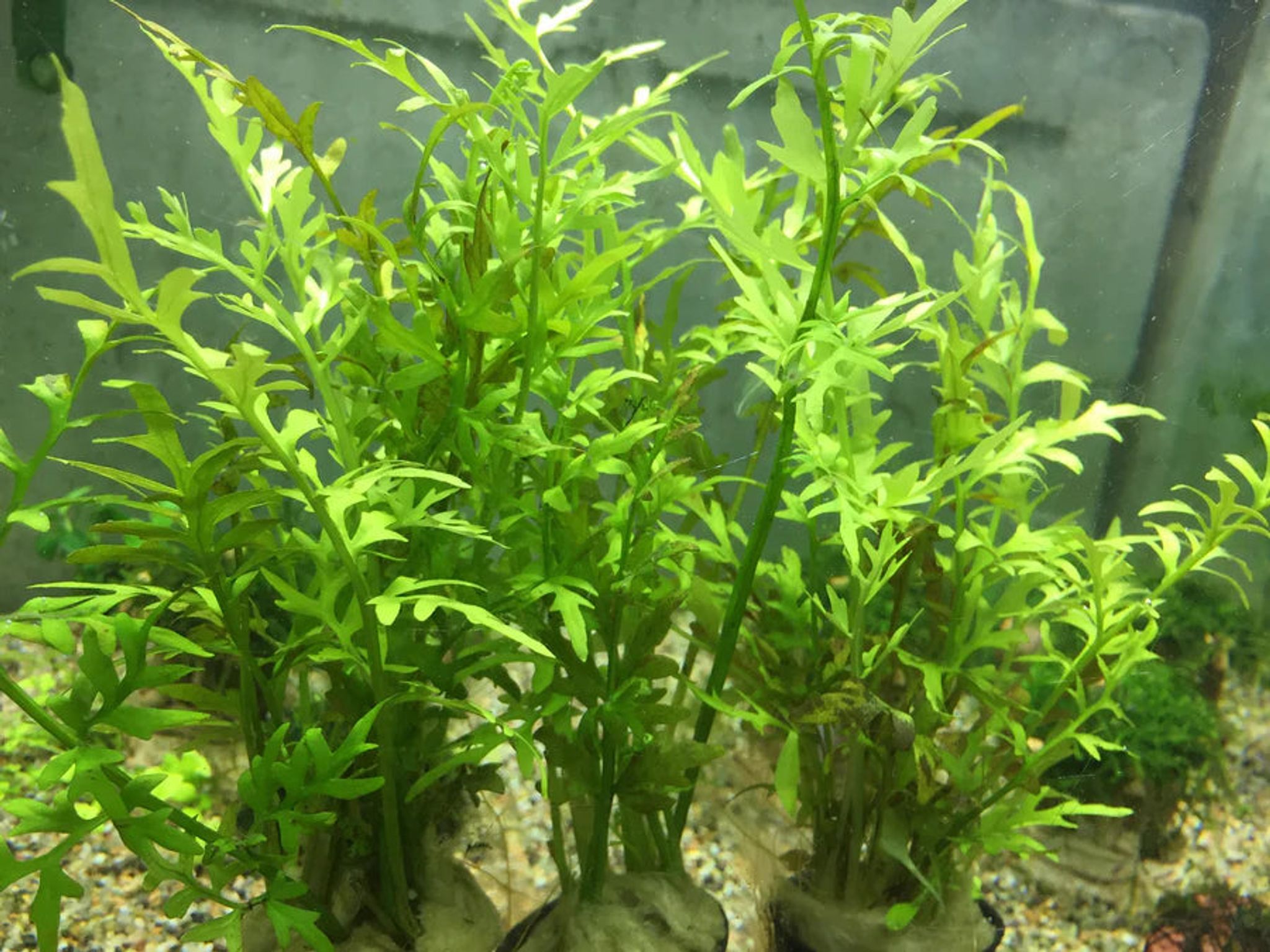

Water Sprite Care Guide: Light, CO2, Substrate and Growth Tips
Water sprite (Ceratopteris thalictroides) is one of the most forgiving plants a freshwater hobbyist can grow, thriving whether it's floating loose or rooted in substrate. This guide walks through the lighting, CO2, substrate, and water parameter ranges that keep it healthy, plus trimming and propagation techniques so fast growth stays an asset instead of a mess.
What Is Water Sprite?
Water sprite is technically a fern, not a true stem plant, which is why it behaves a little differently than plants like anacharis or hornwort. It can be grown two ways in the same tank type:
- Fully submerged and planted in substrate, where it develops broader, coarser fronds and a more upright, bushy shape.
- Floating on the surface, where its roots hang freely into the water column and the leaves become noticeably more finely divided and feathery.
Both forms are the same species reacting to their environment, so a floating specimen moved into substrate (or vice versa) will gradually reshape its new leaves to match.
Lighting Needs
Water sprite survives on low to medium light, which is part of why it's such a common recommendation for beginner and low-tech tanks. A standard aquarium LED strip light is enough to keep it alive and green.
That said, growth rate scales directly with light intensity. Under moderate-to-higher light, the plant fills out faster, produces denser foliage, and holds a fuller shape. Think of light as a dial rather than a pass/fail requirement:
- Low light: slow, steady growth; fine for a low-maintenance setup.
- Moderate light: noticeably faster growth and fuller fronds; the sweet spot for most home aquariums.
- Higher light: fastest growth, but increases nutrient demand and the need for more frequent trimming.
Aim for a consistent photoperiod of roughly 8–10 hours a day regardless of intensity — steady light cycles matter more than raw brightness for avoiding algae problems.
Does Water Sprite Need CO2?
No. Not needing supplemental CO2 is one of water sprite's biggest selling points as a beginner plant, and it will grow acceptably in a plain low-tech tank with no injection system at all.
Adding supplemental CO2 is best framed as an optional performance booster rather than a requirement: it visibly speeds growth and produces denser, healthier-looking foliage when paired with adequate light and nutrients. If you're happy with moderate growth and don't want to manage another piece of equipment, skip it. If you want a fuller, faster-filling plant, CO2 is worth adding.
Nutrients and Fertilizing
Despite not needing CO2, water sprite is a heavy feeder relative to its "easy plant" reputation, simply because it grows so fast. Nutrient-poor water leads to weak, pale, leggy growth even when light looks adequate.
- Use a liquid NPK (nitrogen-phosphorus-potassium) fertilizer for floating or lightly rooted plants that pull nutrients mostly from the water column.
- Use root tabs for specimens planted in substrate, since their roots can access buried nutrients directly.
- Dose on a regular schedule (weekly is typical) rather than only when growth visibly slows.
Substrate: Is It Required?
Substrate is optional, not mandatory. Water sprite can be left floating or tied to décor like driftwood or rock with no substrate at all, and it will still grow. However, planted specimens generally do better with the right base underneath them.
- Use 2–3 inches (about 5–7.5 cm) of a soft substrate: nutrient-rich planted substrate, fine gravel, sand, or aqua soil all work.
- Avoid coarse, heavy gravel. Water sprite's roots are fine and brittle, and coarse gravel damages them as the plant tries to establish.
If you're setting up a rooted layout from scratch, browse substrate options sized for delicate root systems rather than reaching for whatever gravel is on hand.
Water Parameters
Water sprite tolerates a fairly wide range once established, which adds to its beginner-friendly reputation.
| Parameter | Recommended range | Notes |
|---|---|---|
| Temperature | 68–82°F (20–28°C) | Comfortable across most community tank heater settings |
| pH | 6.0–7.5 | Sweet spot; tolerates up to ~8.0 in a pinch |
| GH (general hardness) | Soft to moderately hard (2–15 dGH) | Wide tolerance once acclimated |
| KH (carbonate hardness) | 3–8 | Supports pH stability |
| Tank size | 10 gallons (38 L) and up | Workable in nano tanks with frequent trimming |
Sources disagree slightly on the upper pH limit — most cap the ideal range at 7.5, though the plant can handle water up to about 8.0 without major issues. Treat 6.0–7.5 as the target and anything higher as tolerable rather than ideal.
Growth Rate, Size, and Trimming
Water sprite is a genuinely fast grower. Expect a mature plant to reach 10–24 inches (25–60 cm) tall or long depending on conditions, and to need trimming every 1–3 weeks under good light and nutrient levels.
How to Trim Correctly
- Use sharp scissors or pruning shears for clean cuts that heal quickly.
- Never cut through the thick main crown/stem — only trim side fronds and runners. Cutting the crown can kill or badly stunt the plant.
- Remove floating cut fragments promptly. Left in the tank, trimmings root on their own and turn into new plantlets, multiplying your water sprite population faster than most people expect.
Water Flow
Water sprite prefers low to moderate current. Strong filter outflow or a powerhead aimed directly at the plant can shred or tear its thin, delicate fronds. If leaves look tattered near an outflow, reposition the filter or add a spray bar or baffle to diffuse the current.
Floating vs. Planted: Which Should You Choose?
Both approaches work, but they suit different goals:
- Choose floating if you want fry or shrimp cover, algae suppression through fast nutrient uptake, or the least maintenance. Floating plants tend to grow faster and shade the tank below, which helps outcompete algae for light and nutrients.
- Choose planted (rooted) if you want a fuller midground or background look with a more aquascape-style appearance and broader leaves.
There's no rule against doing both in the same tank — many hobbyists let some plantlets float while rooting others for a layered look.
Propagation
Water sprite propagates in two main ways:
- Adventitious plantlets — small "baby" plants sprout naturally along the edges of mature leaves, eventually drop off, and root wherever they land. This is the most common and effortless method.
- Cuttings — a healthy frond or stem section placed in substrate or left floating will often root and grow into a new plant.
To propagate deliberately (for another tank, or to share), watch for plantlets forming visible root nubs on the leaf margin, then gently separate them by hand or with small scissors and either float them in a cup of tank water until roots lengthen, or plant them directly into soft substrate.
Can a Tank Have Too Many Plants?
Generally, no — as long as fish retain adequate swimming space. Problems appear when plant density outpaces available light, nutrients, or CO2, which causes stunted, pale growth rather than lush growth. Other risks include decaying leaf litter fouling the water, and in heavily planted, unaerated tanks, oxygen depletion or a CO2 spike overnight that stresses fish (since plants respire and consume oxygen in the dark).
Manage a densely planted tank by layering light exposure across levels, fertilizing weekly, maintaining good surface agitation or aeration, and removing decaying trimmings promptly.
Compatibility With Fish and Invertebrates
Water sprite is safe with most peaceful community species:
Its dense floating growth also provides excellent cover for fry and shrimp, giving newly hatched or molting animals a place to hide. It's a popular choice for betta tanks and shrimp setups for exactly this reason.
Avoid pairing it with large herbivorous or plant-eating species — goldfish, silver dollars, and many cichlids will shred or eat it faster than it can regrow.
Medication Sensitivity
Water sprite is sensitive to copper-based medications and potassium permanganate treatments. Remove the plant before dosing either, or choose a plant-safe alternative treatment instead.
Peacock Fern vs. Water Sprite
"Peacock fern" is a confusing common name because it's applied to two very different plants:
- Ceratopteris cornuta — a true aquatic water fern related to water sprite, with broader, more ruffled and crested fronds. This one can be grown submerged just like water sprite.
- Selaginella uncinata ("peacock moss" or peacock spikemoss) — not aquatic at all. This is a terrarium/paludarium plant that must stay emersed above the waterline. Submerging it will cause it to rot.
If a listing calls something "peacock fern," check the scientific name before buying it for a fully submerged tank.
A Similar Easy Plant: Brazilian Pennywort
If you like water sprite's low-maintenance profile, Brazilian pennywort (Hydrocotyle leucocephala) is worth considering as a companion or alternative. It shares several traits — fast growth, no CO2 requirement, tolerant of low light — but has trailing, round leaves instead of feathery fronds, and can also be grown floating or rooted.
| Trait | Water Sprite | Brazilian Pennywort |
|---|---|---|
| Leaf shape | Feathery (floating) to broad (rooted) fronds | Round, lily-pad-like leaves on trailing stems |
| Light needs | Low to moderate | Low to moderate |
| CO2 | Not required | Not required |
| Growth speed | Fast | Fast |
| Best use case | Algae control, fry/shrimp cover, quick fill-in | Foreground/trailing accents, floating cover |
Growing both side by side gives a planted tank two different textures without adding equipment or complexity.
General Planted Tank Practices That Apply Here
Water sprite performs best within the same basic routine that benefits most easy aquarium plants:
- A consistent 8–10 hour light photoperiod
- Regular liquid or root-tab fertilizing
- A substrate suited to the plant's root type when rooting
- Periodic trimming and dead-leaf removal
- Keeping light, CO2, and fertilizer levels balanced with each other to avoid algae outbreaks
Common Mistakes to Avoid
- Leaving trimmings floating — they root and quickly multiply into unwanted extra plants.
- Cutting through the main crown instead of just fronds, which can kill or stunt the plant.
- Planting in coarse gravel, damaging the fine root system.
- Strong filter outflow shredding leaves — reposition flow or add a baffle.
- Yellow or pale new growth — usually an iron or general nutrient deficiency; add a liquid fertilizer with chelated iron.
- Small holes in leaves — typically a potassium deficiency; supplement potassium.
- Browning, melting, or leaf drop after purchase — transition stress from a new water chemistry, usually resolving in 1–2 weeks; trim off dead fronds and be patient.
- Overcrowding without added nutrients or CO2 leads to pale, thin, leggy growth as the fast-growing plant outstrips its food supply.
Frequently Asked Questions
Does water sprite need CO2?
No. It grows well without injected CO2, which is part of why it's recommended for beginners. Adding CO2 will speed growth and produce lusher leaves, but it's optional rather than required.
Can water sprite float or does it need to be planted?
Both work. Floating is easier and often faster-growing since roots pull nutrients straight from the water column, while planting in substrate gives a rooted aquascape look with broader leaves.
How fast does water sprite grow, and how often should I trim it?
It's a fast grower, commonly reaching 10–24 inches, and typically needs trimming every 1–3 weeks under good light and nutrient conditions to keep it from overtaking the tank.
What lighting does water sprite need?
Low to moderate light is enough for the plant to survive and stay green. Medium-to-higher light speeds up growth and produces fuller, denser foliage.
Is water sprite the same as peacock fern?
Not exactly. "Peacock fern" sometimes refers to Ceratopteris cornuta, a related aquatic fern that can be grown submerged like water sprite, but it can also refer to Selaginella uncinata, a non-aquatic moss that must stay above the waterline.
Will my fish eat water sprite?
Peaceful community fish and shrimp generally leave it alone. Goldfish and many cichlids, however, will eat or shred it, so it's not a good pairing with those species.
Why is my water sprite turning yellow or getting holes in the leaves?
Yellowing new growth usually points to an iron or general nutrient deficiency, while small holes in the leaves typically signal a potassium shortage. Adding a balanced liquid fertilizer addresses both.
Can water sprite take over my tank?
Yes, if trimmings are left to float and root on their own. Regular pruning and promptly removing cuttings keeps its fast growth manageable.
Water sprite rewards a light touch: modest lighting, occasional fertilizing, and a trim every couple of weeks are usually all it takes to keep it thriving as a floating nutrient sponge or a rooted centerpiece. You can browse live aquatic plants and the substrate to pair with them on FishyHub to get a tank set up for either approach.