


Turbo Snail Care Guide: Tank Requirements, Feeding and Compatibility
Turbo snails are the heavy-duty algae grazers of the saltwater clean-up crew, but their size and appetite mean they need more planning than a handful of small hermits. This guide covers exactly how big a tank they need, what parameters keep them alive, how many to stock, and what will and won't get along with them.
What Is a Turbo Snail?
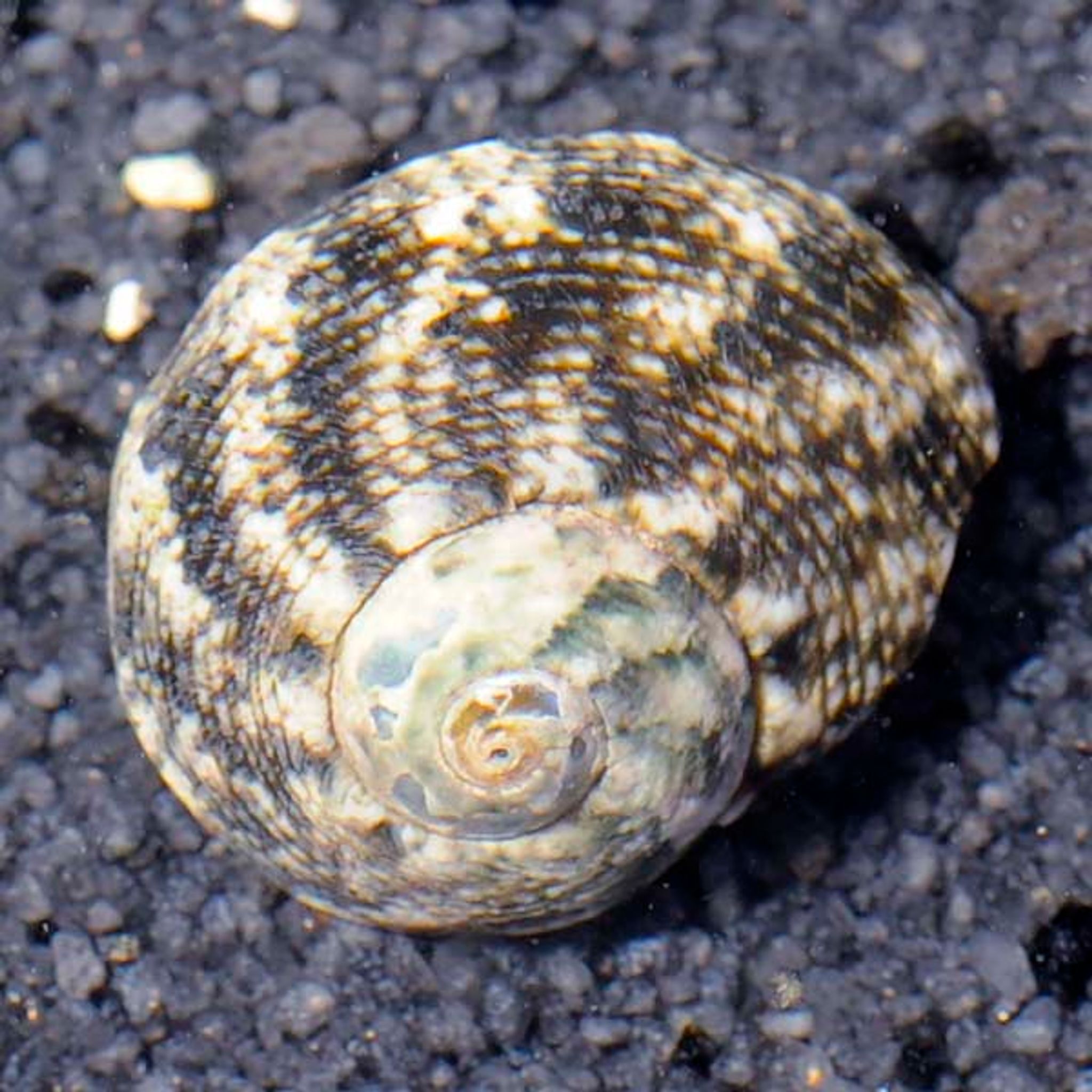
Turbo snails belong to the genus Turbo, sold under names like Mexican turbo, dusky turbo, and zebra turbo. They're recognized by a thick, spiraled "turban" shell and an operculum — a hard trapdoor that seals the shell opening when the snail retreats. A strong, muscular foot lets them grip glass and rock tightly while grazing.
Among clean-up crew snails, turbo snails are the fastest and heaviest hair-algae and diatom removers available. That grazing power is the main reason hobbyists choose them over smaller, gentler species — but it comes with tradeoffs covered below.
Size and growth: Turbo snails typically reach 1.5–2 inches (3.8–5 cm) in shell diameter in home aquariums, with some individuals reaching 3 inches (7.6 cm). Growth is slow, so a snail bought small will take many months to reach full size.
Lifespan: 1–2 years is the realistic average in home aquaria. Longer claims of 3–5 years do occur, but only in unusually stable, well-established reef systems with consistent calcium and alkalinity — treat that as a best-case ceiling, not the expectation.
Tank Requirements
Minimum Tank Size
A 10-gallon (38 L) tank is the absolute minimum, but turbo snails are better suited to established tanks of 20 gallons (76 L) or more. Their bulk, strength, and algae demand mean small tanks run out of food and rockwork space quickly.
Nano Tank Considerations
In tanks under roughly 15–20 gallons (57–76 L), turbo snails are often oversized and too bioload-intensive for the space. Smaller grazers — astrea snails, nerite snails, or small hermit crabs — are usually a better fit for nano systems, with turbo snails reserved for larger, more mature setups.
Water Parameters
Keep turbo snails within a standard marine reef range. Ignore any listing that quotes freshwater-style parameters (GH or TDS in µS/cm) for a "blue turbo" variant — that combination doesn't match a marine species and should be treated as unreliable or mislabeled livestock. All turbo snails, regardless of color variant, do best in the same range:
| Parameter | Target Range |
|---|---|
| Temperature | 72–80°F (22–27°C); stay in the low-to-mid 70s when possible |
| Salinity (specific gravity) | 1.023–1.025 (roughly 35 ppt) |
| pH | 8.1–8.4 |
| Alkalinity | 8–12 dKH |
| Calcium | 350–450 ppm |
| Nitrate | Under 20 ppm, lower is better |
| Copper | Zero tolerance — always lethal |
Copper is the single non-negotiable. Any copper-based medication — ich treatments, some prophylactic dips — will kill turbo snails and all other snails in a system. Never treat a display tank or a shared quarantine system with copper while snails are present.
Stable calcium and alkalinity aren't optional extras; they directly support shell growth and repair. A shell that looks pitted, thinning, or eroded is often an early warning sign of low calcium or low pH, well before other symptoms appear.
Acclimation
Turbo snails don't tolerate rough handling or sudden parameter swings well. Follow a standard drip acclimation:
- Float the sealed bag for 15–20 minutes to match temperature.
- Open the bag and slowly add small amounts of tank water over 1–2 hours.
- Place the snail directly onto rock or glass — never on bare sand — so it can grip immediately.
Never dump a snail into cold water or drop it shell-down onto substrate. A snail placed upside-down on sand at introduction may not be able to right itself and can die before anyone notices.
Feeding: What Turbo Snails Actually Eat
Turbo snails are strict herbivores and grazers. Their preferred diet is:
- Hair algae
- Diatoms
- Film algae on glass, rock, and sand
- Cyanobacteria on hard surfaces
They need an ongoing algae supply to survive — a tank that's "too clean" will starve them. This is one of the most common and preventable mistakes in turbo snail keeping.
When Algae Runs Low
In newer tanks, heavily skimmed systems, or tanks where algae has been recently scrubbed out, supplement with:
- Dried seaweed or nori clipped to rock
- Algae wafers
- Spirulina pellets
Without supplementation, a turbo snail in a low-algae tank can starve within weeks. If you're unsure whether your tank has enough natural food, use a simple visual check: if green film algae covers more than half the glass within a week of cleaning, there's likely enough to sustain a light stocking level. If the glass stays clear that long, plan to supplement.
How Many Turbo Snails Do You Need?
Stocking advice varies widely across sources, from as dense as 1 snail per 2–3 gallons to as conservative as 1 per 7–10 gallons. The reconciled, steady-state formula:
Baseline: 1 turbo snail per 5–10 gallons of established tank.
Use denser stocking (1 per 2–3 gallons) only temporarily, to fight an active algae bloom in a large, mature tank — and only if you're prepared to either supplement feeding once the algae is knocked down or thin the population out afterward. Overstocking beyond the available algae supply is a common cause of die-offs, and dead snails decompose fast enough to spike ammonia in smaller systems.
A practical adjustment rule: start at 1 per 5 gallons, then adjust up or down by about 50% based on how much algae you're actually seeing — more algae supports more snails, a clean tank supports fewer.
Building a Clean-Up Crew Gradually
Don't dump a large pre-made clean-up crew into a new tank on day one. Instead:
- Wait until the tank is mature — roughly 3–6 months old, with a visible algae film — before adding a full crew.
- Add animals in small stages, a few every 2–3 weeks.
- Watch how quickly existing algae disappears before adding more.
Adding turbo snails to a tank under 4–6 weeks old, before any algae film has developed, is one of the fastest ways to lose them to starvation.
Righting Behavior: Why Turbo Snails Flip Over
This is one of the most repeated practical warnings about the species: turbo snails are heavy, and their shell shape often means they cannot flip themselves back over once knocked shell-down by flow or a falling rock. Left upside down, a snail will exhaust itself trying to right itself and can die.
- Check the tank periodically after any aquascape change or flow adjustment.
- Gently flip any snail found upside down back onto rock, foot-down.
- Make this a habit rather than a one-time check — flow patterns shift over time as corals grow and rockwork settles.
If a snail dies unnoticed, remove the shell promptly. Turbo snails decompose quickly, and a decaying body can spike ammonia and nitrite in a smaller system within hours.
Physical Impact on Your Aquascape
A turbo snail's size and strength cut both ways. They graze aggressively but can also dislodge frags, topple loosely stacked rock, or knock over top-heavy coral as they move. Secure rockwork before adding turbo snails, and keep coral frags out of their main grazing paths, especially on open rock faces.
Compatibility
Turbo snails are reef safe — they don't eat coral tissue, though their bulk means they may occasionally bump a poorly secured frag.
Good tank mates:
- Peaceful reef fish
- Most reef-safe shrimp
- Other grazing snails — cerith, nassarius, astrea, trochus
- Emerald crabs
Avoid or use caution with:
- Large or aggressive hermit crabs, which may attack a snail for its shell after it molts or dies
- Coral-banded shrimp and other large predatory shrimp
- Wrasse and puffer species known to crack snail shells
- Any medication regimen involving copper
Turbo snails can live alongside small, peaceful hermit crabs without issue, but larger species kept without enough spare shells and space will often turn to shell-jacking weakened or molted snails.
Turbo Snails vs. Other Saltwater Snails
Turbo snails aren't the only clean-up crew option, and they aren't always the right one. Here's how they stack up:
| Species | Algae-Clearing Speed | Size | Notable Tradeoff |
|---|---|---|---|
| Turbo snail | Fastest, heaviest | Large (1.5–2 in / 3.8–5 cm) | Flipping risk, shorter lifespan, high bioload |
| Trochus | Fast | Medium | Hardier, less prone to flipping |
| Astrea | Moderate | Small | Good nano-tank fit |
| Cerith | Slow, works sand surface too | Small | Nocturnal, less visible grazing |
| Nassarius | N/A (detritus, not algae) | Small | Sand-sifter, not an algae grazer |
| Margarita | Moderate | Small | Gentler, good beginner option |
| Gold-ringed cowry | Moderate | Small-medium | Attractive alternative grazer |
Turbo snails win decisively on raw algae-clearing power and size, but lose on flipping risk, shorter captive lifespan, and a heavier bioload per individual. If your priority is sand and detritus cleanup rather than glass and rock algae, pair turbo snails with nassarius or other detritivores rather than expecting turbo snails to do that job — they graze hard surfaces only.
Alternative Grazers: Limpets
Siphonaria limpets are a hardy, predator-resistant option some hobbyists use alongside or instead of turbo snails, particularly for green film algae. They're a good fallback when turbo snails keep dying or getting knocked over in a given system, since limpets are less vulnerable to both flipping and shell-jacking.
Clean-Up Crew Role and Mechanical Support
Turbo snails are one pillar of a broader clean-up crew — they handle glass and rock algae, but not sand or detritus. Pair them with sand-sifting snails or small hermit crabs for substrate cleanup, and consider an algae magnet or scraper for glass maintenance between grazing cycles. Mechanical scrapers are commonly paired with a clean-up crew rather than used as a replacement for it.
A Note on Quarantine
Most hobbyists skip formal quarantine for snails and other inverts, since turbo snails rarely carry fish diseases. The tradeoff is hitchhiker risk — pest algae, unwanted worms, or other organisms can ride in on the shell or rockwork. A brief freshwater or iodine dip before introduction is a lower-effort compromise than a full quarantine period, though it's not universally practiced.
Common Mistakes to Avoid
- Adding snails to a tank under 4–6 weeks old with no visible algae film
- Overstocking beyond the available algae supply, leading to die-offs and ammonia spikes
- Placing a snail shell-down on bare sand during acclimation instead of on rock
- Skipping post-aquascape checks for flipped or stuck snails
- Using copper-based medication anywhere connected to a tank with snails
- Expecting turbo snails to clean sand or detritus — they only graze hard surfaces
- Housing turbo snails with large, food-competitive hermits or predatory shrimp without enough spare shells
- Letting nitrate or copper drift unchecked — snails often show stress (poor shell growth, lethargy, death) before fish do, making them a useful early water-quality indicator
Turbo snails and other clean-up crew invertebrates can be browsed in the marine invertebrates category alongside compatible tank mates like marine shrimp if you're planning out a full crew.
Frequently Asked Questions
How many turbo snails do I need for my tank?
Roughly one per 5–10 gallons of established tank is the steady-state baseline. Go denser — down to 1 per 2–3 gallons — only temporarily to fight a heavy algae bloom, then thin the population or add supplemental feeding once the bloom is under control.
What size tank do turbo snails need?
A 10-gallon (38 L) tank is the minimum, but they're better suited to 20 gallons (76 L) or more given their size, appetite, and bioload. Tanks under 15–20 gallons often do better with smaller grazers like astrea snails or nerite snails instead.
Are turbo snails reef safe?
Yes, turbo snails don't eat coral tissue and are considered reef safe. Their size and strength can, however, physically knock over unsecured frags or loosely stacked rockwork as they graze.
What do turbo snails eat if there's no algae?
Supplement with nori, algae wafers, or spirulina pellets clipped to rock. Without supplemental feeding, a turbo snail in a low-algae tank can starve within weeks.
Why is my turbo snail upside down or not moving?
Turbo snails are heavy and often can't self-right if knocked shell-down by flow or a falling rock. Gently flip it back onto rock foot-down, and check regularly, especially after any flow or décor changes.
Can turbo snails live with hermit crabs?
Small, peaceful hermit crabs are generally fine tank mates. Larger, more aggressive hermits and predatory shrimp can attack a turbo snail for its shell, particularly after it molts or dies, so they should be avoided or closely monitored.
How long do turbo snails live?
Typically 1–2 years in home aquariums. Longer lifespans of 3–5 years do occur, but only in unusually stable, mature reef systems, so treat that as a best case rather than an expectation.
Do turbo snails need calcium or special water parameters?
Yes: stable calcium (350–450 ppm), alkalinity of 8–12 dKH, pH 8.1–8.4, salinity of 1.023–1.025, and zero copper exposure. Pitting or thinning on the shell is often an early sign that calcium or pH has drifted too low.
Ready to add turbo snails or other clean-up crew invertebrates to your system? Browse live stock in the marine invertebrates category on FishyHub.